


You follow a tutorial, connect a language model, and get a working chatbot on your laptop. Then you upload a longer document, ask an unfamiliar question, or let a friend try it. The answer sounds confident, but the source is wrong. A request fails halfway through, and you cannot tell whether the problem came from your code, the model, or the documents you gave it.
The AI engineering skills to learn become clearer at that point. You need enough programming to trace the request, enough knowledge of language models to understand their limits, and a way to check the result before someone depends on it. You also need to put the application somewhere other people can use it. Those responsibilities connect the seven skills in this guide.
The starting framework comes from Aman Kharwal’s seven-skill carousel: Python and software engineering, large language models, retrieval, agents, evaluation, cloud deployment, and system design. A carousel can give you the map. Learning the work requires examples, decisions, and projects that reveal where your understanding is incomplete. This article expands that framework into a technical learning path you can begin in late 2026 and continue through 2027.
The year is a planning horizon. The recommendations below come from tools, course curricula, and certification information available in October 2026. You will see no promises about a future salary or a guaranteed job. You will get a way to judge your progress: what you should understand, what you should build, and what you should be able to explain after each stage.
We will use a fictional support assistant for a small online store as a running example. It starts by answering questions from a policy document, then learns to look up an order and draft a support ticket. You can replace the store with a university help desk, a software product, or a subject you know well. Choose a setting where you can recognize a wrong answer. That knowledge will help you far more than an impressive project name.
If you need the wider career picture, including entry routes and job responsibilities, start with how to become an AI engineer. This guide concentrates on the technical work: the skills you can practice, the evidence you can produce, and the decisions you should be ready to defend.
AI Engineering Skills to Learn First
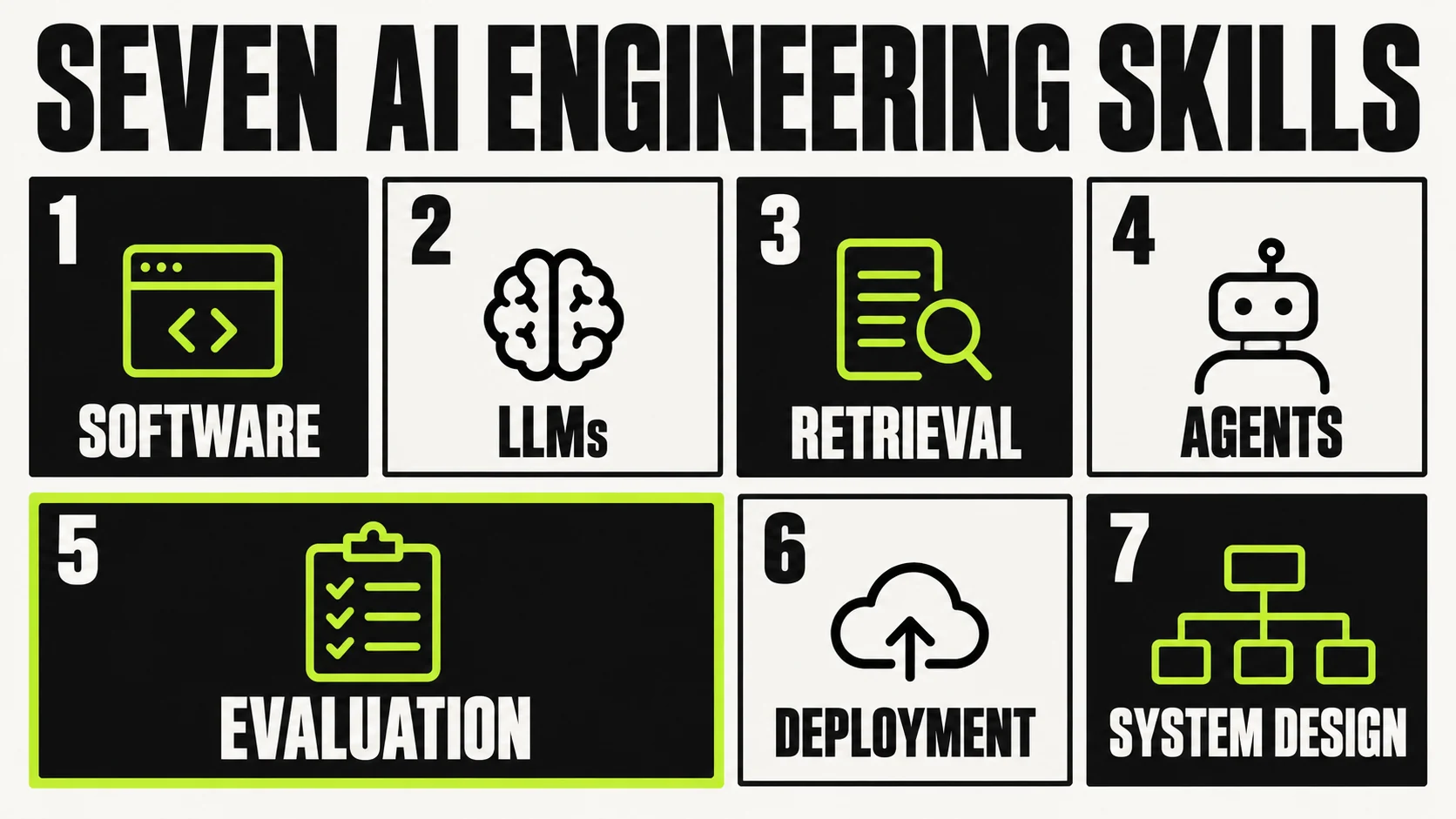
Start with Python, basic software development, and the ability to make and inspect an API request. An API is an agreed way for one program to ask another program for information or an action. Once you can handle a request and its errors, add language models, retrieval, and controlled tool use. Begin evaluation with your first small application, and keep it beside each later stage.
1. Choose an AI engineer learning path for your background
A complete beginner should practice files, functions, dictionaries, and error handling before building an agent. A backend developer can begin with model behavior and retrieval, then use familiar software skills to build the surrounding service. Someone from data analysis may already understand datasets and measurement but need more work on APIs, testing, and deployment. Your previous experience changes the starting point, even though the seven areas remain useful. Choose an AI engineer learning path that addresses those gaps in the order your project exposes them.
You need some machine learning foundations along the way. Understand the difference between training a model and using one, why a test set should stay separate from development examples, and how a metric can hide a failure. Study probability and vector similarity as you encounter them in a project. A beginner who wants a more gradual foundation can use the plan to learn AI from scratch, then return to the software and LLM sections here.
2. Learn one connected system before collecting frameworks
For the store assistant, the first version can read a local text file and return a matching policy paragraph. The next version can ask a model to answer from that paragraph. Later, you can add an order lookup, an evaluation set, and a deployed interface. Each change gives you a reason to learn another concept without discarding the work you have already done.
Keep a short project journal from the beginning. Record the behavior you wanted, the failure you observed, the change you made, and the result of the next check. That record helps you distinguish understanding from tutorial familiarity. It also gives you material for a portfolio explanation that includes failed approaches and the reasons you changed them.
1. Python and Software Engineering
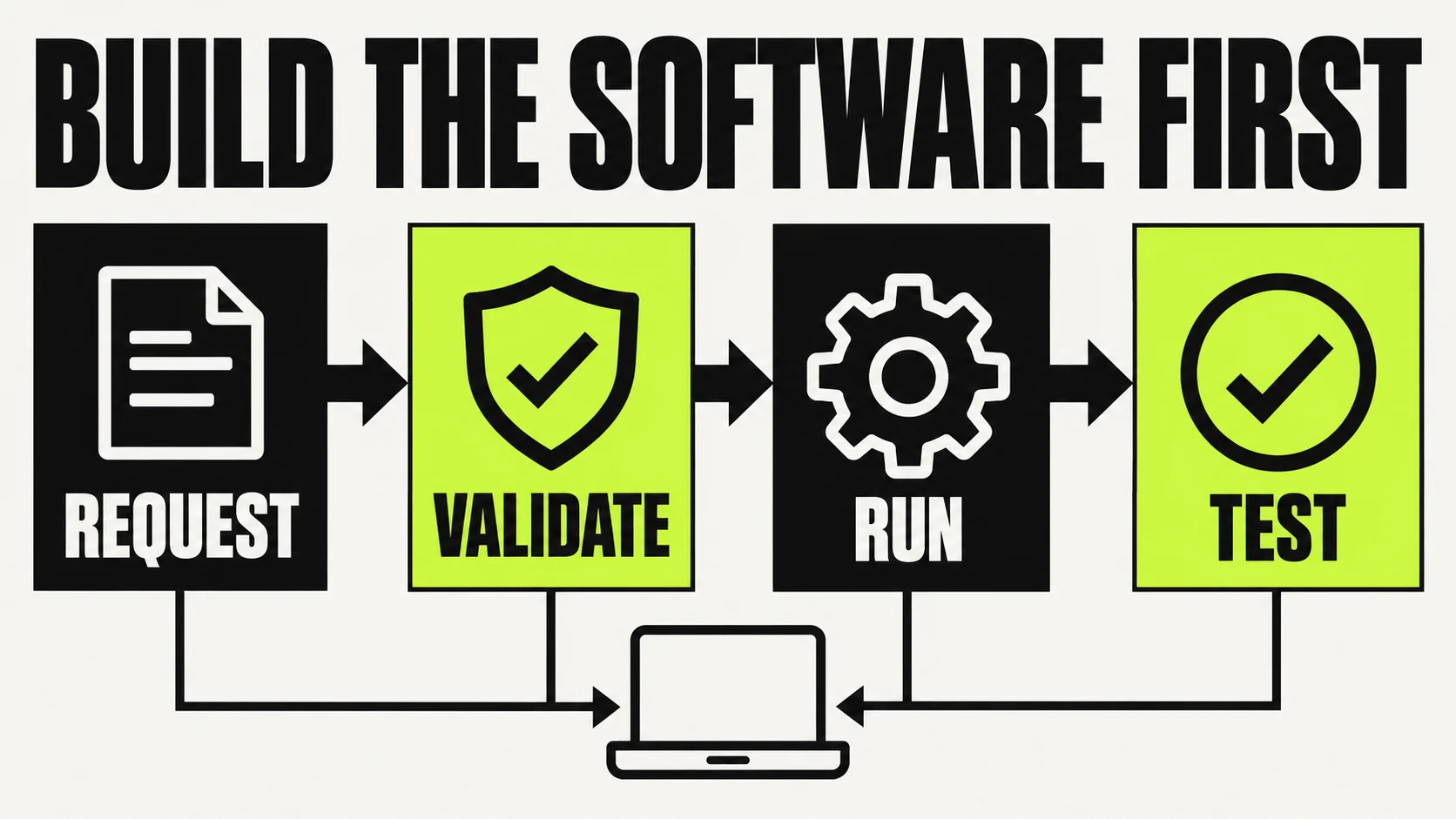
Python and software engineering let you turn a model call into an application you can inspect and maintain. You should be able to organize code into functions, validate incoming data, handle failures, and write tests for behavior you expect to remain stable. For an AI application, these skills govern everything around the model, including who can use it and what happens after a response arrives.
1. Write small programs you can explain
Begin with Python values, conditions, loops, functions, and common data structures. A list can hold the store’s policy documents; a dictionary can hold an order’s fields, such as its identifier and shipping status. Practice reading a file, finding a record, and returning a clear error when the record does not exist. These exercises prepare you for the same operations inside a larger AI service. They also give you a manageable starting point for AI engineering projects for beginners.
Separate the parts that change for different reasons. Keep document loading apart from answer generation, and keep both apart from the web interface. You can then test the document reader without calling a model and replace the model without rewriting the whole application. Small, named functions also make generated code easier to review because you can ask what each function accepts, returns, and changes.
Use an AI coding assistant as a tutor while keeping responsibility for the code. Ask it to explain an unfamiliar expression, suggest a test, or point out an unhandled error. Then run the program with an input you choose yourself. Copying a working file teaches less than changing one assumption and predicting what will happen before you run it.
2. Understand APIs, validation, and asynchronous work
Learn the basic shape of an HTTP request: a destination, a method, headers, and sometimes a body. JSON is a text format for structured data, such as an object containing an order identifier and a question. Inspect a successful response and an error response before adding a library that hides those details. You should know which part of your program handles a missing field, an expired credential, or a service that takes too long to reply.
FastAPI is a Python framework for building web APIs. Its explanation of asynchronous requests is useful once your application waits for other services. Asynchronous code lets a service work on other tasks during some waiting periods. It does not make a slow model reason faster, and it does not remove the need for request limits or timeouts. Practice with a small service before adding several external calls.
Validation means checking whether data meets the rules your application expects. A support request might require a nonempty question and a correctly formatted order identifier. Reject invalid data before it reaches a model or an order database. Return an error that helps the user correct the input without exposing internal details about your service.
3. Use Git, tests, and readable failure reports
Git records changes to your project so you can inspect a difference or return to an earlier version. GitHub can host that repository and help you share the work with another developer. Learn to make a focused commit, read a diff, create a branch, and merge a small change. Keep credentials and private documents outside the repository, including files that an AI assistant creates for you.
Write tests for predictable behavior first. An empty question should fail validation, a missing policy file should produce a controlled error, and an order lookup should return the expected record from a test database. Use a fake model response when you are checking your own code. Tests that depend on a live provider for every run can become slow, costly, and difficult to diagnose.
A useful error report includes a request identifier and the stage that failed. For example, record that retrieval timed out while keeping the customer’s message out of a public log. You need enough information to reproduce a problem without storing every piece of user data. Make that choice before the application handles real documents.
4. Build a policy-search API before adding a model
Create a service that accepts a question, searches a small set of store policies, and returns the matching passages. Add a health endpoint so you can check whether the service is running. Write a README explaining installation, configuration, example requests, and expected errors. Ask someone to follow those instructions on a clean setup if you can.
You are ready to progress when you can trace a request from input to response and explain a failed test without guessing. The service should reject malformed input, handle a missing document, and run without a credential embedded in the code. Keep this version in Git. It gives you a baseline you can compare with the model-assisted version next.
2. Large Language Models and Generative AI
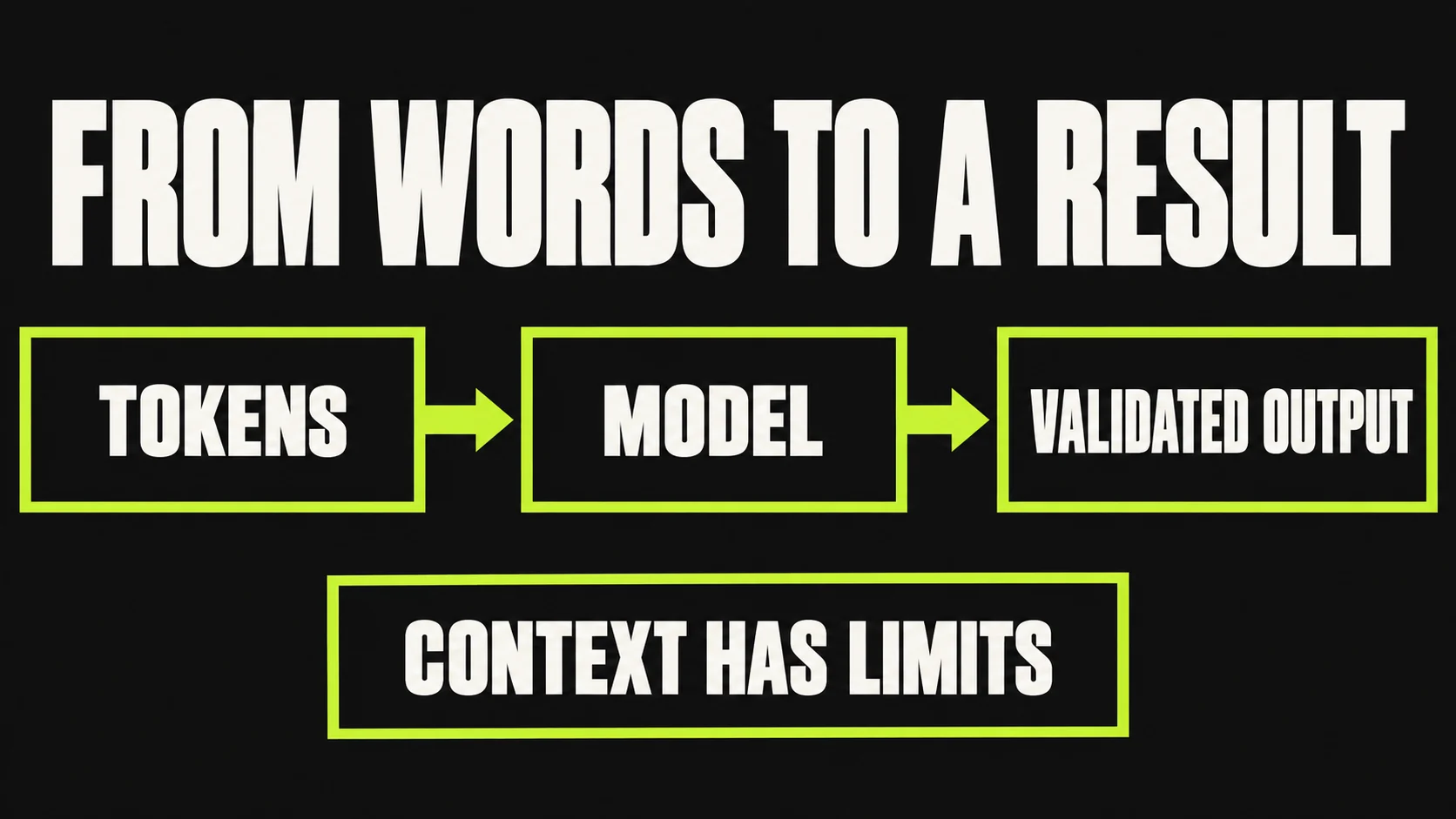
Learn how large language models process input, generate responses, and interact with software. A large language model, or LLM, learns statistical patterns from training data and uses those patterns to generate text. For application work, you need to understand tokens, context limits, instructions, structured output, and model selection well enough to recognize failures. You can build useful applications before learning to train a large model yourself.
1. Understand tokens, transformers, and context
A token is a piece of text in the model’s representation. A token can be a word, part of a word, or punctuation, depending on the tokenizer. The tokenizer converts text into the units the model accepts. Inspect a few examples containing ordinary English, a long identifier, and code so you see why word count and token count differ.
A transformer is a neural network architecture that uses attention to combine information from positions in a sequence. At an introductory level, focus on how the model uses surrounding information to produce a response. You do not need to reproduce its training process to understand that an answer depends on the input you provide. Later, studying attention and embeddings will help you understand retrieval and model adaptation.
The context window limits how much input and output a model can handle in a request, under that model’s rules. A conversation, instructions, retrieved passages, and tool results can all use space. A large window also creates a reading problem for you: irrelevant or conflicting material can make an answer harder to diagnose. Choose the information the task needs and test the effect of adding more.
2. Write instructions and define the response format
A useful prompt states the task, supplies the information needed, and explains the expected response. For the store assistant, tell the model to answer from the supplied policy passages and identify the passage it used. Include a case where the passages do not contain the answer. That case reveals whether the system can leave a question unresolved without inventing a policy.
Structured output gives your application a defined response shape, such as fields for an answer, cited document identifiers, and a review flag. A schema is the set of rules for those fields and their types. Schema-constrained model output helps software parse responses, but a correctly shaped object can still contain a wrong claim. Your application must check field values and the business rules that apply to them.
Function calling is related, but its purpose is to request a tool operation through a defined interface. The model might propose an order lookup with an order identifier as an argument. Your code decides whether to execute that operation and how to return the result. Keep the distinction clear: producing a request to use a tool is one step in an application-controlled process.
3. Choose models through a small comparison
Model selection is a decision about a task and its constraints. Use a small set of representative questions and compare candidate models under the same conditions. Check answer quality, format compliance, latency, and cost per completed task. Latency is the time the user waits for a result; it includes your application’s work as well as the model call.
Avoid changing the prompt, model, retrieval method, and test questions at the same time. You will struggle to identify which change affected the result. Save the model identifier and configuration with each experiment. Provider behavior and product names can change, so a record of the actual setup matters when you revisit a result later.
Fine-tuning means adapting model parameters using additional training examples. It can help with a repeated behavior or task, but it requires data preparation and evaluation. A store policy that changes next week is usually easier to maintain in a searchable document source. Investigate fine-tuning after you can describe the remaining failure and show why simpler changes did not solve it.
4. Build a structured support-response generator
Add a model to your policy-search service and request a response with an answer, supporting passage identifiers, and a review flag. Check that the identifiers refer to passages your service supplied. Present the supporting text beside the answer so you can inspect whether it supports the claim. Keep an unsupported question in your test set from the start.
Try an ambiguous question and a document containing two different return policies for different regions. Record whether the model asks for clarification or applies the wrong rule. You are ready to continue when you can explain those failures in terms of missing context, weak retrieval, unclear instructions, or model behavior. “The AI got confused” is a starting observation; your next task is to identify the condition that caused the failure.
3. Retrieval-Augmented Generation and Search
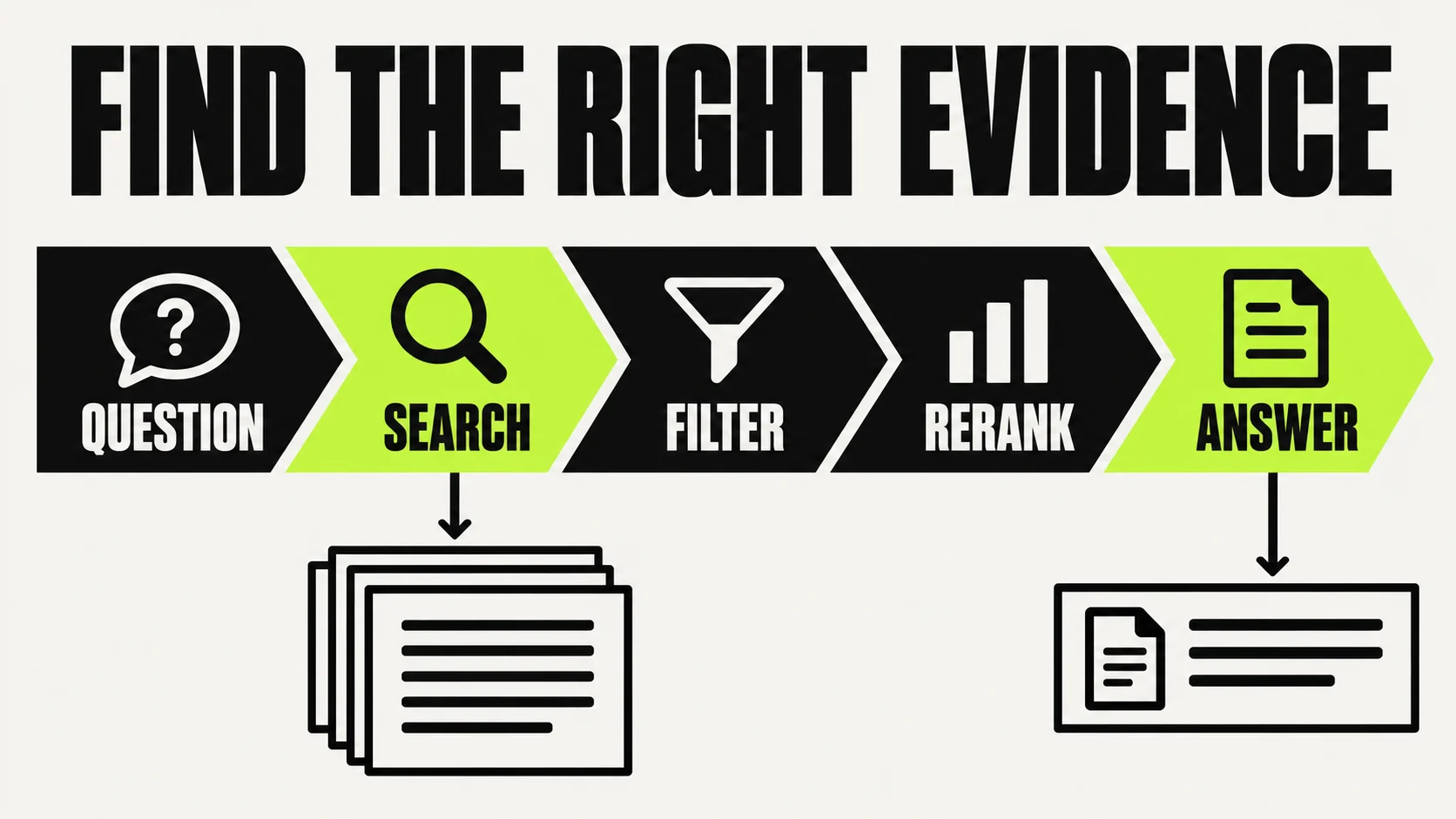
Retrieval-augmented generation, usually shortened to RAG, combines information retrieval with a model’s answer generation. Your application finds relevant material, places it in the model’s context, and asks the model to answer from that evidence. For a support assistant, retrieval can supply current policies or product instructions. Learn to measure search quality on its own before judging the finished answer.
1. Prepare documents with their meaning intact
Chunking means dividing documents into smaller pieces for storage and retrieval. Start by preserving natural boundaries such as a policy section or a product instruction. A chunk should contain enough information to make sense when retrieved. Splitting a rule from its exception can create a misleading answer even if the search system finds a passage containing the right words.
For the store example, keep the product category, region, effective date, and document version with each passage. Those fields are metadata: information about the content. Metadata lets you restrict a search to the policies a user should see or the version that applies to an order. It also helps you remove an outdated passage without rebuilding your document collection by hand.
Document preparation deserves its own checks. Inspect text extracted from a PDF with columns, a table, or a scanned page. Missing headings and scrambled reading order can affect retrieval long before a model generates an answer. Save the original source and the processed text so you can compare them when a result looks wrong.
2. Compare keyword, vector, and hybrid search
Keyword search finds terms and patterns in text. It is useful for an exact product code or an unusual order-status phrase. Vector search compares numerical representations called embeddings, which can place related meanings near each other. A question about sending an item back may match a returns policy even when the question uses different words.
Hybrid retrieval combines signals from keyword and vector search. It can be useful when your documents contain both ordinary language and exact identifiers. Begin with a simple search baseline and test it on your own questions before adopting a more involved combination. A small, well-structured document collection may need less infrastructure than a tutorial’s architecture suggests.
Reranking adds another stage that scores or reorders the first search results. Query rewriting changes the search query to make the user’s intent easier to retrieve. Both techniques can help, and both introduce more behavior to test. Keep the original question, rewritten query, and retrieved passages in an inspection view so you can see where a correct interpretation went wrong.
3. Check retrieval separately from generation
Create questions whose supporting passages you can identify in advance. Include an exact product identifier, a paraphrased policy question, a request with a date restriction, and a question the documents cannot answer. For each one, check whether the needed evidence appears in the retrieved results. A fluent answer should not distract you from a search stage that missed the relevant passage.
Next, examine how the model uses the evidence it receives. A retrieved passage may be relevant while the answer adds an unsupported condition. Another answer may quote the correct rule but omit an exception that changes the result. Separate retrieval errors from answer errors in your journal so you choose a repair that addresses the stage responsible.
Your document system also needs an update process. Replace a policy, remove a product, or change an access permission and check the result of a new query. Old content can remain in a search index after you update the source file. Treat deletion and access changes as behaviors to verify in the application.
4. Build a policy assistant with inspectable evidence
Extend the assistant so each answer displays the source passage and its document version. Use fictional policies that contain realistic exceptions, such as different return rules for opened and unopened items. Add a pair of questions that look similar but require different evidence. You will learn more from that pair than from a collection of easy questions with obvious keyword matches.
Write a short experiment comparing two retrieval approaches under the same questions. Explain what improved, what became worse, and whether the extra processing was worthwhile. Keep the results in the repository beside the project. If you need more depth on selecting and managing model input, work through context engineering as an extension of this stage.
4. AI Agents and Controlled Tool Use
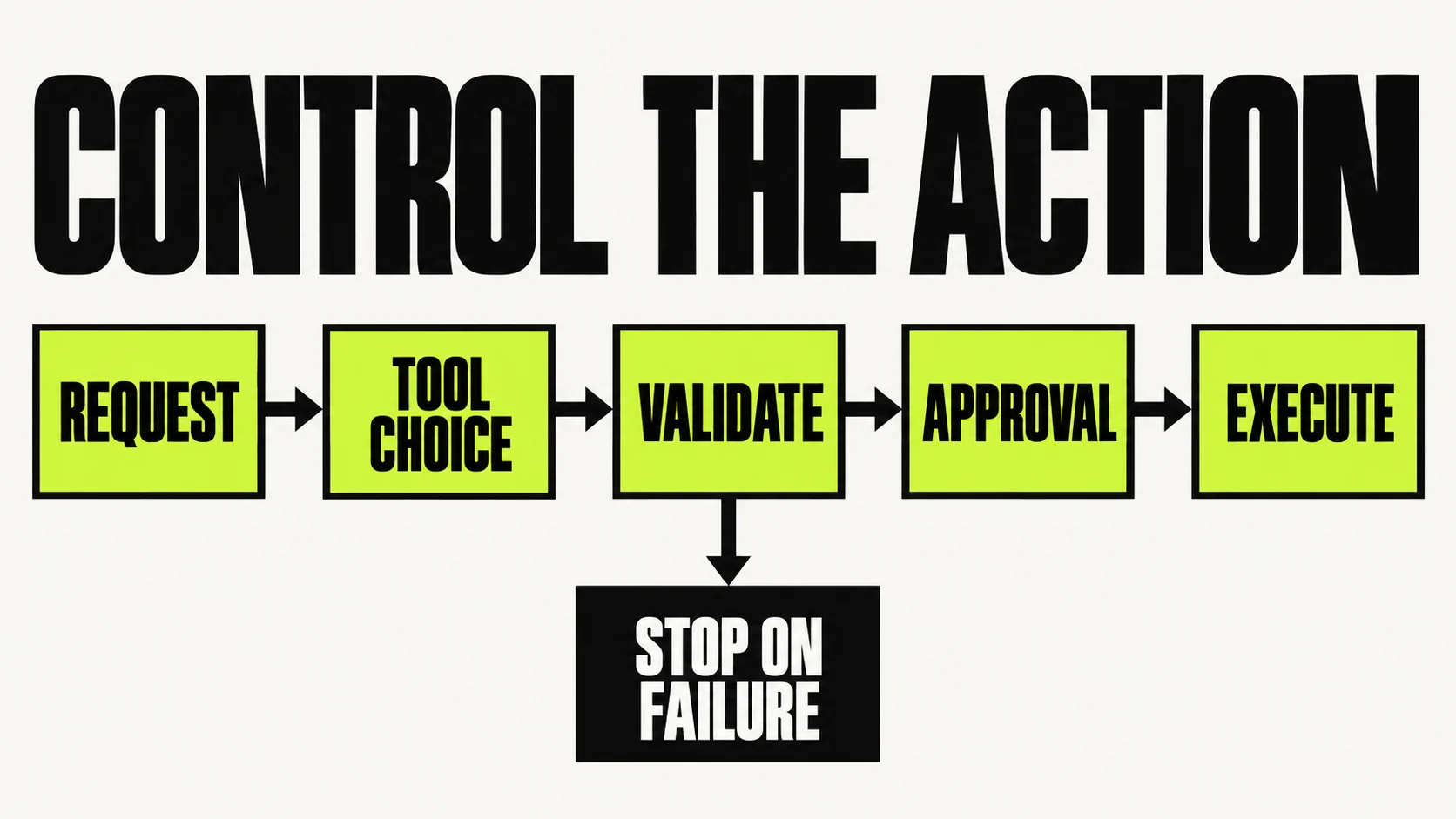
AI agents use models to help choose actions and interact with tools across a task. A workflow follows paths that you define in code; an agent can choose some of its next steps from intermediate results. Learn tool design, state management, permissions, and recovery before adding several agents. The store assistant gives you a manageable example: retrieve a policy, look up an order, and draft a ticket for review.
1. Start with a workflow you can draw
Write down the allowed steps before selecting a framework. For an order question, the assistant needs an authenticated user, an order identifier, and a permitted lookup. It may then combine the order status with a relevant policy. A draft response can go to a support worker for review. Each step has a clear input and a result you can inspect.
The distinction between predefined workflows and model-directed agents helps you choose how much freedom a task needs. A fixed sequence is often easier to test when the business process already specifies the order. Introduce model choice where the task requires it, such as deciding which read-only source can answer a question. Keep the process understandable enough to explain on a whiteboard.
Tools should have narrow names and clear arguments. An order-status lookup can accept an order identifier and return a limited set of fields. A broad tool that accepts an arbitrary database query gives the model far more responsibility. Your first project will be easier to inspect if each tool has a small, explicit purpose and a controlled response.
2. Keep permission checks in application code
A user asking about an order does not establish ownership of that order. Your service must check the authenticated user’s access before the tool returns information. A sentence in the prompt asking the model to respect privacy cannot replace that check. Apply the same rule to retrieved documents: users should search within material they are allowed to access.
Start with read-only tools and add write operations after you have tested the workflow. A support ticket draft can remain a preview until a person submits it. Show the proposed action and relevant details at the approval step. Your application should also handle a rejected proposal and an approval that expires before execution.
Treat content from documents and tool responses as information to inspect. A retrieved page can contain text that tries to redirect an assistant’s behavior, a problem often called prompt injection. Keep permissions, allowed destinations, and execution rules outside that content. Add a test document containing a misleading instruction and verify what the application permits the agent to do.
3. Learn state, memory, and failure recovery
State is the information about the current task, such as the order being discussed and the steps already completed. Memory stores information for use beyond an immediate step or conversation. Decide what your application needs to retain, who can inspect it, and how it expires. Saving everything can create stale information and a larger privacy problem than the task requires.
A multi-step task can fail after an action has already completed. Suppose the ticket service creates a ticket but the response times out. A blind retry could create another ticket. An idempotency mechanism lets the service recognize a repeated request for the same operation. Practice this behavior in a mock service before allowing a model to trigger real writes.
MCP, the Model Context Protocol, is a standard for connecting AI applications with tools and contextual resources. Learn its role after you understand a direct tool call. The protocol does not decide whether a user should have access to a tool or whether a proposed action is acceptable. Those remain application and service responsibilities that you need to design and test.
4. Build an assistant that can stop and recover
Add an order lookup and a ticket-drafting tool to your project. Give the agent a limit on the number of steps it can take, and define what happens when a tool fails. Record the sequence of calls so you can inspect the task after it ends. A useful demonstration includes an unresolved task that ends with a clear explanation and a route to human support.
Keep multi-agent systems as a later exercise. Several agents can divide work, but they also create handoffs, shared-state decisions, and more failure paths. Build one controlled agent first and measure where it struggles. Study the surrounding controls in agent harness engineering once you can connect each control to a failure you have observed.
5. Evaluation, Debugging, and Observability
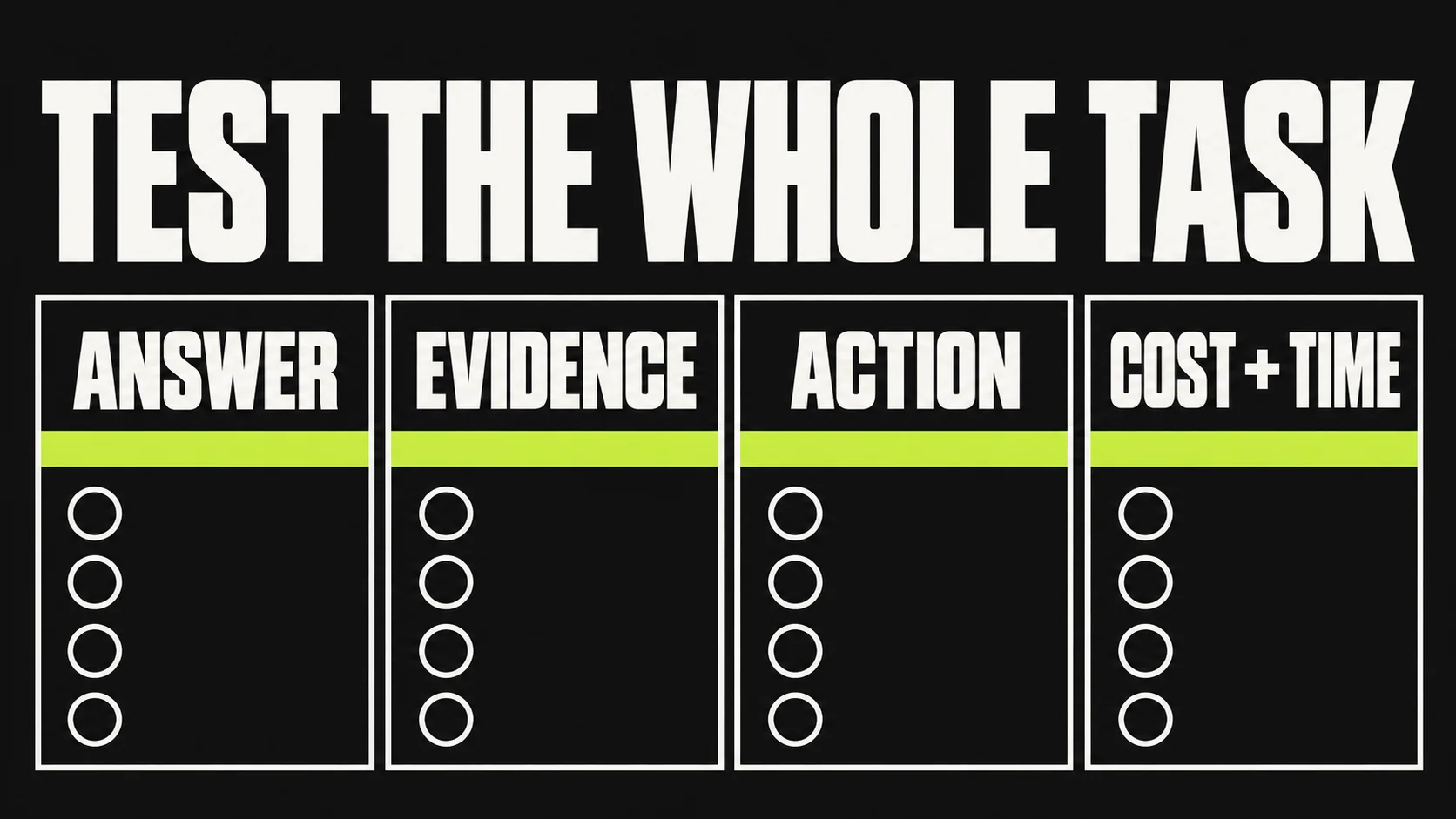
Evaluation means checking an AI system against defined tasks and success criteria. Observability means collecting enough information about its operation to diagnose a failure. For a support assistant, check the answer, its evidence, the tool actions, and the final result in the support system. Add cost and latency measurements so you can judge whether a proposed improvement works under the conditions users will experience.
1. Define success before choosing a metric
Write the behavior you expect in ordinary language. A policy answer should apply the correct region and mention the exception that changes eligibility. An order lookup should return information only for an authorized user. A ticket task should create the intended record once, with the approved content. These definitions give you something concrete to test.
Use examples from the task you are building. A collection of general trivia questions tells you little about a store assistant’s handling of ambiguous return policies. Include common questions and the cases that could cause harm or extra work. Keep the expected behavior beside each example so another person can understand why a result passed or failed.
Choose metrics after writing those expectations. A pass rate can summarize the evaluation, but inspect results by failure type as well. An improvement on easy policy questions can hide worse performance on access checks. Your report should make a serious failure visible even if the average result looks better.
2. Combine code checks, human review, and model judges
Use code for facts that software can verify: required fields exist, a tool argument meets its schema, or the expected ticket appears in a test database. Ask a person to judge whether an explanation is understandable or whether the policy interpretation is correct. A model judge can help review larger sets of open-ended answers, but compare its judgments with human decisions before depending on its scores.
Anthropic’s work on evaluating agent outcomes and execution traces makes a useful distinction for the ticket example. An assistant can say it created a ticket even if the database contains no ticket. Inspect the result in the environment as well as the conversation. The agent’s account of its work is one piece of evidence.
Keep development examples separate from a held-out test set. Development examples help you improve the application; held-out examples help check whether the change works beyond the cases you have studied. You can begin with a small collection you review by hand. Grow it from recurring user questions and confirmed failures, subject to the data permissions your project requires.
3. Trace failures and control your experiments
A trace records the steps in a request, such as retrieval, model calls, tool proposals, and tool results. Store a request identifier with those events so you can connect them. Redact sensitive content where possible and decide who can access detailed traces. The ability to debug an application should not depend on exposing private conversations to everyone who can read a dashboard.
Change one major variable at a time during a learning experiment. Compare the same questions before and after a retrieval change, then inspect any regressions. A regression is behavior that used to work and now fails. Keep successful cases as checks you run again after later changes, especially after switching a model or updating a document-processing library.
Save enough configuration to understand the result later. Record the prompt version, model identifier, document collection, retrieval settings, and evaluation version. You do not need a complicated experiment platform for your first project. A clear configuration file and a saved result file can establish the habit before you adopt more tooling.
4. Publish an evaluation report with your project
Create a small evaluation runner that sends saved cases through the assistant and records the outcomes. Report the cases that passed, the cases that failed, and the conditions of the run. If you use invented store records or simulated tool errors, label them as such. Do not present a tutorial experiment as a production benchmark.
Include at least one failed approach in the report and explain why you changed it. You might show that adding more retrieved passages increased latency without solving a missing-policy problem. That explanation demonstrates judgment a polished demo cannot show on its own. Another developer should be able to reproduce the comparison and inspect the examples behind your conclusion.
6. Cloud Deployment and AI Operations
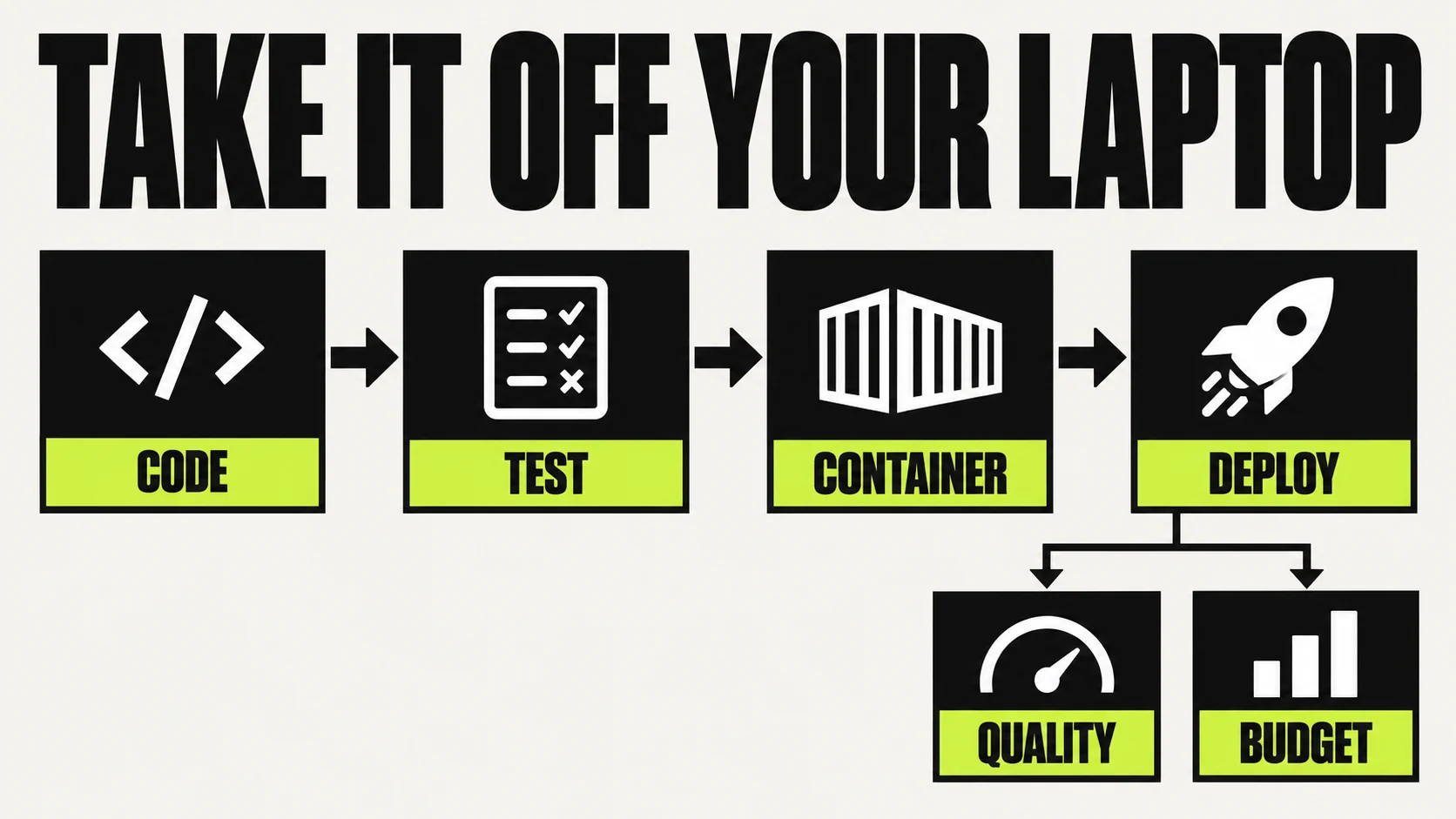
Deployment makes your application available outside your development environment. AI operations covers the work needed to keep it running, observe quality, control access, and manage changes. Learn containers, configuration, release checks, monitoring, and spending limits through one small deployment. You can postpone advanced infrastructure until your application has a reason to need it.
1. Package the application and separate configuration
A container packages a program with the dependencies it needs to run in an isolated process environment. A container image is the template used to start that environment. Work through Docker’s application and container concepts and package the service you have already built. Test the image from a clean setup so it does not depend on an unrecorded file from your laptop.
Keep configuration separate from code. Development and deployment may use different service addresses, credentials, and logging settings. Your application should read those values from its environment or an appropriate configuration service. Document the names and purposes of required settings without committing their secret values to the repository.
Decide which information must survive a restart. A container’s local files are a poor place to keep the only copy of your evaluation records or support tickets. Use storage appropriate to the data and the deployment service. Restart the application during testing and check which information remains available afterward.
2. Build a release path you can reverse
Continuous integration, or CI, runs checks when you change code. Continuous delivery or deployment, often grouped under CD, prepares or releases passing changes to an environment. For your first project, run ordinary software tests and a small set of AI behavior checks before a release. Keep a manual release step while you learn the process if that makes failures easier to control.
A staging environment is a place to test a release before exposing it to normal users. Use fictional records and a separate configuration there. Check the application’s startup, its document access, and one complete support task. A service can start without being ready to answer questions, so test more than whether the web page loads.
Practice rolling back to the previous working release. Record which code version, prompt, and document index belong together. A code rollback alone may not restore behavior if you have also changed the documents or database structure. Walk through that situation while the project is small enough to understand.
3. Monitor the experience and the spending
Measure the path the user experiences: time to a useful answer, failed requests, and completion of the intended task. Track model usage beside retrieval and infrastructure costs. One request can trigger several calls or retries, so the price of a single model call does not describe the cost of the task. Use the provider’s current billing information when you calculate a real budget.
Set application limits as well as billing alerts. Cap the number of agent steps, restrict uploaded file sizes, and limit how often a user can make expensive requests. A billing alert tells you that spending has crossed a threshold; it may not stop further requests. Test your own stopping behavior with simulated limits before relying on it.
Monitor answer quality after deployment too. New documents, different users, and changed provider behavior can expose cases your first evaluation did not cover. Give users a way to report a wrong answer and preserve enough context to investigate it under your data policy. Add confirmed failures to a reviewed evaluation set after you understand them.
4. Deploy a small service with an operations note
Deploy the assistant on one cloud or application platform you can explain. Include authentication, a health check, request limits, and a way to turn off tool execution. Use mock order data in the public demonstration. A limited deployment with clear behavior is a better learning exercise than exposing a broad agent with access you cannot audit.
Write an operations note describing startup, configuration, common failures, rollback, and shutdown. Run a short failure drill: make the model unavailable, break retrieval, or return a timeout from the ticket service. Record what the user sees and how you restore service. That drill connects deployment knowledge to the application’s behavior under stress.
7. AI System Design and Technical Judgment
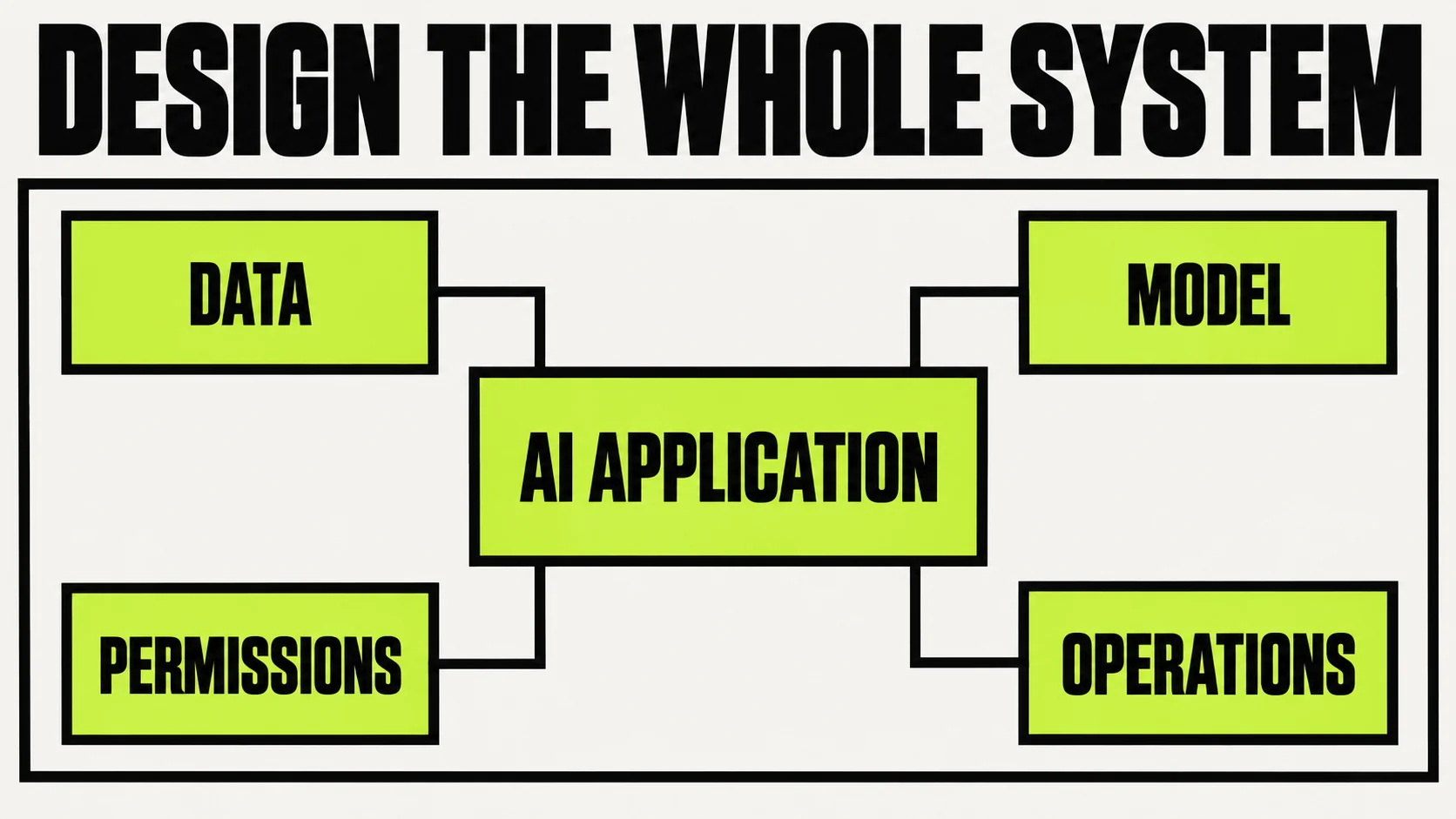
AI system design is the work of choosing how the application’s parts fit together under real constraints. You decide where information lives, which work belongs in ordinary code, when a model is useful, and how to handle uncertainty or failure. Practice explaining those choices with the support assistant you have built. A diagram helps only if you can connect its boxes to the task and the risks you need to manage.
1. Begin with the user’s task and a baseline
Write a short problem statement before drawing an architecture. For the store assistant, the goal might be to help support workers find the correct policy and draft a response they can review. Define the users, available documents, allowed actions, and conditions that require escalation. Those details shape the system more than the choice of an agent framework.
Create a simple baseline to compare against. It could be keyword search with a visible policy passage and a response template. Add a model where interpretation or language generation helps, then compare the result. A baseline gives you a way to justify additional cost and complexity with evidence from the task.
Keep uncertain requirements visible. If the store has no clear rule for a damaged item, a model cannot establish the business policy for you. Ask the policy owner to resolve that gap and define the assistant’s behavior until then. System design includes deciding which uncertainty requires a human decision outside the software.
2. Explain the path of one request
Draw the path from the user interface through authentication, retrieval, model calls, tools, and storage. Mark which service checks access and which component can change a record. Show where you validate an input and where a human reviews an action. A reviewer should be able to follow one request without knowing your preferred framework.
Add the failure paths to the same drawing. Show what happens if retrieval returns nothing, the model refuses or times out, and the ticket service reports an error. Decide which operations can retry and which require checking whether an action already completed. These choices become easier when you have practiced them in the earlier projects.
Distinguish an external model API from a model you host yourself. An external API reduces some infrastructure work while adding a dependency on a provider’s service and terms. Hosting a model gives you different operational responsibilities, including serving hardware and capacity planning. Learn the tradeoff through the requirements of a project before assuming either approach is the default for all work.
3. Reason about quality, time, and cost together
A more involved architecture can improve one measure and worsen another. Reranking might improve evidence selection but add processing time. A second model review might catch some errors while increasing the cost of each request. Decide which changes are worth keeping by measuring the complete task and inspecting the failures that remain.
Use a worked estimate with explicit assumptions. Count the calls in your workflow, estimate the usage of each call, and apply current provider rates if you need a monetary estimate. Add storage and other infrastructure separately. Label this as an estimate until you compare it with measured usage, and keep assumed traffic separate from observed traffic.
Caching stores a result so the application can reuse it. It can reduce repeated work, but you must decide when the stored result becomes stale and who is allowed to receive it. A cached answer about an order needs different handling from a public explanation of shipping terms. Include document updates and user permissions in the cache design.
4. Write a design decision and defend it
Choose one decision from your project, such as using a fixed workflow for ticket creation. Explain the requirement, the options you considered, the approach you chose, and the evidence behind it. State a condition that would make you revisit that choice. A decision document becomes useful when another person can disagree with it using the same facts.
Practice explaining the system at two levels. Give a support manager a plain-language account of its limits and review steps, then give an engineer enough detail to reproduce a failure. You will discover gaps when you try to translate between those explanations. Keep the technical depth connected to what the application does for its users.
Courses and Resources for These AI Engineering Skills
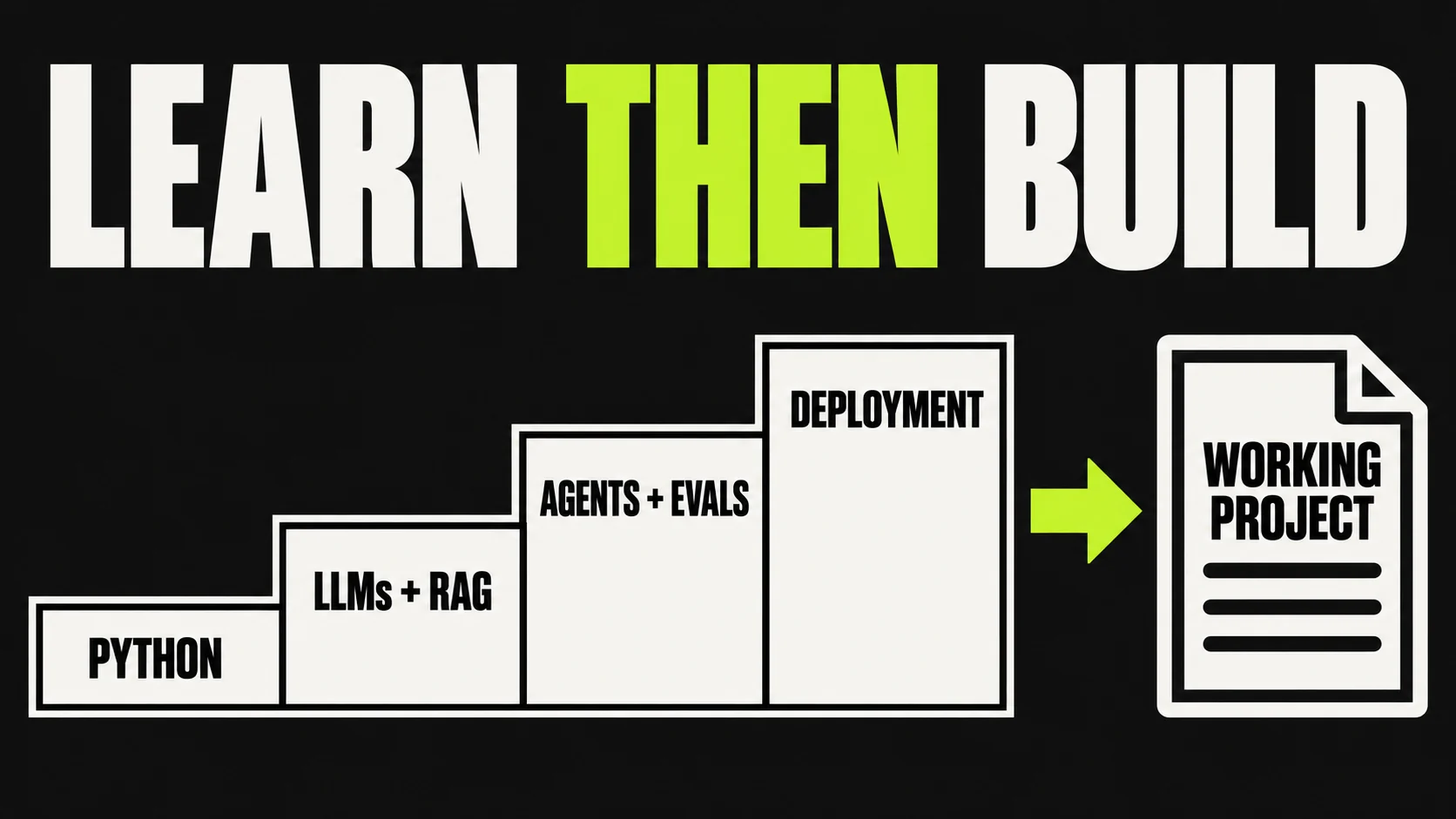
Choose courses to address the next gap in your project. The early resources below cover programming and model foundations; the later ones cover retrieval, agents, evaluation, and deployment. You do not need to finish the whole list before building. Complete a relevant unit, use the idea in your own application, and return when another gap gives the next lesson a purpose.
1. Python for Everybody (University of Michigan, Coursera)
Python for Everybody is a suitable starting point if writing a function or reading a file still feels unfamiliar. The specialization covers programming, data structures, web data, and databases. Use its exercises to build confidence with the information your AI application will receive and store. After a lesson, write a small program using your own fictional store records so you can check whether you understood the idea without copying the example.
2. Machine Learning Specialization (DeepLearning.AI and Stanford Online, Coursera)
The Machine Learning Specialization helps you understand learning from data, supervised models, and evaluation. It is useful if you can call a model but struggle to explain training, overfitting, or a test set. You do not need to pause all application work while studying it. Use the concepts to improve how you compare systems and separate development examples from later checks.
3. ChatGPT Prompt Engineering for Developers (DeepLearning.AI)
ChatGPT Prompt Engineering for Developers is an introduction to using model APIs for tasks such as summarization, transformation, and conversation. It suits a learner who can read basic Python and wants to practice instructions through code. Treat the prompting principles as the lesson, and check current provider documentation when an older example uses a changed API. Add one exercise to your assistant and test it on a case outside the course notebook.
4. LLM Course (Hugging Face)
The Hugging Face LLM Course introduces transformer models and the libraries used to work with them. Use it to understand tokenizers, datasets, and model adaptation after the basic API workflow feels comfortable. It is a useful route for readers who want to inspect more of the model pipeline. Keep an experiment small enough that you can explain the inputs and inspect the output before moving to a larger model.
5. Building and Evaluating Advanced RAG (DeepLearning.AI)
Building and Evaluating Advanced RAG connects retrieval techniques with ways to evaluate the resulting system. Take it after you have built a basic document assistant and can inspect the passages it retrieves. Compare a technique from the course against your existing baseline using the same questions. Keep the added method only if its result helps with a failure you can identify in your own project.
6. AI Agents Course (Hugging Face)
The Hugging Face AI Agents Course covers agent foundations and introduces implementations through several frameworks. It suits a learner who can call an LLM and wants to understand how tools and intermediate results fit into a task. Build one small agent alongside the course, with permissions you define yourself. A course accomplishment can record your study, while the project shows how you handled the application’s own constraints.
7. Evaluating AI Agents (DeepLearning.AI and Arize AI)
Evaluating AI Agents teaches tracing, component evaluation, and experiments for agent behavior. Use it once your assistant makes tool calls that you need to inspect. The work on code checks and model judges will help you choose a suitable evaluator for different parts of a task. Apply a lesson to one known failure, then preserve the example so you can detect the same failure after a later change.
8. Docker Get Started (Docker Docs)
The Docker getting-started material gives you an entry point for packaging and running an application. Work through it using a small service before containerizing the whole assistant. Learn what an image contains, how a running container gets configuration, and where persistent data should live. Finish by starting your application from the documented image and checking a complete request from outside the container.
9. Read technical books beside a project
A book is useful when you need a connected explanation that scattered tutorials do not provide. Choose one that matches your current problem, then read the relevant chapters with your project open. For model applications, focus on topics such as evaluation, retrieval, and deployment; for foundations, choose material that develops the math and learning concepts you cannot yet explain. The selection of AI and machine learning books can help you choose without adding several books to your study plan at once.
Keep a small resource list attached to the repository. Record which lesson helped with which decision, including any example you changed because the current API differed. That note is more useful than a long bookmark collection. You can return to a source with a clear reason and see how your understanding changed after using it.
AI engineering skills to learn become easier to organize around one working application. Use a course to close a gap, then produce something you can inspect in your own project. Keep the test cases that exposed a mistake. Compare changes under the same conditions before deciding that a new tool helped. Your study record should show what you learned and what you can now explain.
Which AI Engineering Certifications Are Worth Considering?
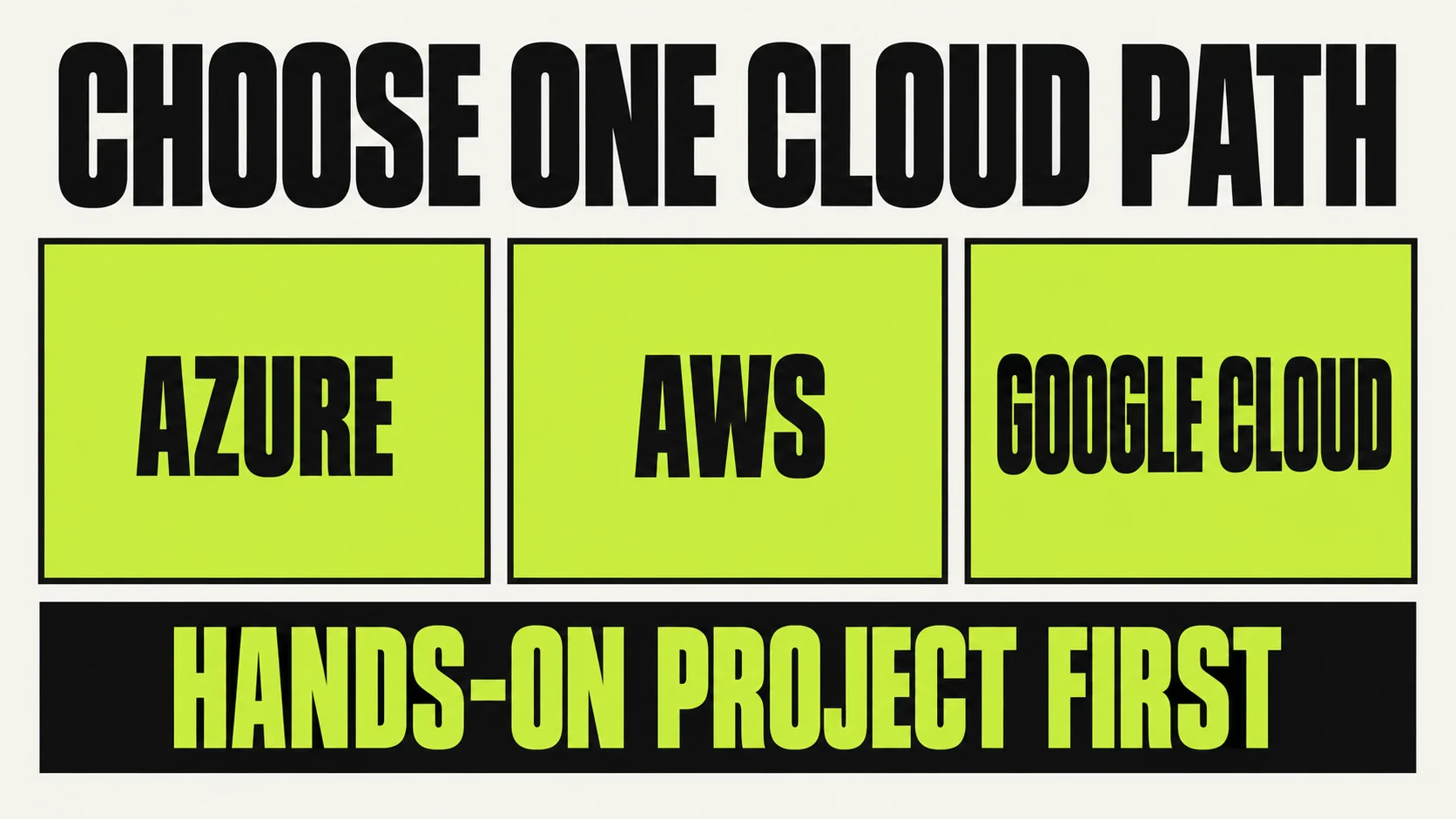
Choose a certification after you know which platform you want to use and have practiced its tools. A vendor exam checks knowledge within a defined scope; a course certificate records a different kind of accomplishment. Neither replaces a working project you can explain. The options below reflect official credential pages checked in October 2026, so revisit the current exam guide before committing to a preparation plan.
1. Azure AI Apps and Agents Developer Associate
Microsoft Certified: Azure AI Apps and Agents Developer Associate is the current Azure path associated with AI-103. It covers developing and deploying AI solutions using Python and Microsoft Foundry, including generative AI and agentic work. Consider it if you want to build on Azure and can already write a small application. Use the exam objectives to identify platform-specific gaps after you have practiced the wider engineering concepts.
Older recommendations may point you toward Azure AI Engineer Associate and AI-102. Microsoft retired Azure AI Engineer Associate on June 30, 2026. Check the exact credential and exam code when selecting study material. An older course may still teach useful concepts, but that does not mean its exam preparation matches the credential you can take today.
2. AWS Certified Machine Learning Engineer, Associate
AWS Certified Machine Learning Engineer, Associate suits readers building and operating ML or AI workloads on AWS. Its updated MLA-C02 scope includes generative AI, foundation models, and agentic work alongside ML engineering. The official page lists MLA-C02 as a beta exam at the time of this check. Match your preparation to the version and language available when you register, because the older English exam has already reached its final testing date.
This is a path to consider after you have worked with AWS services and can connect them to your application. Practice data access, deployment, monitoring, and permissions in a small environment. Use the published exam guide to decide which areas still need study. Avoid treating familiarity with an LLM API as preparation for the whole cloud engineering scope.
3. AWS Certified Generative AI Developer, Professional
AWS Certified Generative AI Developer, Professional is an advanced option for developers with production experience. AWS targets candidates with application development experience and hands-on generative AI work. Consider it after you can build, deploy, and diagnose an AI application on the platform. A beginner can read the objectives to understand the direction of study while choosing a smaller project as the immediate next step.
Prepare by explaining decisions in a deployed system, including access control, retrieval, model use, and operations. Compare those decisions with the exam scope and fill the gaps through labs. Keep evidence of your own implementation beside the credential. You should be able to describe a failure and its repair without relying on an exam term as the explanation.
4. Google Cloud Professional Machine Learning Engineer
Google Cloud Professional Machine Learning Engineer covers building, evaluating, serving, and operating AI solutions on Google Cloud. The official page includes both conventional ML and foundation-model work, with data and operational responsibilities. Consider it if you want a broader ML engineering route on that platform. Read the current exam guide because product names and the covered services can change.
Keep your AI engineer learning path connected to one platform for your first serious certification effort. Use the service you deployed as a starting point for labs, then extend it where the exam scope requires more knowledge. Record what the project proves and what the certification assesses as separate evidence. That approach keeps your preparation connected to work you can demonstrate.
A Project Plan for the AI Engineering Skills to Learn
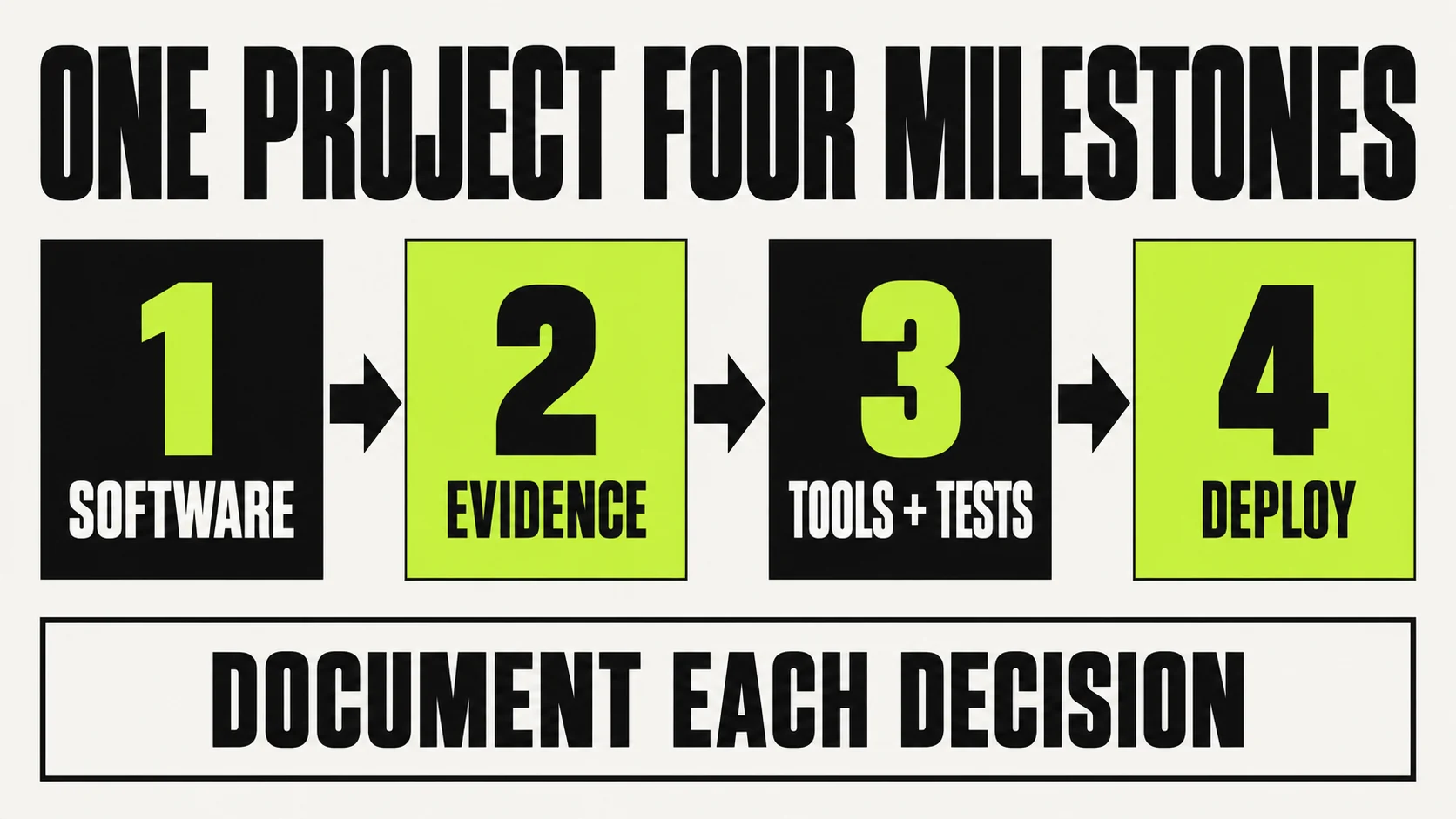
Use a project plan with observable milestones, and adjust the pace to your starting knowledge. An AI engineer learning path should give you a way to check progress before adding another topic. The four phases below can organize a month of work for a developer who already knows Python. A beginner may need much longer for the first phase. The schedule is a study scaffold, not a promise of job readiness or mastery within thirty days.
1. Days 1 to 7: Build the software foundation
Create a repository and a small set of fictional store documents. Write a program that reads them, then expose a search operation through an API. Add input validation and tests for a missing document or malformed request. Keep the first version small enough to run and inspect from your own terminal.
Finish the phase with instructions another person could follow. Include setup steps, sample inputs, expected results, and a description of the test data. Write down the parts you can explain without consulting the tutorial. Spend extra time on any part that still feels like a copied block of code, even if that means extending the schedule.
2. Days 8 to 14: Add model responses and retrieval checks
Connect a model and request a structured response from retrieved evidence. Create a small set of questions with supporting passages you have identified yourself. Add questions with ambiguous wording and questions the documents cannot answer. Inspect the evidence before judging whether the finished response sounds useful.
Compare one retrieval change against the original search method. Keep the model and question set fixed during that comparison. Record an improvement and a failure you still need to address. Your milestone is an assistant whose answers you can investigate, with evidence and configuration saved beside the result.
3. Days 15 to 21: Add tools and an evaluation runner
Give the assistant a mock order lookup and a ticket-drafting operation. Define who can access an order and require a review step before the draft becomes a completed action. Add a simulated timeout and a repeated request. Verify that the system stops or recovers in the way you intended.
Build an evaluation runner for your saved cases and inspect the trace of a failed task. Separate answer mistakes from access failures and tool-execution failures. Write a short report using the same task definitions you chose before the run. You should be able to explain why each example passed or failed without relying on the model’s own confidence.
4. Days 22 to 30: Deploy and document the system
Package the service, deploy it in a controlled environment, and add health checks and application limits. Use fictional data in any public demonstration. Test a complete request, a provider failure, and a rollback. Record the configuration needed to reproduce the deployment without publishing secrets.
Finish with a design note and a brief demonstration. Show a normal task and a task the assistant cannot complete. Explain the baseline, your chosen approach, a failed experiment, and the reason for the next improvement you would make. That demonstration turns the AI engineering skills to learn into evidence another person can inspect.
5. Adapt AI engineering projects for beginners
After the first version works, change the domain or a requirement that affects the design. A university help desk might need access restrictions by student role, while a software documentation assistant might need version-specific search. Keep the model interface familiar and change the part that tests your understanding. You will see which decisions were general and which depended on the store example.
You can also build a separate evaluation tool that compares two versions of your assistant. Let a reviewer inspect changed answers, retrieved evidence, and task outcomes. This is a useful extension of AI engineering projects for beginners because it makes your method visible. It also gives you a project you can improve as your understanding of measurement grows.
Common Mistakes and Terms You Should Be Able to Explain
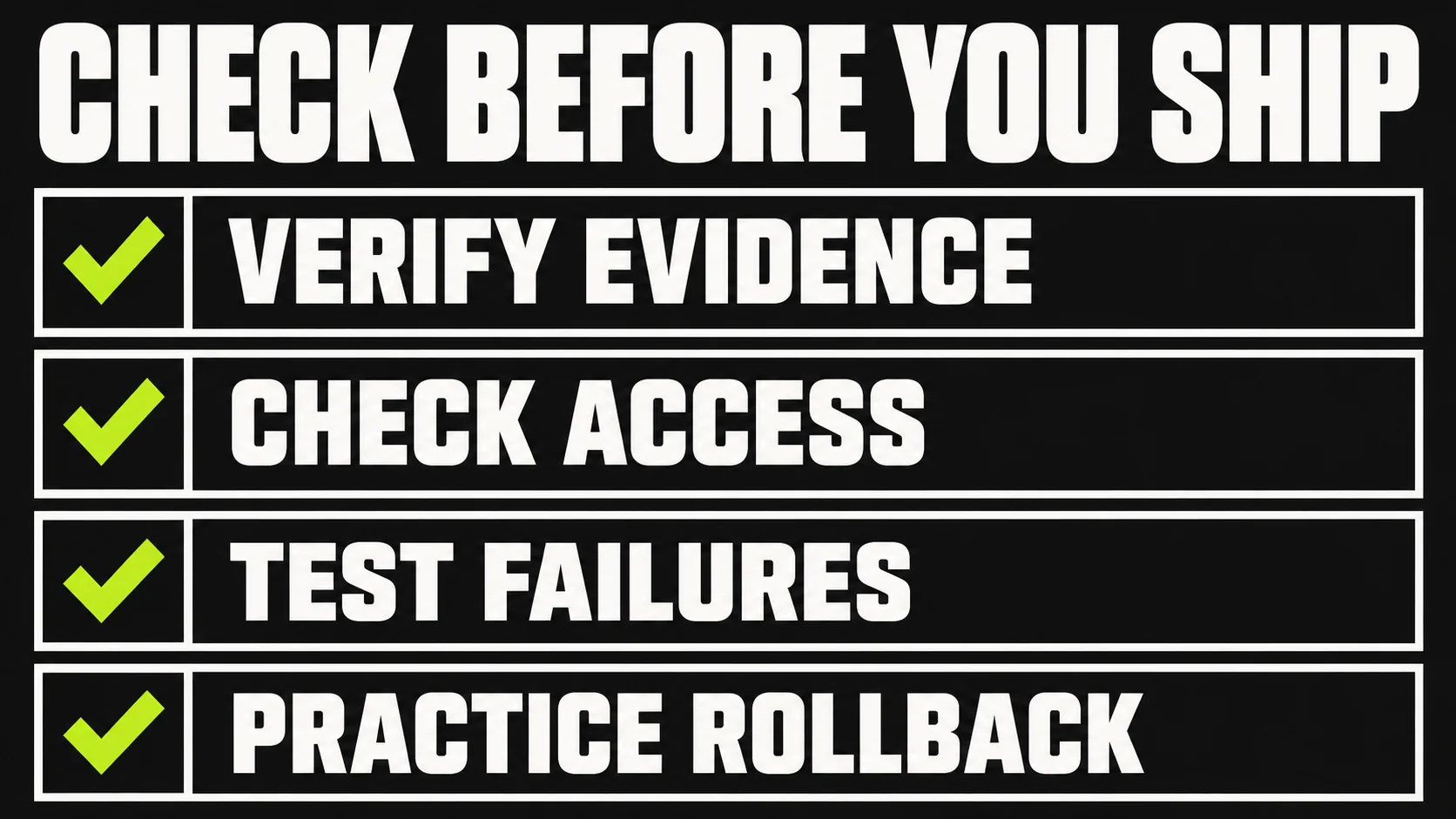
The most useful checks concern evidence, permissions, and reproducibility. A project can look polished while you still cannot explain its failures or rebuild its environment. Review those weaknesses before adding another framework or certificate. Use the questions below as a self-assessment after each milestone, with your repository open beside you.
1. Avoid learning through an endless collection of demos
Tutorials help you begin, but repeated setup can consume the time you need for debugging and evaluation. Keep one application long enough to encounter document changes, failed calls, and conflicting requirements. Add a framework only when you can name the problem it helps solve. Preserve the earlier version so you can compare the new behavior with a baseline.
Do not hide failures in a portfolio presentation. Show a case where retrieval missed the evidence or a tool stopped because access was unavailable. Explain the repair or the limit you chose to keep. A reader can assess your judgment more easily when the demonstration includes conditions under which the system should stop.
2. Check generated code and model-written explanations
Review code before running it against real services, especially when it reads files, sends data, or changes records. Trace the path of a credential and inspect the destinations of external requests. Ask for an explanation of unfamiliar code, then verify the explanation with a small test. A convincing description can still omit an error path you need to handle.
Apply the same care to written project claims. Distinguish what you built, what you measured, and what you plan to add. Use the conditions of your own experiment when reporting a result. A small, accurate account gives another developer a basis for reproducing your work and asking useful questions.
3. Explain model and retrieval terms in plain language
A token is a unit of text the model processes, while a tokenizer converts text into those units. An embedding is a numerical representation used to compare properties such as semantic similarity. A context window is the model’s limit on the information handled in a request under its input and output rules. Inference is the process of running a trained model to produce a result.
A chunk is a piece of a document prepared for retrieval, and metadata records facts about that piece. Vector search compares embeddings; hybrid search combines retrieval signals such as keyword and vector matching. Reranking reorders candidate results with another scoring step. RAG places retrieved information into the input used to generate an answer.
4. Explain agent and operations terms through your project
A tool call is a structured request for a software operation, and a schema defines the expected shape of data. State records the current task’s information, while memory retains information for later use. A trace records execution steps, and an evaluation case defines an input with criteria for judging the result. A regression is a behavior that worked before a change and fails afterward.
A container runs a packaged application in an isolated process environment, while CI runs checks on changes. Latency is the time required to return a result, and a rate limit restricts request frequency or usage. Idempotency lets a service handle a repeated operation without an unintended duplicate effect. A rollback restores a previous release, subject to the data and configuration changes your system must also handle.
Use these explanations to test your understanding with another person. For AI engineering projects for beginners, a short explanation tied to working code is a useful progress check. Choose a term, point to its role in your application, and describe a failure involving it. Return to the relevant lesson if you can recite the definition but cannot connect it to your code. That connection is the practical purpose of studying the vocabulary.
Conclusion
The AI engineering skills to learn connect through the work of building a usable application. Python lets you organize and inspect the software. LLM knowledge helps you choose inputs and response formats. Retrieval supplies evidence, agents add controlled actions, and evaluation helps you judge the result. Deployment and system design bring those parts into an environment where other people can use them.
Start with a problem you understand well enough to judge an answer. Keep the application small, save your experiments, and practice failure recovery alongside the normal workflow. Choose courses and a platform certification when they address a gap you can name. Your progress will be easier to explain when each learning step leaves behind code, a test, or a decision another person can inspect.
Frequently Asked Questions
1. What are the AI engineering skills to learn for 2027?
The AI engineering skills to learn are Python and software engineering, LLM fundamentals, retrieval, agents, evaluation, cloud deployment, and system design. Begin with a small program you can test, then add model behavior and evidence retrieval. Practice evaluation from the first version instead of leaving it until deployment. Use 2027 as a study horizon while checking current tools and course information as you work.
2. Is Python enough for AI engineering?
Python is a useful foundation, but an AI application also requires knowledge of APIs, data handling, testing, and deployment. You need to understand the model’s behavior and the task your application performs. SQL can help when the project uses a relational database, and web skills help with an interface. Learn those additions through the needs of a small project.
3. Should I learn machine learning before building LLM applications?
You can begin a small LLM application while studying machine learning foundations. Learn training, inference, overfitting, and evaluation early enough to understand the experiments you run. Add mathematical detail as you encounter it in retrieval or model adaptation. Training-focused roles require a deeper path than an introductory application built around an existing model.
4. Should I learn RAG or fine-tuning first?
Start with retrieval if your application needs answers from documents that change or belong to a particular organization. RAG gives you a way to inspect the evidence supplied to the model. Fine-tuning adapts model parameters and requires a suitable training and evaluation process. Consider it after you can describe the behavior you want to change and compare it with simpler approaches.
5. Do I need to learn several agent frameworks?
You can learn the foundations with one implementation and a small set of tools. Focus on tool arguments, state, permissions, stopping rules, and failure recovery. Compare another framework after you can explain the limits of your first application. Framework familiarity becomes more useful when you can connect its abstractions to behavior you have already implemented.
6. Are AI agents necessary for every AI application?
An AI application can use a model within a fixed workflow without giving it control over the next step. Use that approach when the task has a clear sequence you can define in code. Add agent behavior where choosing among actions helps complete the task. Measure the result and inspect the extra failure paths before expanding that freedom.
7. How do I know whether my RAG project works?
Create questions with supporting evidence you can identify and check whether retrieval returns that evidence. Then inspect whether the answer follows the retrieved material and handles missing information. Include document updates, ambiguous questions, and access restrictions in your checks. Save the examples and compare them again after changes to the model or retrieval process.
8. Which certification should a beginner choose?
Choose a platform after you have practiced building and deploying a small application on it. Read the current certification scope and compare it with your experience. A course accomplishment can support your study record while you build toward a role-based vendor exam. Keep a working project beside any credential so you can explain what you implemented yourself.
9. Is Azure AI-102 still the right exam to prepare for?
Microsoft retired Azure AI Engineer Associate, the credential associated with AI-102, on June 30, 2026. The current Azure AI Apps and Agents Developer Associate path uses AI-103. Check Microsoft’s current exam guide before choosing preparation material. Older content may explain useful concepts while covering a different exam scope.
10. Can I learn these skills in thirty days?
Thirty days can organize a focused project if you already have the programming background it requires. It is not a reliable estimate for mastering the full set of skills. A beginner may spend that period learning Python and building a tested service. Use the milestones to judge progress and extend the schedule when you need more practice.
11. What should an AI engineering portfolio project contain?
Include a working application, clear setup instructions, representative tests, and an evaluation report. Show the evidence behind answers and the outcome of tool actions where relevant. Add a design note explaining a choice and the conditions that would make you revisit it. A demonstration should include a failure or an unresolved case you can explain.
12. Do I need Kubernetes to deploy my first AI project?
You can learn deployment through a smaller application platform or a single controlled service. Begin with packaging, configuration, authentication, health checks, and a rollback process. Study Kubernetes when an application’s orchestration needs give you a reason to use it. Adding it before you can explain a basic deployment can make failures harder to isolate.
13. Should I use AI tools while learning to code?
An AI coding assistant can explain unfamiliar code and suggest exercises or tests. Review its output, change inputs yourself, and check the behavior it claims to implement. Keep private data and service access under your control while experimenting. Your goal is to understand the resulting program well enough to diagnose it without depending on the assistant’s explanation.
14. How can I prepare for AI engineering interviews with this project?
Practice explaining a request from the interface through retrieval, model calls, tools, and storage. Bring an example of a failure, the evidence you collected, and the change you made. Explain a tradeoff involving quality, time, or cost under stated assumptions. Be clear about the parts you implemented and the parts you would still need to learn for a production setting.
Final Thoughts
A long list of AI engineering skills to learn can make it difficult to begin. You can see the distance between a small Python program and a deployed assistant, but you cannot yet see the smaller decisions between them. Work makes those decisions visible. A missing file gives you a reason to learn error handling, and a wrong passage gives you a reason to study retrieval.
Choose one part you can finish today. Create a repository, write a short fictional policy document, and build a program that reads it. Add a check for a missing file and explain the result in a README. If you already know how to do that, add the next behavior you cannot yet test with confidence.
Keep your early versions. You will want to see how your decisions changed after you found a failure or understood a concept you had copied before. A project journal also helps on the days when progress feels slow, because it records specific problems you can now solve. You do not need to turn each exercise into a public achievement.
Give yourself room to understand the work before expanding it. One application can teach you about code, evidence, model behavior, and the responsibility of allowing software to act. Start with a task small enough to inspect, and keep working until you can explain what happened when it went wrong.