If you want to know how to learn digital marketing from scratch in 2026, you are entering one of the most practical and flexible skill paths in the online world. Digital marketing is not just about posting on Instagram, running ads, or writing blogs. It is the complete process of attracting people online, building trust with them, helping them understand a product or service, and finally converting that attention into traffic, leads, sales, customers, subscribers, or brand growth. In simple words, digital marketing is how businesses grow on the internet.
Digital marketing is still highly relevant in 2026 because almost every business now needs an online presence. Whether it is a local coaching class, a personal brand, an e-commerce store, a SaaS startup, a restaurant, a doctor, a freelancer, a YouTuber, or a large company, everyone needs some form of digital marketing or online marketing. According to Adobe, digital marketing uses digital channels such as search engines, websites, social media, email, mobile apps and online advertising to promote products and achieve marketing goals. Coursera also defines digital marketing as the use of the internet and digital technologies to connect with customers.
The good thing is that you do not need to be from a marketing background to understand how to learn digital marketing from scratch in 2026. You can start as a complete beginner. You can learn the basics through free resources, practice on your own blog or social media page, build projects, create a portfolio, and then monetize the skill through freelancing, jobs, internships, affiliate marketing, blogging, YouTube, consulting, personal branding, agency services, or your own business. Google’s Digital Marketing and E-commerce Certificate says it is designed for learners with no degree or experience required, which makes digital marketing one of the more beginner-friendly career paths available online.
This article will explain how to learn digital marketing from scratch in 2026 in a simple, step-by-step way. We will cover what digital marketing is, why online marketing is still valuable, what digital marketers actually do, the main digital marketing skills to learn in 2026, the best online courses for digital marketing beginners, useful books, YouTube tutorials, tools, AI tools, career paths, monetization methods, beginner projects and FAQs.
What Is Digital Marketing?
Digital marketing is the process of promoting products, services, brands, creators, businesses, or ideas using online platforms and digital technologies. When a business uses Google Search, YouTube, Instagram, Facebook, LinkedIn, websites, blogs, email newsletters, online ads, influencer collaborations, landing pages, WhatsApp campaigns, or analytics tools to reach people, that comes under digital marketing.
To understand it from complete scratch, imagine a small business selling handmade candles. Earlier, that business might depend only on word of mouth, local shops, banners, or newspaper ads. But with digital marketing, the same business can create an Instagram page, build a Shopify or WordPress website, write blog articles about home decor, run Google Ads for “scented candles online,” collect emails from interested buyers, send discount campaigns, collaborate with influencers, retarget website visitors, and track which campaign brought actual sales. This complete online growth process is digital marketing.
Digital marketing is measurable, which is one of the biggest reasons businesses love it. In traditional marketing, if someone prints a newspaper ad, they may not know exactly how many people saw it and bought because of it. But in digital marketing, you can track website visits, clicks, impressions, leads, purchases, email open rates, ad costs, conversion rates, and return on ad spend. This is why digital marketing is not just creative work. It is a mix of creativity, psychology, writing, data, technology, strategy, and experimentation.
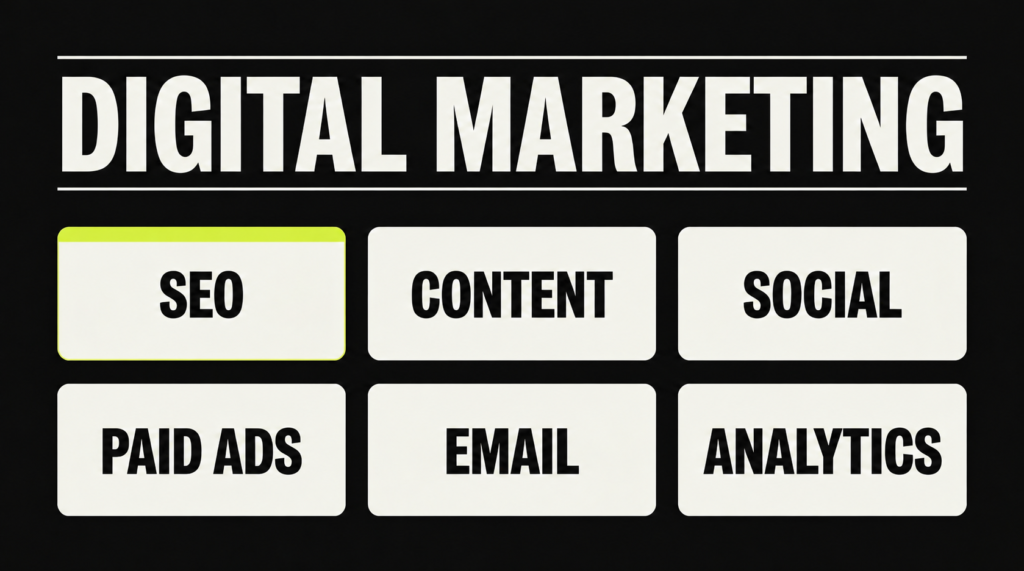
If you want to understand how to learn digital marketing from scratch in 2026, this is the first thing you should remember: digital marketing is not one single skill. It is a complete online marketing system. SEO brings search traffic. Content builds trust. Social media builds attention. Paid ads bring targeted traffic faster. Email marketing builds relationships. Analytics tells you what is working. AI tools help you research, plan and execute faster. All of these parts work together.
Why Learn Digital Marketing from Scratch in 2026?
You should understand how to learn digital marketing from scratch in 2026 because the internet has become the default place where people discover brands, compare options, read reviews, watch videos, research products, follow creators, and make purchase decisions. Google’s 2026 marketing trends article says people are still constantly looking for answers, solutions, products and connections through searching, streaming, scrolling and shopping.
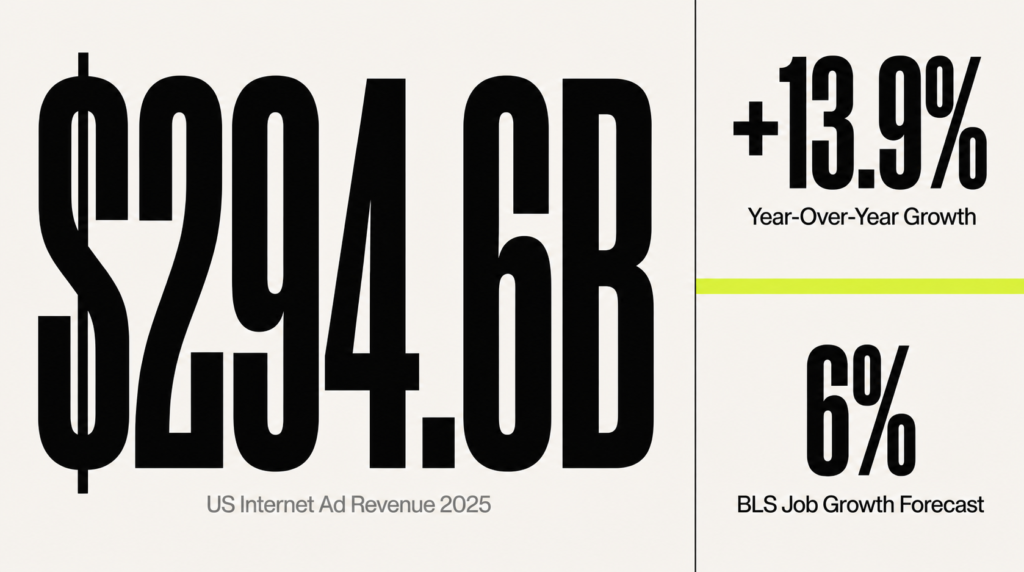
There is also strong market demand. The U.S. Bureau of Labor Statistics projects employment for advertising, promotions and marketing managers to grow 6 percent from 2024 to 2034, faster than average for all occupations. In India, LinkedIn public job results show thousands of digital marketing roles, including digital marketing strategist, social media manager, performance marketing executive and related positions.
Another reason is that digital marketing is not limited to jobs. You can use it for your own business, blog, YouTube channel, Substack, newsletter, affiliate site, e-commerce store, online course, personal brand, consulting service, or SaaS product. If you understand digital marketing, you understand how attention moves online. That alone is a powerful skill because every online business depends on attention, trust and conversion.
Digital advertising is also still growing. IAB and PwC reported that U.S. internet advertising revenue reached $294.6 billion in 2025, with 13.9 percent year-over-year growth. This shows that businesses are still spending heavily on online marketing channels, and the need for skilled people who can manage campaigns, content, data and strategy remains strong.
So, if you are asking how to learn digital marketing from scratch in 2026, the answer is not only “watch some YouTube videos.” The real answer is to learn digital marketing like a skill stack. You need to learn customer psychology, SEO, content, social media, paid ads, email marketing, analytics, AI tools and monetization together. These are the digital marketing skills to learn in 2026 if you want to become valuable.
What Do Digital Marketers Actually Do?
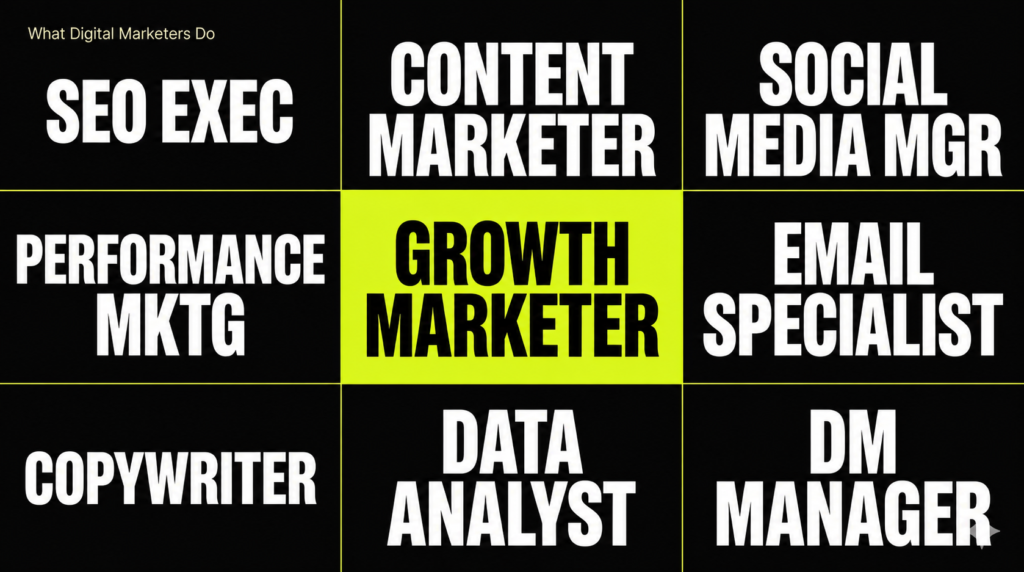
A digital marketer helps a business grow online. The exact work depends on the role, but the main responsibility is to bring the right people to the right offer using the right online channels. A digital marketer may research the audience, find keywords, create content, write ad copy, run paid ads, manage social media pages, optimize website pages, build email campaigns, analyze data, improve landing pages, and report results to the business owner or marketing team.
For example, if a company sells an online course, a digital marketer may first research what students are searching for on Google. Then they may create SEO articles around those topics, run Facebook and Google Ads, build a landing page, write email sequences, create Instagram Reels, test different ad headlines, track conversions in Google Analytics, and improve the campaign based on data. The work is not random. It is a structured online marketing system of attracting, engaging, converting and retaining customers.
Common digital marketing roles include:
- SEO Executive
- Content Marketer
- Social Media Manager
- Performance Marketing Specialist
- Email Marketing Specialist
- Marketing Analyst
- Growth Marketer
- Digital Marketing Manager
- E-commerce Marketing Specialist
- Marketing Automation Specialist
- Copywriter
- YouTube Marketing Specialist
- Affiliate Marketing Manager
If you want to know how to learn digital marketing from scratch in 2026, do not try to master all roles on day one. Start by understanding the complete digital marketing system first, then slowly specialize in one or two high-value skills. For example, you can start with SEO and content marketing, then add email marketing, then learn paid ads and analytics. This way, the digital marketing skills to learn in 2026 become easier to manage.
The Main Types of Digital Marketing
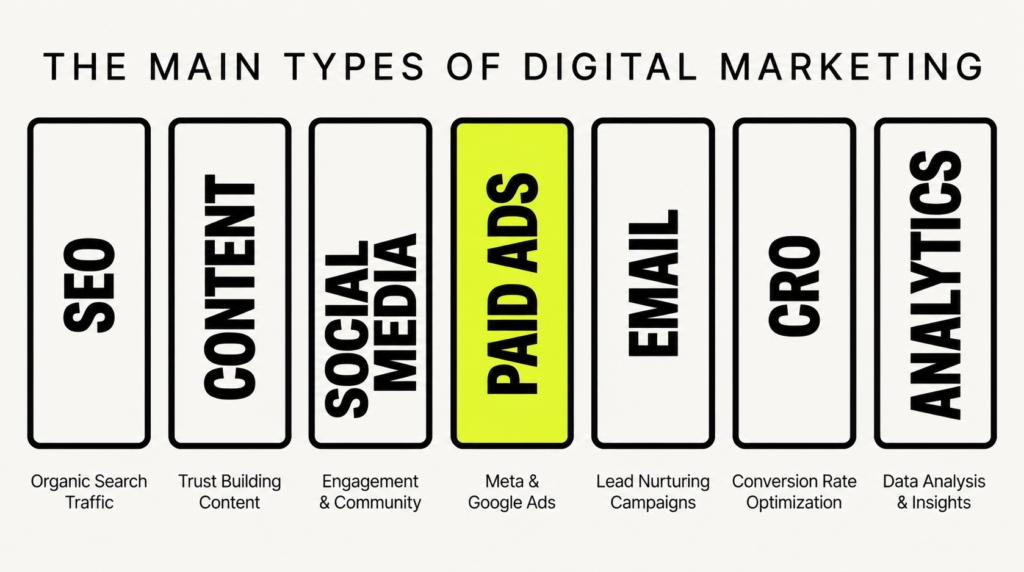
Digital marketing has many branches, but the main ones are SEO, content marketing, social media marketing, paid advertising, email marketing, analytics, conversion optimization, influencer marketing, affiliate marketing and marketing automation. These branches are connected to each other. A good digital marketer understands how they work together.
1. Search Engine Optimization, or SEO
SEO means improving your website or content so that it can appear higher on search engines like Google. If someone searches “best budget laptops for students” and your article appears on the first page, that traffic can come without paying for ads. Google’s SEO Starter Guide explains that SEO is about helping search engines understand your content and helping users find your site through search.
SEO includes keyword research, on-page SEO, content quality, internal linking, backlinks, technical SEO, page speed, mobile usability, user intent and search performance tracking. If you want to make money through blogging, affiliate marketing, niche websites, local business websites, SaaS content or long-term organic traffic, SEO is one of the most important digital marketing skills to learn in 2026.
2. Content Marketing
Content marketing means creating useful content that attracts and educates your target audience. This content can be blog posts, videos, newsletters, social media posts, podcasts, ebooks, case studies, templates, guides, webinars or infographics. The goal is not just to create content for the sake of posting. The goal is to solve real problems, answer real questions, build trust and move people closer to a product, service or brand.
For example, a fitness coach can write articles about fat loss, create YouTube videos about home workouts, post Instagram Reels about diet mistakes, and offer a free meal plan in exchange for email signups. This is content marketing. It builds authority before selling. If you want to understand how to learn digital marketing from scratch in 2026, content marketing should be one of your first learning areas because it teaches you research, writing, positioning and audience understanding.
3. Social Media Marketing
Social media marketing means using platforms like Instagram, Facebook, LinkedIn, X, YouTube, Pinterest, TikTok and Threads to grow brand awareness, engagement, community and sales. This includes creating posts, short videos, carousels, stories, live sessions, social campaigns, influencer collaborations and paid promotions.
In 2026, social media marketing is not just about posting motivational quotes. It is about understanding platform culture, storytelling, short-form video, creator-led content, community building, comments, DMs, social proof and content distribution. Social media marketing is one of the most visible digital marketing skills to learn in 2026 because businesses need consistent content and audience engagement.
4. Paid Advertising
Paid advertising means paying platforms like Google, Meta, YouTube, LinkedIn or other ad networks to show your message to a selected audience. Google Ads, Meta Ads, YouTube Ads and LinkedIn Ads are common examples. Paid ads can bring faster results than organic marketing, but they require proper targeting, copywriting, landing pages, tracking and budget control.
Google Skillshop offers official Google Ads training and certifications for Search, Display, Measurement, Video and Shopping campaigns. WordStream’s PPC University is another useful free resource for understanding pay-per-click advertising.
5. Email Marketing
Email marketing means building a list of people who have given permission to receive updates from you, then sending them useful emails, newsletters, offers, product updates or educational content. Email is powerful because you own the audience more than you do on social media platforms. Your Instagram reach can drop because of an algorithm change, but your email list remains a direct communication channel.
Mailchimp Academy offers email marketing certification and learning paths where beginners can learn about audience segmentation, tags, groups, objectives and email strategy.
6. Analytics and Measurement
Analytics means tracking what is working and what is not. A digital marketer must know how to read data. This includes website traffic, conversions, cost per click, click-through rate, bounce rate, engagement rate, email open rate, return on ad spend and customer acquisition cost.
Google Analytics 4, Google Search Console, Google Tag Manager and Looker Studio are important tools here. Google says Analytics Academy on Skillshop provides free courses designed by analytics experts to help users get the most out of Google Analytics. Google Search Console helps measure search traffic and fix issues in Google Search results.
7. Conversion Rate Optimization
Conversion Rate Optimization, or CRO, means improving a website, landing page, form, checkout page or sales page so that more visitors take action. That action can be signing up, buying, booking a call, downloading a guide or subscribing to a newsletter.
For example, if 1,000 people visit your landing page and 20 people sign up, your conversion rate is 2 percent. If you improve the headline, proof, offer, page speed and call-to-action, and now 50 people sign up, your conversion rate becomes 5 percent. This means you got more results from the same traffic. CRO is one of the underrated digital marketing skills to learn in 2026 because it directly improves revenue without needing more traffic.
The Core Skills You Need to Learn Digital Marketing from Scratch in 2026
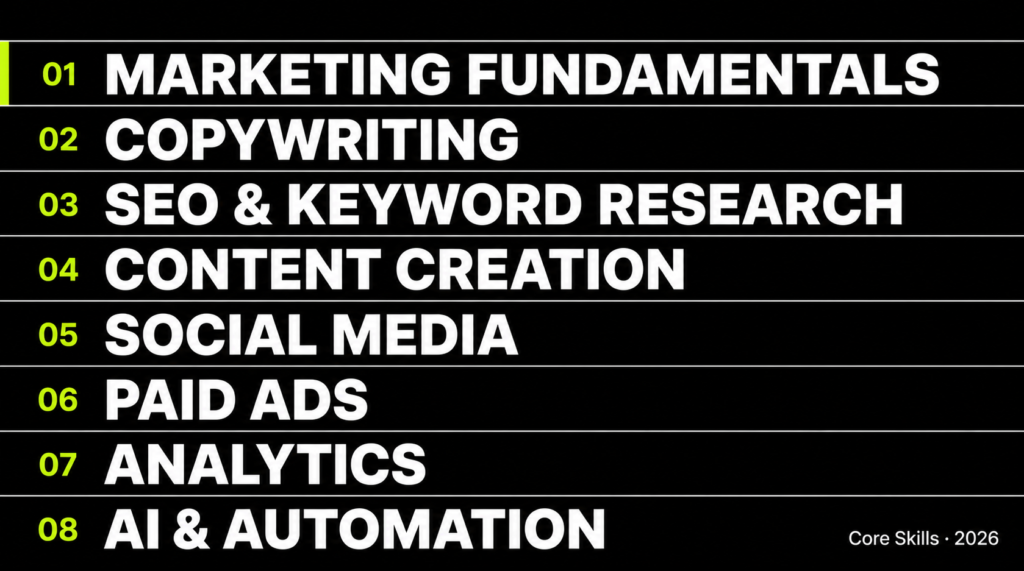
If you want to understand how to learn digital marketing from scratch in 2026, you need to build a strong base. Digital marketing is not one skill. It is a skill stack. The more connected your skill stack becomes, the more valuable you become.
1. Marketing Fundamentals
Before tools, platforms and AI, you need to understand the basics of marketing. Marketing is about understanding people. Who are they? What problem do they have? What do they want? What are they afraid of? What options are they comparing? Why should they trust you? Why should they act now?
Learn concepts like target audience, buyer persona, positioning, value proposition, customer journey, sales funnel, offer creation and brand messaging. Without these fundamentals, you may learn tools but still fail to create results. This is why marketing fundamentals should be the first digital marketing skill to learn in 2026.
2. Copywriting
Copywriting is writing that persuades people to take action. It is used in ads, landing pages, emails, social media captions, product pages, YouTube titles, website headlines and sales pages. Good copywriting is not about using fancy English. It is about clarity, emotion, benefits, proof and action.
A beginner should learn how to write clear headlines, strong hooks, simple offers, benefit-focused descriptions and clear calls to action. If you can write well, your ads, emails, posts and landing pages will perform better. Copywriting is one of the most valuable digital marketing skills to learn in 2026 because almost every online marketing channel needs strong writing.
3. SEO and Keyword Research
Keyword research is the process of finding what people are searching for. If you understand keyword research, you can create content that has demand. Tools like Google Trends, Google Keyword Planner, Ahrefs, Semrush and AnswerThePublic can help you understand search demand and questions.
Google Keyword Planner helps advertisers discover new keywords and estimate search campaign performance. Google Trends helps explore search interest by time, location and popularity.
4. Content Creation
Content creation is the ability to turn ideas into useful articles, videos, posts, carousels, newsletters or guides. A good content marketer knows how to research, structure, write, edit, repurpose and distribute content.
In 2026, content creation is becoming more competitive because AI tools can generate average content quickly. This means human insight, personal experience, examples, opinions, proof, original research and better storytelling matter more than ever. HubSpot’s 2026 State of Marketing report highlights that as AI floods the market with content, brands need a clear point of view to stand out.
5. Paid Ads
Paid ads are important if you want faster traffic and leads. Start with Google Ads and Meta Ads. Learn campaign objectives, targeting, keywords, bidding, ad copy, creatives, landing pages, conversion tracking and testing.
Paid ads can be high-paying because businesses directly connect this skill with revenue. If you can spend ₹10,000 and generate ₹50,000 in sales profitably, a business will value your skill. But paid ads also carry risk because bad campaigns can waste money quickly. So learn with small budgets, case studies and simulations before managing large client accounts.
6. Analytics
Analytics separates guesswork from real marketing. You need to know what data means. If traffic is increasing but sales are not, the problem may be conversion. If ads get clicks but no leads, the problem may be landing page mismatch. If emails are not getting opened, the subject line or audience quality may be weak.
Google Analytics, Search Console, Looker Studio and spreadsheet skills are enough for beginners. Later, you can learn advanced dashboards, attribution, cohort analysis and customer lifetime value. Analytics is one of the most important digital marketing skills to learn in 2026 because companies want marketers who can prove results, not just create activity.
7. AI and Automation
AI is now part of digital marketing. You can use AI for research, content outlines, ad variations, email drafts, customer persona creation, keyword clustering, content repurposing, competitor analysis, landing page ideas and campaign brainstorming. But AI should not replace thinking. It should speed up research and execution.
Salesforce’s State of Marketing report is based on insights from nearly 4,500 marketers and focuses on AI, data and personalization in modern marketing. McKinsey’s 2025 AI survey also notes that AI adoption is growing, but scaling real impact still requires strategy, governance, talent, data and adoption practices.
Along with digital marketing skills, AI-related skills are becoming equally important in 2026. If you want to increase your earning potential and future-proof your career, you should also focus on high-value AI skills. I have covered this in detail in 7 AI Skills That Lead to High-Paying Jobs in 2026, where I explain exactly what to learn, how to learn it, and how people are turning those skills into real income opportunities.
Best Online Courses to Learn Digital Marketing in 2026
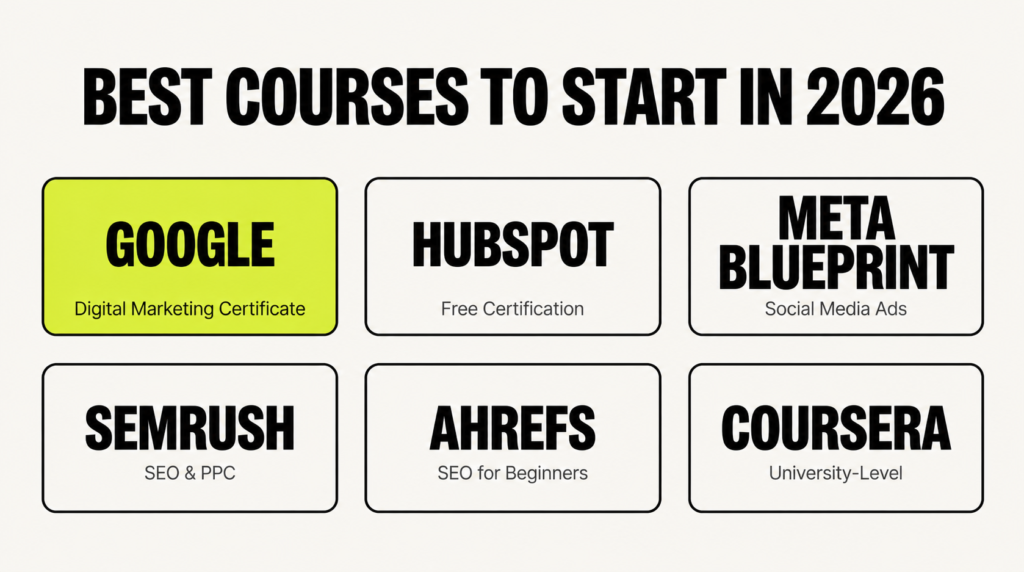
If you want to understand how to learn digital marketing from scratch in 2026, online courses can give you structure. The best approach is to combine one complete beginner course with specialized courses for SEO, ads, analytics, email and social media. Do not collect 20 certificates without practice. Choose a few strong courses and build projects while learning.
This section is important because many beginners search for the best online courses for digital marketing beginners, but they get confused because there are too many options. The right course depends on your goal. If you want a complete beginner foundation, start with Google or HubSpot. If you want SEO, use Ahrefs and Semrush. If you want paid ads, use Google Skillshop and Meta Blueprint. If you want a university-style course, use Coursera or edX.
1. Google Digital Marketing & E-commerce Professional Certificate
The Google Digital Marketing & E-commerce Professional Certificate is one of the best online courses for digital marketing beginners because it is created by Google and is designed for learners with no degree or previous experience. It covers digital marketing foundations, customer engagement, content marketing, email marketing, analytics, e-commerce stores and customer loyalty. Google’s Grow page also says the certificate includes tools like Shopify, Mailchimp, Google Ads, Google Analytics, Canva, Constant Contact and Hootsuite.
This course is good for beginners who want a structured path and a certificate that looks credible on LinkedIn. You will not become an expert just by finishing it, but it can give you a strong foundation if your goal is to understand how to learn digital marketing from scratch in 2026 in a proper order.
2. Google Fundamentals of Digital Marketing on Skillshop
Google’s Fundamentals of Digital Marketing is a beginner-level course on Skillshop with around 40 hours of learning and an award on completion.
This is a good free or low-cost starting point for someone who wants to understand the broad basics before going deep. This course is useful if you want a simple overview of digital marketing, online business presence, search, advertising, analytics and customer behavior. For a complete beginner, this can be one of the first courses to take before moving into advanced digital marketing skills to learn in 2026.
3. HubSpot Academy Digital Marketing Certification
The HubSpot Academy Digital Marketing Certification is a free certification that covers inbound-first digital marketing, content, SEO, social media, email and more.
HubSpot Academy is especially useful for understanding inbound marketing, content strategy, lead generation and CRM-based marketing. This is a good course for beginners who want to learn how digital marketing fits into a customer-first business strategy. It is also useful for freelancers because many small businesses use HubSpot-style inbound methods. If you are searching for the best online courses for digital marketing beginners, this should be on your list because it is free, beginner-friendly and practical.
4. Meta Social Media Marketing Professional Certificate
The Meta Social Media Marketing Professional Certificate on Coursera is designed for people who want to build job-ready social media marketing skills. It covers social media strategy, content planning, campaign development, advertising and analytics across Meta platforms.
This is a strong choice if your goal is to become a social media marketer, Meta Ads beginner, content strategist or social media executive. If you want to understand how to learn digital marketing from scratch in 2026 with a focus on Instagram, Facebook and paid social media, this course is highly relevant.
5. Semrush Academy
Semrush Academy offers free courses in SEO, content marketing, PPC, social media, AI, competitive research and Semrush tools.
This is especially helpful if you want to learn SEO and content marketing with practical tool-based training. Use Semrush Academy after you understand basic digital marketing because it becomes more useful when you are ready to practice keyword research, competitor research, content optimization and SEO audits. For people who want to build practical online marketing skills, Semrush Academy is one of the best free learning resources.
6. Ahrefs SEO Course for Beginners
The Ahrefs SEO Course for Beginners is a free SEO training course that teaches keyword research, on-page SEO, link building and ranking basics.
This is excellent if you want to specialize in SEO, blogging, affiliate marketing, content websites or organic growth. If your main goal is to build websites, grow blogs, rank articles and attract organic traffic, Ahrefs is one of the best online marketing learning resources. SEO is one of the most practical digital marketing skills to learn in 2026 because it can help you get free long-term traffic.
7. Coursera Digital Marketing Specialization by University of Illinois
The Digital Marketing Specialization by the University of Illinois on Coursera is a more academic and structured specialization that covers digital marketing skills and customer behavior online.
This is better for learners who want a university-backed course and are interested in the strategy side of marketing. If you want something deeper than a quick tutorial and you want a structured view of online marketing, this specialization can be useful.
8. The Complete Digital Marketing Course, 12 Courses in 1 on Udemy
Udemy’s The Complete Digital Marketing Course, 12 Courses in 1 is a broad beginner-friendly course that covers SEO, YouTube marketing, Facebook marketing, Google Ads, Google Analytics and more.
This can be useful if you want one affordable course during a Udemy sale. But because Udemy course quality varies, always check the latest reviews, update date, instructor credibility and curriculum before buying. This course is useful for beginners who want a broad overview of many digital marketing topics in one place.
9. Wharton Fundamentals of Digital Marketing, Social Media and E-Commerce on edX
The Wharton Fundamentals of Digital Marketing, Social Media and E-Commerce course on edX is useful for learners who want a business-school style introduction to digital marketing, social media and e-commerce.
This is good for people who want a more premium, structured learning experience from a reputed institution. If your goal is not just to learn tools but also to understand digital strategy and consumer behavior, this course can be a good choice.
10. Google Ads and Google Analytics Certifications on Skillshop
Once you understand the basics, learn Google Ads and Google Analytics through Skillshop. Google Ads training helps you learn Search, Display, Measurement, Video and Shopping campaigns. Google Analytics Academy helps you understand GA4 setup, reports and business measurement.
These are important if you want to work in paid ads, performance marketing, analytics or e-commerce marketing. For beginners who want high-value digital marketing skills to learn in 2026, Google Ads and analytics should be taken seriously because companies care about measurable results.
Certifications can help you build credibility, especially when you are starting out. While digital marketing certifications are useful, AI certifications are becoming increasingly valuable as well. I have listed some of the most relevant options in 7 New AI Certifications That Could Land You a $100,000 Job, where you can find industry-recognized programs that actually add value to your profile instead of just collecting random certificates.
Best Books to Learn Digital Marketing, Marketing Psychology and Content Strategy

Courses teach tools and workflows, but books teach deeper thinking. If you want to understand how to learn digital marketing from scratch in 2026, read books that teach marketing psychology, copywriting, storytelling, content, persuasion and customer behavior.
1. Digital Marketing All-in-One For Dummies
Digital Marketing All-in-One For Dummies is a broad beginner-friendly book that covers digital marketing fundamentals in a simple way. It is useful if you want one big reference-style book to understand online marketing, content, traffic, email and customer journeys.
2. Digital Marketing For Dummies
Digital Marketing For Dummies is another beginner-friendly book from the For Dummies series. It is useful if you are completely new and want simple explanations without academic jargon.
3. They Ask, You Answer by Marcus Sheridan
They Ask, You Answer by Marcus Sheridan book is excellent for content marketing because the core idea is simple: answer the real questions customers ask. If you want to learn blogging, SEO content, trust-building content and sales-driven education, this book is highly relevant. Marcus Sheridan’s official page explains that “They Ask, You Answer” has become a standard for digital sales and marketing buy-in.
4. Building a StoryBrand by Donald Miller
Building a StoryBrand by Donald Miller book teaches how to clarify your message so customers understand what you offer. It is extremely useful for website copy, landing pages, brand messaging, ads, emails and personal branding. The official StoryBrand page says the book helps you craft a clear message and connect with customers.
5. Everybody Writes by Ann Handley
Everybody Writes by Ann Handley book is great for content writers, bloggers, marketers and creators. Ann Handley’s official page says the book teaches how to create better marketing writing and storytelling.
6. Influence by Robert Cialdini
Influence by Robert Cialdini book teaches persuasion principles such as reciprocity, social proof, authority, liking, scarcity, commitment and consistency. These ideas are useful in copywriting, landing pages, sales pages, ads and marketing psychology.
7. Contagious by Jonah Berger
Contagious by Jonah Berger book explains why ideas, products and stories spread. Jonah Berger’s official page says the book explores six principles behind word-of-mouth and social transmission.
8. Made to Stick by Chip Heath and Dan Heath
Made to Stick by Chip Heath and Dan Heath book teaches why some ideas are remembered and others are forgotten. The official Heath Brothers page says the book explains how to communicate ideas more effectively.
Along with marketing books, it is also worth reading AI-focused books that teach you how to use AI tools for making money and building online businesses. I have curated a list in 10 Best AI Books to Make Money in 2026, which can help you understand practical ways to use AI for content creation, automation, freelancing, and digital products.
Best YouTube Channels and Free Resources to Learn Digital Marketing
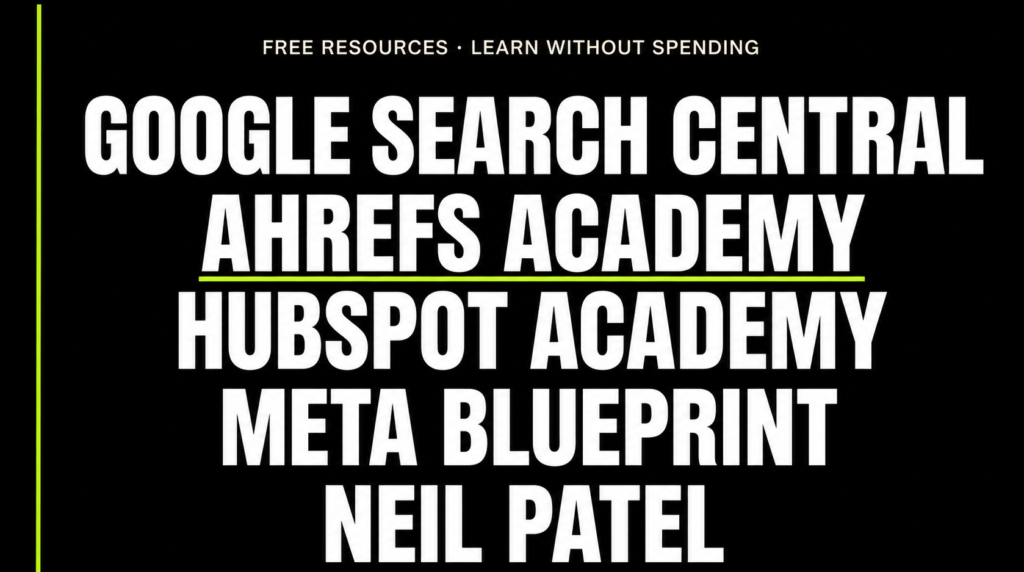
If you want to understand how to learn digital marketing from scratch in 2026 without spending too much money, YouTube and free academies are enough to start. But you need to learn with structure, not random videos. Free content is powerful, but only when you follow a roadmap. Start with fundamentals, then SEO, then content, then social media, then email, then analytics, then paid ads.
1. Google Search Central YouTube Channel
Google Search Central is the official YouTube channel from Google Search Central. It is useful for SEO, Google Search basics, technical SEO, search updates and best practices.
This channel is useful because SEO advice on the internet can be confusing and outdated. When you learn from Google’s own resources, you get a more accurate understanding of how Google Search works. If SEO is one of your main digital marketing skills to learn in 2026, this channel should be part of your learning routine.
2. Ahrefs YouTube Channel and SEO Course
Ahrefs is one of the best free resources for learning practical SEO. Their YouTube channel and academy are useful for keyword research, backlinks, content strategy and SEO tutorials.
Ahrefs teaches SEO in a very practical way. You can learn how to find keywords, analyze competitors, create link-worthy content, improve rankings and understand search intent. If you want to use digital marketing for blogging, affiliate marketing or organic growth, Ahrefs is one of the strongest free resources.
3. HubSpot Marketing YouTube Channel
HubSpot’s channel is helpful for inbound marketing, digital marketing basics, automation, content strategy, sales and marketing workflows.
HubSpot is useful because it explains digital marketing from a customer journey point of view. Instead of only teaching random tactics, it helps you understand how content, CRM, lead generation, email, sales and automation work together. This makes it useful for beginners who want to understand online marketing as a complete business system.
4. Neil Patel YouTube Channel and Free Training
Neil Patel’s YouTube channel and training hub cover SEO, social media, content marketing, email marketing, YouTube marketing, LinkedIn marketing and growth marketing. His training page lists free resources like SEO Unlocked, Content Marketing Unlocked, Instagram Unlocked, YouTube Unlocked, LinkedIn Unlocked and Email Marketing Unlocked.
Neil Patel’s content is useful for beginners because many videos explain digital marketing topics in simple language. It is especially useful if you want beginner-friendly explanations of SEO, content, traffic growth and social media marketing. When using this resource, focus on applying the lessons to a real project instead of only watching videos.
5. Google Search Central SEO Starter Guide
This is one of the most important free SEO resources because it comes directly from Google. Start here before following random SEO advice.
The SEO Starter Guide explains how to make your website understandable for search engines and useful for people. It covers basic SEO principles, content, site structure, links and search-friendly practices. If you are learning how to learn digital marketing from scratch in 2026, this guide can help you build a clean SEO foundation.
6. HubSpot Academy
HubSpot Academy has free courses and certifications for digital marketing, content marketing, social media, inbound marketing, email and more.
HubSpot Academy is useful because the courses are structured and beginner-friendly. You can learn digital marketing, inbound marketing, content marketing, email marketing and sales alignment in one place. It is one of the best free learning platforms for digital marketing beginners.
7. Meta Blueprint
Meta Blueprint provides free online training, webinars and certification resources for Facebook, Instagram, Messenger and Meta advertising skills.
Meta Blueprint is useful if you want to learn Instagram marketing, Facebook marketing, Meta Ads, campaign objectives, ad formats and business tools. Since many small businesses depend on Instagram and Facebook for leads and sales, Meta Blueprint is a practical resource for learning social media and paid ads.
8. Mailchimp Academy
Mailchimp Academy is useful for learning email marketing, email automation and audience segmentation.
Mailchimp Academy can help you understand how email marketing works from the inside. You can learn list building, segmentation, customer journeys, campaigns and email automation. Email marketing is one of the most underrated digital marketing skills to learn in 2026 because it helps businesses build direct relationships with their audience.
Best Digital Marketing Tools to Learn in 2026
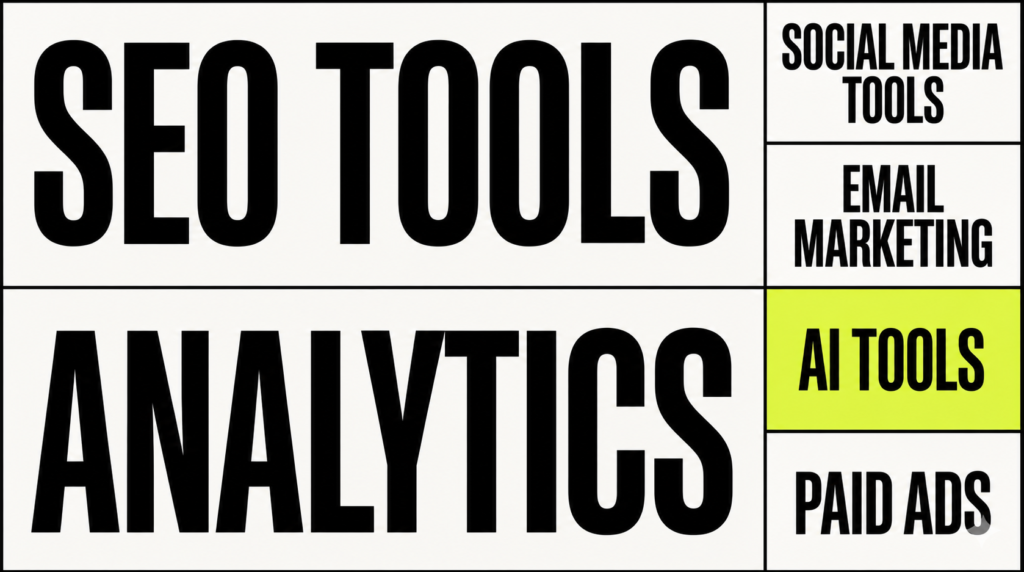
A beginner does not need 50 tools. Start with essential tools and slowly add advanced tools as your projects grow. If you are serious about how to learn digital marketing from scratch in 2026, learn tools by using them on actual projects. Do not just watch tutorials. Use Google Search Console on a real website. Use Canva to make real posts. Use Mailchimp or another email tool to send real emails. Use Google Analytics to track real visitors.
1. SEO and Keyword Research Tools
Start with Google Search Console, Google Trends, Google Keyword Planner, Ahrefs Webmaster Tools, Semrush and AnswerThePublic. These tools help you understand what people search, how your website performs, what keywords matter, and what topics you should create content around.
Useful links:
- Google Search Console:
Google Search Console helps you measure your website’s search traffic, see which keywords bring impressions and clicks, find indexing issues, submit sitemaps and understand how your website performs in Google Search. If you want to learn SEO as part of digital marketing, this tool is essential because it shows real data from your own website. - Google Trends:
Google Trends helps you understand whether a topic is rising, falling, seasonal or region-specific. For example, if you are writing content around online marketing, AI tools, SEO or social media, Google Trends can help you see whether people are actively searching for those topics. It is useful for content planning, niche research and timing your articles. - Google Keyword Planner:
Google Keyword Planner helps you discover keyword ideas and understand search demand, especially for Google Ads. Bloggers, SEO beginners and performance marketers can use it to find search terms, estimate competition and understand what people are looking for. It is especially useful if you are learning both SEO and paid search advertising. - Ahrefs Academy:
Ahrefs Academy teaches SEO, keyword research, link building, content strategy and practical ways to grow search traffic. Even if you do not use the paid Ahrefs tool immediately, the academy can help you understand how professional SEO works. - Semrush Academy:
Semrush Academy is useful for learning SEO, competitor research, PPC, content marketing, local SEO and social media. It is also helpful if you want to understand how agencies and professional marketers use SEO tools for client work. - AnswerThePublic:
AnswerThePublic helps you find questions people are asking around a topic. This is useful for blog ideas, FAQ sections, YouTube video ideas and customer research. If you are writing an article about how to learn digital marketing from scratch in 2026, AnswerThePublic can help you discover beginner questions like “Is digital marketing hard?” or “Can I learn digital marketing without a degree?”
AnswerThePublic says it helps users see real questions people are asking, which makes it useful for blog ideas, FAQs, SEO content and customer research.
2. Analytics Tools
For analytics, learn Google Analytics 4, Google Search Console, Google Tag Manager and Looker Studio. Google Tag Manager lets you configure and deploy website or app tags through a web interface, while Looker Studio helps turn data into dashboards and reports.
Useful links:
- Google Analytics:
Google Analytics helps you understand how people visit and use your website. You can see traffic sources, user behavior, engagement, conversions and important events. If you are learning online marketing, Google Analytics is important because it helps you move from guessing to measuring. - Google Analytics Academy:
Google Analytics Academy is useful for beginners who want structured learning around GA4. It helps you understand how to set up analytics, read reports, track events and use data for marketing decisions. - Google Tag Manager:
Google Tag Manager helps you manage tracking codes, pixels and tags without manually editing website code again and again. This is especially useful for marketers who run ads, track conversions, use analytics tools and manage multiple marketing platforms. - Looker Studio:
Looker Studio helps you create dashboards and reports from data sources like Google Analytics, Google Search Console, Google Ads and spreadsheets. This is useful if you want to show clients or employers clear reports about traffic, leads, conversions and campaign performance.
3. Social Media Tools
For social media, learn Canva, Buffer, Hootsuite, Meta Business Suite and native platform analytics. Buffer helps create, organize and repurpose content, and it also includes an AI assistant. Hootsuite is useful for managing and scheduling social media content.
Useful links:
- Canva:
Canva helps you create social media posts, carousels, YouTube thumbnails, presentations, lead magnets, posters and marketing visuals without advanced design skills. For beginners in digital marketing, Canva is one of the easiest tools to learn because visual content is needed everywhere. - Buffer:
Buffer helps you plan, schedule and publish social media content across different platforms. It is useful for managing consistency, organizing content calendars and repurposing content. If you are learning social media marketing, Buffer can help you understand how content planning works professionally. - Hootsuite:
Hootsuite is a social media management platform used for scheduling, monitoring and managing social media accounts. It is useful for businesses and agencies that handle multiple platforms and need a more organized workflow. - Meta Business Suite:
Meta Business Suite helps you manage Facebook and Instagram pages, messages, posts, insights and ads from one place. If you want to learn Facebook marketing, Instagram marketing or Meta Ads, this is an important tool to understand.
4. Email Marketing Tools
For email marketing, start with Mailchimp, ConvertKit, Brevo or HubSpot. Learn how to create forms, segment lists, write newsletters, build welcome sequences and track open rates and clicks.
Useful links:
- Mailchimp:
Mailchimp is useful for building email lists, creating newsletters, setting up email campaigns and learning basic email automation. It is beginner-friendly and widely used by small businesses, creators and marketers. - Mailchimp Academy:
Mailchimp Academy helps beginners understand email marketing strategy, segmentation, customer journeys and campaign planning. If you want to learn email marketing properly, this resource gives you structured lessons instead of random tips. - HubSpot Academy:
HubSpot Academy is useful for learning email marketing, inbound marketing, CRM, lead generation and automation. It is especially helpful if you want to understand how email fits into a larger digital marketing and sales system.
5. AI Tools for Digital Marketing in 2026
AI tools can speed up your digital marketing work, but you must use them carefully. AI can help you brainstorm content ideas, write first drafts, generate ad variations, create social media captions, summarize research, build customer personas, create email drafts and repurpose content. But do not blindly publish AI-generated content without fact-checking, editing and adding human insight.
Useful AI tools:
- ChatGPT:
ChatGPT can help with research, outlines, brainstorming, content drafts, ad copy, email drafts, customer persona ideas, campaign concepts and marketing strategy. For a beginner learning how to learn digital marketing from scratch in 2026, ChatGPT can act like a study assistant, but you still need to verify facts and improve the final output. - Canva Magic Design:
Canva Magic Design can help you quickly create visual ideas, social posts, presentations and marketing designs. This is useful for social media marketers, content creators and beginners who do not have advanced design skills. - Jasper:
Jasper is an AI writing and marketing platform built for content, campaigns and brand messaging. It can be useful for teams and marketers who want structured AI workflows for marketing copy and content production. - Surfer SEO:
Surfer SEO helps with SEO content optimization, keyword usage, content structure and search visibility workflows. It is useful for bloggers, SEO writers and content marketers who want to improve article optimization. - Grammarly:
Grammarly helps improve grammar, clarity, tone and readability. If you are writing blogs, emails, ads, landing pages or social media posts, Grammarly can help polish your writing before publishing. - Notion AI:
Notion AI is useful for planning, notes, content calendars, research organization, campaign planning and documentation. Digital marketers can use it to organize content ideas, client notes, weekly plans and project workflows.
OpenAI describes ChatGPT as an AI chatbot for everyday use that helps users explore ideas, solve problems and learn faster. Canva says Magic Design can auto-generate designs from text and media, while Jasper positions itself as an AI platform for marketing workflows.
Step-by-Step Roadmap to Learn Digital Marketing from Scratch in 2026
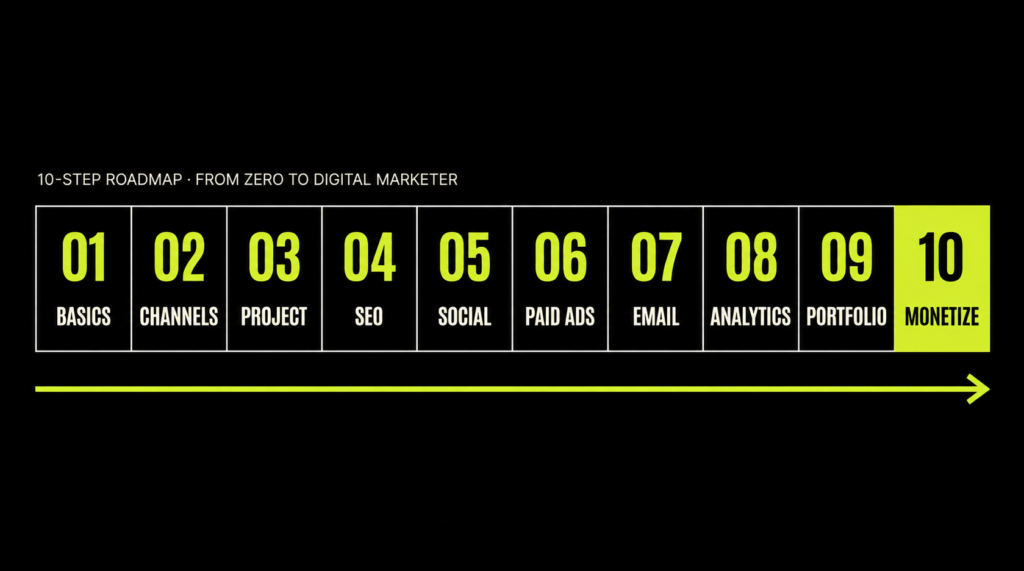
If you are a beginner, do not start by learning everything randomly. Follow a simple roadmap. This is the most practical answer to how to learn digital marketing from scratch in 2026.
Step 1: Learn the Basics of Marketing
Start by understanding what marketing is, how businesses make money, how customers make decisions, and how online platforms influence buying behavior. Learn target audience, customer pain points, offers, funnels, positioning and value proposition.
Step 2: Learn the Main Digital Marketing Channels
Study SEO, content marketing, social media marketing, paid ads, email marketing and analytics at a basic level. At this stage, your goal is not mastery. Your goal is to understand how each channel works.
Step 3: Pick One Practice Project
Create a simple blog, Instagram page, YouTube channel, newsletter, affiliate site or mock business. If you already have a business idea, use that. Digital marketing cannot be learned properly by only watching videos. You must practice.
For example, create a small WordPress blog and try to rank articles. Or create an Instagram page and test content formats. Or create a landing page and collect emails. Your project becomes your learning lab.
Step 4: Learn SEO and Content Deeply
SEO and content are the best beginner-friendly skills because you can practice without spending money on ads. Learn keyword research, search intent, article structure, internal linking, on-page SEO, content updating and Search Console tracking.
Step 5: Learn Social Media and Short-Form Content
Pick one or two platforms. For personal branding, LinkedIn and X can work well. For visual businesses, Instagram and Pinterest can work well. For education, YouTube and short-form video can work well. Learn hooks, storytelling, posting consistency, comments, profile optimization and content repurposing.
Step 6: Learn Paid Ads with Small Budgets
After organic marketing, learn Google Ads and Meta Ads. Start with theory, then practice with small test campaigns only if you can afford to experiment. Learn conversion tracking before spending serious money.
Step 7: Learn Email Marketing
Build a simple lead magnet, create a landing page, collect emails and send a weekly newsletter. Learn welcome sequences and basic automation. Email marketing teaches audience ownership, trust and conversion.
Step 8: Learn Analytics
Set up Google Analytics, Search Console and basic dashboards. Track what is working. Learn how to read traffic sources, search queries, conversions, engagement and campaign performance.
Step 9: Build a Portfolio
Create 3 to 5 case studies. These can be from your own project, a friend’s business, a mock project, a local business website, or a content experiment. A portfolio is more powerful than only certificates.
You should also create a simple portfolio website where you can show your digital marketing projects, case studies, services, results, content samples and contact details. For this, Framer is a great tool because it helps beginners build clean, modern and professional portfolio websites without heavy coding. You can use Framer to create a personal portfolio, a landing page for your services, or a case study website that shows your SEO work, social media strategy, email sequence, ad campaign or content calendar. If you are learning how to learn digital marketing from scratch in 2026, a Framer portfolio can make your work look more professional when you apply for internships, freelance clients or entry-level digital marketing jobs.
Step 10: Monetize the Skill
Once you have proof, you can apply for internships, freelance projects, entry-level jobs, content writing projects, SEO projects, social media management gigs, paid ads assistant roles, affiliate marketing, blogging or consulting.
How to Monetize Digital Marketing Skills
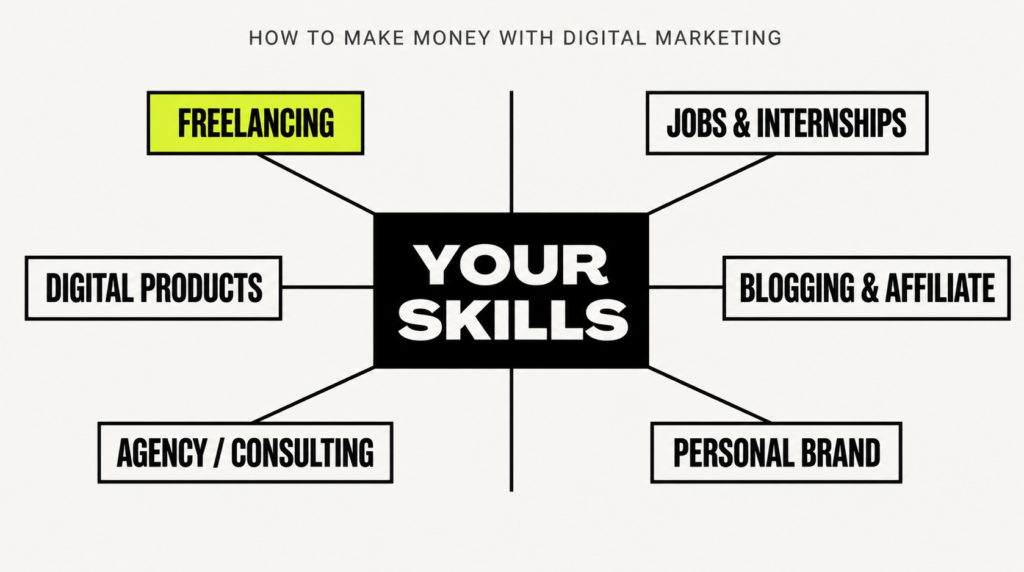
After you understand how to learn digital marketing from scratch in 2026, there are multiple ways to make money from digital marketing and online marketing skills.
1. Freelancing
You can offer services like SEO content writing, blog management, social media management, Instagram content planning, Google Business Profile optimization, email newsletters, landing page copy, Meta Ads management, Google Ads management or analytics reporting. Start with small businesses because they often need help but cannot afford big agencies.
2. Jobs and Internships
You can apply for roles like digital marketing intern, SEO executive, social media executive, content marketer, PPC trainee or marketing analyst. Entry-level roles may not pay huge money immediately, but they give you experience, systems and confidence.
4. Blogging and Affiliate Marketing
If you know SEO and content marketing, you can build a blog around a niche and monetize with affiliate links, sponsored posts, digital products, ads or lead generation. This takes time, but it can become a long-term asset.
5. Personal Brand
Digital marketing is perfect for building a personal brand. You can write on LinkedIn, X, Substack, Medium, your own blog or YouTube. If you consistently share useful content, you can attract clients, readers, sponsors, affiliate income and future business opportunities.
6. Agency or Consulting
Once you gain experience, you can create a small digital marketing agency or consulting service. You can help businesses with content strategy, SEO, paid ads, email funnels or full-stack online growth.
7. Selling Digital Products
You can sell templates, ebooks, mini-courses, Notion systems, marketing checklists, content calendars, SEO templates or ad copy templates. Digital marketing helps you not only create products but also sell them.
If you are thinking beyond freelancing or jobs and want to build something bigger, AI opens up massive opportunities for startups. I have shared some powerful ideas in 21 Billion Dollar AI Startup Ideas 2026, where you can explore scalable business ideas that combine AI with real-world problems. This is especially useful if you want to move from learning skills to building your own product or SaaS.
Why Digital Marketing Is Still Valuable in 2026 Despite AI
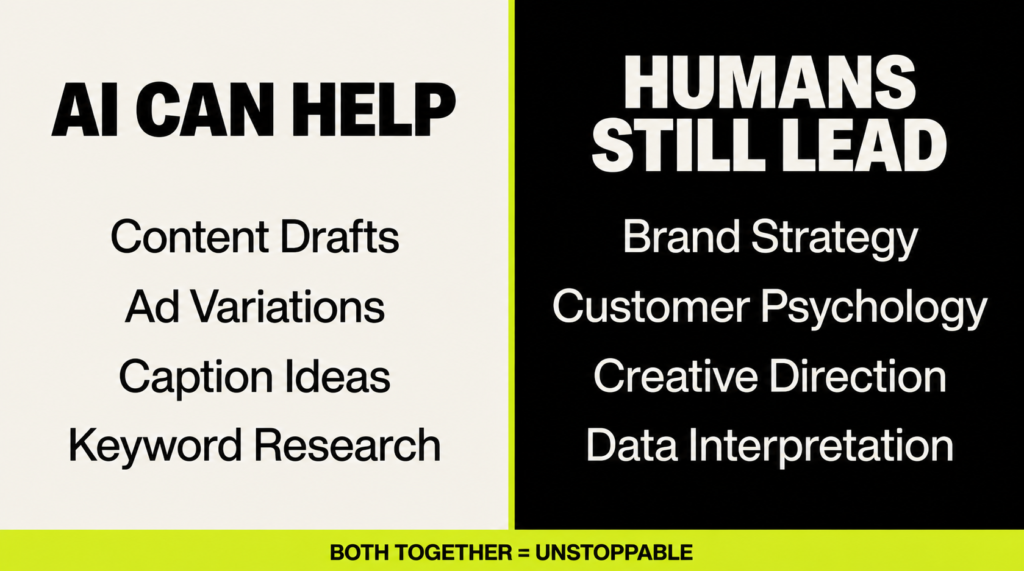
Some people think AI will replace digital marketers. The more accurate answer is that AI will replace weak, generic, tool-only marketers. But it will make strong marketers faster and more valuable.
AI can write a basic caption, but it cannot fully understand a brand’s lived experience, customer psychology, emotional positioning, cultural context, original opinion, business constraints and long-term strategy without human direction. AI can help create options, but a marketer still needs to choose the right angle, verify facts, understand the audience and connect marketing activity to business goals.
HubSpot’s 2026 marketing statistics page says over 92 percent of marketers plan on or already use SEO optimization for traditional and AI-powered search engines, while nearly 30 percent report decreased search traffic as consumers turn to AI tools. This means digital marketers now need to understand both traditional search and AI-influenced discovery.
The future digital marketer is not just a person who posts content. The future digital marketer understands SEO, AI search, content strategy, analytics, automation, human storytelling, platform behavior and business growth. That is why how to learn digital marketing from scratch in 2026 is not only about learning tools. It is about learning how attention, trust, data and conversion work together.
Beginner Projects to Build Your Digital Marketing Portfolio
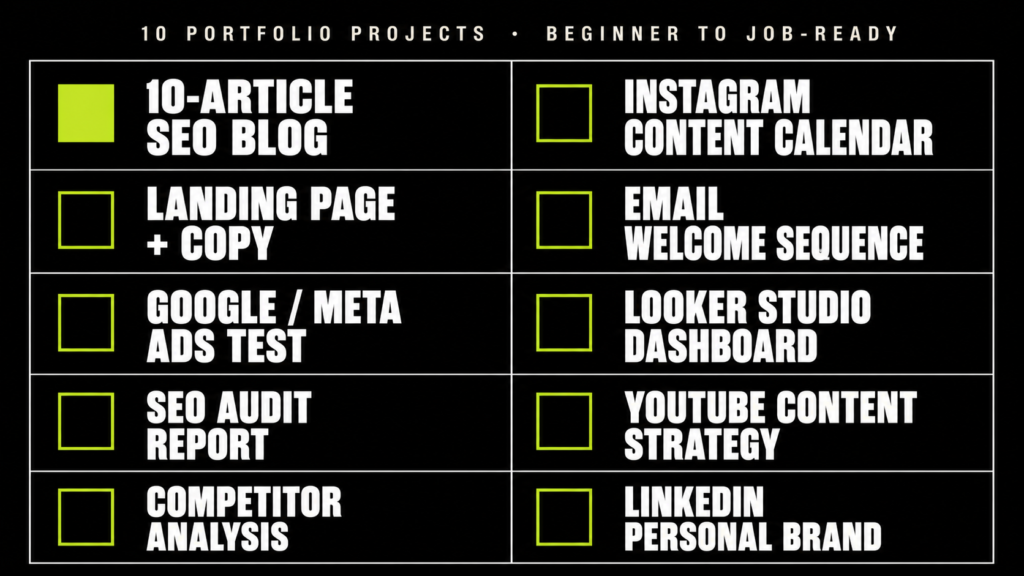
If you want to understand how to learn digital marketing from scratch in 2026, build these projects:
- Create a 10-article niche blog and optimize it for SEO.
- Create a 30-day Instagram content calendar for a local business.
- Build a landing page for a mock product and write the copy.
- Create a lead magnet and email welcome sequence.
- Run a small Google Ads or Meta Ads test campaign with a low budget.
- Create a Looker Studio dashboard using sample data.
- Do an SEO audit of a small website.
- Create a content strategy for a YouTube channel.
- Create a competitor analysis report for an e-commerce brand.
- Build a personal brand content system for LinkedIn or X.
These projects will help you show proof. When applying for jobs or freelance work, do not just say “I completed a course.” Say, “I created a blog, published 10 SEO articles, used Search Console, improved impressions, built a content calendar and created a report.” That sounds much stronger.
These projects also help you practice the main digital marketing skills to learn in 2026. You learn SEO by publishing articles. You learn social media by creating content calendars. You learn copywriting by writing landing pages. You learn email marketing by building a sequence. You learn analytics by reporting results. That is how digital marketing becomes real.
Best Book to Learn Digital Marketing from Scratch in 2026
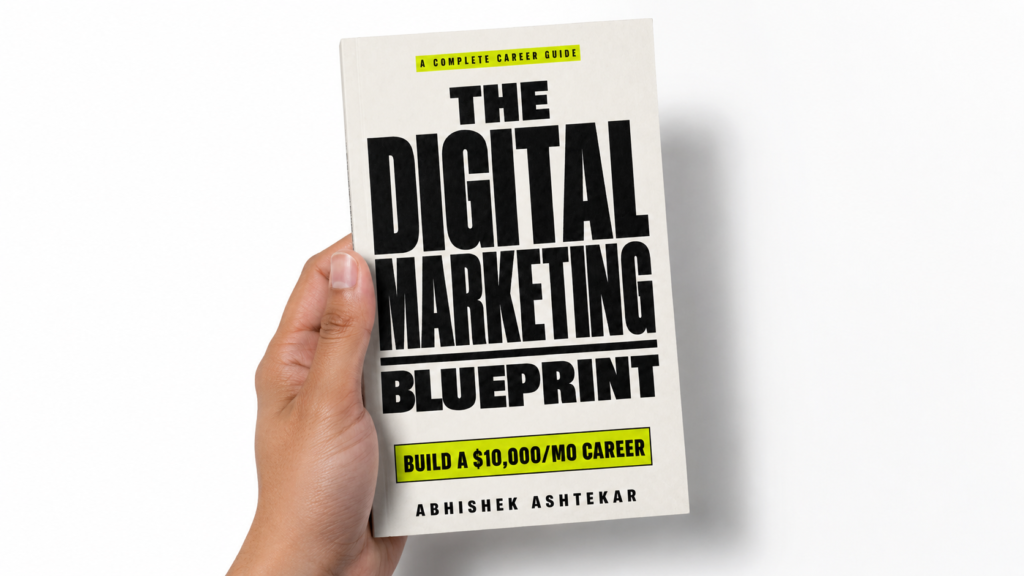
If you are looking for the best book to learn digital marketing from scratch in 2026, I have also written a complete practical guide called The Digital Marketing Blueprint: Build a High-Income Digital Marketing Career [2026 Edition]. This book is built for beginners who want to understand digital marketing in a clear, modern, and practical way instead of getting lost in random YouTube videos, scattered courses, outdated tutorials, and confusing marketing advice.
The book goes beyond the basic meaning of digital marketing and explains how the complete online growth system actually works. It covers marketing fundamentals, customer psychology, market research, branding, copywriting, content strategy, SEO, keyword research, topic clusters, on-page SEO, technical SEO, entity SEO, topical authority, AI SEO, AEO, GEO, social media marketing, YouTube marketing, LinkedIn growth, email marketing, newsletters, paid advertising, analytics, automation, no-code tools, AI workflows, freelancing, portfolio building, digital marketing jobs, agency building, local business marketing, ecommerce marketing, creator monetization, and a complete 90-day digital marketing learning roadmap.
In simple words, this book is not only about learning definitions. It is about understanding how all the important parts of modern digital marketing connect with each other.
Inside the book, you will learn things like:
- How digital marketing really works as a system of attention, trust, offer, action, measurement, and improvement
- How SEO, content marketing, social media, email marketing, paid ads, and analytics work together
- How newer terms like AI SEO, AEO, GEO, entity SEO, topical authority, marketing automation, AI workflows, and performance creative fit into modern marketing
- How to build practical beginner projects instead of only collecting certificates
- How to create a digital marketing portfolio even if you do not have clients yet
- How to use digital marketing for jobs, freelancing, blogging, personal branding, local businesses, ecommerce, digital products, and creator monetization
- How to follow a structured 90-day digital marketing roadmap instead of learning randomly
One of the biggest challenges beginners face is information overload. There are thousands of blogs, courses, tools, AI platforms, and digital marketing resources online, but it is not always easy to know what to learn first, what to ignore, and how everything connects. The Digital Marketing Blueprint is designed to solve that problem by giving you a clear learning path from complete beginner to practical execution.
If your goal is to build a high-income digital marketing career, start freelancing, grow your own blog, build a personal brand, promote digital products, work with clients, or understand how online marketing works in the AI era, this book can work as a practical companion resource along with the free courses, tools, and beginner projects mentioned in this guide.
Conclusion
Digital marketing is one of the most practical skills you can learn in 2026 because it sits at the center of online business, content, sales, personal branding, freelancing, e-commerce and startups. If you want to understand how to learn digital marketing from scratch in 2026, start with the basics, understand the customer journey, learn SEO, content, social media, paid ads, email marketing, analytics and AI tools, then practice on real projects.
Do not make the mistake of only collecting certificates. Certificates are useful, but proof is better. Build a blog, grow a page, create a landing page, write emails, run small experiments, track results and create case studies. Digital marketing rewards people who can think, test, write, analyze and improve.
The best part is that digital marketing is not limited to one career path. You can use it to get a job, start freelancing, grow a business, build a creator brand, sell books, promote courses, grow a blog, build an agency, or launch your own online product. That is why learning digital marketing is not just learning a career skill. It is learning how the internet economy works.
FAQs
- What is digital marketing in simple words? Digital marketing means promoting a product, service, business or personal brand using online platforms like Google, websites, social media, email, YouTube and online ads. It helps businesses reach people online, build trust, drive traffic, generate leads and increase sales. This is one of the most commonly asked beginner questions around digital marketing, and Smart Insights also lists “What is digital marketing?” as a basic digital marketing planning question.
- Can I learn digital marketing without a degree? Yes, you can learn digital marketing without a specific marketing degree. Many beginner courses, including the Google Digital Marketing and E-commerce Professional Certificate, are designed for learners with no degree or experience required. However, you still need skills, practice, projects and proof of work. A certificate can help you start, but your portfolio will help you stand out. If you are asking how to learn digital marketing from scratch in 2026 without a degree, the answer is simple: learn from structured courses, practice on real projects and build proof.
- How long does it take to learn digital marketing from scratch? You can learn the basics in 1 to 3 months if you study consistently. You can become job-ready for an entry-level role in 3 to 6 months if you practice with projects. To become truly strong, you may need 12 months or more because digital marketing involves many skills like SEO, content, ads, analytics, copywriting and strategy. The best approach is to learn one skill, practice it, then add the next skill.
- Which digital marketing skill should I learn first? Start with marketing fundamentals, SEO, content writing and basic analytics. These skills are beginner-friendly and do not require a large budget. After that, learn social media marketing, email marketing, paid ads and automation. If you want fast freelance services, social media management and content writing are easier to start. If you want long-term high-value skills, SEO, paid ads, analytics and marketing automation are strong options. These are some of the most practical digital marketing skills to learn in 2026.
- How can I tell if my digital marketing is working? Your digital marketing is working if your numbers are improving in the direction of your goal. If your goal is traffic, check website visitors and search impressions. If your goal is leads, check form submissions and cost per lead. If your goal is sales, check conversion rate, revenue and return on ad spend. WebFX lists “How can I tell if my Internet marketing is working?” as a common digital marketing FAQ, and the answer always comes back to tracking the right metrics for the right goal.
Final Thoughts
If you are serious about learning a skill that can help you get a job, start freelancing, grow your own business, build a personal brand, promote books, sell digital products, or understand online growth, then digital marketing is absolutely worth learning. The best way to understand how to learn digital marketing from scratch in 2026 is simple: learn the fundamentals, take one structured course, use free resources, practice on real projects, build a portfolio, study analytics, use AI smartly, and keep improving every month.
Digital marketing is not magic. It is a system. Once you understand the system, you can use it again and again for almost any online business. That is why digital marketing, online marketing, SEO, content, social media, email, analytics and AI tools are not just random topics. Together, they form a practical skill stack that can help you build a career, income stream, personal brand or business in 2026 and beyond.