
A few months ago, a cousin of mine called late one evening after work. He has a stable job, decent experience, and a good reputation on his team. But he sounded worried. His company had just started experimenting with AI tools, and suddenly everyone around him was talking about automation, copilots, and “future-ready skills.” He asked a simple question that a lot of working professionals are quietly sitting with right now.
“What should I actually learn in 2026 if I want a high-paying job and long-term security?”
Instead of overwhelming him with buzzwords or research papers, I broke it down into practical AI skills that real companies are already paying for. AI skills that help people work faster, automate boring tasks, and build systems that save time and money. I also pointed him toward beginner-friendly online courses for each one, so he could start learning without quitting his job or going back to school.
This article is that same conversation, written for you. If you are a working professional, a student, a freelancer, or someone who wants to upskill in 2026 for better pay and more opportunities, these seven AI skills that lead to high-paying jobs in 2026 will give you a real edge. Let us go through them one by one.
What the Market Is Actually Paying for in 2026
Before getting into the specific skills, it is worth understanding what is driving the demand.
According to a PwC analysis, AI skills now command a 56% wage premium over non-AI roles, a significant jump from the 25% premium reported just a year ago (source: Tech AI Magazine). Job postings for AI roles have grown sevenfold between 2023 and 2026, and over 75% of those listings demand specialized knowledge rather than general AI familiarity.
That last point matters. Companies are not just looking for people who have heard of ChatGPT. They are looking for professionals who can apply AI to real business problems, save measurable time, and deliver results their teams can see.
If your goal is not only to learn AI but also to prove your skills to employers, certifications can help you stand out faster. I have also written a separate guide on the Top 7 AI Certifications to Land High-Paying Jobs in 2026, where I break down the most valuable AI certificates for beginners, professionals, and career switchers.
The good news is that most of the seven skills below do not require a computer science degree. Many are accessible to people in marketing, operations, finance, HR, and other non-technical roles.
1. Prompt Engineering
Prompt engineering is one of the easiest AI skills to start with and one of the most immediately valuable. At its core, it is the skill of communicating clearly and strategically with AI systems to get accurate, consistent, and useful results.
Most people use AI tools casually. They type something in and hope for a decent output. Prompt engineers know how to guide AI step by step to perform real, repeatable tasks at work.
As companies integrate AI into daily workflows, they need professionals who can design prompts that work reliably across reports, emails, research tasks, analysis, and customer support. This skill improves your personal productivity instantly. It also makes you the person on your team who can actually get results from AI tools.
Why this skill pays well: According to Glassdoor data, the average salary for a prompt engineer in the United States is $129,538 per year, with top earners reaching above $200,000 (source: Glassdoor). Even for professionals using prompt engineering as a supporting skill rather than a primary job title, it drives 35-43% salary uplifts in non-technical roles (source: Nucamp).
This skill is best for: Beginners, non-technical professionals, marketers, HR teams, and operations roles.
Where you can learn it:
Online Courses:
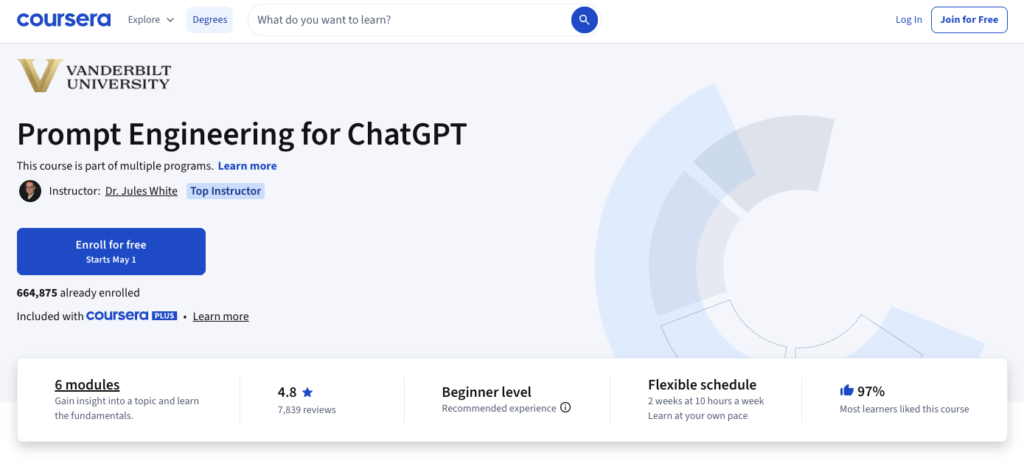
- Prompt Engineering for ChatGPT by Vanderbilt University on Coursera — A well-structured beginner course that teaches you how to write effective prompts for real work tasks. It covers zero-shot prompting, chain-of-thought prompting, and how to apply these techniques in professional settings. No prior experience required.
- ChatGPT Prompt Engineering Masterclass on Udemy — A hands-on course focused on getting practical results from ChatGPT across different use cases including content writing, data analysis, coding assistance, and customer support. Good for people who want to see prompt engineering applied to specific job functions.
- Prompt Engineering for Developers by DeepLearning.AI and OpenAI — A short, free course taught by Andrew Ng and Isa Fulford. It is one of the most widely recommended resources for understanding how large language models respond to different prompt structures. Suitable for both technical and non-technical learners.
- Generative AI for Prompt Engineering by IBM on Coursera — Covers practical prompt engineering techniques with a focus on business applications. Good for professionals who want a more enterprise-oriented perspective on how prompts work inside real AI systems.
Books:
- Prompt Engineering for Generative AI by James Phoenix and Mike Taylor — One of the most comprehensive books on the subject. It covers prompting strategies for text, code, and images, with practical examples throughout. Good for anyone who wants to go deeper than what most online courses cover.
- The Art of Prompt Engineering by Nathan Hunter — A beginner-friendly book that explains how to think about prompts from first principles. It is shorter and more accessible than most technical books on the topic, making it a solid starting point for people new to the field.
Free Resources:
- OpenAI Prompt Engineering Guide — The official guide from OpenAI. It is practical, updated regularly, and covers the most important techniques with clear examples. A good place to start before investing in a paid course.
If you are unsure where to start with AI in 2026, this is almost always the right first step.
2. Generative AI
Generative AI as a skill goes beyond using tools and focuses on understanding how AI systems create text, images, code, audio, and video. This moves you from “I use AI tools” to “I understand how to build solutions with AI.”
Professionals who grasp generative AI can design smarter workflows, choose the right model for the right task, and explain AI outputs clearly to non-technical teammates or clients. That explanation skill alone is worth a lot inside teams that are still figuring out how to adopt AI properly.
This skill also gives you the ability to keep up as tools evolve. Someone who only learned one AI tool is at risk every time that tool gets replaced or updated. Someone who understands generative AI at a foundational level can apply that knowledge across any new system that comes out.
If you are still at the beginner stage and feel confused about where to start, I recommend first reading my complete guide on How to Learn AI From Scratch in 2026. It gives you a step-by-step learning path before you go deeper into specific skills like prompt engineering, AI agents, automation, or RAG.
Why this skill pays well: As AI integration grows, employers consistently prefer people who understand AI over people who simply use it. Generative AI engineers and specialists are seeing some of the fastest-growing salary premiums in the 2026 job market, with AI/ML hiring overall growing 88% year-on-year according to Ravio’s 2026 Compensation Trends report (source: Ravio).
This skill is best for: Anyone who wants a durable AI foundation, especially those in strategy, product, innovation, and learning and development roles.
Where you can learn it:
Online Courses:
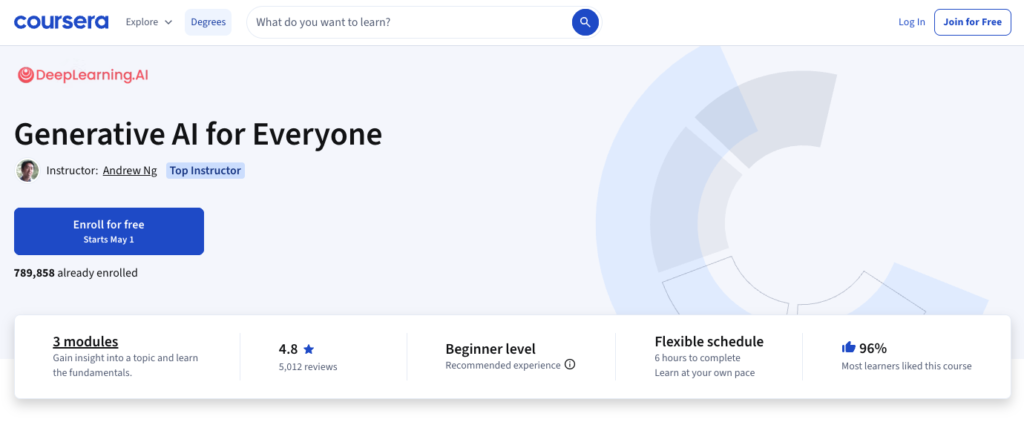
- Generative AI for Everyone by Andrew Ng on Coursera — This is the best starting point for non-technical professionals. Andrew Ng explains how generative AI works, what it can and cannot do, and how to apply it in real business settings. No coding required, and it remains one of the highest-rated AI courses available online.
- Generative AI with Large Language Models on Coursera — Offered by DeepLearning.AI in partnership with AWS. This course goes deeper into how LLMs work, including training, fine-tuning, and deployment. Best for those who want a more technical understanding of what is happening inside these systems.
- Introduction to Generative AI by Google on Coursera — A short, free introductory course from Google that gives a solid conceptual foundation. Good as a first step before committing to a longer program, and it comes with a shareable Google certificate on completion.
- Generative AI Fundamentals by Databricks — A free accreditation program that covers LLMs, vector databases, and responsible AI. Particularly useful if you are interested in enterprise AI applications and want a recognized credential from a major data platform company.
Books:
- Generative AI: A Beginner’s Guide by Tom Taulli — Covers the fundamentals of generative AI in plain language, with a focus on practical applications for business professionals. One of the more accessible books on the topic for readers without a technical background.
- Power and Prediction: The Disruptive Economics of Artificial Intelligence by Ajay Agrawal, Joshua Gans, and Avi Goldfarb — This book takes a broader economic view of how AI changes decision-making in organizations. It gives context for why generative AI matters at the business strategy level, not just the technical level. A good read for managers and leaders.
Free Resources:
- Google AI Generative Learning Path — A curated set of free learning modules from Google Cloud covering generative AI, LLMs, image generation, and responsible AI. Good for building a structured self-study path at no cost.
3. AI Agents
AI agents act like digital teammates. Instead of giving one response to one prompt, they observe a situation, make decisions, and take action across multiple steps, all with minimal human input.
Think of an AI agent that reads incoming customer emails, categorizes them, creates follow-up tasks in your project management system, drafts responses, and flags anything urgent for a human to review. That entire sequence happens automatically.
Companies are actively experimenting with AI agents to reduce manual work in operations, customer support, and sales. Professionals who understand how agents function, even at a conceptual level without writing code, are already standing out in 2026.
Why this skill pays well: AI agent engineering is one of the fastest-growing skill categories in the job market right now. According to data from LinkedIn and HeroHunt, AI agent roles saw demand surge 135.8% in recent quarters, with a projected compound annual growth rate of 32.8% through 2030 (source: HeroHunt). The skills tied to the agentic AI wave, including LangChain, multi-agent orchestration, and vector databases, command the steepest salary premiums in the current market.
This skill is best for: Operations professionals, systems thinkers, and anyone interested in automating multi-step business workflows.
Where you can learn it:
Online Courses:
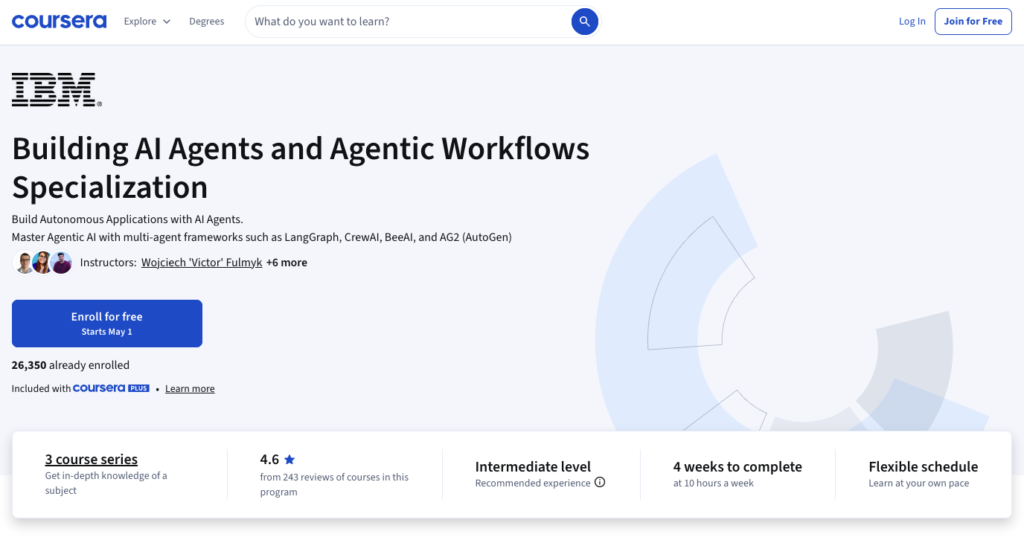
- Building AI Agents and Agentic Workflows on Coursera — A practical course that walks you through how AI agents are designed and built. It covers how agents reason, plan, and take actions, along with hands-on projects using popular frameworks. Suitable for both technical and non-technical learners.
- AI Agents for Business Automation on Udemy — Focused on applying AI agents to real business problems without heavy coding knowledge. Good for professionals in operations or management who want to understand what agents can do and how to implement basic workflows inside their teams.
- AI Agentic Design Patterns with AutoGen by DeepLearning.AI — A free short course that teaches you how to build multi-agent systems using Microsoft’s AutoGen framework. Practical and up to date with the latest agentic AI approaches being used in production environments.
- Functions, Tools and Agents with LangChain by DeepLearning.AI — Another free short course that teaches how to give AI models tools to work with, which is the foundation of how agents operate. Good for those who want to understand the mechanics without diving deep into academic research.
Books:
- Designing Agentic Systems by O’Reilly — A technical reference that covers the architecture of agentic AI systems, including how to design agents that are reliable, observable, and safe to deploy in production environments. More suitable for those with some technical background who plan to build agents professionally.
- The Alignment Problem by Brian Christian — Not a how-to book, but an important read that explains how AI systems are trained to do what we want, which is central to understanding why agents behave the way they do. It gives you a strong mental model for working with agents in a thoughtful and responsible way.
Free Resources:
- LangChain Agents Documentation — The official documentation for LangChain’s agent framework. It includes tutorials, examples, and reference material for building agents from scratch. A good practical companion alongside any course you take.
4. Workflow Automation
Workflow automation is the skill of connecting tools, systems, and processes so that work moves automatically from one step to the next, with less human effort and fewer errors.
When you combine automation with AI, the possibilities expand significantly. You can build systems that automatically pull data from multiple sources, summarize it, generate a report, send it to the right people, and log everything, all triggered by a single event.
This is one of the highest-value practical skills in 2026 precisely because it delivers immediate, measurable results. Executives and business owners can see exactly how much time and money a well-built automation saves. That visibility translates directly into compensation and career growth.
This is also one of the reasons automation appears again and again in high-income AI career paths. If you want to understand which AI skills have the strongest income potential beyond traditional jobs, you can also read my guide on 7 AI Skills That Can Make You Rich in 2026.
Why this skill pays well: The average AI automation specialist earns $116,607 per year in the United States, with experienced professionals earning above $150,000, according to ZipRecruiter’s April 2026 data (source: ZipRecruiter). This skill does not require deep programming knowledge, which makes it one of the most accessible high-paying AI skills available.
This skill is best for: Operations managers, business analysts, finance professionals, and startup teams that need to do more with fewer people.
Where you can learn it:
Online Courses:
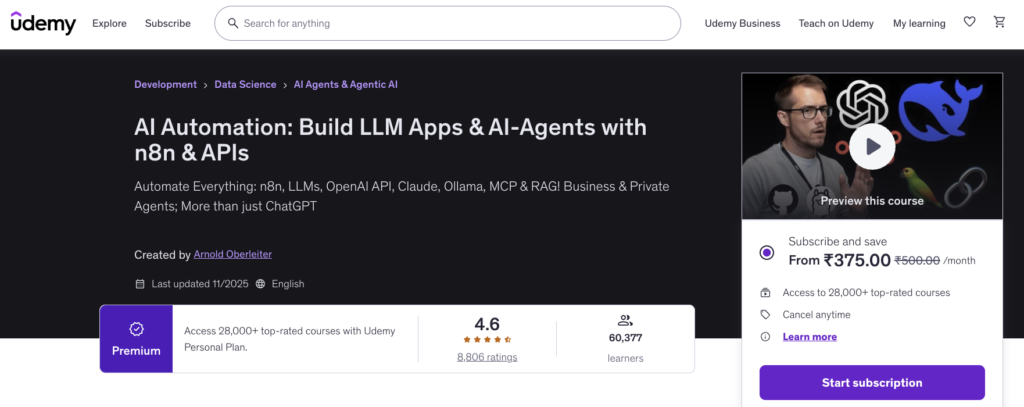
- AI Automation with n8n on Udemy — Teaches you how to build powerful automated workflows using n8n, a popular open-source automation tool. The course covers connecting different apps and services, using AI nodes inside workflows, and deploying automations for real business tasks. Good for hands-on learners who want to build something immediately.
- Business Automation with AI on Coursera — A practical course that covers how to identify automation opportunities inside a business and how to build those automations using AI tools. Good for professionals in management or operations who are not developers but need to understand and drive automation initiatives.
- Automate Everything with Make (formerly Integromat) on Udemy — Covers workflow automation using Make, one of the most popular no-code automation platforms. Similar to Zapier but more flexible for complex workflows. No coding required, and the course includes real-world templates you can adapt immediately.
- Zapier Automation Certification — A free certification program from Zapier that teaches you how to automate work across hundreds of apps. Good for beginners who want a gentle introduction to automation before moving to more advanced tools like n8n or Make.
Books:
- Automate the Boring Stuff with Python by Al Sweigart — Available free online at automatetheboringstuff.com. This book teaches Python through practical automation examples like working with spreadsheets, PDFs, emails, and web data. A good next step once you understand no-code automation and want to add programming to your skill set.
- The Automatic Customer by John Warrillow — Not a technical automation book, but a business book that helps you understand why automation matters from a revenue and customer experience perspective. Useful for professionals who need to build the internal case for automation before they start implementing it.
Free Resources:
- n8n Official Documentation — The official documentation for n8n. It includes step-by-step tutorials, workflow templates, and a community forum where you can find examples of real automations built by other users. A useful complement to any course you take on automation.
5. Agentic AI Systems
If AI agents are individual digital teammates, agentic AI systems are the whole team working together. This skill focuses on building or understanding systems where multiple specialized agents collaborate. One plans, one executes, one verifies, and another reports.
This is an advanced concept compared to the others on this list, but you do not need to build these systems from scratch to benefit from the skill. Understanding how agentic systems work, what they are good for, and where they break down is already valuable in product, strategy, and innovation roles.
Companies building advanced internal tools, research platforms, and customer-facing AI products are actively hiring people who can think clearly about multi-agent design.
Why this skill pays well: This skill sits at the frontier of what AI systems are becoming. According to the World Economic Forum, AI and big data are among the three fastest-growing skill areas globally, and agentic AI represents the next phase of that growth (source: Pace University). Engineers who combine agentic AI knowledge with traditional software skills are positioning themselves for some of the highest-paying roles the 2026 market has to offer.
This skill is best for: Systems and logic-oriented thinkers, software engineers looking to advance, and professionals in product and innovation roles.
Where you can learn it:
Online Courses:
- Agentic AI Foundations on Coursera — Covers the core concepts behind agentic AI systems, including how agents are orchestrated, how they communicate with each other, and how to design systems that are reliable and predictable. A good starting point before you attempt to build anything technical.
- Multi-Agent AI Systems on Udemy — A more hands-on course that walks through building systems with multiple agents using frameworks like CrewAI and AutoGen. Covers planning agents, tool-using agents, and how to coordinate them toward a shared goal.
- Multi AI Agent Systems with CrewAI by DeepLearning.AI — A free short course that teaches you how to build crews of AI agents that collaborate on complex tasks. One of the most practical and up-to-date courses available on this topic, and it is free to take.
- AI Agents in LangGraph by DeepLearning.AI — Teaches you how to build controllable, stateful agents using LangGraph. Good for understanding how to build agents that can handle long-running tasks without losing context between steps.
Books:
- Multi-Agent Systems by Michael Wooldridge — A foundational academic textbook on the theory of multi-agent systems. More technical than most books on this list, but gives you the deepest understanding of how agents reason and interact with each other. Best suited for professionals with some analytical or technical background.
- AI 2041: Ten Visions for Our Future by Kai-Fu Lee and Chen Qiufan — Not a technical manual, but a book that paints a clear picture of how agentic AI systems will reshape work and industries over the next two decades. Useful for building a strategic perspective on where this technology is heading and why it matters for your career now.
6. Retrieval-Augmented Generation (RAG)
RAG is the skill of making AI work with your own data. Instead of relying only on what an AI model was trained on, which can be outdated or irrelevant to your specific context, RAG systems retrieve information from your documents, databases, or internal knowledge bases before generating an answer.
The result is an AI that sounds like it actually knows your company, your policies, your products, and your processes, because it does.
This is extremely valuable for any organization that deals with large volumes of internal documentation, compliance requirements, legal material, or specialized knowledge. RAG makes AI outputs more accurate, more trustworthy, and more useful for the specific business.
Why this skill pays well: RAG engineers are among the most in-demand specialists right now, with salaries in the UK sitting between £110,000 and £180,000 according to Lorien Global’s emerging AI jobs report (source: Lorien Global). In the US market, RAG experience adds $15,000 to $30,000 in salary premium on top of a base prompt engineering role, according to data from PE Collective (source: PE Collective). Demand is rising rapidly as enterprise organizations seek to reduce AI hallucinations and build systems they can actually trust.
This skill is best for: Knowledge managers, enterprise teams, legal and compliance professionals, and anyone building internal AI tools.
Where you can learn it:
Online Courses:
- Building RAG Applications on Coursera — Covers the full pipeline for building a RAG system, from chunking and embedding documents to querying a vector database and generating accurate answers. Good for both technical and semi-technical professionals who want to understand and build RAG from the ground up.
- Build RAG Systems with LLMs on Udemy — A practical course that walks you through building a working RAG application from scratch. It covers the most important tools and libraries, including LangChain, OpenAI, and popular vector databases like Pinecone and Chroma.
- Building and Evaluating Advanced RAG by DeepLearning.AI — A free short course that goes beyond the basics and covers how to evaluate and improve the quality of your RAG system. Particularly useful for professionals who need to build RAG systems that are reliable enough for enterprise use rather than just demos.
- Vector Databases: from Embeddings to Applications by DeepLearning.AI — Since vector databases are the backbone of RAG systems, understanding them is essential. This free short course from Weaviate teaches you how embeddings work and how to use vector databases in real applications. A good companion to any RAG course you take.
Books:
- Hands-On Large Language Models by Jay Alammar and Maarten Grootendorst — A practical, visual book that covers how LLMs work and how to build applications on top of them, including RAG systems. One of the best technical references for anyone building with LLMs in 2026. Highly recommended if you want depth without reading academic papers.
- Natural Language Processing with Transformers by Lewis Tunstall, Leandro von Werra, and Thomas Wolf — Covers the transformer architecture that underlies most modern AI models. Understanding this gives you a much stronger foundation for building and debugging RAG systems, especially when something goes wrong in production.
Free Resources:
- LangChain RAG Guide — The official LangChain guide to building RAG systems. Includes working code examples, explanations of each step, and links to more advanced tutorials. A great practical reference alongside any course you take.
7. AI Content Creation
AI content creation in 2026 is nothing like what it was in 2022. It is no longer about asking ChatGPT to write a blog post and publishing whatever comes out. Today, it is a skill that combines research, strategic planning, quality editing, visual production, and multi-channel distribution, all with AI tools doing the heavy lifting on the repetitive parts.
Companies need people who can scale content output without losing brand voice or quality. That combination, knowing how to direct AI and then refine what it produces, is genuinely difficult to find.
Why this skill pays well: AI-assisted writing has become standard practice in 2026, and the demand for professionals who can manage AI content workflows is growing across marketing agencies, media companies, and education platforms (source: Onward Search). AI content professionals who combine writing judgment with tool proficiency can freelance at competitive rates or grow into senior content strategy roles.
This skill is best for: Writers, marketers, educators, and creative professionals looking to stay relevant and scale their output.
Where you can learn it:
Online Courses:
- AI for Marketing and Content on Coursera — Covers how to use AI tools strategically for content planning, writing, repurposing, and distribution. Good for marketers and content managers who want to understand how AI fits into their existing workflow rather than seeing it as a replacement for human judgment.
- AI Content Creation Mastery on Udemy — A practical course that covers the full AI content workflow from ideation to publishing. Includes video, blog, and social media content creation using popular AI tools. Good for freelancers and content professionals who want to increase their output and income.
- Content Marketing Certification by HubSpot Academy — A free certification that covers content strategy, creation, and distribution from first principles. While not exclusively AI-focused, it gives you the content fundamentals that make AI tools far more effective in your hands. Recommended before diving into AI-specific content courses.
Books:
- YouTube Secrets by Sean Cannell and Benji Travis — Covers the strategy behind building a content audience on YouTube. As video becomes an increasingly important content format, this book gives you a strong foundation in what makes content perform, which makes AI video tools significantly more effective to use.
- Content Inc. by Joe Pulizzi — A foundational book on building a content-led business. Understanding content strategy at this level helps you direct AI tools with much more clarity and produce content that actually serves a business goal rather than just filling a publishing calendar with output.
- They Ask, You Answer by Marcus Sheridan — One of the most practical books on content marketing. It teaches you how to answer customer questions through content, which is exactly the kind of strategic thinking that makes AI-generated content more targeted and useful for real audiences.
Free Resources:
- HubSpot AI Content Guides — A regularly updated collection of practical guides on using AI for content marketing. Covers tools, workflows, and real examples from marketing teams. A good resource to keep bookmarked as tools and best practices continue to change throughout 2026.
Which AI Skill Should You Learn First Based on Your Goals
Choosing the right skill matters more than trying to learn all seven at once. Your current role and career direction should drive your starting point.
- If you are a beginner or non-technical professional: Start with Prompt Engineering. It delivers immediate productivity gains in almost any job role and has the fastest learning curve of any skill on this list. Add Generative AI as your second step once you are comfortable.
- If you work in operations, finance, or business support: Workflow Automation is your highest-return move. You will be able to show your employer measurable results quickly. Layer in AI Agents as you grow more confident with automation concepts.
- If you are a systems thinker or logic-oriented professional: Agentic AI Systems and RAG are your natural fit. They reward structured thinking and they position you for advanced, higher-paying roles that most people are not yet qualified for.
- If you enjoy writing, marketing, or digital storytelling: AI Content Creation is the obvious starting point. Pair it with Generative AI to understand the tools more deeply and differentiate yourself from people who just know the surface level.
One important thing to remember: going deep on one skill will take you further than going shallow on five. Pick the one that makes the most sense for where you are right now. Apply it to real work or a side project within the first two weeks of learning. That application is what transforms knowledge into a marketable skill.
Conclusion
The seven skills in this article are not predictions about the future. They are what companies are actively hiring for right now in 2026. Real job listings, real salary data, and real businesses are already showing you where the demand is going.
You do not need to learn all seven. You do not need a degree in computer science, and you do not need to quit your job to get started. What you need is one skill, chosen based on where you are right now, learned properly over the next six to eight weeks, and applied to something real as soon as possible.
The professionals who will benefit most from AI in 2026 are not the ones chasing every new tool. They are the ones who picked something specific, went deep, and built a track record of results. That is the move that changes careers. Pick your skill, commit to it, and start today.
FAQs
- Do I need coding experience to learn these AI skills? Not for most of them. Skills like prompt engineering, workflow automation, and AI content creation are fully accessible to non-technical professionals. You do not need to write a single line of code to become effective with these tools. RAG and agentic AI systems do benefit from some technical comfort, but even those have beginner-friendly learning paths available through platforms like Coursera and Udemy.
- How long does it take to become job-ready with one AI skill? Most working professionals can build genuine confidence in a skill within four to eight weeks of consistent part-time learning. That means roughly one to two hours per day over that period, combined with applying what you learn to a real task or project. The application part is what makes the difference. You can watch course videos indefinitely without becoming skilled.
- Are these AI skills useful outside tech companies? Absolutely. These skills apply directly to marketing agencies, law firms, hospitals, financial institutions, HR departments, and educational organizations. AI is not a tech-industry tool. It is a cross-industry tool, and the professionals who bring it into non-tech companies are often valued even more because the competition is thinner there.
- Can I use these skills for freelance work? Yes, and this is one of the strongest use cases. Workflow automation, AI agents, and AI content creation are in particularly high demand from small businesses and growing startups that cannot afford to hire full-time specialists. Freelancers with strong automation or RAG skills are commanding competitive day rates in 2026.
- Should I get certified in these AI skills? Certifications from recognized platforms like Coursera, Google, and IBM carry real weight with employers, especially when you do not have a computer science background. They signal structured learning and commitment. That said, a certification without a real project behind it is less convincing than a practical example of what you built or automated.
- Which AI skill has the highest salary ceiling in 2026? Based on current market data, RAG engineering and agentic AI systems offer the highest salary ceilings for specialists, with top roles in the US reaching $200,000 to $300,000 or more for experienced professionals. For non-technical professionals, prompt engineering combined with domain expertise in healthcare, legal, or finance consistently commands the highest premiums.
- Is it too late to get into AI in 2026? No. The market is still in the early stages of hiring professionals who can actually apply AI to business problems. Most organizations are still experimenting and building their AI teams. The right time to start was a year ago. The second best time is today, and that is still well ahead of the majority of working professionals who have not yet committed to learning any of these skills seriously.
Final Thoughts
High-paying jobs in 2026 will not go to people who know AI exists. They will go to people who can use AI to save time, reduce errors, and deliver results that their teams and employers can see.
You do not need a research background or a graduate degree for most of the skills on this list. What you need is structured learning, a real project to apply it to, and the discipline to go deep on one thing before moving to the next.
Pick one skill from this list, the one that fits your current role and your career direction. Spend four to eight weeks learning it properly. Build something real with it, even if it is small. That single decision, made in 2026 and followed through on, can genuinely change the trajectory of your career.