

There’s a hidden advantage behind every powerful AI result you see today, and it is not just the tool itself. It is the prompt. The way you frame your question, choose keywords, and structure your instructions can completely change the output. That is what prompt engineering in 2026 is all about. It is the skill of communicating with AI tools like ChatGPT, Claude, and Gemini to get accurate and high-quality results.
As artificial intelligence careers grow, prompt engineering has become one of the most in-demand digital skills. Whether you want to create content, automate tasks, or build AI tools, learning how to become a prompt engineer without a degree gives you a strong advantage. You do not need a tech background. Many successful prompt engineers come from non-technical fields. What matters most is practice, curiosity, and understanding how AI responds.
The earning potential is a big reason this field is booming. Prompt engineer salaries in 2026 typically range from $100,000 to $200,000+ per year (Source: Glassdoor), with top professionals earning even more. Freelancers often charge between $35 to $100+ per hour (Source: Upwork), making this one of the most high-paying AI jobs without a degree.
If you want a future-proof, flexible, and well-paying skill, this is it. Here’s how to become a prompt engineer in 2026 step by step, even if you are starting from zero.
What is Prompt Engineering?
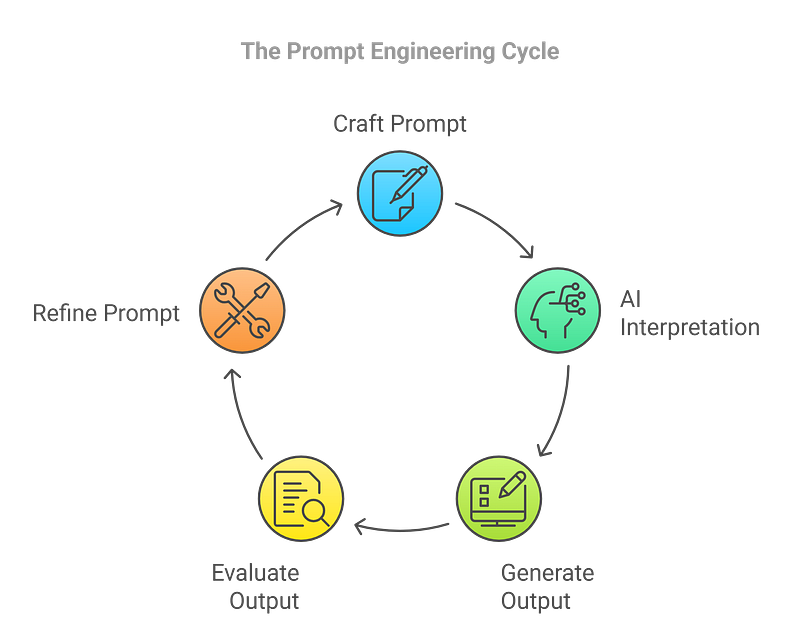
Prompt engineering is the practice of creating clear and structured inputs that help AI systems generate accurate and useful responses. It plays a key role in working with modern tools like ChatGPT, Claude, and other large language models. If you are trying to understand how to become a prompt engineer in 2026, this is where everything begins.
Think of AI as a smart assistant that depends entirely on your instructions. The way you ask matters. A poorly written input leads to weak results, while a well-structured prompt improves accuracy, tone, and relevance. That is why learning prompt engineering skills and understanding AI communication techniques can make a huge difference in output quality.
In today’s fast-growing prompt engineering career landscape, this skill is becoming more valuable across industries like content creation, automation, and product development. It blends creativity with logical thinking, making it ideal for people who want to explore AI careers without a degree or heavy coding background.
As AI tools continue to advance, the demand for professionals who understand prompt engineering in 2026 is increasing rapidly. Learning advanced prompting techniques is quickly becoming a must-have ability for anyone who wants to stay competitive in the evolving digital and AI-driven world.
Who is a Prompt Engineer?
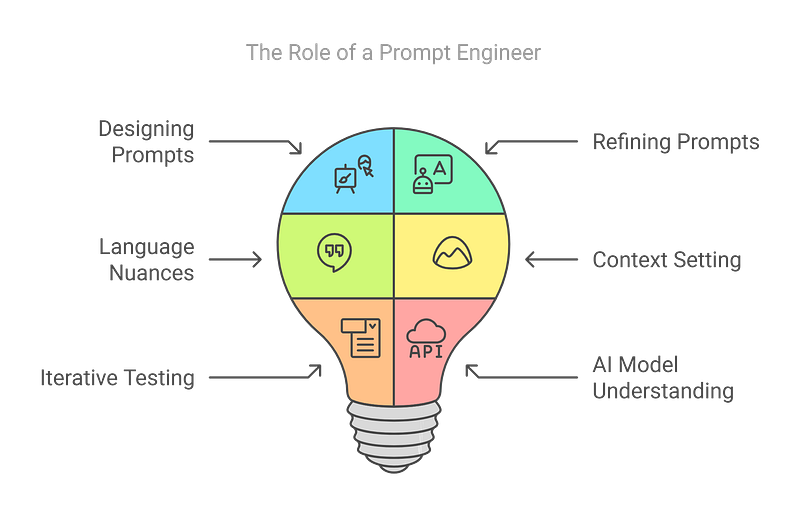
A prompt engineer is someone who designs and refines inputs to help AI systems produce accurate and meaningful results. They translate human intent into clear instructions that machines can understand, ensuring outputs are relevant, structured, and useful. If you are learning how to become a prompt engineer in 2026, understanding this role is an important step.
Unlike traditional developers, prompt engineers focus more on language, context, and testing rather than heavy coding. They use techniques like prompt optimization and LLM prompt design to continuously improve how AI responds. These prompt engineering skills allow them to guide tools like ChatGPT and other AI systems effectively.
As the demand for AI continues to grow, a prompt engineering career is becoming one of the most accessible paths in the tech space. Many people are exploring this field as part of AI careers without a degree, since it focuses more on communication, creativity, and problem-solving than complex programming.
In the evolving world of prompt engineering in 2026, professionals in this role are helping businesses automate tasks, generate content, and build smarter AI-driven solutions, making them highly valuable across multiple industries.
What Do Prompt Engineers Do and What Are Their Responsibilities?
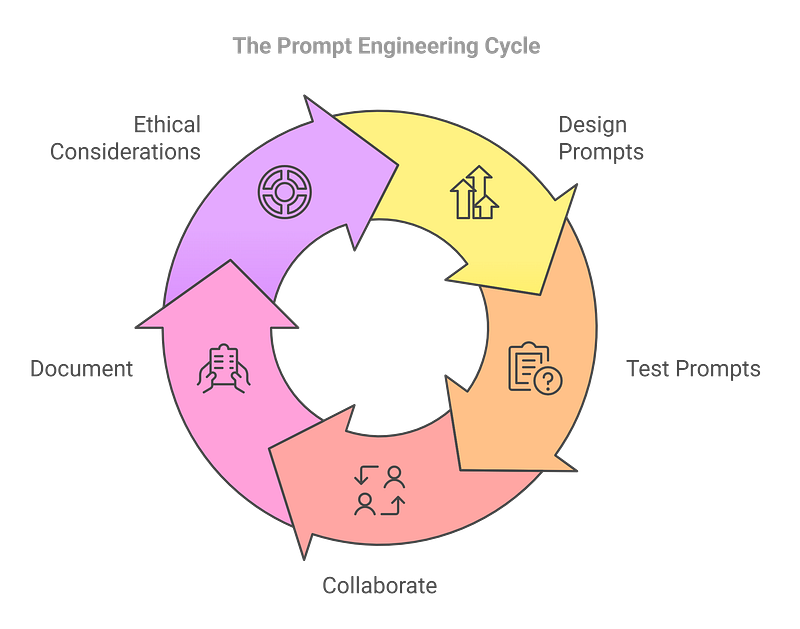
Prompt engineers focus on improving how humans interact with AI systems, making outputs more accurate, relevant, and useful. Their work revolves around refining inputs and continuously testing how AI responds in different scenarios.
Their core responsibilities include:
- Prompt Creation and Refinement: Writing and improving inputs that guide AI models to deliver better results, using structured approaches and clear instructions.
- Performance Testing: Experimenting with different prompt variations to evaluate output quality using both qualitative insights and measurable data.
- Cross-Team Collaboration: Working with developers, AI specialists, and product teams to integrate prompts into real-world applications and workflows.
- Process Documentation: Keeping detailed records of prompt versions, testing methods, and results to support consistency and future improvements.
- Responsible AI Practices: Ensuring prompts reduce bias, follow ethical guidelines, and protect user data and privacy.
By handling these responsibilities, prompt engineers help build AI systems that are more reliable, efficient, and aligned with real user needs.
What Skills Do Prompt Engineers Need?
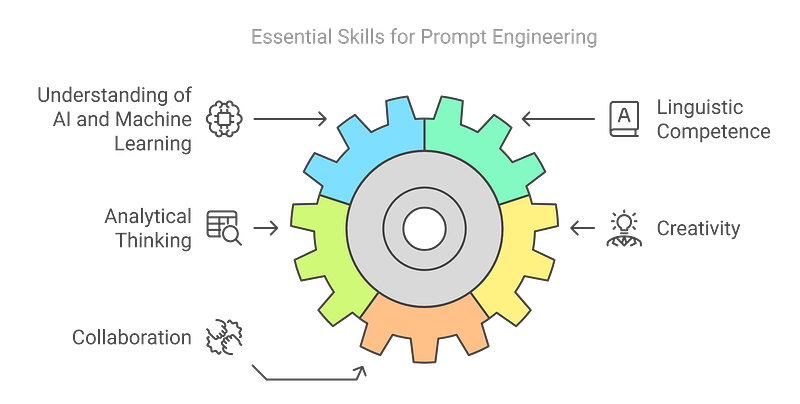
To succeed in prompt engineering, you need a mix of technical understanding, language skills, and problem-solving ability. It is not just about writing prompts, but about knowing how AI systems respond and how to improve those responses over time. If you are building a career in this space, focusing on the right AI skill set for prompt engineering is essential.
Key skills include:
- AI Fundamentals Knowledge: Understanding how large language models (LLMs) work helps you create more effective and structured prompts.
- Strong Writing Skills: Clear grammar, tone, and sentence structure are crucial for crafting precise and impactful inputs.
- Critical Thinking: The ability to evaluate AI outputs and identify gaps or errors is key to improving results.
- Creative Problem-Solving: Thinking outside the box helps in handling complex or unclear tasks with better prompts.
- Team Communication: Working with different teams requires clear communication and the ability to explain prompt strategies.
You can build these skills through hands-on practice, online learning, and real-world experimentation. Exploring AI tools, joining communities, and consistently testing prompts will help you grow faster and stay competitive in the evolving AI landscape.
If you want to go beyond prompt engineering and understand the wider skill stack required in the AI job market, you can also read 7 AI Skills That Lead to High-Paying Jobs in 2026. That guide will help you understand which AI skills are becoming valuable, how they connect with real jobs, and how beginners can start building a career around them step by step.
Key Responsibilities of a Prompt Engineer
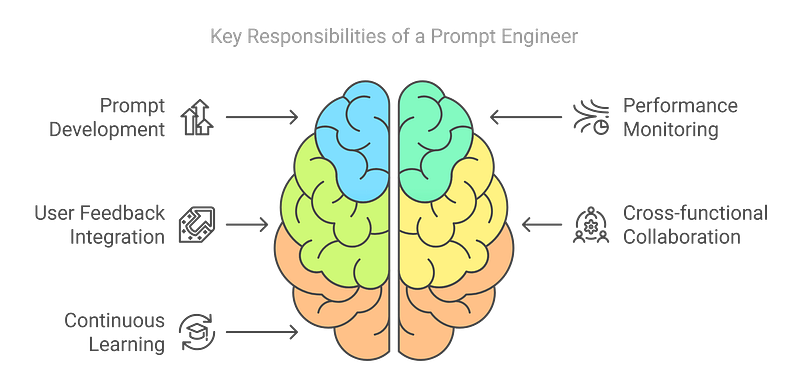
The role of a prompt engineer involves several important tasks that ensure AI systems perform effectively and deliver meaningful results. These responsibilities focus on improving output quality, aligning AI behavior with user needs, and supporting real-world applications of AI tools.
Key responsibilities include:
- Prompt Development: Creating and structuring inputs tailored to specific use cases so AI models generate accurate and relevant responses.
- Output Analysis and Improvement: Monitoring AI responses, identifying patterns or inconsistencies, and refining prompts to improve performance.
- User Experience Enhancement: Using feedback to adjust prompts and make AI interactions more helpful and user-friendly.
- Team Collaboration: Working with product teams, developers, and stakeholders to align AI workflow optimization with business goals.
- Continuous Skill Upgrading: Keeping up with the latest trends, tools, and techniques in AI to stay effective in a rapidly evolving field.
By consistently managing these responsibilities, prompt engineers help create AI systems that are reliable, efficient, and aligned with real-world expectations.
Why Become a Prompt Engineer?
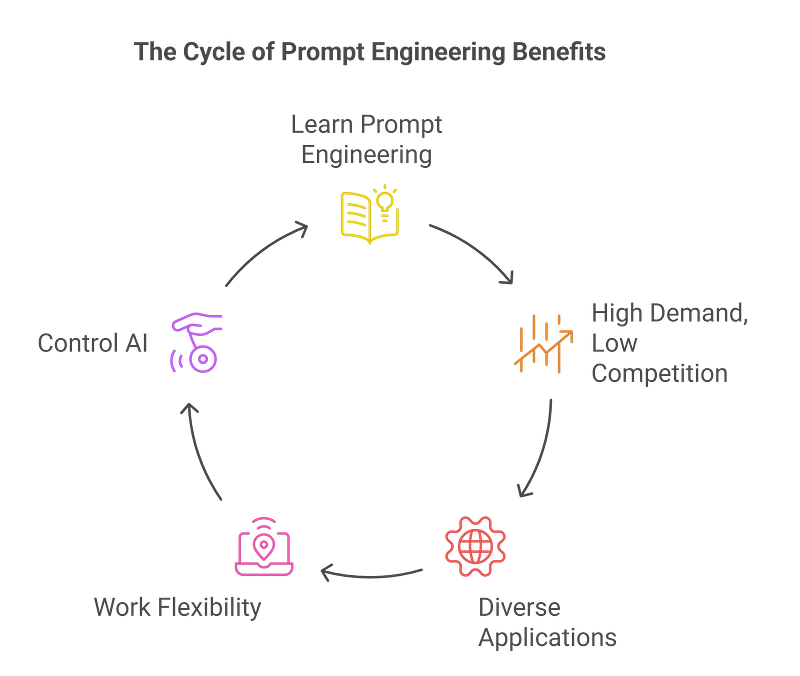
You might have experienced this already. You come across an AI-generated result that feels incredibly accurate or even personalized. What most people overlook is that the real magic is not just in the AI, but in the way it is guided. That is where prompt engineering comes in. It is like learning how to communicate with a system that can write, design, analyze, and even build solutions for you. If you are exploring how to become a prompt engineer in 2026, this is one of the biggest reasons why this skill matters.
Here’s why a prompt engineering career is becoming a game-changer:
- A core digital skill: Just like coding was essential a decade ago, prompt engineering skills and AI prompt writing are becoming a new form of digital literacy.
- High demand with low competition: The field is still evolving, which means early adopters have a strong advantage in the growing AI careers landscape.
- Wide industry applications: From marketing and design to education and software, prompt engineering in 2026 is being used across multiple domains.
- Flexible work opportunities: You can explore remote AI jobs, freelancing, or consulting, making it one of the best AI careers without a degree for beginners.
Becoming a prompt engineer is not just about using AI tools. It is about learning how to guide them effectively. Instead of worrying about being replaced by AI, you position yourself as someone who knows how to make AI work smarter, deliver real results, and build a future-ready skill in the evolving digital world.
Do I Need a Degree to Become a Prompt Engineer?

No, you really don’t need a degree to get started in this field. One of the biggest advantages of this career path is that it is completely skill-based. You do not need a computer science background or formal technical education to learn how to become a prompt engineer without a degree. Many companies today care more about what you can do with AI tools than what qualifications you hold.
What you actually need is:
- Curiosity: A strong interest in understanding how AI models think and respond to different inputs.
- Creativity: The ability to write clear, structured, and effective prompts that produce better results.
- Hands-on practice: Prompt engineering is learned by doing, not just reading or watching tutorials.
What makes this field exciting is that people from non-technical backgrounds are thriving in it. Writers, marketers, teachers, and designers are successfully building careers in entry-level AI jobs without coding. The common factor is simple. They practice consistently and experiment with different approaches.
A simple way to start is by using tools like ChatGPT, Claude, or Gemini. Try different prompts, tweak your wording, and observe how the outputs change. This kind of daily experimentation is one of the fastest ways to build real-world AI prompt skills.
Life as a Prompt Engineer
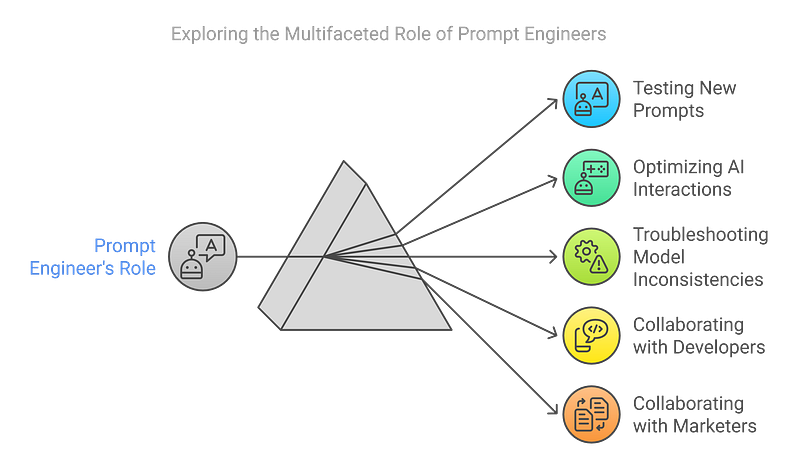
Imagine starting your day with a simple goal: figuring out how to ask better questions. That is what daily life looks like in this field. A prompt engineering career is less about routine tasks and more about experimenting with ideas, refining inputs, and improving how AI responds. If you are exploring how to become a prompt engineer in 2026, this is the kind of work you can expect.
On a typical day, you might test new prompts, improve how a chatbot responds, or fix inconsistent AI outputs. You could be working with developers to integrate prompts into applications or helping marketing teams create high-performing content using AI. This is where strong prompt engineering skills make a difference, as you continuously refine how AI tools deliver results.
Another big advantage is flexibility. Many professionals in this field work in remote AI roles, making it one of the most attractive AI careers without a degree for beginners. You can work from home, a café, or anywhere with a stable internet connection. At the same time, the work requires deep thinking. Writing an effective prompt often means balancing user intent, AI limitations, and clear instructions.
As prompt engineering in 2026 continues to grow, this role is becoming more dynamic and impactful. It combines creativity, logic, and real-world problem solving, making it one of the most engaging and future-ready paths in the modern AI landscape.
What is the Average Prompt Engineer’s Salary? (Salary Breakdown by Experience Level)
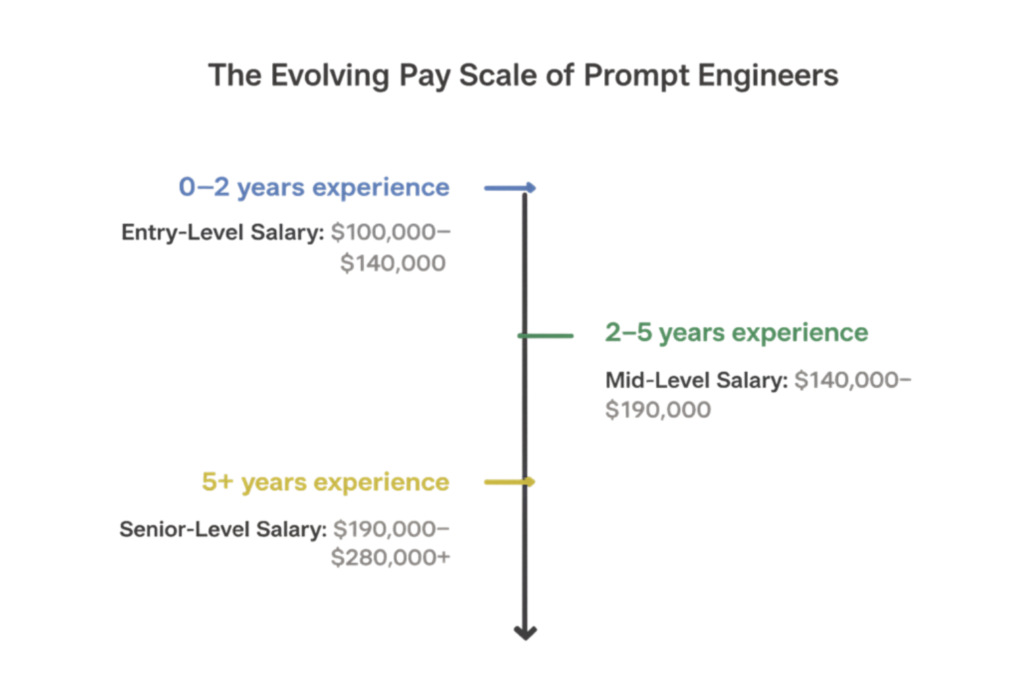
Prompt engineering has quickly become one of the most high-paying AI careers, with strong earning potential across all experience levels. Here’s an updated look at prompt engineer salary in 2026:
- Entry-Level (0–2 years experience): Expect a salary range of $100,000–$140,000 per year depending on location and company size (Source: Levels.fyi).
- Mid-Level (2–5 years): Salaries jump to $140,000–$190,000, often with bonuses and stock options (Source: Indeed).
- Senior-Level (5+ years): You’re looking at $190,000–$280,000+, particularly at top tech firms like Google, Meta, or OpenAI (Source: Glassdoor).
Freelance prompt engineers also do well, charging between $100–$300/hour depending on their niche and client base (Source: Upwork).
What Factors Affect a Prompt Engineer’s Salary?
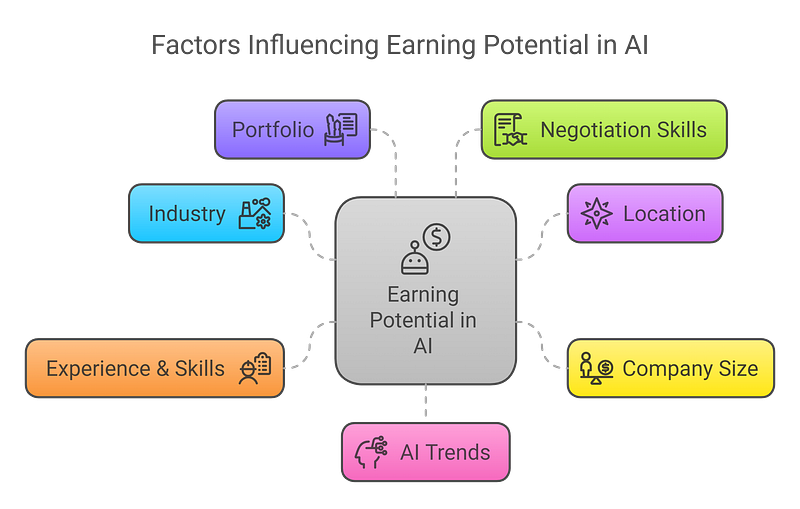
Several factors can influence how much you earn as a prompt engineer. Your income is not fixed. It depends on your skills, experience, and the kind of work you do in the AI job market.
Here’s what impacts your earning potential:
- Industry Demand: Roles in high-value sectors like finance, healthcare, and SaaS often offer higher pay compared to education or nonprofit organizations.
- Location and Market Exposure: Working with global companies or tech hubs can increase your earning potential, especially in remote AI jobs where geography matters less.
- Company Scale: Large tech companies and well-funded startups usually offer better compensation than smaller businesses.
- Skill Depth: Strong knowledge of AI tools, basic coding, and prompt optimization techniques can significantly boost your value.
- Portfolio Strength: A solid portfolio with real projects and results plays a major role in landing higher-paying opportunities.
In addition, soft skills like negotiation and staying updated with the latest AI trends can further increase your income over time.
How Do Prompt Engineer Salaries Compare Globally?

Prompt engineer salaries vary by country, but professionals in the U.S. and parts of Western Prompt engineer salaries can vary depending on region, demand, and market maturity. Professionals in countries like the United States and parts of Western Europe tend to earn the highest, but opportunities are expanding globally with the rise of remote work.
Here’s a quick snapshot of global salaries:
- United States: Around $120,000 to $200,000+ per year (Source: ZipRecruiter)
- Canada: Approximately CAD $95,000–$150,000 per year (Source: Glassdoor Canada)
- United Kingdom: Roughly £75,000–£130,000 per year (Source: Reed)
- India: Around ₹15L–₹40L per annum, depending on experience (Source: Naukri)
- Australia: Typically AUD $110,000+ per year (Source: Seek)
The good news is that prompt engineering is largely a location-independent career. With the growth of remote AI roles, your earning potential depends more on your skills, portfolio, and real-world experience than where you live.
Is Prompt Engineering a High-Paying Career?

PYes, it absolutely is. Prompt engineering has quickly become one of the most high-paying roles in the AI industry, even though it is still a relatively new field. In many cases, salaries are already comparable to established careers like software engineering, product management, and UX design.
Here’s why this field pays so well:
- Specialized Skill Set: Prompt engineering requires a unique mix of language, logic, and AI understanding that not many people have yet.
- Talent Shortage: There is a clear gap between demand and available skilled professionals in the AI job market.
- Growing Business Need: Companies across industries want better AI outputs, which directly increases the value of skilled prompt engineers.
In top markets like Silicon Valley, experienced professionals are earning $200K+ per year working on advanced AI systems and internal tools. On the freelance side, even beginners in AI freelancing can charge around $50 to $100 per hour, with experienced specialists earning significantly more on complex projects.
As businesses continue investing in AI, the demand for people who can effectively guide these systems will only grow. That ability to “talk to AI” and get real results is what makes prompt engineering such a powerful and rewarding career path today.
Top Skills to Learn for a Prompt Engineer

If you are starting from scratch, building the right skill set is key to succeeding in this field. You do not need to master everything at once, but focusing on core prompt engineering skills will help you grow faster and stand out.
Here are the must-have skills:
- Prompt Structuring: Learn how to write, test, and refine inputs that generate better and more consistent AI outputs.
- Language Understanding: Know how AI interprets context, intent, and phrasing to improve response accuracy.
- Basic Programming Knowledge: Familiarity with Python and APIs helps in automation and working with tools like LangChain and OpenAI.
- Analytical Thinking: The ability to evaluate outputs, identify errors, and improve responses is essential.
- Creative Writing Skills: Strong writing helps you craft clear, engaging, and result-driven prompts.
- Data Awareness: Understanding patterns, testing variations, and measuring results can improve prompt performance.
- AI Tool Proficiency: Hands-on experience with platforms like ChatGPT, Claude, Gemini, Notion, and vector databases adds practical value.
It is not about being a coding expert. It is about understanding how systems work, experimenting consistently, and writing with clarity and precision.
How to Become a Prompt Engineer in 2026 (Step-by-Step)
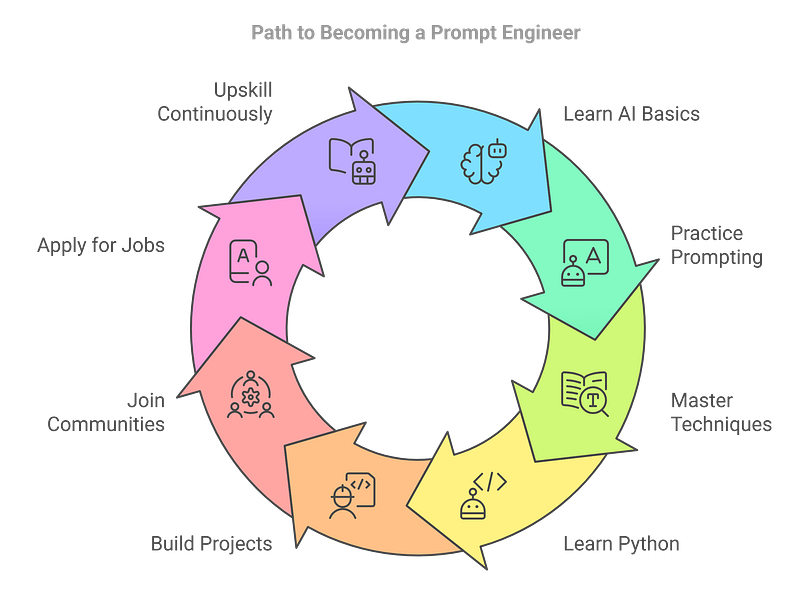
Let’s break this down in a simple and practical way, like we’re having a real conversation. Becoming a prompt engineer might sound technical or overwhelming at first, but in reality, it is one of the most accessible paths in the AI career space for beginners. You do not need a complex background or years of experience to get started.
Whether you are completely new to AI or just exploring how to start prompt engineering, this step-by-step approach will guide you clearly. The goal is not perfection. It is about learning by doing, experimenting with AI tools, and gradually building real skills that can turn into career opportunities.
1. Learn the Basics of AI and Large Language Models (LLMs)
Before you start writing effective prompts, it is important to understand how AI actually works. You do not need deep technical knowledge, but having a basic idea of how large language models work will give you a big advantage. Models like GPT are trained on massive datasets to predict text, not truly “understand” it like humans. That is exactly why learning AI fundamentals for beginners is so important in prompt engineering.
Start by exploring simple concepts like tokens, context, and how AI processes input. This will help you write better prompts because you will know how the system responds behind the scenes. The goal here is not to become a machine learning expert, but to build a clear mental model of how AI behaves.
Best resources to get started:
- ChatGPT Prompt Engineering for Developers (Coursera by DeepLearning.ai): A beginner-friendly and practical course built with OpenAI.
- YouTube (3Blue1Brown – “How GPT Works”): Great for visual learners who want simple explanations.
- Book: You Look Like a Thing and I Love You by Janelle Shane: A fun and easy introduction to AI concepts.
- Lex Fridman Podcast: Deep conversations with AI experts that help you understand real-world applications.
Spend about 1 to 2 weeks exploring these resources. Keep it light and curiosity-driven. You are not studying for an exam. You are building a foundation that will make everything else in your prompt engineering roadmap much easier.
2. Practice Prompting Every Day (Yes, Daily)
Here’s the part people skip, but it’s the most important: you need to play with AI every day. Prompting is an art, and like any art, the only way to get good is by doing it over and over again. You can’t learn to This is the step most people underestimate, but it is the most important one. If you want to improve your prompt writing skills, you need consistent, hands-on practice. Prompting is a creative skill, and like writing or design, it only improves when you actually do it. Reading about it is not enough.
Start simple. Open tools like ChatGPT, Claude, or Gemini and begin experimenting. Ask the AI to generate something, then tweak your input and observe how the response changes. For example, request a blog post, then ask for a more casual version, then rewrite it in a different tone. This kind of trial and error helps you understand how small changes in wording can produce very different results. That is the core of effective AI prompting techniques.
Some areas you can practice with:
- Blog and article generation
- Customer support responses
- Code explanations or debugging help
- Creative writing like stories or scripts
- Interactive content like dialogues or scenarios
- Resume and cover letter improvements
You can also explore platforms like FlowGPT, where people share real prompt examples. Try existing templates, modify them, and create your own versions. This daily experimentation is one of the fastest ways to build confidence and develop real-world prompt engineering skills.
3. Master Advanced Prompting Techniques
OnOnce you understand the basics, the next step is learning how to structure prompts more strategically. Prompting is not only about what you ask, but also about how you frame the request. This is where advanced prompt engineering techniques become important, because they can significantly improve the quality, depth, and accuracy of AI responses.
Here are some of the most useful methods to learn:
- Zero-shot prompting: Giving the AI a task without any examples. This works well for simple and direct requests.
- Few-shot prompting: Providing a few examples before the main instruction so the model better understands the expected format or style.
- Chain-of-thought prompting: Asking the AI to reason step by step, which is useful for logic, problem-solving, and complex tasks.
- ReAct prompting: Combining reasoning with action for multi-step workflows and agent-based tasks.
- Role-based prompting: Assigning the AI a role or persona to shape tone, perspective, or expertise.
To learn these techniques:
- Check out the OpenAI Cookbook on GitHub: It includes practical examples, tested prompt patterns, and advanced use cases.
- Search YouTube for “LangChain + GPT-4 prompt tips”: These videos show how prompting works inside apps, automations, and multi-step systems.
- Follow AI blogs like The Prompt Report or Ben’s Bites: They regularly share insights, trends, and deeper prompt strategy breakdowns.
Do not rush this part. Try each method multiple times until it clicks.
4. Learn Basic Python and How to Use APIs
No, you don’t need to become a full-stack developer. But learning some basic Python will unlock a lot of You do not need to become a full-stack developer to succeed in this field, but learning some basics of Python for prompt engineering can significantly increase your capabilities. Many AI platforms provide APIs, which allow you to integrate prompts into real applications, automate workflows, and build useful tools.
You should focus on learning how to:
- Write and run simple Python scripts
- Make API requests using libraries like
requests - Use environments like Jupyter Notebook for testing
- Work with basic JSON data structures
Good resources to get started:
- FreeCodeCamp Python Course: A beginner-friendly way to learn coding fundamentals.
- Codecademy Python 3: Interactive lessons with hands-on exercises.
- OpenAI API Documentation: Helps you understand how to use AI models in real applications.
- Hugging Face Transformers: Useful for exploring different AI models beyond OpenAI.
With these foundational skills, you can start building small but practical tools like an AI email assistant, content generator, or chatbot. This is where prompt engineering shifts from theory into real-world application.
5. Build Real Projects and a Portfolio (Yes, This Matters More Than Any Certificate)
If you want to stand out, focus on what you can build, not just what you have learned. In the world of prompt engineering projects, employers care more about real work than certificates. The best way to prove your skills is by solving simple problems using AI.
Start with small and practical ideas. You do not need anything complex in the beginning.
Beginner-friendly project ideas:
- A chatbot that answers FAQs for a local business
- A resume feedback tool that provides personalized suggestions
- A writing assistant that turns notes into full articles
- A prompt library for generating social media content
Once you build something, document it and share it publicly. This is how you create a strong prompt engineering portfolio.
Best tools to showcase your work:
- Framer: A no-code tool to create clean and professional portfolio websites
- Notion: Great for organizing and presenting your prompt experiments
- GitHub: Ideal for sharing code, scripts, and technical projects
Aim to complete at least 2 to 3 solid projects and present them clearly. This builds credibility and shows that you can apply your skills in real-world scenarios.
Projects are more powerful than certificates, but the right certification can still improve your credibility, especially when you are applying for jobs or freelance opportunities. If you want to know which ones are actually worth considering, check out 7 New AI Certifications That Could Land You a $100,000 Job.
6. Join Communities and Start Networking
One of the fastest ways to grow in this field is by connecting with people who are already working in it. In the world of prompt engineering communities, you will find real insights, practical tips, and even job opportunities that you will not get from courses alone.
Do not wait until you feel fully prepared. Join early, observe discussions, ask questions, and share your progress. Even if your work feels basic, being active helps you learn faster and build confidence. These communities are often more supportive than you might expect.
Here are some valuable platforms to explore:
- Reddit (r/PromptEngineering): A great place to discuss ideas, share prompts, and get feedback.
- Discord Communities (FlowGPT, OpenAI, LangChain): Active spaces for collaboration, technical discussions, and learning from others.
- LinkedIn: Follow AI professionals, share your experiments, and build your personal brand in the AI networking space.
- Twitter (X): A highly active platform where AI builders and prompt engineers share insights, trends, and real-time updates.
These connections can lead to mentorship, collaborations, and even job opportunities. In AI, networking is less about formal conversations and more about sharing ideas, learning publicly, and staying curious.
7. Apply for Jobs (Even If You Think You’re Not Ready Yet)
Here’s the reality. No one ever feels completely ready, especially in a fast-moving field like AI. The best way to grow is by taking action. Applying for roles, even when you feel underqualified, helps you understand expectations and build confidence in your prompt engineering career path.
Since AI job roles are still evolving, many companies are not strictly looking for perfect candidates. They want people who can improve AI outputs and think critically. If you can demonstrate that, you already stand out.
Before you start applying, make sure you have:
- A strong portfolio with 2 to 3 practical projects
- A clear LinkedIn profile that highlights your AI interests and work
- An online presence such as GitHub, Notion, or a personal portfolio site
Top platforms to find opportunities:
- AIJobs.ai: Focused on AI-specific job listings
- PromptBase: A marketplace to sell prompts and find freelance work
- Wellfound: Ideal for startup roles in AI and tech
- Himalayas: Great for finding remote-first AI jobs
- Remote OK: Look for roles under AI or LLM-related categories
Start applying even if you feel unsure. Every application and interview teaches you something new. In many cases, your ability to explain your thought process and how you approach prompts matters more than formal credentials.
8. Keep Upskilling (Because This Field Evolves Fast)
Prompt engineering is not a one-time skill you learn and forget. The AI space is changing rapidly, and what works today might not be as effective tomorrow. That is why continuous learning is essential if you want to stay relevant in the evolving AI industry. You do not need to follow everything, but you should stay consistent with learning and experimentation.
Here’s how to stay updated and improve your skills:
- Follow AI newsletters: Platforms like TLDR AI and Ben’s Bites provide simple and quick updates on the latest trends.
- Explore active GitHub projects: Repositories like LangChain, OpenAI Cookbook, and AutoGPT share new tools and real-world implementations.
- Read research insights: Websites like arXiv and Papers with Code help you understand new developments in areas like prompt optimization and LLM usage.
- Experiment with new tools: Try platforms like Claude, LangChain, GPT-Engineer, and other emerging AI tools to stay hands-on.
Do not be afraid to make mistakes. Every unexpected output or failed attempt is part of the learning process. The more you experiment, the better you understand how to guide AI effectively.
By following these steps, you now have a clear and practical roadmap to move from beginner to skilled prompt engineer. The key is consistency. Show up, practice regularly, and keep improving over time.
Best Online Courses for Prompt Engineers (Sorted by Experience Level)
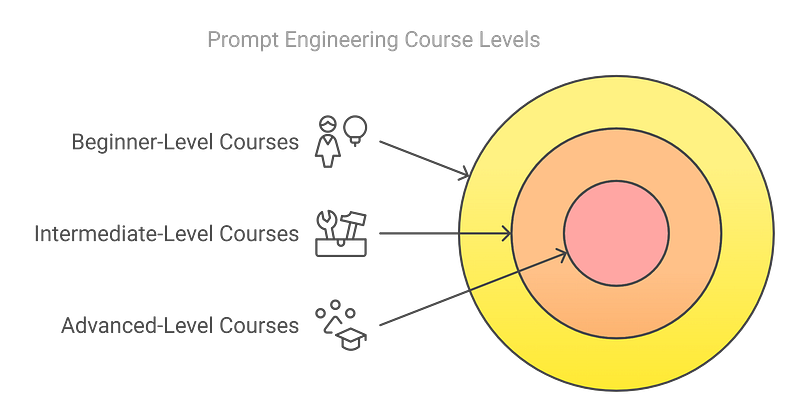
Let’s be real. There are tons of courses out there claiming to teach prompt engineering, but not all of them are actually worth your time. Some are practical and hands-on, while others are just surface-level content. To make things easier, here’s a curated list of the best courses based on your current skill level.
Whether you are just getting started with AI learning for beginners or looking to improve your advanced prompting techniques, these recommendations will help you learn faster and more effectively without wasting time.
Beginner-Level Courses (Getting Started with Prompt Engineering)
If you are just starting out, choosing the right course can make a huge difference. The goal at this stage is to build a strong foundation in prompt engineering for beginners without getting overwhelmed by technical complexity.
- Prompt Engineering for ChatGPT – Vanderbilt University (Coursera): This is one of the best starting points for beginners. It clearly explains how to write effective prompts and how small changes in wording can improve AI responses. No coding is required, making it ideal for non-technical learners.
- Generative AI: Prompt Engineering Basics – IBM (Coursera): A practical course that introduces different prompt types like zero-shot and few-shot. It focuses more on real use cases and helps you understand what works in everyday scenarios.
- Understanding Prompt Engineering – DataCamp: A simple and interactive course that breaks down how prompts interact with AI systems. It is great for building core skills through hands-on practice.
- AI for Everyone – Andrew Ng (Coursera): While not focused only on prompting, this course helps you understand the bigger picture of AI. It is perfect if you want to learn how AI fits into real-world applications without any technical background.
These courses are designed to help you build confidence, understand the basics, and start practicing real-world prompting as quickly as possible.
Intermediate-Level Courses (Enhancing Your Prompt Engineering Skills)
Once you understand the basics, the next step is to deepen your knowledge and start applying intermediate prompt engineering skills in more practical and complex scenarios. These courses are designed to help you move from simple prompting to real-world problem solving.
- Advanced Prompt Engineering for Everyone – Vanderbilt University (Coursera): This course dives deeper into advanced techniques like structured prompting, reducing AI hallucinations, and improving consistency across different use cases. It is ideal if you are already working with AI tools and want more reliable results.
- ChatGPT Prompt Engineering for Developers – DeepLearning.AI (Coursera): Created with OpenAI and taught by Andrew Ng and Isa Fulford, this course is highly practical. Even if you are not a developer, it teaches you how to build prompts for tasks like summarization, content generation, and automation.
- ChatGPT Prompt Engineering – DataCamp: This course builds on beginner knowledge and focuses on solving real-world problems using AI. You will learn how to create prompts for business use cases like content creation, workflow automation, and text analysis.
These courses help you transition from basic experimentation to applying prompt engineering in real projects and professional environments.
Advanced-Level Courses (Mastering Prompt Engineering)
If you already have a solid foundation, the next step is to go deeper and build advanced prompt engineering skills that can be applied in real-world systems and production environments. These courses focus on both technical depth and practical implementation.
- Generative AI with Large Language Models – DeepLearning.AI & AWS (Coursera): This course goes beyond basic prompting and helps you understand how AI models work internally. It covers advanced topics like fine-tuning, retrieval-augmented generation (RAG), and real-world deployment. It is ideal for those who want to work on large-scale AI systems and production-level applications.
- The Complete Prompt Engineering for AI Bootcamp (Udemy): A comprehensive and hands-on course that covers everything from fundamentals to advanced use cases. You will learn how to work with APIs, integrate prompts into tools, and build full AI-powered applications. It is especially useful if you want to freelance or build projects quickly.
- Prompt Engineering PRO (ChatGPT & Generative AI Fast-Track) – Udemy: Designed for faster learning, this course focuses on practical workflows and real-world examples. It helps you turn ideas into working AI solutions and is a great option if you want to quickly level up your skills.
These courses are best suited for learners who want to move beyond basics and start building scalable, high-impact AI solutions using prompt engineering.
Courses are great for structured learning, but books help you understand AI, business, creativity, and long-term thinking at a deeper level. If you want to build a stronger mindset around AI opportunities, you can also read 10 Best AI Books to Make Money in 2026. It will help you discover useful books that connect AI knowledge with real income opportunities.
Bonus Tip: Don’t just rely on one course. Mix and match. Take a beginner course for the theory, then jump into a bootcamp to build something real. Then follow that up with an advanced course to specialize in the areas you care about most — whether it’s agents, copywriting, or app development.
Learning prompt engineering is like learning a new language. It starts slow, gets easier with practice, and eventually you become fluent in shaping AI to do what you want.
Career Path of a Prompt Engineer

Prompt engineering is not a limited career path. In fact, it opens doors to multiple directions depending on your interests, whether that is building systems, improving user experiences, or working on strategy within the growing AI careers ecosystem. If you are exploring how to become a prompt engineer in 2026, understanding these career paths will help you see the long-term opportunities in this field.
- Entry-Level Prompt Engineer: At this stage, your focus is on writing, testing, and improving prompts daily. You learn how AI responds, experiment with different approaches, and gradually build consistency in generating high-quality outputs. This is where you develop strong prompt engineering skills and understand real-world applications.
- Senior Prompt Engineer / LLM Specialist: With experience, you move into more advanced work like designing workflows, optimizing systems, and guiding teams. You may also specialize in areas like automation, content systems, or domain-specific AI applications, making this a natural progression in a prompt engineering career.
- AI Experience Designer: This role focuses on how users interact with AI. You design conversations, improve usability, and create more natural, human-like interactions across tools like chatbots and virtual assistants. It blends design thinking with prompt engineering in 2026.
- AI Product Manager: If you prefer strategy and planning, this path involves leading teams, defining product features, and ensuring AI solutions align with user needs and business goals. It is one of the most impactful roles within modern AI careers.
- AI Consultant or Builder: Many professionals choose to freelance, build startups, or offer consulting services. This path gives you flexibility to work across industries and is ideal for those looking for AI careers without a degree, especially in the growing freelance and creator economy.
No matter where you begin, prompt engineering is a flexible skill that connects with multiple roles in tech, design, and business. As prompt engineering in 2026 continues to evolve, these career paths will expand even further, offering long-term growth and opportunities in the AI-driven world.
Future Scope of Prompt Engineers
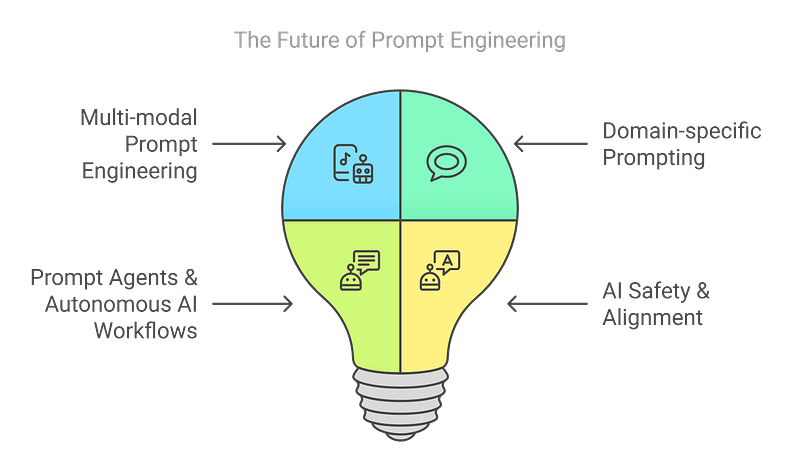
Let’s look at where this is heading. AI is not slowing down. It is becoming part of everything, from education and healthcare to finance, apps, and everyday tools. As this growth continues, the need for people who can effectively guide AI systems will only increase. This is why the future of prompt engineering looks extremely promising.
Here are some key trends shaping this field:
- Multimodal AI prompting: Working with models that handle text, images, audio, and video together
- Domain-specific applications: Specialized prompting for industries like healthcare, legal, and finance
- AI agents and automation: Building workflows and autonomous systems using chained prompts
- Responsible AI practices: Ensuring outputs are safe, unbiased, and aligned with ethical standards
As AI technology evolves, prompt engineering is becoming more advanced and more valuable. It is no longer just about writing inputs, but about designing intelligent interactions. Those who keep learning and adapting will have a strong advantage in this rapidly growing space.
Why Now is the Best Time to Become a Prompt Engineer
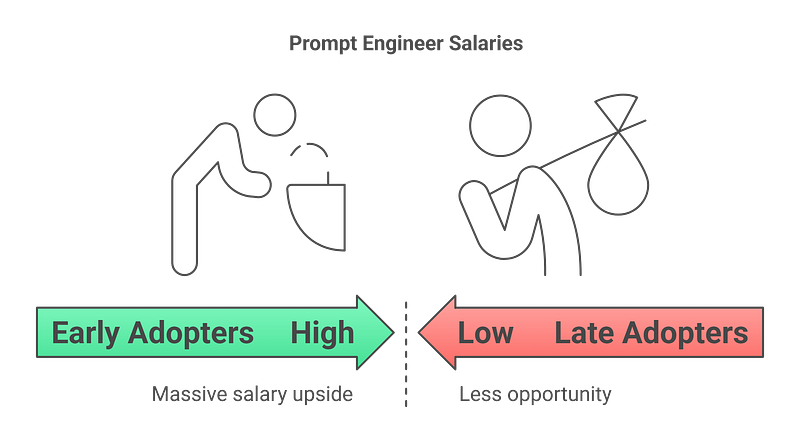
If you have been thinking about entering a fast-growing field with strong income potential and low barriers to entry, this is the right moment. The demand for prompt engineering skills is rising quickly, and the space is still new enough that early learners have a clear advantage.
We are still in the early stages of the AI wave. Many people are only beginning to understand how AI works, which means less competition and more opportunities. It is similar to the early days of web development, but with far more powerful tools and faster growth.
Here’s why this is the perfect time to start:
- Early-stage opportunity: Prompt engineering is still not widely understood, giving beginners a strong head start.
- No formal degree needed: Skills, creativity, and practical experience matter more than traditional education.
- Easy to get started: With just a laptop and internet, you can begin learning and practicing immediately.
- High demand across industries: Companies are actively looking for people who can improve AI outputs and workflows.
- Remote career flexibility: Many roles allow you to work from anywhere without location limits.
- Strong earning potential: It is one of the fastest-growing and well-paying roles in the AI space.
- Impact on the future: You play a role in shaping how humans interact with AI systems.
- Faster growth opportunities: With fewer experts in the field, it is easier to grow quickly if you stay consistent.
- Rapid AI adoption: Businesses are investing heavily in AI and need skilled professionals to use it effectively.
- First-mover advantage: Starting now positions you ahead of the curve as the industry matures.
If you are even slightly interested in AI, this is your window to start. You do not need to wait for the perfect time. The best time to begin building your AI career is right now.
Conclusion
AI is no longer a future concept. It is already shaping how we work, learn, and create every day. Learning prompt engineering gives you a practical way to tap into this shift and actually use AI to your advantage. The best part is that you do not need a technical degree or years of coding experience to get started.
With the right mindset, strong communication skills, and consistent practice, you can build a career that is both creative and financially rewarding. Whether you choose freelancing, startups, or full-time roles, this skill opens doors across the growing AI job landscape.
Start small. Experiment with AI tools, join communities, and keep learning as you go. You do not need to be perfect to begin. You just need to start. If you want more practical guides, tools, and step-by-step roadmaps like this, you can explore more on ZeroToAIMastery.com.
FAQs
- Can you learn prompt engineering without a technical background? Yes, absolutely. Prompt engineering for beginners is more focused on communication, logic, and creativity than heavy programming skills.
- How long does it take to become a prompt engineer? With consistent practice and hands-on learning, you can become job-ready in about 3 to 6 months, depending on your pace and dedication.
- Do prompt engineers need coding skills? Not always. Coding is optional, but having basic knowledge can help with automation and working with APIs in advanced use cases.
- Are prompt engineering jobs remote-friendly? Yes, many roles in the AI remote job market are fully remote, especially in tech companies and freelance opportunities.
- What is the average salary of a prompt engineer? Salaries typically range from $100,000 to $270,000+ per year depending on experience (Source: Levels.fyi, Glassdoor).
Final Thoughts
If you are looking for a career that blends creativity, communication, and modern technology, prompt engineering is one of the most exciting paths you can explore right now. It gives you the opportunity to work with cutting-edge AI tools without needing years of formal education or technical experience.
The field is growing rapidly, and there is still plenty of room for beginners who are willing to learn and experiment. Whether you come from writing, coding, marketing, or simply have an interest in AI, there is a place for you in this evolving space. The key is to stay curious, keep building, and take action as you learn. You can also follow more such insights and detailed guides on ZeroToAIMastery.com as you continue your journey.