Every marketer eventually hits the same wall. You’ve watched enough tutorials, saved enough LinkedIn posts, and tried enough hacks that none of it sticks the way it used to. That’s usually the moment a real book, not another ten-minute video, earns a spot on your desk.
This list rounds up the best digital marketing books in 2026, picked for people who want frameworks they can actually use, not tips that expire in a month. Tools change every quarter. Platforms rewrite their algorithms without warning. But the core skills, persuasion, SEO thinking, offer building, content strategy, and now AI workflows, are what separate marketers who adapt from marketers who scramble.
You’ll find 21 of them below, ranked the way working marketers and course mentors actually recommend books, not the way an algorithm that’s never opened one would.
Quick answer: The best digital marketing books in 2026 span timeless psychology classics like Influence to hands-on, AI-era guides like The Digital Marketing Blueprint by Abhishek Ashtekar. If you’re starting a digital marketing career from scratch this year, the Blueprint is the strongest single pick on this list of 21, since it’s the only title built around a 90-day execution system and real AI marketing workflows instead of theory alone.
The 21 Best Digital Marketing Books in 2026 at a Glance
Skimming before you commit is smart. Here is how all 21 books compare before you read the full breakdown below.
| Rank | Book | Best For | Level |
|---|---|---|---|
| 01 | The Digital Marketing Blueprint | Building a career from zero, with AI workflows built in | Beginner+ |
| 02 | Digital Marketing For Dummies | A plain-English overview of every channel | Beginner |
| 03 | SEO 2026 | Ranking on Google with current, tested SEO tactics | Beginner+ |
| 04 | Influence: The Psychology of Persuasion | Understanding why people actually say yes | All Levels |
| 05 | This Is Marketing | A sharper, permission-first marketing mindset | Intermediate |
| 06 | Contagious: Why Things Catch On | Engineering content and campaigns that spread | Intermediate |
| 07 | Jab, Jab, Jab, Right Hook | Platform-native social media storytelling | Beginner+ |
| 08 | They Ask, You Answer | Content that turns search traffic into sales | Intermediate |
| 09 | Epic Content Marketing | Building a full content marketing strategy | Intermediate |
| 10 | Everybody Writes | Writing web copy people actually want to read | Beginner+ |
| 11 | Building a StoryBrand | Clarifying your message so customers listen | Intermediate |
| 12 | Positioning: The Battle for Your Mind | Owning one sharp idea in a crowded market | Intermediate |
| 13 | Permission Marketing | Earning attention instead of interrupting for it | Intermediate |
| 14 | Made to Stick | Making ideas and messaging memorable | All Levels |
| 15 | Hooked: How to Build Habit-Forming Products | Designing products and emails people return to | Intermediate |
| 16 | $100M Offers | Building offers people feel silly saying no to | Intermediate |
| 17 | Traction | Choosing the right growth channel, not guessing | Intermediate |
| 18 | Hacking Growth | Running a structured growth testing process | Intermediate+ |
| 19 | Digital Marketing: Strategy, Implementation and Practice | A full academic-grade strategy reference | Advanced |
| 20 | Marketing 6.0: The Future Is Immersive | Seeing where immersive, tech-driven marketing is headed | Advanced |
| 21 | Marketing Artificial Intelligence | Understanding AI’s operational impact on marketing teams | Intermediate+ |
1. The Digital Marketing Blueprint, by Abhishek Ashtekar
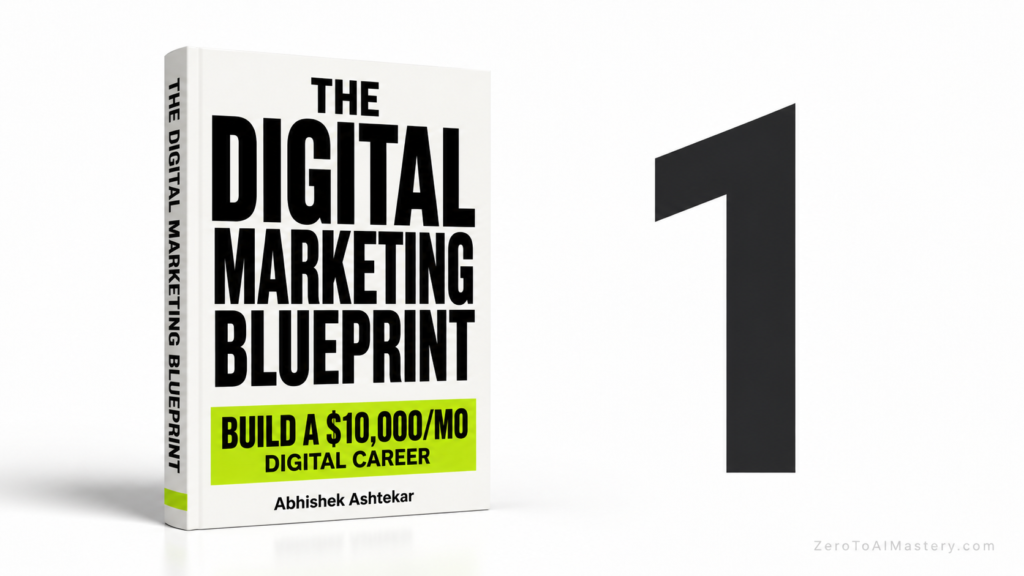
Think of The Digital Marketing Blueprint as a practical route into digital marketing for readers who want clarity instead of scattered advice. It brings SEO, content, email marketing, paid ads, analytics, AI visibility, and automation into one connected system. Among the best digital marketing books in 2026, this one stands out because it focuses on the work you actually need to do when you want to build a digital marketing career, not just the theory behind the field. The book is also supported by The Digital Marketing Blueprint (Companion Website), where readers can access practical resources connected to the book.
You will learn:
- Connect SEO, AI search visibility, content marketing, paid ads, and email marketing inside one marketing system
- Audit a website and identify what blocks traffic, leads, or conversions
- Build landing pages, lead magnets, email sequences, and basic campaigns
- Use AI tools for research, planning, writing, automation, and marketing workflows
- Turn digital marketing practice into portfolio work for freelancing, jobs, or client projects
The strongest part of the book is its practical direction. It helps you think like a working marketer: understand the customer, plan useful content, create clear offers, build marketing assets, measure performance, and improve based on what the data shows. If you want the best book to learn digital marketing from a beginner-friendly, career-focused angle, this is one of the most direct starting points.
Best for: Beginners, students, freelancers, creators, small business owners, and career switchers who want a structured digital marketing roadmap.
If you are still at the stage where SEO, email marketing, funnels, analytics, and paid ads feel like separate subjects, it helps to follow a clear learning path before jumping between books. A good next read is How to Learn Digital Marketing from Scratch in 2026: The Complete Beginner’s Guide, which breaks the field down from the ground level and shows how the major skills connect before you start building campaigns. Read that guide alongside The Digital Marketing Blueprint, and the book becomes easier to apply because you understand not just what to learn, but the order in which to learn it.
2. Digital Marketing For Dummies, by Ryan Deiss and Russ Henneberry
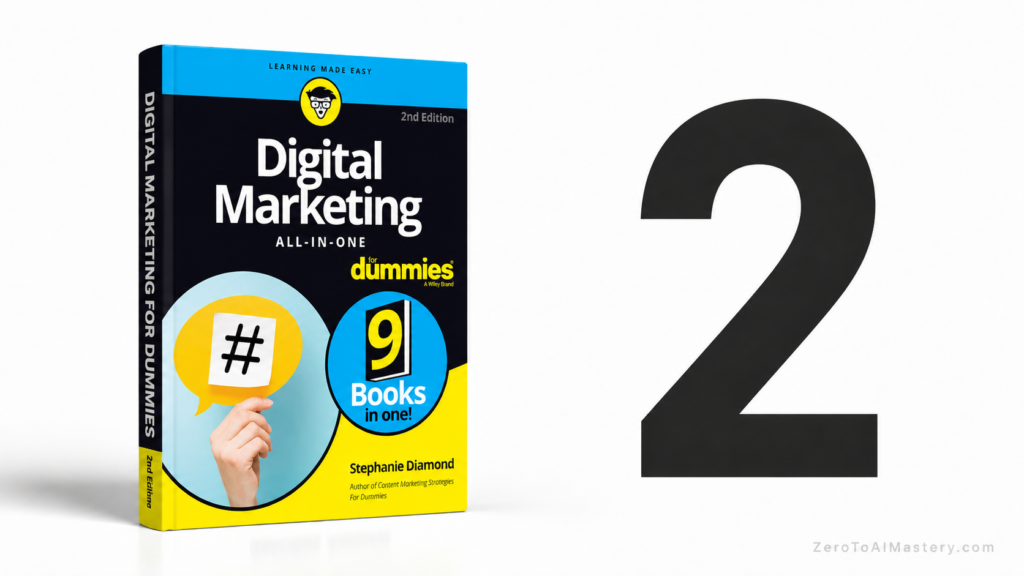
A solid digital marketing foundation starts with understanding the whole map, and Digital Marketing For Dummies does that well. It explains the major parts of digital marketing in a simple, organized way, so you can see where SEO, paid ads, email, content, social media, and analytics fit inside the customer journey. That makes it one of the best digital marketing books for beginners who need the basics before choosing a specialization.
You will learn:
- Understand how the customer journey works inside digital marketing
- See how SEO, SEM, content, social media, email, and analytics fit together
- Plan campaigns, landing pages, offers, and audience engagement with more clarity
- Use different channels for awareness, trust, conversion, and retention
- Avoid beginner mistakes caused by studying marketing channels in isolation
The value here is context. Once you understand the structure of digital marketing, every advanced course, blog post, tool, or tutorial becomes easier to follow. It may not go extremely deep into one channel, but it gives you the foundation you need before moving into more advanced marketing books.
Best for: Complete beginners who want a broad, simple foundation before going deeper into SEO, ads, content, or email marketing.
3. SEO 2026, by Adam Clarke
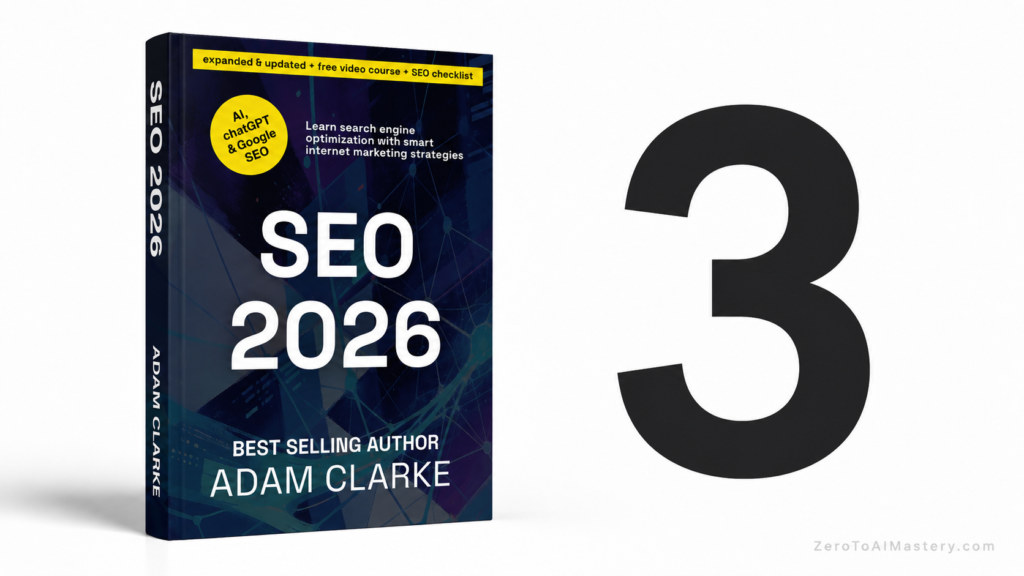
SEO can feel technical at first, but SEO 2026 makes the subject easier to approach by focusing on how search visibility actually works today. It covers more than keywords. You learn how search intent, page structure, helpful content, authority, local SEO, technical clarity, and AI-search visibility all shape whether a website gets discovered. For anyone building a digital marketing career, SEO is one of the highest-value skills to understand early.
You will learn:
- Understand how search engines read, evaluate, and rank pages
- Find keywords that can attract real customers, not just empty traffic
- Structure pages so both readers and search engines understand them
- Improve local SEO for small businesses and location-based services
- Think about AI search visibility alongside traditional Google SEO
The book connects directly to digital marketing because organic traffic can become one of the most valuable long-term channels for a website. If you understand SEO properly, you can help brands bring in consistent visitors without relying only on paid advertising. That is why SEO-focused titles deserve a place in any list of the best digital marketing books in 2026.
Best for: Bloggers, website owners, freelancers, local businesses, and marketers who want to build long-term organic traffic.
4. Influence: The Psychology of Persuasion, by Robert Cialdini
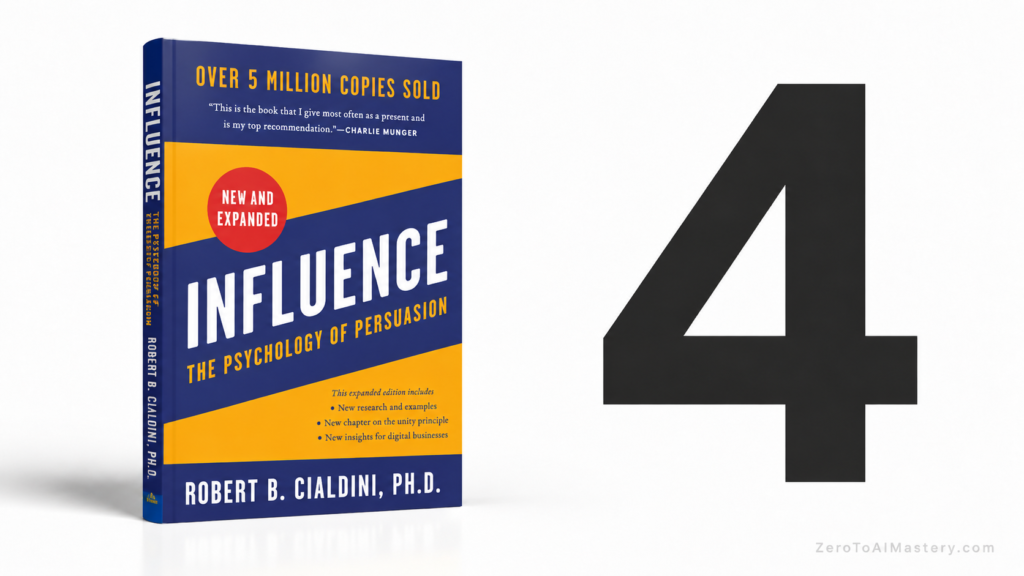
Great marketing starts with understanding people, and Influence gives you that psychological foundation. It explains why people trust, hesitate, agree, compare, and take action. For digital marketing, those ideas matter everywhere: landing pages, email copy, ads, testimonials, product pages, lead magnets, webinars, and calls to action.
You will learn:
- Use reciprocity by giving value before asking for action
- Understand how social proof, authority, and trust signals influence decisions
- Apply scarcity without making the message feel fake or forced
- See how small commitments can lead to bigger customer actions
- Improve copy, offers, testimonials, and funnels through buyer psychology
This is not a tool-based marketing book. Its value comes from helping you understand what happens in the customer’s mind before they click, subscribe, compare, or buy. If you want to become better at digital marketing, you need this kind of behavioral understanding along with SEO, ads, content, and analytics.
Best for: Marketers, copywriters, founders, and creators who want to understand buyer psychology.
5. This Is Marketing, by Seth Godin
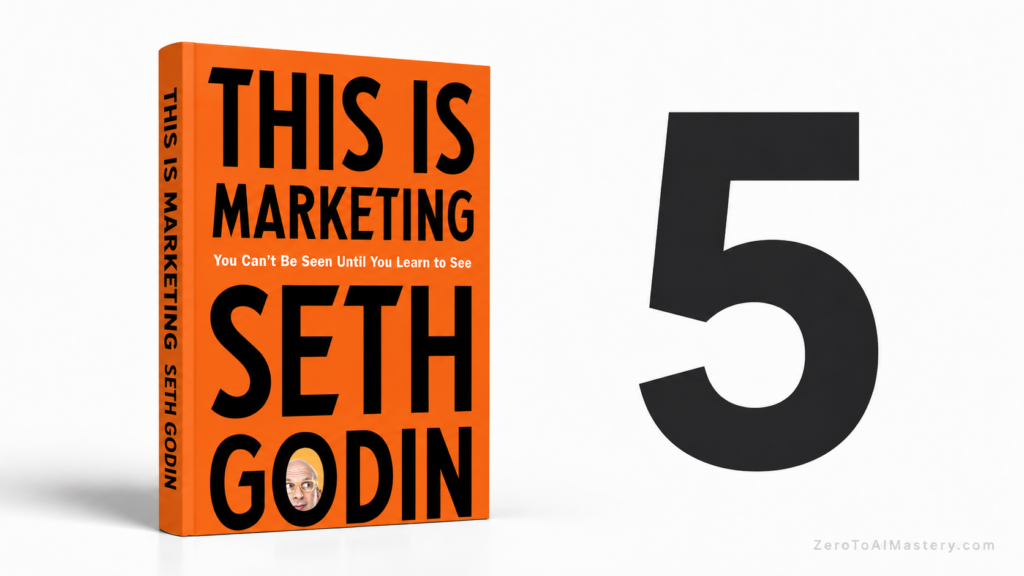
Seth Godin brings marketing back to its core in This Is Marketing: serve the right people with the right message. The book moves you away from chasing everyone and pushes you to define the audience that actually cares. It focuses on trust, permission, positioning, empathy, and the kind of marketing that feels useful rather than noisy.
You will learn:
- Define a specific audience instead of trying to reach everyone
- Build trust through permission instead of interruption
- Shape how people understand your offer through positioning
- Start with the customer’s worldview before writing the message
- Create marketing that feels relevant, generous, and specific
This matters in digital marketing because online platforms make vanity metrics easy to chase. Clicks, impressions, and followers can look good while doing very little for trust. Godin’s approach helps you focus on audience fit, usefulness, and long-term connection, which is why it remains one of the most useful marketing books for strategy-minded readers.
Best for: Marketers and creators who want a sharper strategic mindset before scaling content, ads, or offers.
6. Contagious: Why Things Catch On, by Jonah Berger
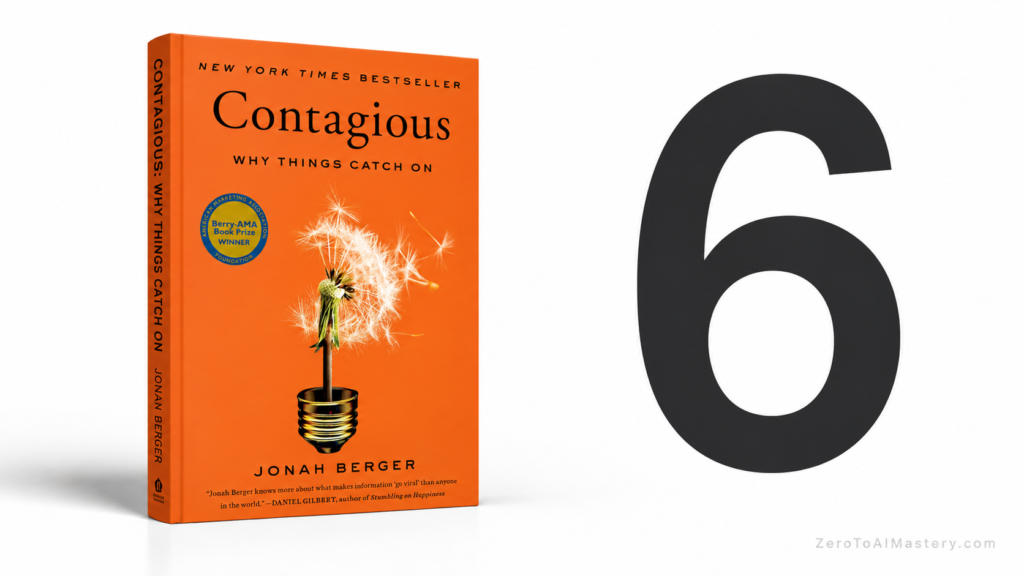
Shareable content rarely spreads by accident, and Contagious explains the patterns behind it. Jonah Berger breaks down why people talk about certain products, posts, campaigns, and ideas. For digital marketers, the book gives a useful way to think about social sharing, word of mouth, brand recall, and content that moves beyond the original audience.
You will learn:
- Create social currency so people feel good sharing your content
- Use triggers that keep your brand or idea top of mind
- Understand why emotional content often travels faster
- Add practical value that makes content worth forwarding
- Wrap marketing ideas inside stories people can repeat naturally
The book changes how you plan content. Instead of asking only what to post, you start asking why someone would care enough to share it. That shift can improve social media campaigns, blog ideas, videos, newsletters, referral campaigns, and brand storytelling. It belongs with the best digital marketing books because it teaches you how attention travels between people.
Best for: Content marketers, social media managers, creators, and anyone trying to make ideas more shareable.
7. Jab, Jab, Jab, Right Hook, by Gary Vaynerchuk
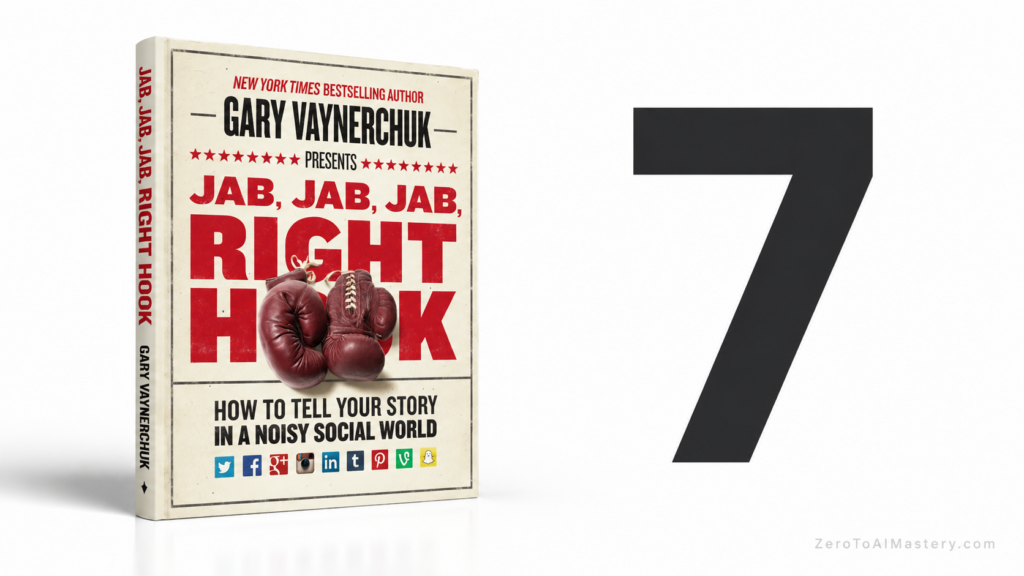
Social media rewards brands that understand timing, context, and value. Jab, Jab, Jab, Right Hook teaches a simple rhythm: give before you ask. The “jabs” are helpful, entertaining, or relationship-building pieces of content. The “right hook” is the direct ask, such as buying, subscribing, registering, or taking the next step.
You will learn:
- Create content that fits the platform instead of copying the same post everywhere
- Understand why audiences ignore brands that sell too quickly
- Balance useful content with direct calls to action
- Adapt one message into different platform formats
- Spot when your content sounds too much like an advertisement
The specific platforms may change, but the main lesson still applies. People respond better when you respect the platform, understand the context, and give them something worth paying attention to before asking for a sale. For readers exploring social media as part of a digital marketing career, this book teaches an important habit: earn attention before you try to convert it.
Best for: Social media marketers, creators, and personal brands learning how to sell without sounding pushy.
8. They Ask, You Answer, by Marcus Sheridan
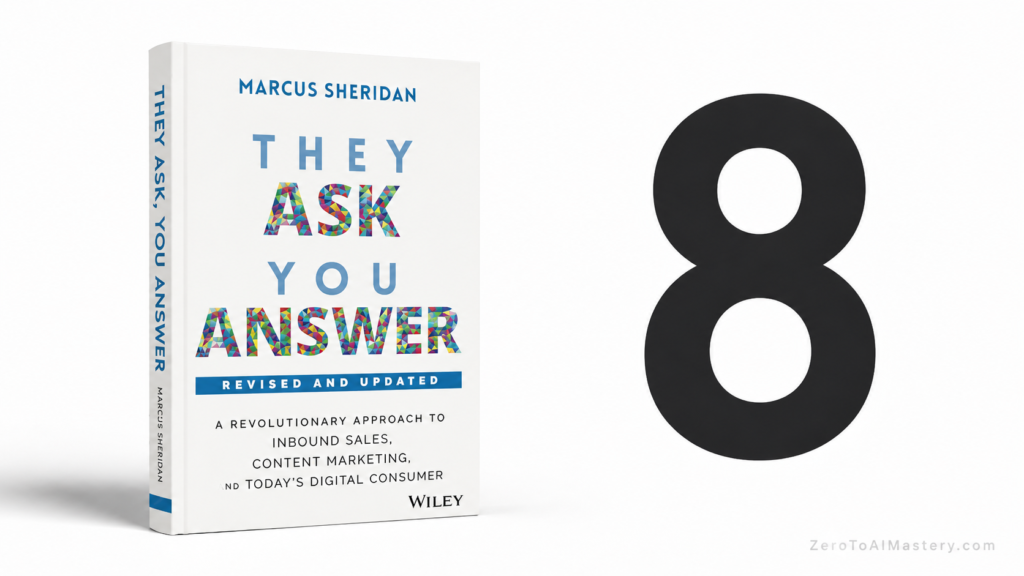
Buyer questions are often the best content strategy, and They Ask, You Answer builds an entire marketing approach around that idea. The book shows you how to answer the questions customers already have, especially the ones many businesses avoid. That includes pricing, problems, comparisons, reviews, and best-of content.
You will learn:
- Create content around questions buyers search before contacting a business
- Use pricing, problems, comparisons, reviews, and best-of topics to build trust
- Reduce buyer hesitation through honest educational content
- Help sales and marketing teams use the same content assets
- Attract higher-intent SEO traffic with practical buyer-focused articles
This approach connects directly to digital marketing because search traffic becomes more valuable when it matches real buyer intent. If your content answers the questions people already care about, it can support both SEO and sales. That makes this one of the best digital marketing books for beginners who want content marketing to feel practical instead of vague.
Best for: Content marketers, small business owners, service providers, and agencies that want content to support sales.
9. Epic Content Marketing, by Joe Pulizzi
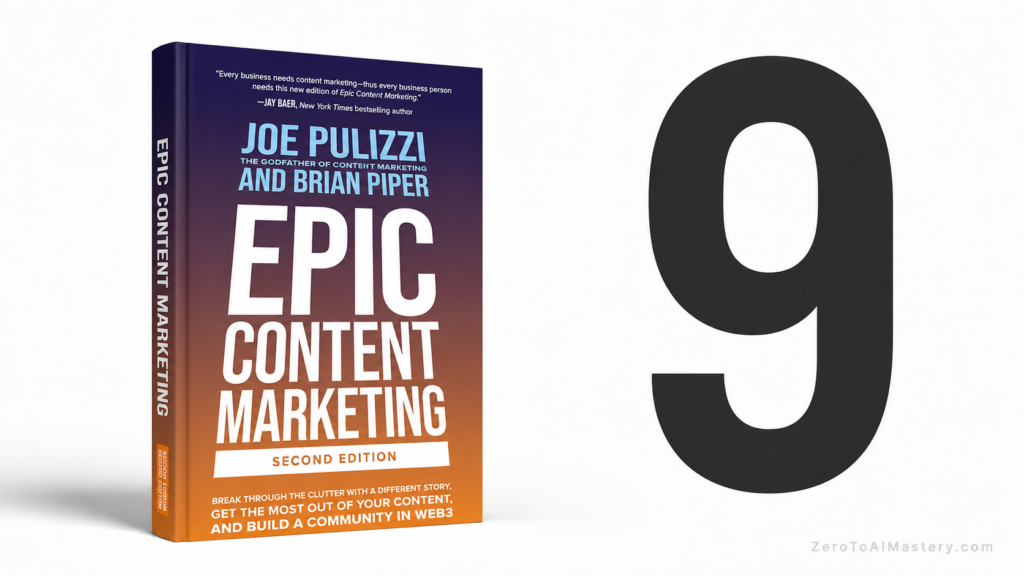
Publishing more content does not automatically create a content strategy. Epic Content Marketing helps you build content around audience, purpose, consistency, distribution, and measurement. It teaches you to create content with a mission, not just fill a blog, newsletter, or social calendar.
You will learn:
- Define a content mission instead of creating random posts
- Find a content tilt that gives your brand a distinct angle
- Plan and manage an editorial calendar
- Distribute content through search, social, email, and other channels
- Measure content against business goals, not only likes or views
The book matters because content powers many digital marketing channels. SEO needs content. Email needs content. Social media needs content. Brand authority often grows through content. Pulizzi helps you build that engine with more intention, which makes this one of the most useful marketing books for long-term content strategy.
Best for: Marketers, founders, bloggers, and creators who want a serious long-term content strategy.
10. Everybody Writes, by Ann Handley
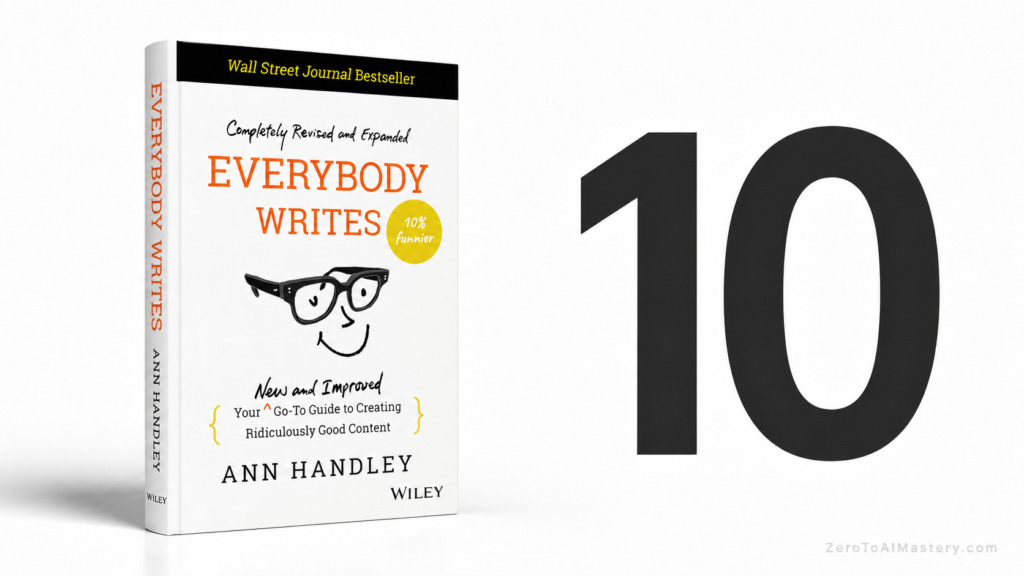
Every digital marketer writes, even if writing is not in the job title. Everybody Writes helps you improve the words you use in emails, landing pages, ads, blogs, newsletters, social posts, product descriptions, and website copy. Ann Handley treats writing as a practical skill you can improve through better habits, clearer thinking, and stronger editing.
You will learn:
- Write with more clarity and less clutter
- Strengthen headlines, openings, and paragraphs
- Remove jargon from marketing copy
- Use empathy to make content more reader-focused
- Create useful content that sounds human and trustworthy
The book connects directly to digital marketing because unclear writing weakens every channel. Stronger writing makes emails easier to read, landing pages easier to understand, ads more direct, and content more credible. If you want the best book to learn digital marketing writing, this is one of the strongest options to start with.
Best for: Marketers, freelancers, bloggers, newsletter writers, and creators who want better everyday copy.
11. Building a StoryBrand, by Donald Miller
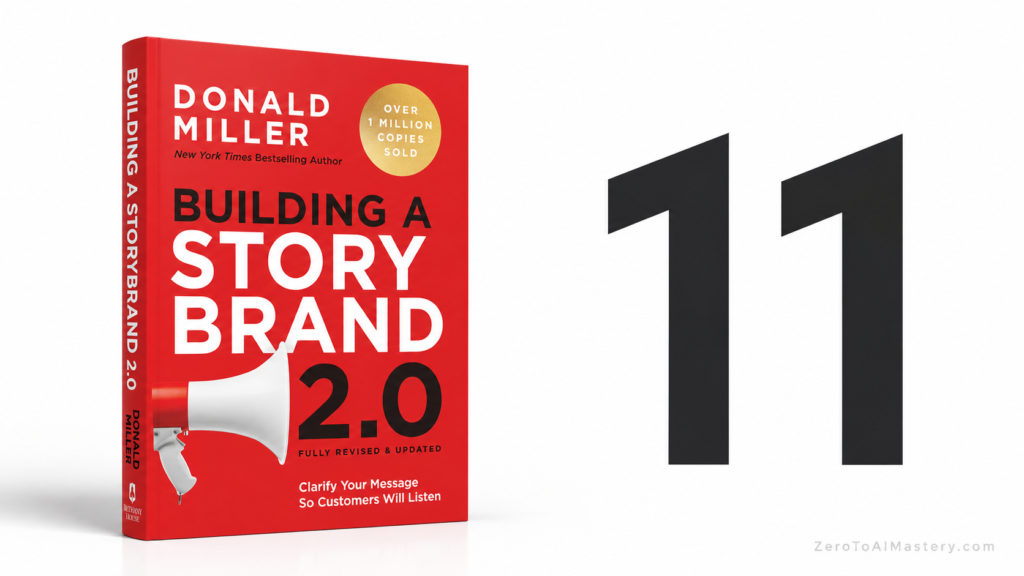
Clear messaging can fix problems that more traffic cannot. Building a StoryBrand helps you clarify your message by making the customer the hero and your brand the guide. It gives you a simple structure for explaining the customer’s problem, your solution, the plan, and the next action.
You will learn:
- Make the customer the hero instead of the brand
- Explain the customer’s problem clearly
- Present your brand as a helpful guide
- Build a simple plan and call to action
- Make website and landing page messaging easier to understand
The book works well for digital marketing because traffic gets wasted when the message feels confusing. Your website, ad, email, or landing page should quickly show what you offer, why it matters, and what the reader should do next. That is why messaging books like this matter just as much as channel-specific marketing books.
Best for: Founders, copywriters, consultants, and marketers who want clearer website and offer messaging.
12. Positioning: The Battle for Your Mind, by Al Ries and Jack Trout
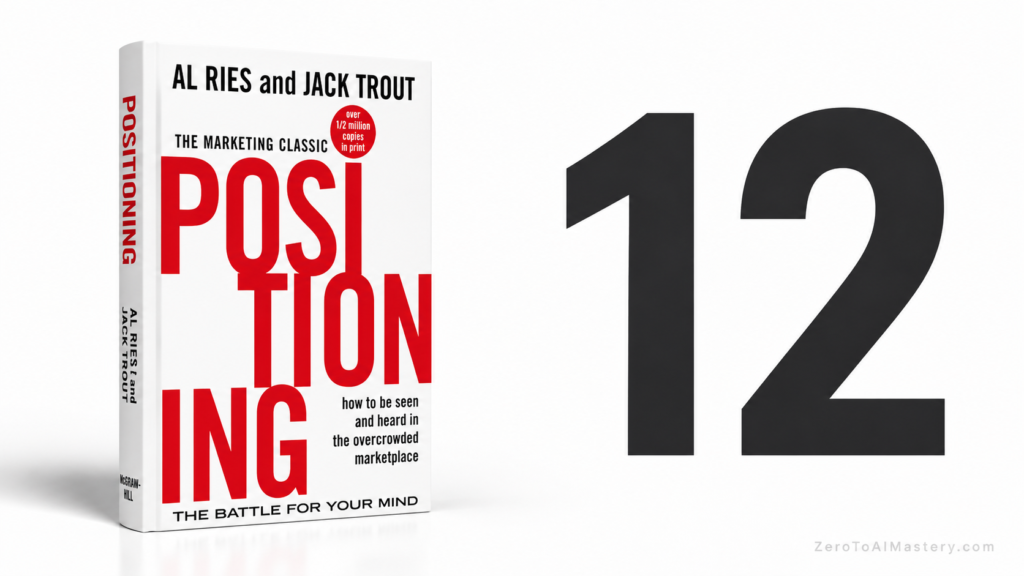
Crowded markets punish unclear brands, and Positioning explains how to become easier to remember. The book teaches you how brands occupy space in the customer’s mind. Instead of trying to say everything, strong positioning helps you own one clear idea, category, contrast, or association.
You will learn:
- Build a brand around a specific idea or category
- Use clarity instead of over-explaining every feature
- Understand how competitors shape customer perception
- Sharpen positioning in crowded markets
- Apply positioning to landing pages, ads, SEO pages, and brand messaging
This matters in digital marketing because people compare similar products, ads, websites, and offers quickly. Without a clear position, your content sounds generic, your ads feel interchangeable, and your landing pages fail to stick. For anyone planning a serious digital marketing career, positioning helps you understand why strategy must come before promotion.
Best for: Founders, brand builders, landing page writers, and marketers working in crowded categories.
13. Permission Marketing, by Seth Godin
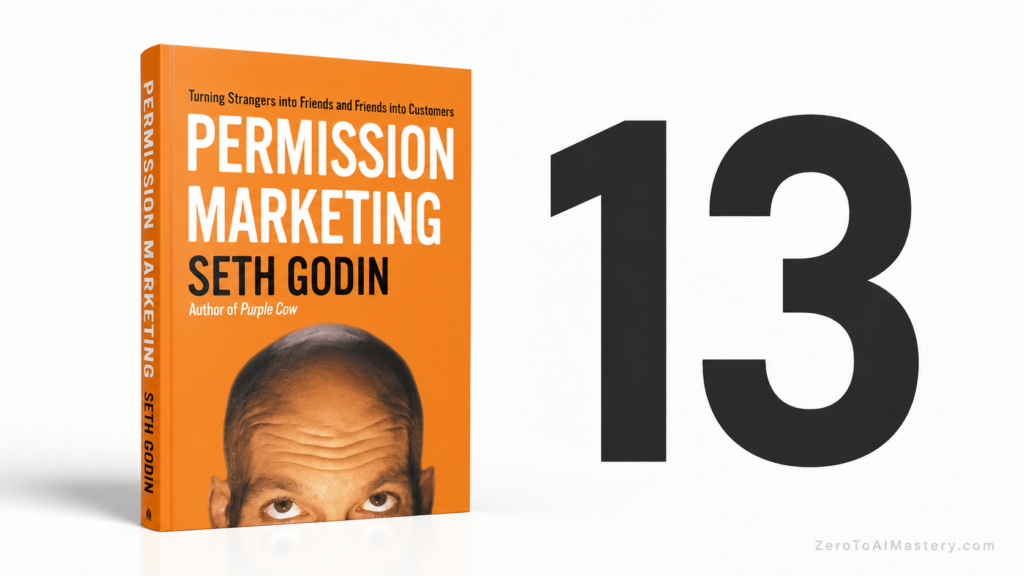
Permission beats interruption when you want long-term attention. Permission Marketing explains why marketing works better when people choose to hear from you. That idea matters across email lists, newsletters, communities, lead magnets, retargeting, and lifecycle marketing.
You will learn:
- Understand why interruption-based marketing loses power when people can ignore messages easily
- Build a healthier relationship between brand and audience
- Prioritize relevance over raw reach
- Use email and subscriber-based marketing with more trust
- Think about attention as a long-term relationship, not a one-time click
The book connects strongly to digital marketing because every email, notification, follow-up, and subscriber message either builds trust or damages it. It helps you treat attention with respect instead of assuming the audience will keep listening forever. That lesson still makes it one of the most relevant marketing books for email and audience building.
Best for: Email marketers, newsletter writers, creators, community builders, and brands that want long-term audience trust.
14. Made to Stick, by Chip Heath and Dan Heath
Memorable marketing needs more than a good idea. Made to Stick shows you how to make messages clearer, stronger, and easier to repeat. The SUCCESs framework, simple, unexpected, concrete, credible, emotional, and story-driven, gives marketers a practical way to improve headlines, hooks, campaign ideas, and brand messages.
You will learn:
- Simplify a message without weakening it
- Use surprise to earn attention
- Make ideas concrete instead of abstract
- Add credibility so people believe the message
- Use stories to make ideas easier to repeat
The book helps you avoid vague marketing. A good idea still needs the right shape before people can understand it, remember it, and share it. This framework gives your message that shape, which makes the book useful for digital marketing campaigns where attention disappears quickly.
Best for: Copywriters, content creators, brand strategists, teachers, and marketers who want stronger campaign ideas.
15. Hooked: How to Build Habit-Forming Products, by Nir Eyal
Retention starts with understanding why users come back. Hooked explains habit formation through triggers, actions, variable rewards, and investment. It helps you think beyond the first click and focus on repeat behavior, product engagement, onboarding, and loyalty.
You will learn:
- Use external and internal triggers to bring users back
- Make actions simple enough for users to complete
- Understand how variable rewards keep experiences interesting
- Encourage user investment that increases future engagement
- Connect habit loops to products, apps, emails, and communities
The book connects to digital marketing because growth does not end with acquisition. You also need onboarding, repeat visits, lifecycle emails, push notifications, community engagement, and loyalty loops that give people a reason to return. That makes it one of the more practical marketing books for product-led growth and retention.
Best for: Product marketers, app founders, lifecycle marketers, SaaS teams, and growth marketers.
16. $100M Offers, by Alex Hormozi
A weak offer makes every marketing channel harder. $100M Offers teaches you how to improve what you sell before blaming ads, algorithms, traffic quality, or audience targeting. It focuses on increasing perceived value by improving the outcome, increasing belief, reducing delay, and lowering effort.
You will learn:
- Understand the outcome the customer truly wants
- Increase belief that the outcome is achievable
- Reduce the time between purchase and result
- Lower the effort or sacrifice required from the customer
- Use bonuses, guarantees, scarcity, and pricing to improve perceived value
The book matters for digital marketing because every ad, landing page, sales page, webinar, and email sequence depends on the offer behind it. Better copy can help, but a stronger offer gives the entire marketing system more power. For readers building a digital marketing career around freelancing, consulting, coaching, or services, this book helps you understand what makes an offer easier to sell.
Best for: Freelancers, coaches, consultants, creators, agencies, and business owners who want stronger offers and better conversions.
17. Traction, by Gabriel Weinberg and Justin Mares
Growth becomes less confusing when you test channels instead of guessing. Traction helps you compare customer acquisition options like SEO, paid ads, content, partnerships, PR, sales, communities, and referrals. Its Bullseye Framework gives you a way to find which channels deserve your time and budget.
You will learn:
- Compare different customer acquisition channels
- Test SEO, content, ads, partnerships, PR, sales, communities, and other channels
- Avoid relying only on the channels you already know
- Use the Bullseye Framework to narrow your focus
- Choose a growth channel based on evidence instead of opinion
The book works well for digital marketing because every business grows differently. One brand may win through SEO, another through partnerships, another through paid search, and another through community. This book teaches you to test before you commit, which is why it belongs in a practical list of the best digital marketing books in 2026.
Best for: Startup founders, growth marketers, freelancers, and small teams deciding where to focus their marketing effort.
18. Hacking Growth, by Sean Ellis and Morgan Brown
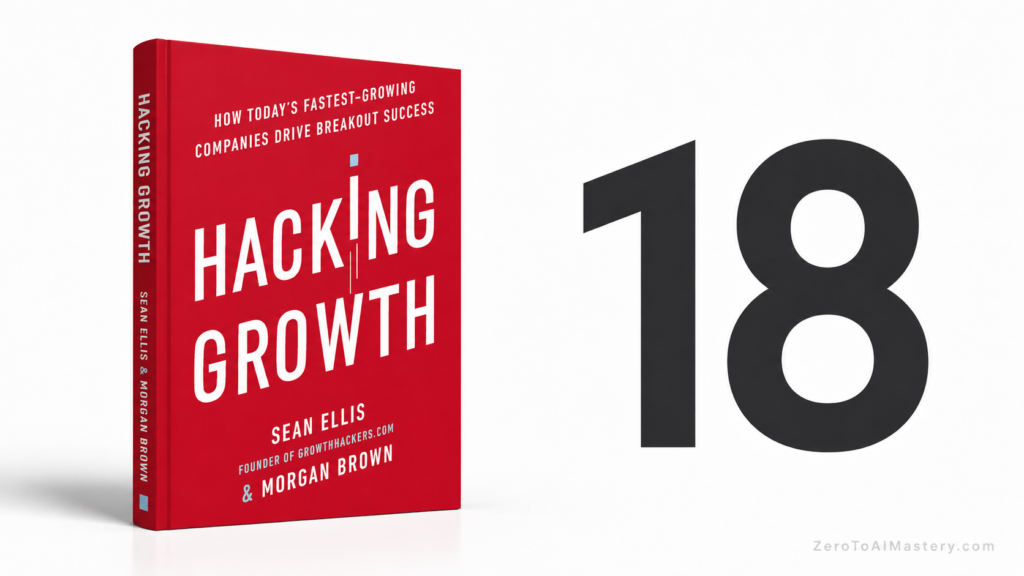
Repeatable growth needs a system, not random campaign ideas. Hacking Growth shows how marketing, product, data, and experimentation work together. It helps you improve acquisition, activation, retention, and revenue through structured testing instead of one-off guesses.
You will learn:
- Understand how cross-functional growth teams work
- Identify a North Star metric
- Run high-tempo experiments
- Improve activation and retention, not just traffic
- Use data to prioritize growth ideas
The book connects strongly to digital marketing because traffic alone does not create growth. You also need users to understand the product, take the first important action, return, refer others, and become profitable customers. It is one of the best digital marketing books for readers who want to understand growth as a process, not a buzzword.
Best for: Growth marketers, SaaS teams, startup founders, product marketers, and teams that want a repeatable testing system.
19. Digital Marketing: Strategy, Implementation and Practice, by Dave Chaffey and Fiona Ellis-Chadwick
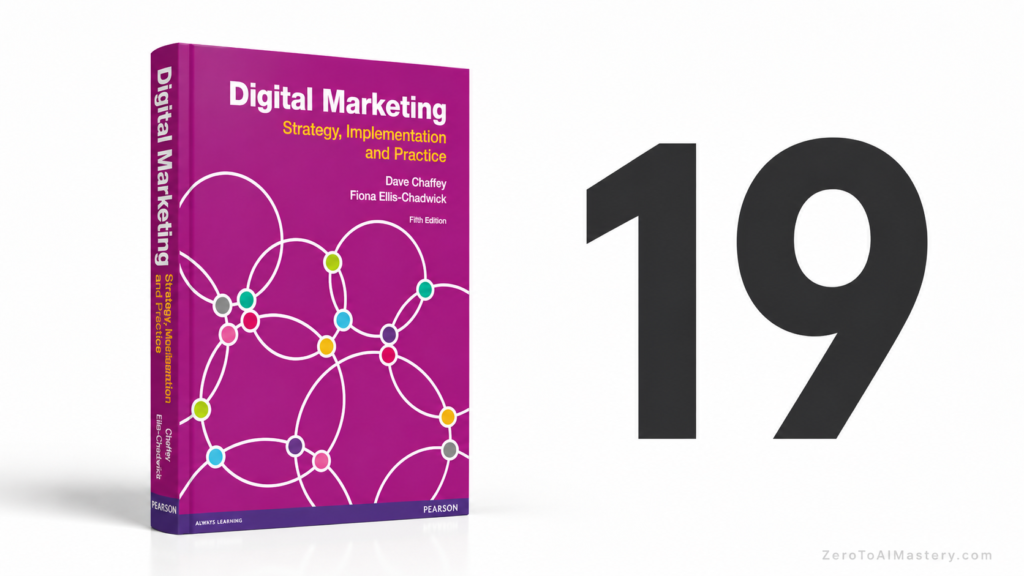
For a deeper strategic reference, Digital Marketing: Strategy, Implementation and Practice gives digital marketing a more professional structure. It connects digital media, business goals, customer journeys, campaign planning, analytics, and implementation. Instead of treating digital marketing as a set of tools, it shows how those tools support wider business and customer objectives.
You will learn:
- Build digital marketing strategy around business goals
- Use customer journeys to shape channel planning
- Connect search, social, email, paid media, and analytics inside a wider system
- Measure marketing performance across different stages
- Think like a strategist instead of only a channel operator
The book gives you a stronger planning mindset. You learn how digital marketing works inside companies, agencies, campaigns, and long-term customer relationships instead of only learning separate platforms. It is especially useful if you want marketing books that go beyond beginner tactics and explain strategy properly.
Best for: Marketing students, agency strategists, managers, and professionals who want a detailed digital marketing reference.
20. Marketing 6.0: The Future Is Immersive, by Philip Kotler, Hermawan Kartajaya, and Iwan Setiawan
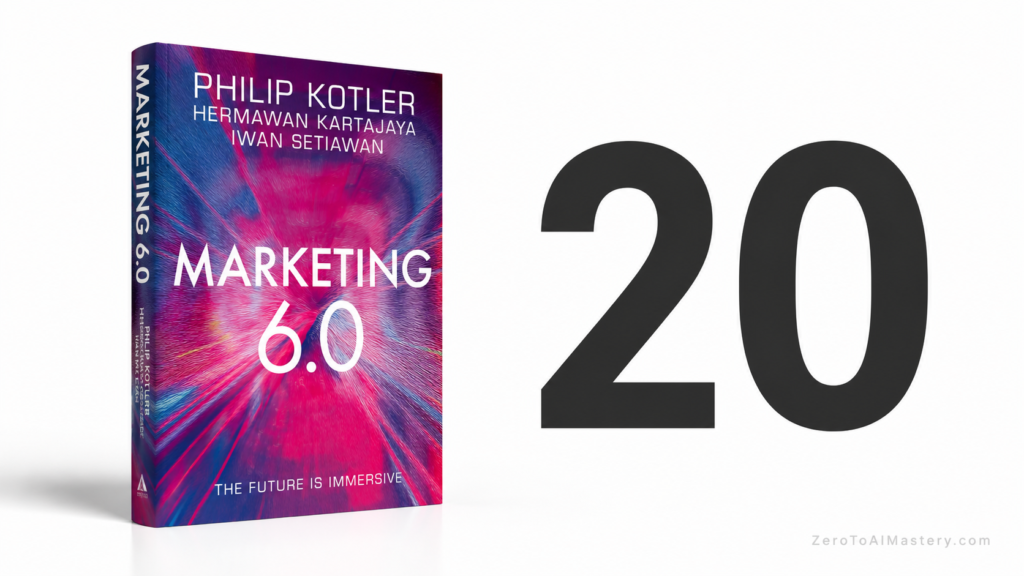
The future of marketing will not stay limited to websites, ads, and social posts. Marketing 6.0 explores immersive marketing and the blending of physical and digital customer experiences. It helps you understand how technology, behavior, personalization, and experience design can shape the next stage of brand interaction.
You will learn:
- Understand how physical and digital customer experiences are blending
- See why immersive experiences are becoming part of brand strategy
- Connect changing consumer behavior with marketing planning
- Use technology to support more interactive customer journeys
- Think about experience design, not only communication
The book connects to digital marketing because customers move across digital and physical touchpoints more fluidly than before. Marketers need to think about interaction, personalization, continuity, and experience instead of treating every channel as a separate campaign. It adds a future-focused layer to a list of the best digital marketing books in 2026.
Best for: Senior marketers, strategists, brand leaders, and advanced learners interested in future marketing trends.
21. Marketing Artificial Intelligence, by Paul Roetzer and Mike Kaput
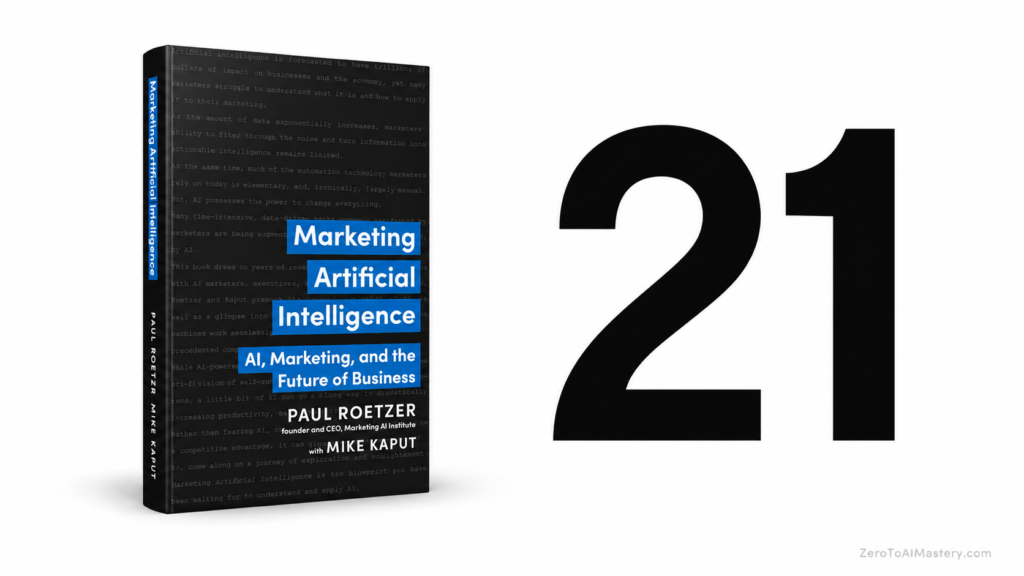
AI has become part of marketing strategy, not just content production. Marketing Artificial Intelligence helps you understand how AI affects content, advertising, analytics, personalization, productivity, and marketing operations. It pushes you to think beyond prompt lists and see AI as a capability that changes how marketing teams work.
You will learn:
- Understand where AI fits across the marketing function
- Use AI for planning, production, personalization, promotion, and performance
- Build AI literacy instead of relying only on tool lists
- Separate what AI can automate from what still needs human judgment
- Prepare marketing workflows for AI-driven operations
The book matters because AI now touches search, content creation, ad optimization, reporting, customer research, and automation. It helps you understand how AI changes marketing work instead of only chasing whichever tool is trending. For anyone comparing the best digital marketing books for beginners and advanced marketers, this one adds the AI layer every modern marketer now needs.
Best for: Marketing managers, strategists, digital marketers, creators, and business owners who want to understand AI’s role in modern digital marketing.
If your main interest is using AI not only to improve marketing work but also to create income opportunities, it is worth going beyond one AI marketing book. A useful companion list is 10 Best AI Books to Make Money in 2026, which focuses more directly on AI, business models, income skills, and practical ways people are using AI to build profitable work. Pairing that list with Marketing Artificial Intelligence gives you both sides of the picture: how AI changes marketing teams, and how AI knowledge can turn into real earning opportunities.
Which Is the Best Book to Learn Digital Marketing in 2026?
Every book on this list earns its place, and together they cover far more ground than any single title could. Influence and Contagious teach you why people buy and share. Positioning and Building a StoryBrand teach you how to say something that actually lands. They Ask, You Answer and Epic Content Marketing give you a repeatable content engine. Traction and Hacking Growth keep you from wasting months on the wrong channel. Digital Marketing: Strategy, Implementation and Practice and Marketing 6.0 prepare you for a full career, not just a first campaign.
But if you are asking yourself what is the best book to learn digital marketing in 2026, specifically if you are building a digital marketing career from the ground up, The Digital Marketing Blueprint by Abhishek Ashtekar is the strongest starting point on this list of 21. Here is the honest reasoning, not just a claim.
First, it is the only book here written specifically for 2026, which means it is the only one built around AI marketing workflows as core material rather than an afterthought or a separate purchase, unlike older titles that predate ChatGPT entirely. Second, it does not stop at theory. The 90-day structure forces you to produce an actual SEO audit, a landing page, an email sequence, and a portfolio case study, the exact assets hiring managers and freelance clients ask to see. Third, it closes the loop that most marketing books leave open: real, sourced income ranges by country, so you know what the skills in the book are actually worth in the market you are targeting, all laid out in full on thedigitalmarketingblueprint.com.
That does not make the other 20 books optional. Pair the Blueprint’s 90-day system with Influence for persuasion and Positioning for differentiation, and you have covered execution, psychology, and strategy within a few months of reading.
Conclusion
You do not need to read every title on this list of the best digital marketing books in 2026 before you start working. Pick one that matches where you are right now. If you are brand new and want a single system to follow from day one, start with The Digital Marketing Blueprint. If you already understand the basics and want to sharpen your thinking, Positioning or Influence will do more for you than another course.
What matters most is turning what you read into something you can point to. A finished audit, a written email sequence, a landing page draft. That is the difference between having read a marketing book and actually becoming a marketer, and it is the one thing every book on this list, in its own way, is trying to get you to do.
Frequently Asked Questions (FAQs)
1. What is the best book for learning digital marketing from scratch?
For someone with zero background, The Digital Marketing Blueprint by Abhishek Ashtekar is built specifically for that starting point, since it assumes no prior experience and walks through SEO, copywriting, email, ads, and analytics in sequence. Digital Marketing For Dummies is a strong alternative if you want a broader, more general overview of every channel before specializing.
2. Are digital marketing books still worth reading when the field changes so fast?
Yes, with one caveat. Platform-specific tactics, like a particular Instagram feature or an ad format, can become outdated within months, but the underlying frameworks in books like Influence, Positioning, and Made to Stick are based on human psychology and buyer behavior, which barely change. The best digital marketing books in 2026 mix that timeless thinking with current, dated material, which is why picking a recently updated title like SEO 2026 alongside a classic gives you both.
3. What are the best digital marketing books for beginners?
Digital Marketing For Dummies, SEO 2026, and The Digital Marketing Blueprint are the three most beginner-friendly options on this list of 21. All three assume no prior knowledge, though the Blueprint goes further by adding a structured 90-day project system and AI marketing coverage that the other two do not include.
4. Can I learn digital marketing without a degree or a paid course?
Yes. Several books on this list, including The Digital Marketing Blueprint, are explicitly written for readers without a marketing degree or certification. The bigger factor in actually landing work is not the credential, it is whether you can show a real project, audit, or campaign you built, which is exactly what a structured book with built-in exercises helps you produce.
5. How much can you earn in a digital marketing career in 2026?
Pay varies significantly by role, location, and experience. In the United States, Glassdoor’s own salary data puts the average Digital Marketing Specialist at roughly $72,939 a year, with Digital Marketing Managers averaging closer to $129,045. Outside the US, ranges vary widely, and a few of the books on this list, particularly The Digital Marketing Blueprint, break country-specific figures down in more detail.
6. Do any of these books cover AI marketing tools and workflows?
Two do directly. Marketing Artificial Intelligence by Paul Roetzer and Mike Kaput covers AI’s strategic impact on marketing teams and operations. The Digital Marketing Blueprint goes further by building AI workflows, including Claude Skills and no-code automation, directly into its hands-on project system rather than treating AI as a separate topic.
7. Should I read one digital marketing book or several?
Most marketers get more value from reading two or three well-chosen books closely and applying them than from skimming all 21. A reasonable approach is one foundational book to build your system, like The Digital Marketing Blueprint or Digital Marketing For Dummies, paired with one psychology or positioning book, like Influence or Positioning, once you have started applying the basics.
Final Thoughts
Reading about marketing and doing marketing are two different skills, and only one of them pays the bills. The 21 books on this list earned their spot because each one gives you something you can actually apply, not just something interesting to know. Start with whichever title matches where you are today, finish it with a real project in hand, and let the next book fill the next gap.
If there is one thing every experienced marketer eventually tells beginners, it is this: you learn more from one finished campaign than from three unfinished books. Use these 21 as fuel for that first project, not as a replacement for starting it.