
The AI gold rush is not slowing down. If anything, it is picking up speed.
Global AI spending crossed $225 billion in investments in 2025 alone, and Gartner projects total worldwide AI spending will grow to over $2 trillion in 2026 (source: Gartner via Vention). AI startups now capture roughly 26% of all global venture capital funding, and 44% of new unicorns in 2024 were AI companies (source: Founders Forum Group). These are not small numbers. They tell you that the window to build a profitable AI startup is wide open right now.
But here is the thing. Starting a profitable AI startup is not about chasing trends or building something cool just because you can. It is about solving real problems that businesses and people actually face. The founders who succeed in 2026 are the ones who find friction inside industries and ask how AI can remove it.
If you have been thinking about launching your own AI business, this guide will walk you through 10 profitable AI startup ideas that have massive potential in 2026. For each idea, you will find a clear explanation of why it works, a real-world example, resources to learn from, and a step-by-step process to get started.
1. AI Chatbots and Virtual Assistants for Business
AI chatbots and virtual assistants are changing how businesses talk to their customers, and they are quickly becoming one of the most profitable AI startup ideas in today’s market. These systems can answer customer questions, book appointments, handle orders, and provide 24/7 support without needing a single human agent on the line. And they keep getting smarter.
Why is this profitable? The math is simple. Hiring customer service agents is expensive. Training them takes time. And they can only handle one conversation at a time. AI chatbots scale instantly. They cost a fraction of what a human team costs. And they work around the clock without breaks or sick days. Conversational AI alone is expected to save $80 billion in contact center labor costs by 2026 (source: Grand View Research). That is a massive cost savings, and businesses are paying attention.
By 2029, AI agents are expected to resolve 80% of common customer service issues without any human help, according to Gartner. That tells you exactly where this market is heading.
Example
Assume a social shopping app like “Rodeo” that uses AI tools such as Amazon Rekognition and Google Vision AI to identify products in photos and videos. This would make shopping more interactive and personalized by helping users quickly find and buy items they see.
Resources to Learn
Books:
- Artificial Intelligence: A Guide for Thinking Humans helps you build a strong understanding of how AI actually works. It explains concepts in a simple and realistic way, so you don’t just follow trends blindly but truly understand the logic behind AI systems.
- Designing Bots: Creating Conversational Experiences focuses on how to design chatbots that feel natural and useful. It teaches how conversations should flow, how users think while interacting with bots, and how to create better user experiences.
Online Courses:
- Building AI-Powered Chatbots Without Programming (Udemy) is perfect if you want to create chatbots without coding. It shows step-by-step how to use tools and platforms to build functional bots quickly and practically.
- Chatbots for Business (Coursera) teaches how companies use chatbots in real-world scenarios. You will learn how to build, deploy, and use chatbots for customer support, marketing, and automation.
Step-by-Step Process to Start This AI Startup
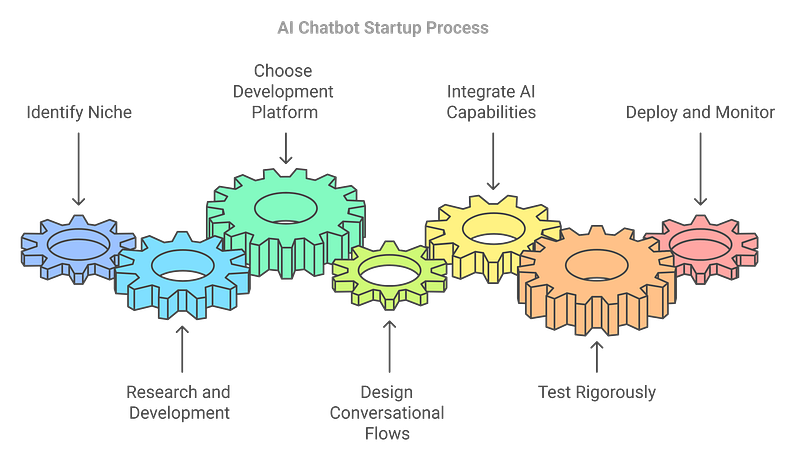
- Monitor, Improve, and Scale: Track how users interact with your chatbot. Look at common questions, drop-off points, and errors. Continuously improve responses, add features, and expand your chatbot based on real user feedback.
- Identify the Niche: Start by deciding exactly who your chatbot is for. You can focus on industries like customer support, e-commerce, healthcare, education, or local businesses. The more specific your niche is, the easier it becomes to solve real problems and attract users.
- Research and Understand the Market: Study existing chatbots in your chosen niche. Look at what they do well and where they fail. Read reviews, test them yourself, and identify gaps. This helps you build something better instead of just copying what already exists.
- Choose the Right Development Platform: Select a platform that fits your skill level and goals. Tools like Dialogflow, Microsoft Bot Framework, or IBM Watson Assistant allow you to build chatbots efficiently, even with minimal coding.
- Design Clear Conversational Flows: Plan how users will interact with your chatbot. Create simple conversation paths for different scenarios like asking questions, solving problems, or making purchases. The goal is to make the interaction smooth, natural, and easy to follow.
- Add AI and NLP Capabilities: Integrate natural language processing so your chatbot can understand user intent instead of just matching keywords. This makes responses smarter, more human-like, and more useful in real conversations.
- Build and Test the Initial Version: Create a working version of your chatbot and test it in real situations. Try different inputs, edge cases, and user behaviors. Fix errors, improve responses, and make sure the chatbot handles conversations properly.
- Launch with Real Users: Deploy your chatbot on platforms like websites, WhatsApp, or apps. Start with a small group of users if possible, so you can monitor performance without major risk.
2. Personalized Learning Platforms Using AI
Think about the last time you tried to learn something online. The course moved too fast in some areas and too slow in others. It did not adjust to your strengths or weaknesses. It treated every student the same way.
This is exactly the gap personalized learning platforms are solving, and it is becoming one of the most profitable AI startup ideas today. These platforms use AI to adapt educational content to each student’s learning style, pace, and performance. When a student struggles with a concept, the platform slows down and provides extra support. When they breeze through a topic, it moves on quickly.
Why is this a profitable AI startup idea? The AI in education market is valued at $10.4 billion in 2026 (source: Resourcera). Online education is booming, and students and professionals alike are looking for learning experiences that actually work. A platform that adapts to each learner keeps users engaged longer, leads to better outcomes, and creates higher retention rates. That translates directly into revenue.
Example
Imagine a platform where the AI watches how a student answers questions in real time, identifies which concepts they find difficult, and automatically adjusts the next lesson to address those weak spots. This is not a future concept. Companies are building this right now across subjects like math, coding, language learning, and professional development.
Resources to Learn
- The Personalized Learning Playbook focuses on how to create learning experiences tailored to individual needs. It explains practical strategies to design personalized education systems, making it especially useful if you want to build AI-driven learning platforms or adaptive learning tools.
- How People Learn II: Learners, Contexts, and Cultures dives deeper into how humans actually learn. It covers the role of environment, culture, and psychology in learning, helping you understand how to design more effective and meaningful learning experiences using AI.
Step-by-Step Process to Start This AI Startup
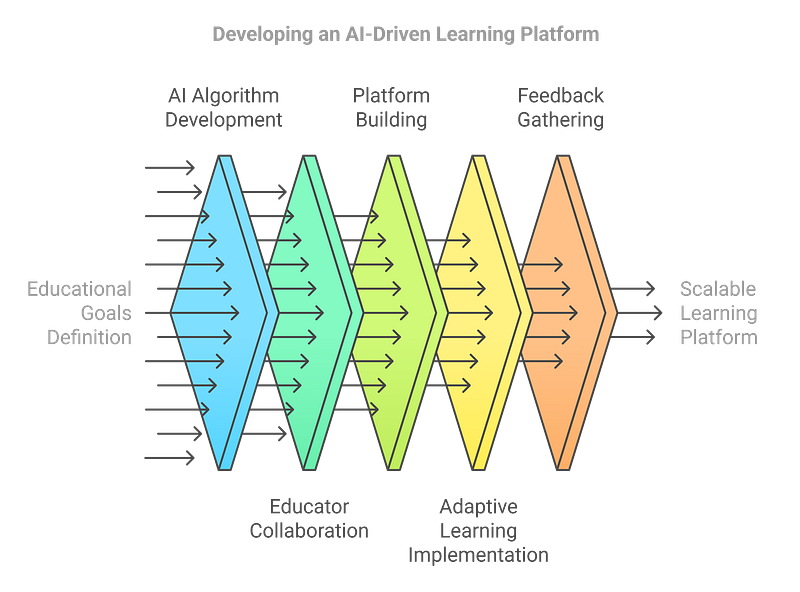
- Scale and Expand the Platform: Once your platform starts gaining users, expand into more subjects, add advanced features, and improve personalization. This helps you reach a wider audience and grow your startup sustainably.
- Define Clear Educational Goals: Start by deciding what your platform will teach. It can be a specific subject like coding, AI, or business skills, or it can focus on exam preparation or skill-based learning. Be clear about your target audience, such as students, professionals, or beginners, so your content stays focused and useful.
- Research Learner Needs and Gaps: Understand what learners actually struggle with. Look at existing platforms, read reviews, and identify what is missing. This helps you build a platform that solves real problems instead of just offering generic content.
- Develop AI-Based Learning Logic: Create systems that can track user performance and behavior. Your AI should be able to analyze how a learner is performing and adjust content accordingly, such as recommending easier topics, harder challenges, or revision sessions.
- Collaborate with Educators and Experts: Work with teachers or subject experts to ensure your content is accurate, structured, and aligned with real learning standards. This adds credibility and improves the quality of your platform.
- Build a Simple and User-Friendly Platform: Design an interface that is easy to use and distraction-free. The platform should allow users to access lessons, track progress, and interact with content smoothly without confusion.
- Implement Adaptive Learning Paths: Use AI to personalize the learning journey for each user. Based on their progress, the platform should automatically adjust difficulty levels, suggest topics, and create a customized learning path.
- Test with Real Users and Improve: Launch an initial version and let real users try it. Observe how they interact with the platform, where they face issues, and what they find useful. Use this data to refine features and improve the experience.
- Collect Feedback and Continuously Update: Regularly gather feedback from users and educators. Improve content quality, add new features, and fix issues to keep the platform relevant and effective.
3. AI Cybersecurity Solutions
Cyber threats are growing more complex every single day. Phishing attacks, ransomware, data breaches, and advanced persistent threats are costing businesses trillions of dollars globally. The old methods of protecting digital assets, like basic firewalls and antivirus software, simply cannot keep up with modern attackers.
This is where AI in cybersecurity makes a real difference, and it is emerging as one of the most profitable AI startup ideas today. AI-based security systems monitor network activity in real time, learn what “normal” behavior looks like, and instantly flag anything suspicious. They can detect threats before they cause damage, predict potential security breaches, and respond to attacks faster than any human security team.
The cybersecurity segment of the AI market is expected to grow at a CAGR of 20.4% over the coming decade (source: Precedence Research). Companies in finance, healthcare, e-commerce, and government are spending heavily on AI security tools. This is not a “nice to have” for businesses anymore. It is a necessity.
Example
Darktrace uses AI to detect cyber threats before they strike. Their system constantly monitors network activity, builds a picture of what normal behavior looks like, and flags anything that deviates from that pattern. It is essentially an AI security guard that never sleeps and never misses a shift.
Resources to Learn
Books:
- Artificial Intelligence in Cybersecurity helps you understand how AI is used to detect threats, automate security tasks, and improve overall cybersecurity systems. It gives a more technical and strategic view of how AI and security work together.
- Cybersecurity and Cyberwar: What Everyone Needs to Know explains the fundamentals of cybersecurity in a simple and practical way, including real-world threats, cyber attacks, and how digital security impacts businesses and governments.
Online Courses:
- Cybersecurity Fundamentals (edX) is a beginner-friendly course that covers basic concepts like network security, threats, and protection methods, helping you build a strong foundation.
- AI for Cybersecurity (Coursera) teaches how AI models are applied to detect fraud, identify threats, and improve security systems in real-world scenarios.
Step-by-Step Process to Start This AI Startup
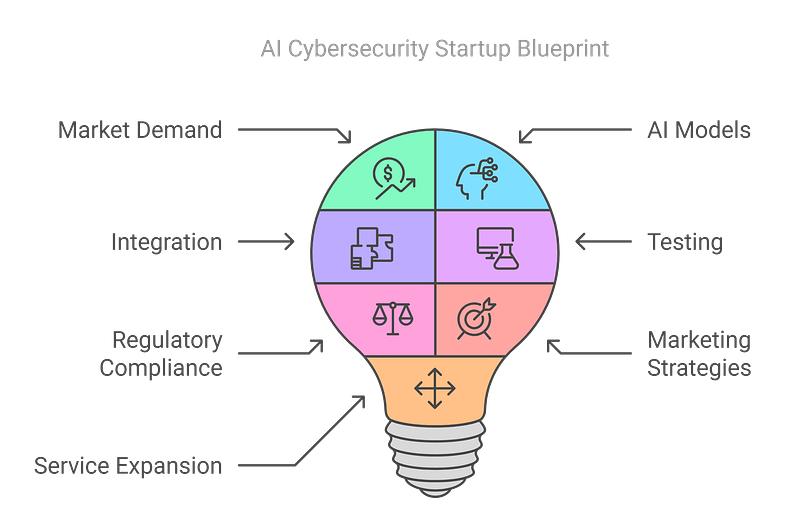
- Scale and Expand Your Services: Add advanced features like automated responses, real-time monitoring, and predictive threat analysis to increase the value of your product as you grow.
- Learn About Cyber Threats: Start by understanding common cyber threats like phishing, malware, ransomware, and data breaches. The more you understand these attacks, the better you can design AI systems to detect and prevent them.
- Research Existing Security Solutions: Study current cybersecurity tools and platforms to understand how they work, what they do well, and where they fail. This helps you build a better and more useful solution.
- Build AI Models for Threat Detection: Develop machine learning models that can identify suspicious patterns and unusual behavior. Train these models on relevant data so they can detect threats in real time.
- Integrate AI with Security Systems: Ensure your AI solution works smoothly with existing tools like firewalls, antivirus software, and monitoring systems so businesses can easily adopt your product.
- Test Your AI System Thoroughly: Simulate different types of cyberattacks to check how well your system performs. Identify weaknesses, improve accuracy, and make sure responses are fast and reliable.
- Follow Security Standards and Regulations: Make sure your solution complies with standards like GDPR, CCPA, and ISO 27001 to protect user data and build trust.
- Launch and Attract Early Users: Introduce your product by offering free trials, demos, or security audits. Focus on industries like finance, healthcare, and e-commerce where security is a top priority.
- Monitor Performance and Improve Continuously: Track how your AI performs in real-world conditions, fix issues, and update models regularly to handle new types of threats.
Bottom line: AI cybersecurity is in massive demand, and businesses are ready to spend heavily to protect their data. If you build a reliable AI security solution, it can turn into a highly profitable and future-proof business.
4. AI Healthcare Diagnostics
Here is a question worth thinking about. What if diseases could be detected before symptoms even appear? What if a simple scan could catch something a human doctor might miss?
AI in healthcare diagnostics is turning this into reality, and it is quickly becoming one of the most profitable AI startup ideas today. By analyzing medical images, lab results, and patient data, AI can spot patterns and abnormalities that are invisible to the human eye. The result is earlier detection, more accurate diagnoses, and better patient outcomes.
The AI healthcare sector is valued at $64.8 billion in 2026 (source: Resourcera). Healthcare AI drew $11.1 billion in investment in 2024 alone, with administrative AI solutions capturing 60% of that total (source: SVB via Articsledge). Hospitals and clinics are actively looking for AI tools that can improve diagnostic accuracy and reduce costs. The demand is there. The technology is ready.
Example
SigTuple Technologies, founded in 2015 in Bengaluru, India, automates the manual review of medical data like blood samples and retinal images using AI. Their solutions assist in pathology and ophthalmology, offering automated digital microscopes and AI platforms that improve diagnostic accuracy and speed.
Resources to Learn
Books:
- Deep Medicine: How Artificial Intelligence Can Make Healthcare Human Again explores how AI can improve healthcare while still keeping the human touch. It explains how doctors can use AI to make better decisions and provide more personalized care.
- Artificial Intelligence in Healthcare gives a clear understanding of how AI is applied in medical fields, including diagnostics, treatment planning, and healthcare systems.
Online Courses:
- Artificial Intelligence in Healthcare (edX) helps you understand the fundamentals of AI in healthcare, including its benefits, challenges, and future potential.
- AI for Medicine (Coursera) teaches how AI is used in diagnosis, patient care, and medical data analysis, with practical real-world applications.
Step-by-Step Process to Start This AI Startup
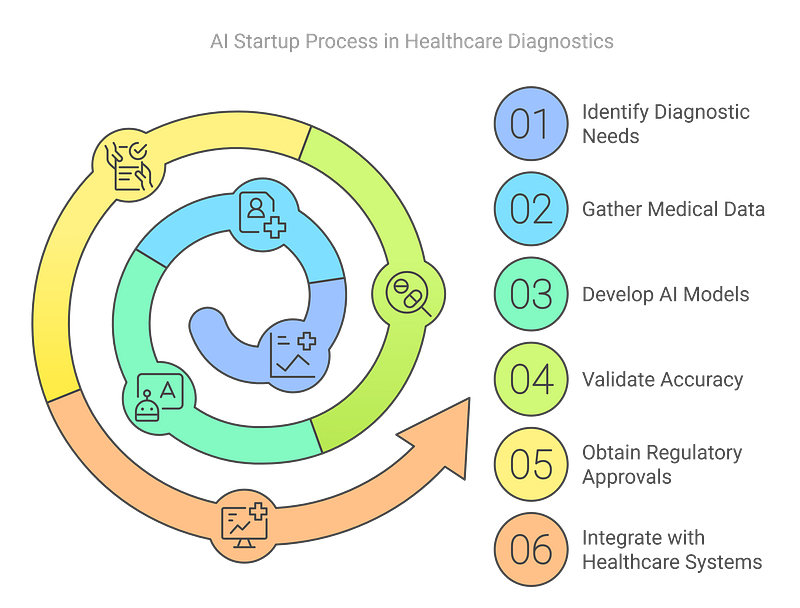
- Monitor and Improve Continuously: After deployment, track performance, collect feedback, and keep improving the system to maintain accuracy and reliability over time.
- Identify Diagnostic Needs: Start by choosing a specific area in healthcare where diagnostics can be improved, such as radiology, pathology, or early disease detection. Focusing on one problem helps you build a more effective and specialized solution.
- Research the Problem Deeply: Understand how diagnosis currently works, where delays or errors happen, and what doctors struggle with. This ensures your AI solves a real and meaningful problem.
- Gather Medical Data: Collaborate with hospitals, clinics, or research institutions to access anonymized medical data. High-quality data is essential for training accurate and reliable AI models.
- Develop AI Models: Use machine learning techniques to build models that can analyze medical images, reports, or patient data and detect patterns or abnormalities.
- Validate Accuracy: Test your AI system thoroughly using real-world scenarios or clinical trials. Ensure that the results are accurate, consistent, and safe for medical use.
- Obtain Regulatory Approvals: Follow healthcare regulations and approval processes to certify your AI tool. This step is critical to legally use your product in real medical environments.
- Integrate with Healthcare Systems: Make sure your AI solution works smoothly with existing hospital systems like electronic health records and diagnostic tools so it can be easily adopted.
- Provide Training to Professionals: Train doctors and healthcare staff on how to use your AI system effectively. Clear guidance ensures better adoption and trust in your product.
5. AI Content Creation Tools
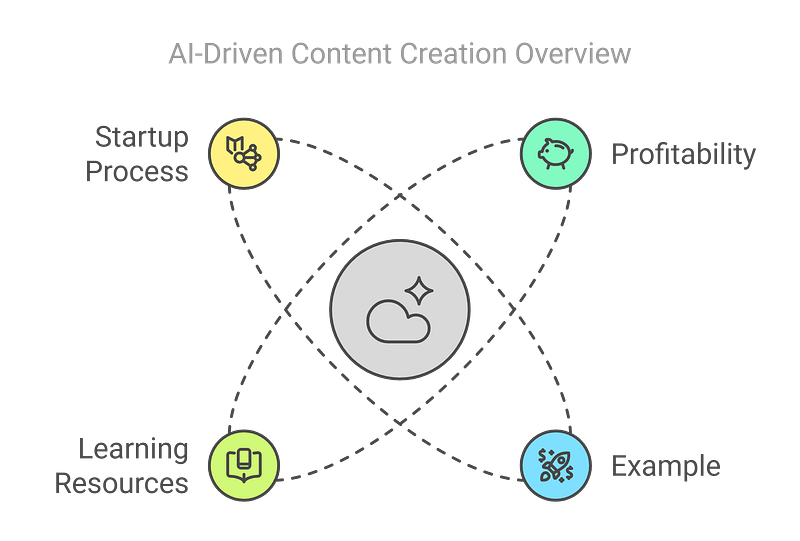
Businesses today need a constant stream of content. Blog posts, social media updates, videos, emails, product descriptions, ad copy. The list never ends. But creating all that content consistently and at a high quality is expensive and time-consuming.
This is where AI content creation tools come in, and they are becoming one of the most profitable AI startup ideas in the digital space. These tools help businesses generate articles, edit videos, write social media content, and create marketing copy faster and at a lower cost. The goal is not to replace human creativity, but to support it and make production more efficient without compromising quality.
The generative AI market reached $136 billion in 2026, driven largely by enterprise adoption of content tools, coding assistants, and image generation (source: Noizz.io). Companies need content at scale, and they are willing to pay for tools that make that possible.
Example
OpusClip is a generative AI video editing startup launched in 2022. It offers a tool that allows users to input text prompts, and the AI analyzes the content to select the most compelling video clips for social media. The startup has secured significant funding, which shows that investors believe strongly in the future of AI content creation.
Resources to Learn
Books:
- The Content Code: Six Essential Strategies to Ignite Your Content, Your Marketing, and Your Business explains how content actually spreads and gains attention. It helps you understand marketing strategies that drive reach, engagement, and real business results.
- Artificial Intelligence for Content Creation: How AI and Machine Learning Can Transform Your Business & Turbocharge Your Marketing Results focuses on how AI can be used to create, optimize, and scale content efficiently. It shows practical ways to use AI for better marketing performance.
Online Courses:
- Content Strategy for Professionals: Engaging Audiences (Coursera) helps you understand how to plan, structure, and distribute content to attract and retain the right audience.
- AI for Content Creators (Udemy) teaches how to use AI tools for writing, editing, and automating content creation workflows.
Step-by-Step Process to Start This AI Startup
- Scale and Expand Features: As your platform grows, add advanced features like SEO optimization, content scheduling, analytics, and multi-platform publishing to increase value.
- Identify Content Needs: Start by understanding what type of content is in high demand in your target market, such as blog articles, social media posts, videos, or marketing copy. Focus on a specific niche so your platform solves a clear problem.
- Research Audience and Competitors: Study what kind of content performs well, what audiences engage with, and where existing tools fall short. This helps you create something more valuable and relevant.
- Develop AI Content Generation Models: Build or integrate AI models that can generate, rewrite, summarize, or optimize content based on user input. Ensure the output matches quality standards and audience expectations.
- Build a User-Friendly Platform: Design a simple and intuitive interface where users can easily generate content, choose formats, and customize outputs without confusion.
- Integrate Editing and Customization Tools: Add features that allow users to refine AI-generated content, such as tone adjustment, rewriting options, formatting tools, and personalization controls.
- Ensure Compliance and Quality: Make sure the content follows copyright rules, avoids plagiarism, and meets ethical guidelines. This builds trust and protects your users.
- Launch and Position Your Product: Introduce your platform to the market by highlighting how it saves time, reduces costs, and improves content quality. Focus on clear use cases and benefits.
- Gather Feedback and Improve Continuously: Collect user feedback, analyze usage patterns, and improve your AI models and features based on real-world needs.
6. AI Marketing Automation for Businesses
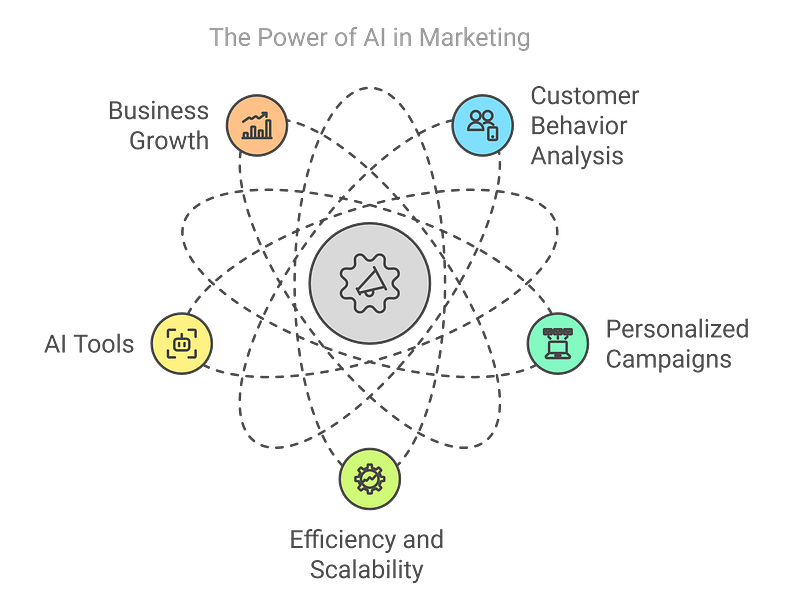
Some businesses seem to know exactly what their customers want, exactly when they want it. That is not luck. That is AI marketing automation.
These systems analyze customer behavior, preferences, and past interactions to automate personalized marketing campaigns. From targeted email sequences to predictive customer analytics and automated social media posting, AI marketing automation puts the right message in front of the right person at the right time. This is why it is becoming one of the most profitable AI startup ideas today.
Why does this work so well? Personalized marketing leads to more sales. When a customer receives a recommendation that actually matches their interests, they are far more likely to buy. AI makes this kind of personalization possible at scale, which was previously only possible for the biggest companies with massive marketing budgets. Now, even small businesses can run highly targeted, automated campaigns.
About 94% of companies worldwide are already using AI in at least one business function as of 2026 (source: Resourcera). Marketing is one of the top areas where businesses are putting AI to work. The opportunity to build a tool that helps companies market smarter, not harder, is enormous.
Example
Companies like HubSpot, Salesforce, and Adobe have deeply integrated AI into their marketing platforms. These tools automate email campaigns, social media scheduling, lead scoring, and customer segmentation. Their AI analyzes user behavior, predicts the most effective content to deliver, and continuously optimizes marketing strategies in real time.
Resources to Learn
Books:
- AI in Marketing, Sales and Service: How Marketers without a Data Science Degree Can Use AI, Big Data, and Bots explains how AI, data, and automation are used in real marketing, sales, and customer service. It is especially useful if you want to apply AI without needing a deep technical background.
- Marketing Automation For Dummies covers the fundamentals of automating marketing processes like email campaigns, lead nurturing, and customer journeys in a simple and practical way.
Online Courses:
- Marketing Analytics: Data-Driven Techniques with AI (Udemy) focuses on analyzing marketing data, understanding user behavior, and using AI techniques to make better marketing decisions.
- AI For Marketing (Coursera) teaches how AI is used to improve marketing strategies, personalize campaigns, and increase conversions using data-driven insights.
Step-by-Step Process to Start This AI Startup
- Expand AI Capabilities: Add advanced features like AI-generated content, automated campaign optimization, voice-based marketing, and predictive customer insights to stay competitive.
- Understand AI in Marketing: Start by learning how AI is used in marketing, especially in areas like email campaigns, customer segmentation, personalization, and predictive analytics. This helps you identify where AI can create real value.
- Study Existing Tools and Platforms: Explore tools like HubSpot, Salesforce, ActiveCampaign, and Adobe to understand how AI-powered marketing automation works in real scenarios.
- Develop AI Models for Automation: Build machine learning models that can analyze customer behavior, predict trends, and recommend personalized content. The goal is to automate decision-making and improve marketing performance.
- Create a User-Friendly Dashboard: Design a clean and simple interface where users can upload data, track insights, manage campaigns, and understand results without confusion.
- Integrate with Popular Platforms: Ensure your solution connects easily with email tools, social media platforms, CRM systems, and analytics dashboards so businesses can use it without changing their existing workflow.
- Test and Optimize the AI System: Run real or simulated marketing campaigns to evaluate how well your AI performs. Improve accuracy, personalization, and engagement based on results.
- Launch and Attract Early Users: Introduce your product with free demos or freemium plans to attract small businesses, then gradually expand to larger clients as your tool proves its value.
- Monitor Performance and Improve Continuously: Track user behavior, campaign performance, and system accuracy. Keep updating your models and features based on real-world data.
Bottom line: AI marketing automation is transforming how businesses connect with customers, and companies are ready to invest in smarter, data-driven solutions. If you build an AI-powered marketing tool, your startup can have huge growth potential.
To build and monetize solutions like this, you need more than just tools. You need the right combination of practical, high-income skills that businesses are actively paying for. This breakdown of 7 AI Skills That Can Make You Rich in 2026 will give you a clear direction on what to focus on.
7. AI Financial Advisors and Robo-Advisors
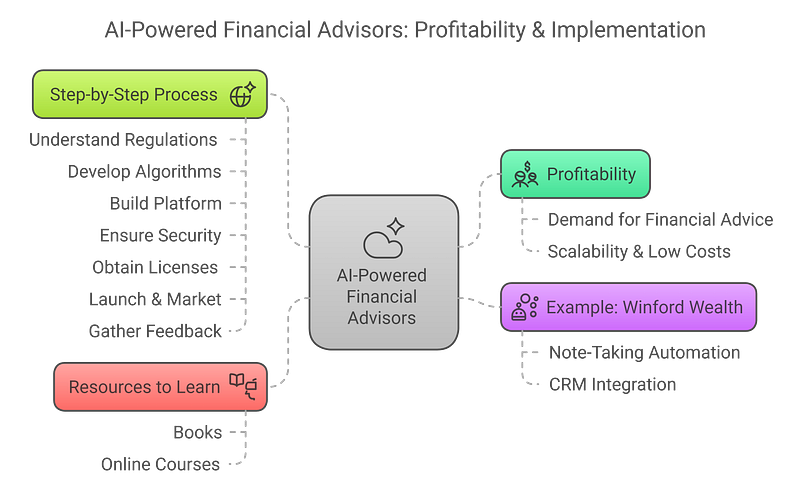
Traditional financial advisors often require minimum investments of $100,000 or more and charge 1 to 2% annually. That prices out a huge portion of the population. AI-powered robo-advisors are changing that completely, and they are emerging as one of the most profitable AI startup ideas in the fintech space.
These digital platforms use algorithms to analyze your financial situation, goals, and risk tolerance. They then provide personalized investment advice and manage your portfolio automatically. All for a fraction of the cost of a human advisor, typically 0.25% to 0.5% per year.
AI in fintech reached $17 billion in 2024 and is projected to hit $70.1 billion by 2033 (source: Articsledge). Robo-advisors are especially popular among millennials and younger investors who value convenience, low fees, and digital-first experiences. The market is growing fast, and there is plenty of room for new entrants who can offer something better.
Example
Wealthfront is one of the leading robo-advisors, serving over 1.3 million users and managing more than $90 billion in assets. The platform uses AI-driven automation for portfolio rebalancing, tax-loss harvesting, and personalized financial planning. Its growth shows that users are increasingly comfortable trusting AI with their money when the product delivers consistent and reliable results.
Resources to Learn
Books:
- The Bogleheads’ Guide to Retirement Planning explains practical strategies for long-term investing, retirement planning, and managing money in a simple and disciplined way.
- The Intelligent Investor is a classic on value investing that teaches how to make smart financial decisions, manage risk, and think like a long-term investor.
Online Courses:
- AI in Finance (edX) covers how AI is used in areas like trading, risk management, fraud detection, and financial analysis.
- FinTech: Foundations & Applications of Financial Technology (Coursera) helps you understand how technology, including AI, is transforming the finance industry.
Step-by-Step Process to Start This AI Startup
- Monitor, Improve, and Scale: Continuously track performance, gather user feedback, improve your algorithms, and expand features to grow your platform over time.
- Understand Financial Regulations: Start by learning the legal requirements for offering financial advice in your target market. This includes compliance rules, data protection laws, and investment advisory regulations.
- Research User Needs and Investment Behavior: Understand what users want, such as wealth growth, retirement planning, or passive income. Study how people currently invest and where they face confusion or challenges.
- Develop AI Algorithms for Recommendations: Build AI models that analyze user data like income, risk tolerance, and financial goals to provide personalized investment suggestions.
- Build a User-Friendly Platform: Create a simple and intuitive interface where users can easily input their financial details, track progress, and receive clear recommendations.
- Ensure Strong Data Security: Implement robust security systems to protect sensitive financial data, including encryption, secure authentication, and compliance with privacy standards.
- Obtain Necessary Licenses or Partnerships: Either acquire the required licenses to operate legally as a financial advisor or partner with licensed financial institutions to offer your services.
- Integrate with Financial Services: Connect your platform with banks, brokerage accounts, or investment tools so users can take action directly based on your AI recommendations.
- Launch and Attract Users: Introduce your platform with a focus on simplicity, affordability, and accessibility. Offer free trials or basic plans to build trust and attract early users.
8. AI E-Commerce Personalization
Online shopping is a crowded space. Thousands of stores sell similar products at similar prices. The stores that win are the ones that make each customer feel like the shopping experience was built just for them.
This is where AI e-commerce personalization comes in, and it is becoming one of the most profitable AI startup ideas in the online retail space. By analyzing customer behavior, browsing patterns, purchase history, and preferences, AI can recommend the right products, personalize content, send targeted offers, and create a shopping experience that feels tailored to each user.
This is not about gimmicks. Personalized shopping experiences increase customer satisfaction, build loyalty, and lead to higher conversion rates and repeat purchases. For online stores, that means more revenue and a real competitive advantage.
Example
Rodeo is a social shopping app that mimics TikTok’s vertical feed, letting users scroll through photos and videos with embedded product links. By syncing with Instagram and TikTok accounts, Rodeo uses AI to identify products in user content and recommend items based on personal preferences. The goal is a shopping experience that feels more like Spotify’s music recommendations than a traditional online store.
Resources to Learn
Books:
- AI for Marketing and Product Innovation explains how AI is used to understand customer behavior, improve marketing strategies, and build better products based on data-driven insights.
- Designing Personalized User Experiences in eCommerce focuses on creating personalized shopping experiences, helping you understand how user behavior and design can improve engagement and conversions.
Online Courses:
- Mastering E-commerce: The Ultimate Course (Udemy) teaches how to build, manage, and grow an e-commerce business, including strategies for marketing, sales, and optimization.
- AI For Everyone (Coursera) helps you understand the basics of AI and how it can be applied in business without needing a technical background.
Step-by-Step Process to Start This AI Startup
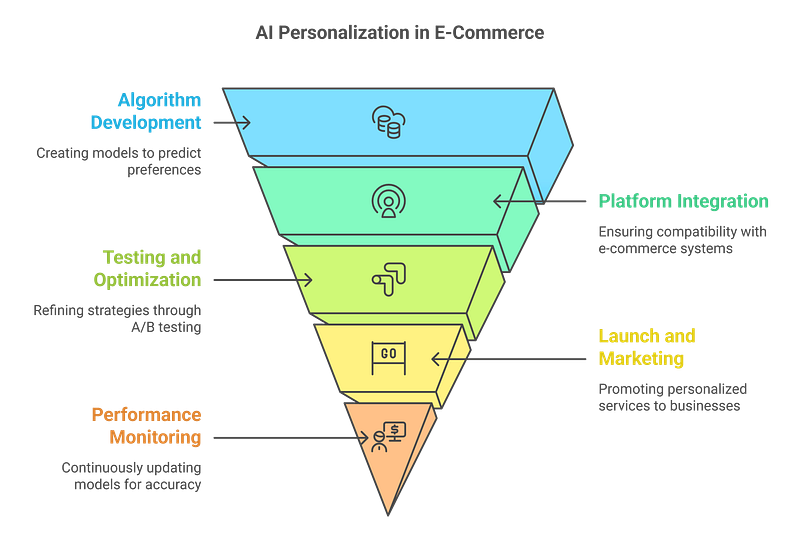
- Scale and Expand Features: Add advanced features like real-time recommendations, dynamic pricing, and personalized marketing campaigns to increase the value of your product as it grows.
- Identify Target Market: Start by choosing a specific e-commerce segment such as fashion, electronics, or groceries. Focusing on a niche helps you build more accurate and valuable personalization features.
- Understand Customer Behavior: Research how users browse, search, and buy products. Identify patterns like what influences their decisions, what they abandon, and what drives conversions.
- Collect User Data: Gather data from website analytics, user activity, and purchase history. This data will be the foundation for building personalized experiences.
- Develop AI Algorithms for Personalization: Build machine learning models that analyze user behavior and predict preferences. These models should recommend products, content, and offers tailored to each user.
- Integrate with E-Commerce Platforms: Ensure your solution connects easily with platforms like Shopify and WooCommerce so businesses can adopt it without major changes.
- Test and Optimize Performance: Use A/B testing to compare different personalization strategies. Improve recommendations, layouts, and offers based on real user responses.
- Launch and Attract Businesses: Promote your solution by highlighting benefits like higher engagement, better user experience, and increased sales. Offer demos or trials to gain initial clients.
- Monitor and Improve Continuously: Track performance metrics like conversion rates, click-through rates, and user engagement. Update your models regularly to match changing trends and behavior.
9. AI SEO Tools and Services
Search engine optimization is one of those things that every business needs but few do well. The companies that rank at the top of Google get the traffic, the leads, and the sales. Everyone else gets left behind.
AI SEO tools are transforming this space and are becoming one of the most profitable AI startup ideas today. They automate time-consuming tasks like keyword research, competitor analysis, and content optimization. Instead of doing everything manually, AI can identify opportunities, improve content structure, predict what will rank, and even generate SEO-friendly content in seconds.
The AI software market is projected to reach $174 billion in 2025 and grow to $467 billion by 2030 (source: ABI Research via Vention). A significant portion of that growth is in tools that help businesses get found online. SEO is not going away. It is getting more competitive, and AI is the tool that helps businesses stay ahead.
Example
MarketMuse is an AI SEO platform that helps content creators and marketers optimize their articles and websites. It analyzes large amounts of data to find content gaps, keyword opportunities, and competitive strategies. Other popular AI SEO tools include SurferSEO, Frase, and Clearscope, all of which automate different parts of the SEO process.
Resources to Learn
Books:
- The Art of SEO: Mastering Search Engine Optimization is a complete guide to understanding how search engines work and how to rank websites effectively using proven SEO strategies.
- The Art of SEO: Mastering Search Engine Optimization (Theory in Practice) goes deeper into practical implementation, helping you apply SEO techniques in real-world scenarios for better traffic and visibility.
Online Courses:
- Search Engine Optimization (SEO) Specialization (Coursera) covers SEO fundamentals in depth, including technical SEO, content optimization, and link-building strategies.
- SEO Training Course: Learn Search Engine Optimization (Udemy) teaches step-by-step how to optimize websites, find keywords, and improve rankings.
Step-by-Step Process to Start This AI Startup
- Continuously Improve and Expand: Keep updating your AI models based on algorithm changes and market trends. Add advanced features to stay competitive and increase value for users.
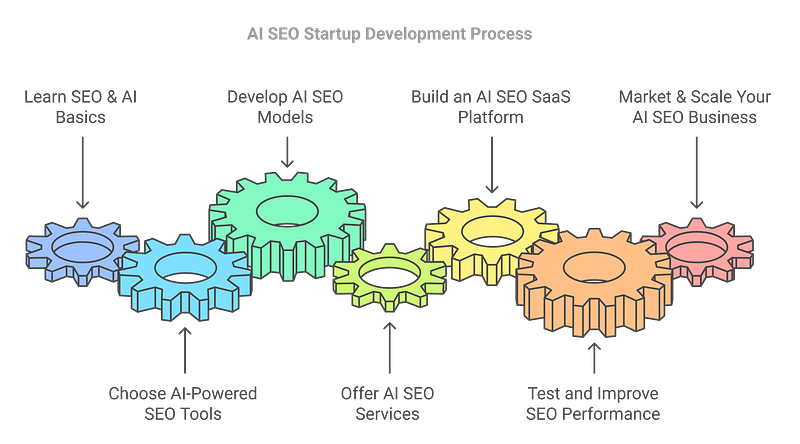
- Learn SEO and AI Basics: Start by understanding how search engines rank websites and how AI can improve tasks like keyword research, content optimization, and backlink analysis. This gives you a strong foundation to build on.
- Study Existing AI SEO Tools: Explore platforms like SEMrush, Surfer SEO, Frase, and Clearscope to understand how AI is already being used in SEO.
- Develop AI Models for SEO: Build or integrate AI systems that can analyze search data, identify ranking opportunities, suggest keywords, and optimize content automatically.
- Start Offering AI SEO Services: Begin by providing services like SEO audits, keyword strategies, and AI-driven content optimization to small businesses. This helps you validate your idea and generate early revenue.
- Build an AI SEO SaaS Platform: Develop a simple tool where users can automate tasks like keyword research, competitor analysis, and content optimization using AI. Focus on usability and clear results.
- Test and Improve Performance: Use real websites to test your system. Track rankings, traffic, and engagement, and refine your algorithms based on actual results.
- Create Case Studies and Proof: Document your results by showing how your AI improves rankings and traffic. This builds trust and helps you attract more clients.
- Launch and Scale Your Business: Promote your services or SaaS product through content, case studies, and outreach. Offer subscription plans and expand your features as you grow.
Bottom line: SEO is essential for any business to survive online, and AI-powered automation is shaping its future. Whether you offer AI-driven SEO services or build your own SEO tool, your startup has strong earning potential.
10. AI Data Analytics Services
Every business generates data. Sales numbers, customer interactions, website traffic, supply chain metrics, financial transactions. The volume is staggering. But collecting data is the easy part. The hard part is turning all that raw data into insights that actually help you make better decisions.
This is where AI data analytics services come in, and they are becoming one of the most profitable AI startup ideas across industries. These systems process large datasets, identify hidden patterns, predict future trends, and deliver insights in a way that decision-makers can easily understand and act on.
As of 2026, around 94% of companies worldwide use AI in at least one business function (source: Resourcera), and data analytics is one of the top use cases. Whether it is a retail chain predicting inventory needs, a hospital forecasting patient admissions, or a financial firm spotting market trends, AI-powered analytics is becoming essential across every industry.
Example
DataRobot is a leading automated machine learning platform that simplifies the process of building and deploying predictive models. It allows businesses to use AI without needing extensive coding knowledge, making advanced analytics accessible to companies of all sizes. DataRobot has raised around $1.1 billion in funding, showing just how valuable this space is.
Resources to Learn
Books:
- Data Science for Business explains how data and analytics are used to make better business decisions, helping you understand the real-world application of data science in companies.
- Artificial Intelligence: A Guide for Thinking Humans helps you understand how AI works in a clear and realistic way, building strong foundational knowledge without unnecessary complexity.
Online Courses:
- Data Science and Machine Learning Bootcamp with R (Udemy) covers practical skills in data analysis, machine learning, and building models using real datasets.
- Machine Learning AI Startup Case Studies with Sramana Mitra (Udemy) teaches how AI startups are built using real-world case studies and business strategies.
Step-by-Step Process to Start This AI Startup
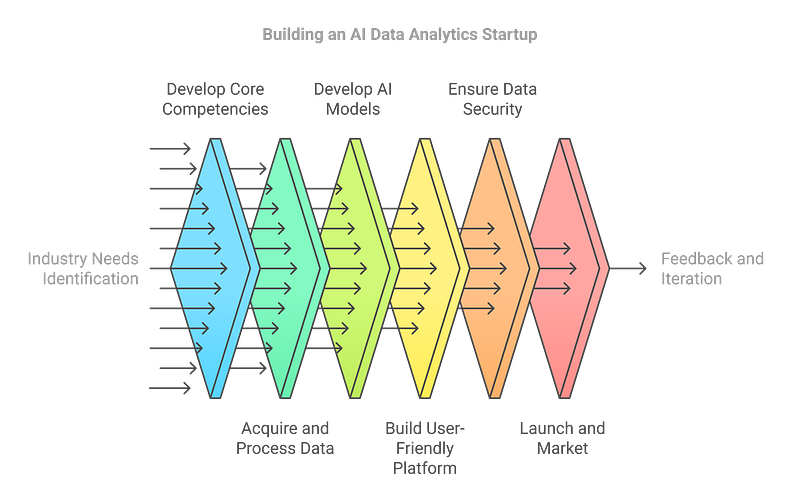
- Gather Feedback and Improve Continuously: Collect feedback from users, refine your models, and update features to keep your product aligned with changing business needs.
- Identify Industry Needs: Start by choosing industries where data analytics can create real impact, such as retail, healthcare, finance, or e-commerce. Focus on specific problems like demand forecasting, fraud detection, or customer insights.
- Research Problems and Opportunities: Understand the exact challenges businesses face in your chosen industry. This helps you build solutions that are practical and valuable instead of generic.
- Build Core Expertise: Create a team or skill set focused on data science, machine learning, and domain knowledge. This combination ensures your solutions are both technically strong and relevant to the industry.
- Acquire and Prepare Data: Collect relevant datasets while following data privacy laws. Clean, organize, and preprocess the data so it can be used effectively for analysis and model training.
- Develop AI Models: Build machine learning models based on your use case. For example, predict sales trends in retail or analyze patient data in healthcare. The goal is to generate useful insights and predictions.
- Build a User-Friendly Platform: Design a simple interface where users can upload data, run analysis, and view insights through dashboards and visualizations. Ease of use is critical for adoption.
- Ensure Data Security and Compliance: Implement strong security measures like encryption and access control to protect client data and comply with regulations.
- Launch and Attract Clients: Introduce your solution to businesses by showcasing clear benefits such as better decision-making, cost savings, and efficiency improvements.
If you want to go deeper into building systems like these and actually understand how AI models are created and deployed in real-world scenarios, you can follow this complete roadmap, How to Become a Machine Learning Engineer in 2026 (Without a Degree), which walks through everything step by step.
Best Online Courses to Learn and Start Profitable AI Startup Ideas
Starting an AI startup is not just about coding. It involves understanding business models, AI automation, market trends, and entrepreneurship. Whether you are just exploring ideas or planning to scale, learning the right skills is essential, especially if you want to build profitable AI startup ideas. The right courses can give you clarity, direction, and a practical path forward. Here are some of the best online courses to help you learn AI entrepreneurship, automation, and business strategy.
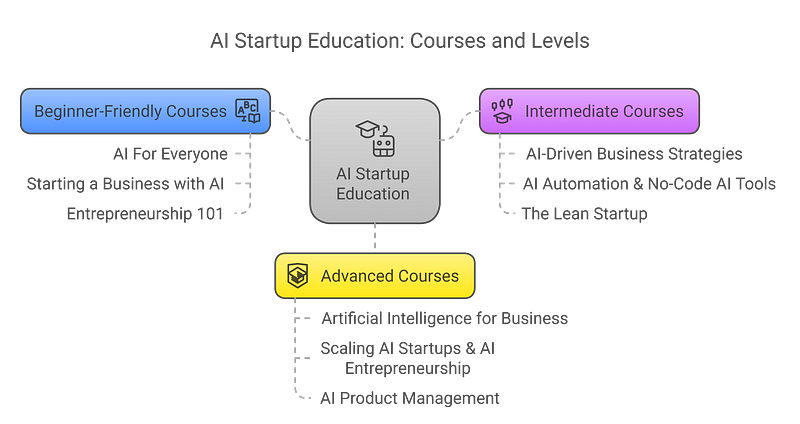
Beginner-Friendly Courses
- AI For Everyone (Coursera): A popular course by Andrew Ng that explains AI in simple, non-technical terms. It helps you understand how AI impacts businesses and how you can apply it to your startup ideas.
- AI for Small Business: Complete Beginner’s Guide (Udemy): Focuses on identifying profitable AI business ideas, validating them, and launching a startup using simple AI tools. It is ideal for beginners with no technical background.
- Entrepreneurship 101: Who Is Your Customer? (edX, MIT): Teaches how to define your target audience and validate your idea before building a product, which is a critical step for any startup.
Intermediate Courses
- AI-Driven Business Strategies (Coursera, University of Pennsylvania): Covers how companies use AI to generate revenue, build scalable models, and optimize operations using data-driven strategies.
- AI Agents: Automation and Business with LangChain and LLM Apps (Udemy): Focuses on building AI-powered automation systems and using tools like LangChain to create real-world business applications.
- The Lean Startup (Udacity): Based on the methodology by Eric Ries, this course teaches how to quickly build, test, and improve startup ideas to reduce risk and increase chances of success.
Advanced Courses
- Artificial Intelligence for Business (Coursera, University of Pennsylvania): A deeper look into how AI is applied across industries like finance, marketing, and operations, helping you scale your startup effectively.
- How To Build AI and Machine Learning Startups (Udemy): Focuses on building AI products, raising funds, and scaling your business with practical strategies.
- AI Product Management (Coursera, Duke University): Covers the complete lifecycle of AI products, including data strategy, development, and management, making it highly useful for serious founders.
If you are serious about building an AI-powered business, these courses can give you the knowledge and direction needed to turn your idea into a real startup.
If you are completely new to AI and feel overwhelmed by where to start, it helps to first build a clear foundation before jumping into courses. You can go through this complete guide, How to Learn AI From Scratch in 2026: A Complete Expert Guide, to understand the concepts, tools, and roadmap in a structured and practical way.
Conclusion
The numbers are clear. The AI market is valued at over $500 billion in 2026 and is growing at a rate that few other industries can match. Companies of all sizes are looking for AI solutions to make their operations faster, smarter, and more cost-effective. That creates a massive opportunity for entrepreneurs who are ready to build profitable AI startup ideas.
It is not about having the most advanced technology or the biggest team. It is about finding a real problem, building a solution that works, and getting it in front of the people who need it. Whether you are drawn to chatbots, healthcare diagnostics, cybersecurity, personalized learning, or any of the other ideas on this list, the path to building profitable AI startup ideas starts with understanding your market and taking action.
The founders who will succeed in 2026 are the ones who start now, learn fast, and stay focused on delivering genuine value. The tools and platforms are more accessible than ever. Pre-trained AI models are available through APIs at affordable prices. You do not need to build everything from scratch. You need to build on top of what already exists and solve a problem that matters.
FAQs
- What is the most profitable AI business to start in 2026? AI businesses in healthcare, finance, cybersecurity, and e-commerce consistently rank among the most profitable. These industries have high budgets for technology, clear pain points that AI can solve, and growing demand for automation. The most profitable niches tend to be those where AI can replace expensive manual work, such as legal document analysis, medical diagnostics, and financial planning.
- How much does it cost to start an AI startup? The cost varies widely depending on your approach. If you build on top of existing AI APIs and pre-trained models, you can start with as little as a few thousand dollars. If you are developing custom AI models from scratch, costs can run into hundreds of thousands. Many successful AI startups in 2026 are built on platforms like OpenAI, Claude, and Google’s AI tools, which keep initial costs low while allowing rapid product development.
- Do I need to be a programmer to start an AI business? Not necessarily. Many AI startups are built by founders who focus on the business side while partnering with technical co-founders or hiring AI engineers. There are also no-code and low-code AI platforms that allow you to build products without deep programming knowledge. That said, having a basic understanding of how AI and machine learning work will help you make better decisions and communicate more effectively with your technical team.
- What skills do I need to launch an AI startup? You need a combination of business skills and AI knowledge. Understanding your target market, validating your idea, building a business model, and knowing how to sell are all essential. On the technical side, familiarity with machine learning concepts, data analysis, and the tools and platforms used to build AI products will give you a strong foundation. Courses like AI For Everyone on Coursera and The Lean Startup on Udacity can help you build both skill sets.
- How long does it take for an AI startup to become profitable? Many AI startups focused on high-value workflows in healthcare, finance, and legal sectors reach profitability within 2 to 3 years. The timeline depends on your business model, pricing strategy, customer acquisition costs, and how quickly you can find product-market fit. Building on pre-trained models and targeting specific industry pain points can shorten the path to profitability significantly.
- What are the biggest challenges of starting an AI business? Data privacy and security are top concerns, especially with regulations becoming stricter every year. Developing reliable AI models requires quality data and ongoing training. Competition from established tech companies is fierce. And building trust with customers who may be skeptical about AI requires transparency and consistent results. The founders who address these challenges head-on are the ones who build sustainable, lasting businesses.
- Is the AI market too crowded for new startups? It is not. While there are many AI companies, the market is still growing rapidly. Businesses are looking for niche, industry-specific AI solutions rather than generic platforms. If you focus on a specific problem within a specific industry and build a product that solves it better than anything else available, you can carve out a profitable space. The AI market is expected to reach $3.49 trillion by 2033 (source: Resourcera). There is plenty of room.
Final Thoughts
AI is not a trend that will fade in a year or two. It is a fundamental shift in how businesses operate, how people learn, how healthcare is delivered, and how decisions are made. The entrepreneurs who recognize this early and focus on building profitable AI startup ideas will be in the strongest position as the market continues to grow.
You do not need to be an AI researcher or have millions in funding to get started. Many successful startups were built by people who simply identified a real problem, found a way AI could solve it, and took action. The tools are more accessible than ever, and the demand for AI solutions is only increasing.
Pick the idea that resonates most with you. Learn everything you can about that space. Build a simple version of your product, get it in front of real users, and use their feedback to improve. That is how profitable AI startup ideas turn into real businesses in 2026, through focus, consistency, and a genuine effort to create value.