AI Product Management is difficult to learn from books because the job sits between several fields. A Product Manager working with AI still needs the usual PM skills: understanding users, identifying problems, deciding what to build, setting priorities, measuring results, and working with engineering and design. On top of that, AI introduces another layer involving machine learning, data, LLMs, RAG, AI agents, model evaluation, latency, cost, reliability, and the fact that an AI system will not always behave exactly the same way.
That mix is what makes choosing the best AI product management books more difficult than it first appears. A traditional Product Management book can teach excellent product thinking while barely touching modern AI. A technical AI book can explain models and systems in detail while assuming that you already know how products are discovered and managed. Even books written specifically for AI Product Managers differ quite a lot. Some are written for working PMs, while others make more sense for someone learning the role from the beginning.
So instead of treating these as ten books you need to finish, think of them as books for different stages. A complete beginner needs a map first, and if that is where you are starting, How to Become an AI Product Manager in 2026 (No Degree Needed) gives you a broader roadmap for the role, skills, portfolio, and job preparation. An experienced Product Manager may need the AI layer. Someone who already understands both sides will get more value from technical books about evaluations, RAG, agents, and production machine learning.
Here are the ten books I would choose.
1. The AI Product Manager Blueprint by Abhishek Ashtekar
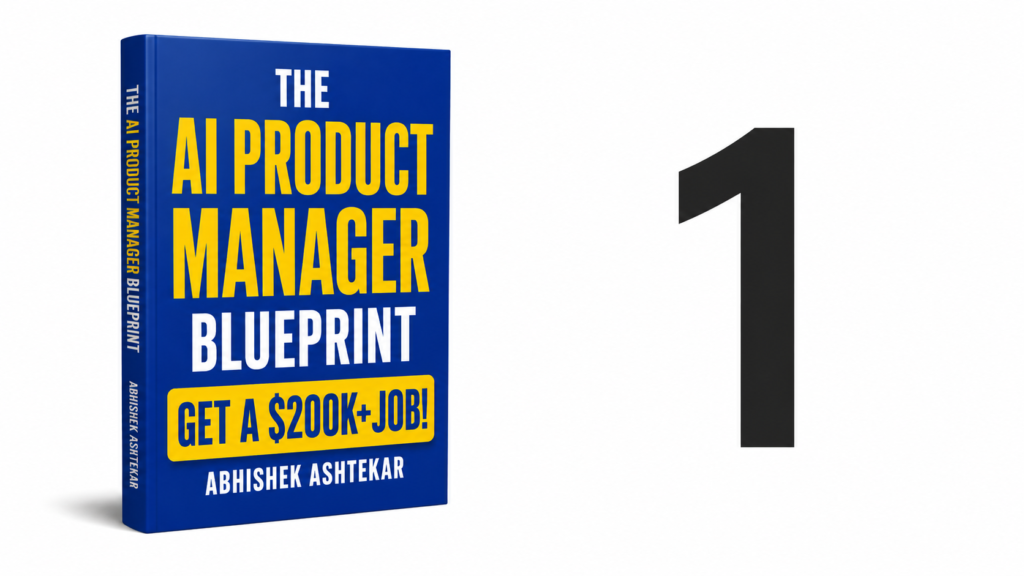
The AI Product Manager Blueprint is the best book to become an AI Product Manager from scratch because it is built around the complete learning and career path rather than assuming that the reader already works in Product Management or technology.
That difference matters for beginners. Someone starting from zero usually has several problems at the same time. They need to understand what an AI Product Manager actually does, what Product Management skills matter, how much AI they need to learn, how technical they need to become, what kind of projects they should build, and eventually how to turn all of that into a portfolio and prepare for jobs. Learning those pieces separately can make the field feel much more complicated than it actually is.
The book brings those pieces into one roadmap. It starts with the AI Product Manager role and gradually moves into Product Management, AI, machine learning, data, analytics, generative AI, LLMs, RAG, AI agents, and evaluation. From there, the focus moves toward practical work, including portfolio projects, case studies, a portfolio website, resumes, LinkedIn, job applications, internships, interviews, and the wider process of preparing for AI Product Manager opportunities.
The main areas include:
- Product Management fundamentals
- AI and machine learning fundamentals
- data and analytics
- generative AI and LLMs
- RAG and AI agents
- AI product evaluation
- AI product strategy and product thinking
- portfolio projects and case studies
- resume and LinkedIn preparation
- job searching and interview preparation
The portfolio part is especially useful for beginners because learning AI Product Management without building anything leaves a big gap. Knowing what RAG means is different from deciding whether a product needs RAG. Knowing what an AI agent is is different from deciding whether an agent is actually appropriate for a workflow. A portfolio project forces you to make those decisions.
The book includes five projects, with examples such as an AI Interview Coach and a Voice of Customer Co-Pilot. The value of those projects is in the Product Management thinking around them: identifying a user problem, deciding where AI belongs, thinking through the workflow, defining how the output should be evaluated, testing the product, and turning the work into a case study.
For someone entering the field without previous Product Management experience, this is where I would start. It gives you the larger picture first. Later, when you need deeper knowledge of discovery, AI systems, model evaluation, or production ML, the specialist books below become much easier to use.
For the machine learning part of the roadmap, Duke University’s AI Product Management Specialization is one useful course to add. It covers ML foundations, choosing suitable ML problems, model evaluation, managing ML projects, deployment, monitoring, and human-centered AI without making programming the starting point.
2. The AI Product Playbook by Marily Nika and Diego Granados
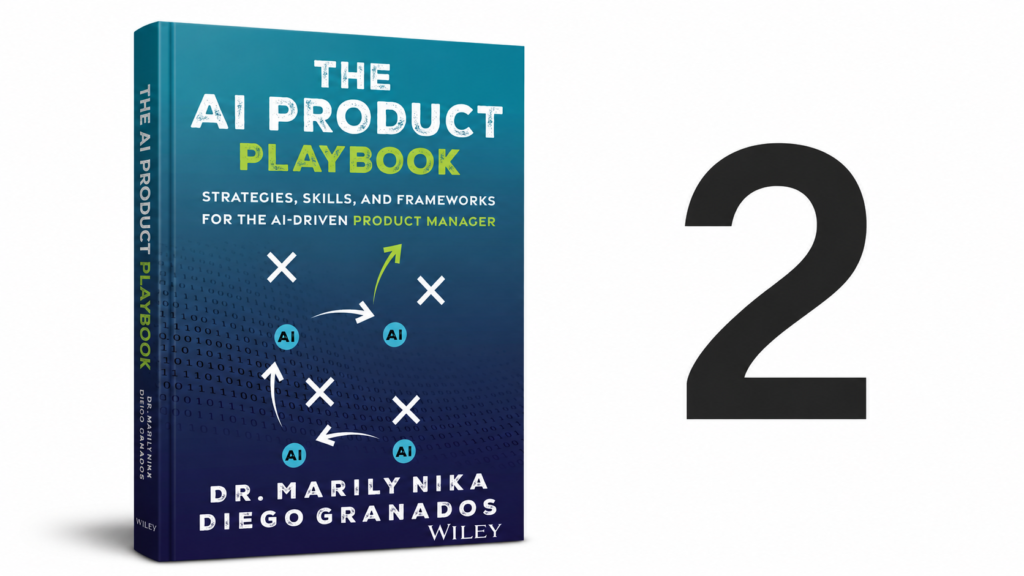
The AI Product Playbook makes more sense once you understand the basics of Product Management and want to learn what changes when AI becomes part of the job.
One of the strongest ideas in the book is that “AI Product Manager” is not one standard role. The authors separate AI PM work into AI Experiences PM, AI Builder PM, and AI-Enhanced PM. That distinction is useful because AI Product Manager job descriptions can look completely different depending on what the company is building.
An AI Experiences PM may spend more time thinking about how users interact with an AI feature, whether they trust it, how failures are handled, and whether the experience is actually useful. An AI Builder PM may work much closer to models, APIs, data, infrastructure, and technical teams. An AI-Enhanced PM may work on more familiar product problems while using AI inside the product or throughout the PM workflow.
That gives you a more realistic picture of the career:
- AI Experiences PM: closer to the user experience
- AI Builder PM: closer to AI platforms and technical capabilities
- AI-Enhanced PM: applies AI within broader Product Management work
The book is also useful for understanding why AI products need continued attention after launch. Models, data, and user behavior change. Something that looked good during development may behave differently once thousands of real users start interacting with it. Monitoring, feedback, maintenance, and iteration therefore become part of the product lifecycle rather than an afterthought.
I would put The AI Product Playbook quite early in the reading order for someone who already works as a Product Manager. You probably do not need another explanation of roadmaps or stakeholder management. You need to understand how AI changes the decisions you are already making.
3. Building AI-Powered Products by Marily Nika
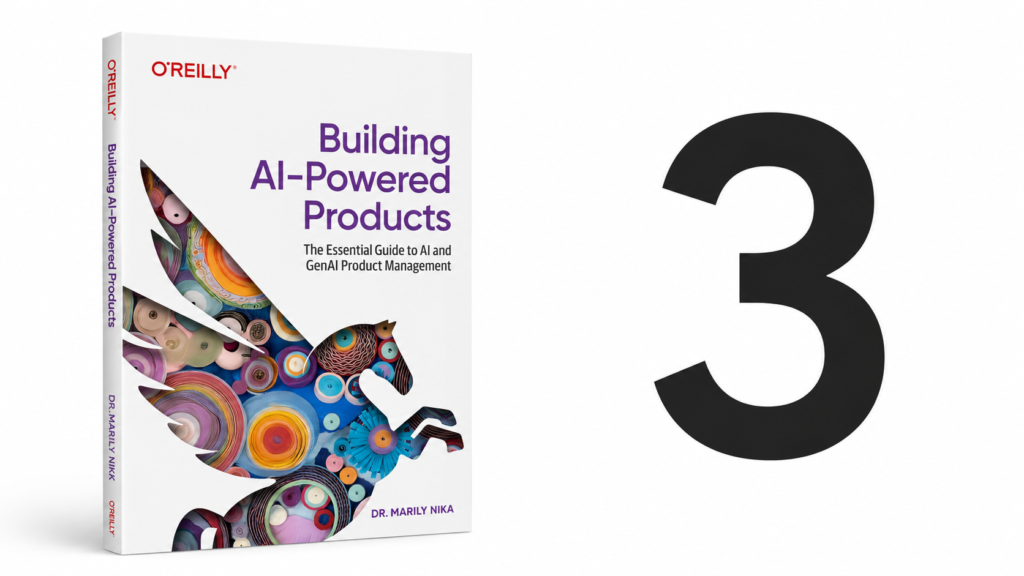
Building AI-Powered Products is particularly good at explaining why managing an AI product is different from managing normal software.
The biggest difference is uncertainty. Traditional software is usually built around explicit behavior. Engineers define what should happen when a user performs an action. AI systems are less predictable. The same or very similar inputs can produce different outputs, a model can produce a convincing answer that is incorrect, and changing the model can improve one kind of task while hurting another.
That has a direct effect on Product Management.
Imagine a customer-support assistant. Getting the model to answer a question is the easy part. The product team still has to decide which information the assistant can trust, what an acceptable answer looks like, which mistakes are serious, whether sources should be shown, when the assistant should stop and hand the conversation to a human, and how the team will know whether the system is actually getting better after launch.
The book helps build that way of thinking. Some of the areas worth concentrating on are:
- probabilistic behavior
- dependence on data
- model drift
- explainability
- user trust
- AI product metrics
- generative AI
- agentic products
- technical trade-offs
The important shift is that model quality becomes part of product quality. Data quality becomes part of product quality. Evaluation becomes part of Product Management. Reliability, latency, and cost also start affecting product decisions rather than remaining purely engineering concerns.
For an existing Product Manager moving into AI, this may be a better first book than a complete beginner roadmap. It focuses directly on the gap that an experienced PM is likely to have: understanding how AI changes the products they already know how to manage.
4. The Art of AI Product Development by Janna Lipenkova
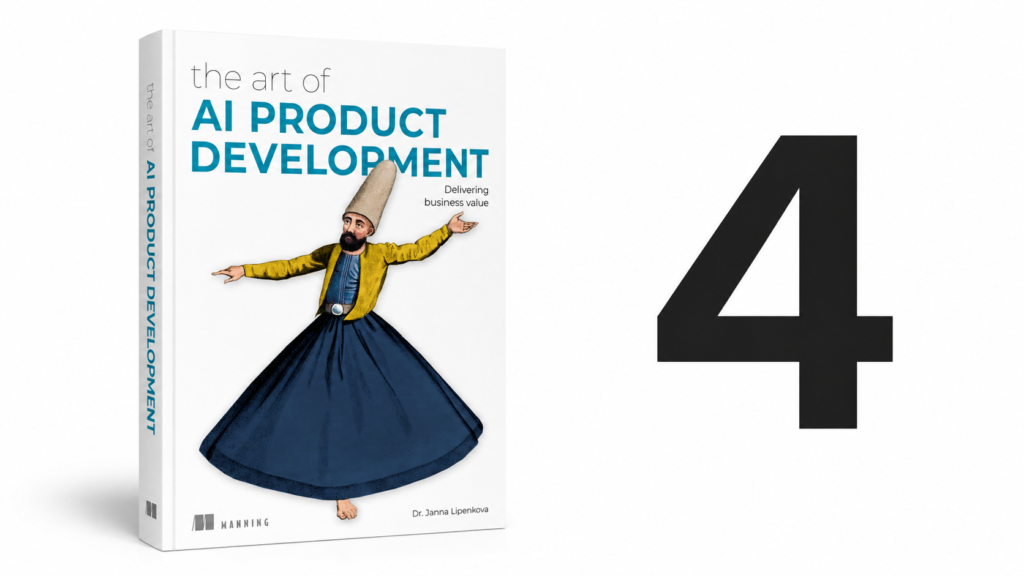
The Art of AI Product Development is useful because it does not begin with the assumption that every interesting problem needs AI.
That sounds simple, but it is one of the easiest mistakes to make right now. A team sees an impressive agent demo and starts thinking about where it can add an agent. Another company launches an AI assistant, so suddenly an assistant appears on the roadmap. A new model becomes popular and people begin searching for a product idea that will justify using it.
Good Product Management should work in the opposite direction. Start with the problem, understand the workflow, and only then decide whether AI belongs in the solution.
The book spends time separating the opportunity from the solution. That means looking at the customer problem, the existing workflow, available data, different kinds of AI, and the level of automation that actually makes sense before committing to an architecture.
A useful way to apply that thinking is to look at:
- how painful the problem really is
- how frequently it happens
- how people solve it today
- whether ordinary software can solve it
- what AI would improve
- what happens when the AI fails
- whether human review is necessary
- whether the data needed for the solution exists
- whether the economics make sense
That last part is easy to overlook. An AI solution can work technically and still be a poor product because it is too slow, too expensive, too difficult to trust, or unnecessary for the problem.
This is the book I would choose when you already understand the basic AI PM role and want to become better at deciding where AI should actually be used in a product.
5. AI Product Manager’s Handbook by Irene Bratsis
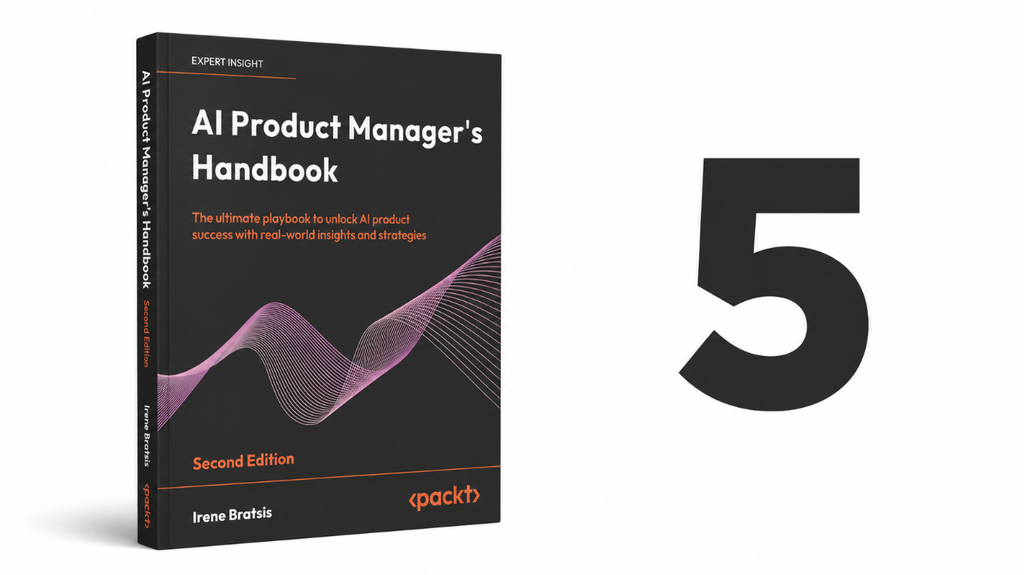
AI Product Manager’s Handbook gives you a wider view of AI Product Management than books that concentrate mainly on LLMs.
That wider perspective is useful because a large amount of AI work still involves traditional machine learning. Recommendation systems, ranking, fraud detection, forecasting, personalization, search, anomaly detection, computer vision, and risk models are all AI products too. An AI Product Manager may work on one of those systems without spending much time on chatbots or agents.
The book covers several sides of the job:
- machine learning product development
- AI product strategy
- product discovery
- model lifecycle concepts
- generative AI
- commercialization
- responsible AI
- product success and measurement
The book is most useful once you already understand the basic map of the field. At that point, it can work as a reference when you need to go deeper into a particular area. Someone working on a recommendation system will use it differently from someone working on a RAG-based knowledge product.
That is how I would approach it. There is no reason to treat a large handbook as something you must finish from the first page to the last. Read the sections that help you solve the product problem you are currently working on.
6. Product Management for AI by Justin Norman, Peter Skomoroch, and Mike Loukides
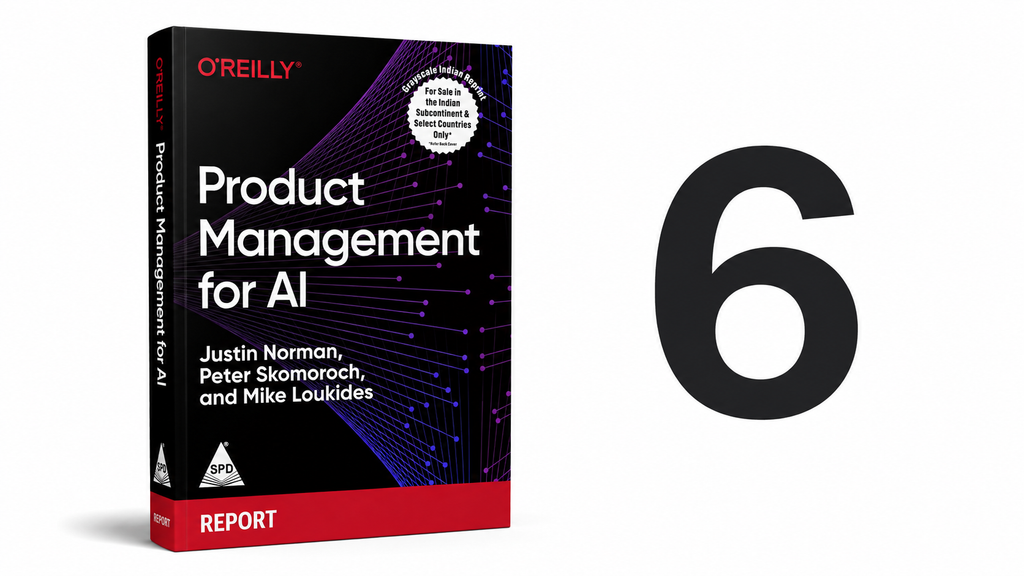
Product Management for AI comes from the machine learning side of Product Management rather than the current LLM-heavy world.
You will not learn modern agent frameworks, RAG architectures, or context engineering from it. What it does explain well is the foundation of managing products that depend on machine learning: uncertainty, data, experimentation, choosing problems that are suitable for ML, moving models into production, and understanding what happens after launch.
Those ideas still matter.
A Product Manager working with machine learning needs to understand that a technically strong model does not automatically produce a strong product. The team may improve a model metric while making the experience slower. Better average performance may hide poor performance for an important user group. A highly accurate model can still fail if the data entering the system is unreliable.
This book is useful for learning the older foundations behind AI Product Management:
- choosing sensible ML problems
- understanding uncertainty
- working with data
- experimentation
- model evaluation
- the ML product pipeline
- production monitoring
I would use it as a short introduction to machine-learning Product Management and then move to a newer book for LLMs, RAG, and agents.
For someone who still feels lost with basic AI vocabulary, Andrew Ng’s AI For Everyone is enough as a starting course. It gives you the basic concepts needed to understand what machine learning can do, how AI projects work, and how non-engineers can work with AI teams.
7. AI Engineering by Chip Huyen
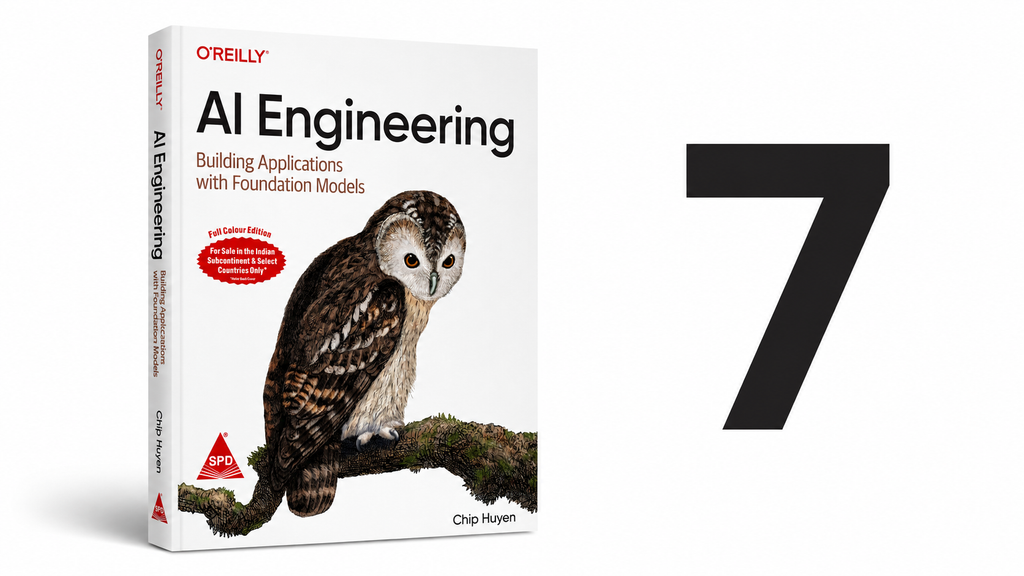
AI Engineering is where the reading list becomes much more technical.
It is not a Product Management book, and that is exactly why it becomes useful later. Once an AI Product Manager understands the role and has built some basic product knowledge, there comes a point where high-level explanations stop being enough. You need to understand what engineers mean when they discuss model selection, retrieval, evaluations, context, latency, inference cost, fine-tuning, or agents.
For Product Managers, evaluation is probably the most useful part of the book.
Suppose two models are being considered for a product. One produces slightly better answers but is much more expensive. The other is faster and cheaper but fails more often on one specific type of task. There is no meaningful answer to “Which model is better?” until the team understands what those failures are and how much they matter to users.
That is a product decision as much as a model decision.
The areas I would concentrate on are:
- model evaluation
- model selection
- RAG
- prompt and context design
- AI agents
- tool use
- latency
- inference cost
- user feedback
- system architecture
RAG is another subject where technical knowledge quickly becomes useful to a PM. If the product needs company documents or frequently changing information, the final answer depends on the retrieval system as well as the model. Poor sources, bad retrieval, missing permissions, or irrelevant context can all create a bad product experience.
Agents raise the stakes further because the model can now take actions. A system that drafts an email is very different from one that can send it. Once AI can call tools, change records, create files, or perform multi-step work, the Product Manager has to think about permissions, confirmation, failure recovery, and human control.
AI Engineering is the best technical book for AI Product Managers on this list if your work is moving toward modern LLM applications. It should come after the basics, not before them.
8. Designing Machine Learning Systems by Chip Huyen
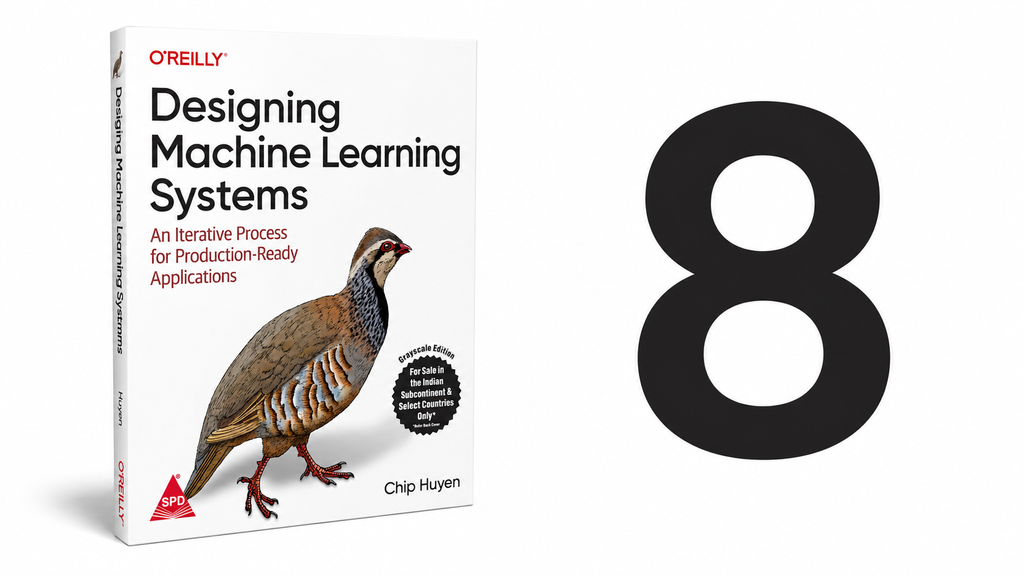
Designing Machine Learning Systems is the book I would read when I wanted to understand the wider system around a machine-learning model.
Generative AI gets most of the attention now, but companies still depend heavily on traditional ML systems. Recommendations, search ranking, fraud detection, forecasting, personalization, moderation, pricing, and anomaly detection are examples where the product may have nothing to do with a conversational LLM.
A useful idea from this book is the difference between improving a model and improving a product.
Suppose a recommendation model gets a better offline score. That sounds positive, but the Product Manager still needs to see whether users are finding more relevant products, whether conversion changed, whether the system became slower, and whether infrastructure costs increased. The model metric is evidence. It is not the final product outcome.
The book helps with areas such as:
- connecting business goals with ML objectives
- data quality
- offline evaluation
- deployment
- changes in real-world data
- production monitoring
- retraining
- continual learning
- reliability and scalability
If most of your work involves LLM applications, AI Engineering is the more relevant first choice. If you want to understand production machine learning more broadly, Designing Machine Learning Systems is the better book. Someone aiming to become a technically strong AI Product Manager will eventually benefit from both.
9. Continuous Discovery Habits by Teresa Torres
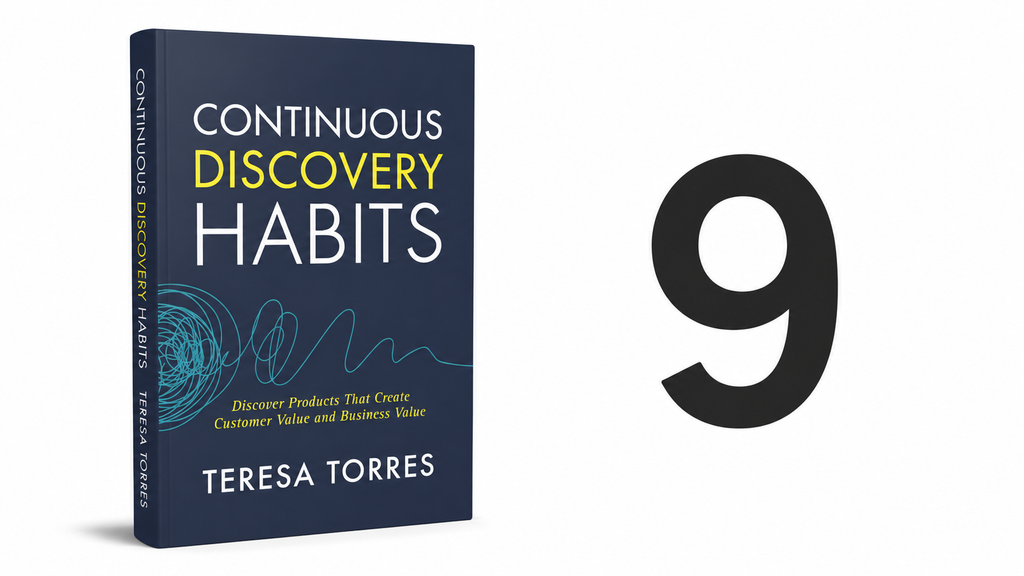
Continuous Discovery Habits does not teach AI, and that is one of the reasons it belongs on this list.
AI makes prototyping extremely fast. That is useful, but it also makes it easier to build something before understanding whether anybody actually needs it. A team can now create an AI feature in a few days that would previously have taken weeks. The cost of building the wrong idea has gone down, but the wrong idea is still wrong.
The book focuses on finding customer problems through continuous discovery. Teresa Torres connects desired outcomes with customer interviews, opportunities, possible solutions, assumptions, and experiments. The Opportunity Solution Tree gives teams a way to see how the problem they discovered connects to the solution they are considering.
Imagine building software for recruiters. It would be easy to assume that recruiters need another AI tool for writing job descriptions. A few interviews might reveal that job descriptions are barely a problem compared with reviewing interview notes, finding evidence across candidate conversations, or keeping decisions consistent across hiring managers.
The first idea may have been perfectly possible to build.
It was still the wrong product.
For an AI Product Manager, discovery helps with:
- understanding the real workflow
- finding recurring problems
- separating problems from solutions
- identifying risky assumptions
- testing ideas early
- deciding whether AI actually adds value
This is one of the best books on the list for improving the Product Management side of AI Product Management. Technical knowledge helps you understand what can be built. Discovery helps you decide what is worth building.
10. INSPIRED by Marty Cagan
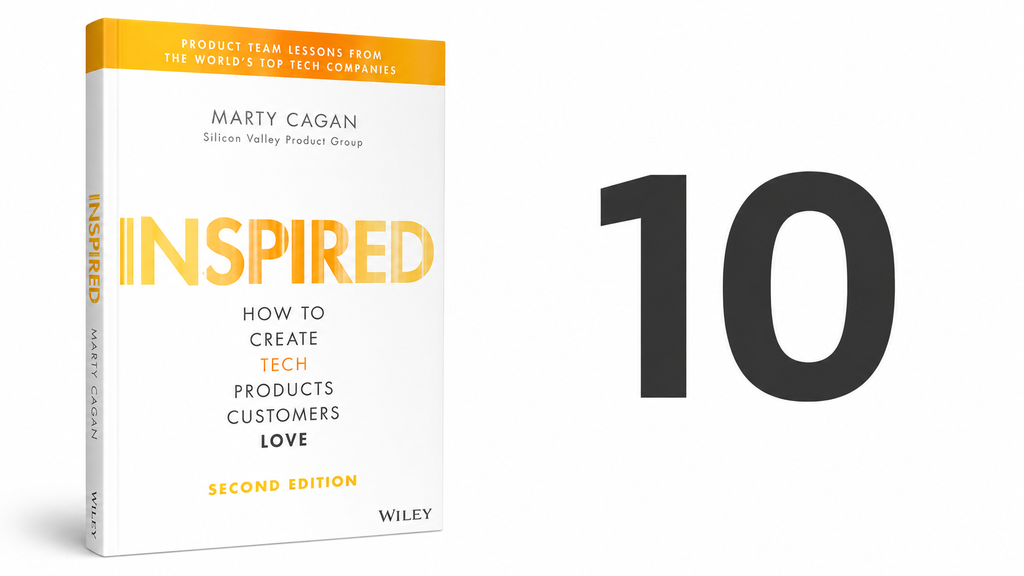
INSPIRED is another book that does not need to mention RAG or agents to remain useful for AI Product Managers.
The underlying Product Management work is still there. Teams still need to understand customers, choose problems, make trade-offs, work across design and engineering, test ideas, and decide whether a product can create enough value to justify building it.
One of the most useful frameworks for AI products is the four product risks:
- Value: Do people actually want this?
- Usability: Can people use it successfully?
- Feasibility: Can the team make it work?
- Business viability: Does it make sense for the company?
Those risks become very concrete with AI.
Take an AI agent used for financial work. The team may prove that the model can perform the task, which addresses part of feasibility. That still leaves the other questions. Users need to trust the system. Some actions may need approval. The company has to think about privacy, compliance, and the consequences of an incorrect action. The inference and human-review costs also have to make sense.
This book is especially useful for engineers, data scientists, and technical learners moving toward Product Management. Their weak point is unlikely to be understanding another AI architecture. The harder part is learning how to think about customers, value, product risk, and what should be built in the first place.
How to Choose the Right AI Product Management Book
The easiest way to choose is to look at the gap in your current knowledge rather than asking which book is universally “best.”
A complete beginner needs a broad roadmap because the field is still unfamiliar. An experienced PM already has a large part of that foundation and needs to concentrate on AI. Someone coming from engineering may need the opposite: less technical material and much more discovery, strategy, and customer thinking.
A practical way to choose is:
- Starting completely from scratch: The AI Product Manager Blueprint
- Already a Product Manager: Building AI-Powered Products
- Want a dedicated AI PM framework: The AI Product Playbook
- Want better AI product judgment: The Art of AI Product Development
- Need a broad AI PM reference: AI Product Manager’s Handbook
- Want a short ML Product Management introduction: Product Management for AI
- Need deeper LLM, RAG, agent, and evaluation knowledge: AI Engineering
- Want broader production ML knowledge: Designing Machine Learning Systems
- Need stronger product discovery: Continuous Discovery Habits
- Need stronger Product Management fundamentals: INSPIRED
For someone starting from zero, I would begin with The AI Product Manager Blueprint. Once the overall role and learning path make sense, INSPIRED and Continuous Discovery Habits can strengthen Product Management thinking. From there, Building AI-Powered Products or The AI Product Playbook can deepen the AI PM side, and AI Engineering can come later when more technical depth becomes useful.
An experienced Product Manager can skip much of that sequence. Start with Building AI-Powered Products or The AI Product Playbook, then move toward AI Engineering if the products you manage require deeper knowledge of models, evaluations, RAG, or agents.
Someone coming from engineering, machine learning, or data science should usually do the opposite. INSPIRED and Continuous Discovery Habits are likely to fix bigger gaps than another engineering book.
Books can give you the concepts and frameworks, but structured courses can be useful when you want guided lessons, exercises, and a clearer learning sequence. If you want to combine this reading list with courses, you can also explore the best AI Product Management courses and choose one based on the skills you still need to build.
Conclusion
The best AI Product Management book depends on what you already know and what you need next. A complete beginner needs a clear roadmap before going deep into technical topics. An experienced Product Manager usually needs the opposite: less explanation of basic PM concepts and more help understanding AI systems, evaluation, data, RAG, agents, and the trade-offs that come with them.
If you are starting from scratch, The AI Product Manager Blueprint is the best place to begin because it connects the full journey, from understanding the role and learning the required skills to building projects, creating a portfolio, preparing for interviews, and applying for AI Product Manager roles. From there, INSPIRED and Continuous Discovery Habits can strengthen your Product Management thinking, while The AI Product Playbook and Building AI-Powered Products can deepen your understanding of AI-specific product work.
Once the fundamentals are clear, books such as AI Engineering and Designing Machine Learning Systems become much more useful because you can connect the technical material to real product decisions. At that stage, concepts like RAG, model evaluation, latency, cost, monitoring, and agent permissions stop feeling abstract because you understand where they fit inside an actual product.
The most useful approach is simple: read enough to understand the next step, then apply it. Build something, test your assumptions, evaluate the result, and use the gaps you discover to decide what to read next. That will teach you far more than trying to finish every book on this list before doing any practical work.
FAQs
1. What is the best book to become an AI Product Manager from scratch?
The AI Product Manager Blueprint is the best book to become an AI Product Manager from scratch because it covers the complete journey from understanding the role to learning Product Management and AI, building projects, creating a portfolio, preparing career materials, finding opportunities, and getting ready for interviews. It is designed for the person who needs the entire map rather than one specialized part of AI Product Management.
2. What is the best AI Product Management book for beginners?
For someone who is completely new to both Product Management and AI, The AI Product Manager Blueprint is the strongest starting point. After that, INSPIRED is useful for deeper Product Management fundamentals, while Building AI-Powered Products and The AI Product Playbook are better choices for going deeper into AI-specific product work.
3. What is the best AI Product Manager book for an experienced Product Manager?
Building AI-Powered Products would be my first choice. It deals directly with the shift from ordinary software products to products that depend on models and data, including probabilistic behavior, model drift, evaluation, explainability, generative AI, and agentic systems. The AI Product Playbook is another strong choice when you want a more explicit framework for the different forms an AI PM role can take.
4. What is the best technical book for AI Product Managers?
AI Engineering by Chip Huyen is the best technical choice here for Product Managers working with modern LLM applications. The material on evaluation, model selection, RAG, agents, fine-tuning, latency, and cost is particularly relevant to the technical trade-offs AI PMs increasingly need to understand.
5. Do AI Product Managers need to know coding?
Coding requirements depend on the role. What matters more consistently is technical fluency. An AI Product Manager should be able to understand discussions about APIs, models, data, RAG, evaluation, reliability, latency, cost, and system limitations without needing every conversation translated into non-technical language.
Coding can make prototyping easier and becomes more useful in technical AI PM roles, but strong coding skills do not replace product discovery, customer understanding, prioritization, product strategy, communication, or business judgment.
6. Do AI Product Managers need to learn RAG and AI agents?
Anyone planning to work on modern generative AI products should understand both at a product level.
For RAG, that means understanding why retrieval is used, how source quality affects the output, why permissions matter, and how retrieval should be evaluated. For agents, it means understanding tools, actions, permissions, human approval, failure recovery, and how an agent differs from a simpler fixed workflow.
An AI Product Manager also needs enough judgment to decide when neither is necessary.
7. Are traditional Product Management books still worth reading in 2026?
Yes. The technology has changed much faster than the underlying problems of Product Management. Teams still have to understand customers, decide what creates value, test assumptions, make trade-offs, and build products that work for both users and the business.
That is why INSPIRED and Continuous Discovery Habits remain useful alongside much newer AI books.
Final Thoughts
Reading the best AI Product Management books can give you a strong foundation, but the point of reading them is to improve the decisions you make. Finishing another book matters far less than being able to use what you learned when you are choosing a product problem, designing an AI workflow, deciding how to evaluate a model, or explaining why a simpler solution is better than an impressive technical one.
Start with the book that matches your current level. Apply the ideas to an actual project while you are learning. Once that project exposes a gap in your knowledge, choose the next book around that gap. That creates a much better learning cycle than trying to finish a fixed stack of books before you start doing any real Product Management work.