

AI is already part of everyday life. It powers self driving cars, suggests what you should watch on platforms like Netflix, and even supports doctors in diagnosing diseases. Because of this shift, how to learn AI from scratch in 2026 is becoming an important question for anyone thinking about their future. If you are serious about building skills in artificial intelligence for beginners or even just understanding how these systems work, this is the right time to begin.
You might be interested in machine learning, deep learning, or AI tools like chatbots, or you might simply want to understand how machines make decisions. That curiosity is enough to start. The problem is that AI looks complex from the outside, and most people get overwhelmed by too many concepts and no clear direction. If I had to start again, I would not jump between random tutorials. I would follow a structured path where you can learn AI from scratch step by step, starting simple and gradually moving toward real applications.
In this guide, you will learn exactly how to learn AI from scratch in 2026 in a practical way. You will understand what to learn first, how to progress, and how to build projects that actually matter. There is no unnecessary complexity here. The goal is simple. By the end, you should have a clear roadmap and enough confidence to move forward and start building in AI.
What is Artificial Intelligence (AI)?
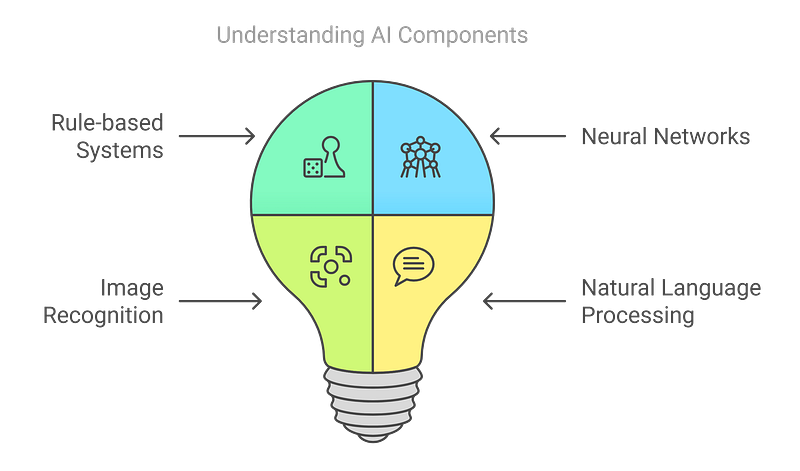
Before you start learning how to learn AI from scratch in 2026, you should understand what AI actually means. Artificial intelligence is about building systems that can perform tasks that normally require human thinking, such as recognizing patterns, making decisions, and learning from data. It ranges from simple rule-based programs to advanced models like neural networks that handle tasks like image recognition and language understanding, and this forms the foundation of modern AI systems.
What are the Different Types of Artificial Intelligence?
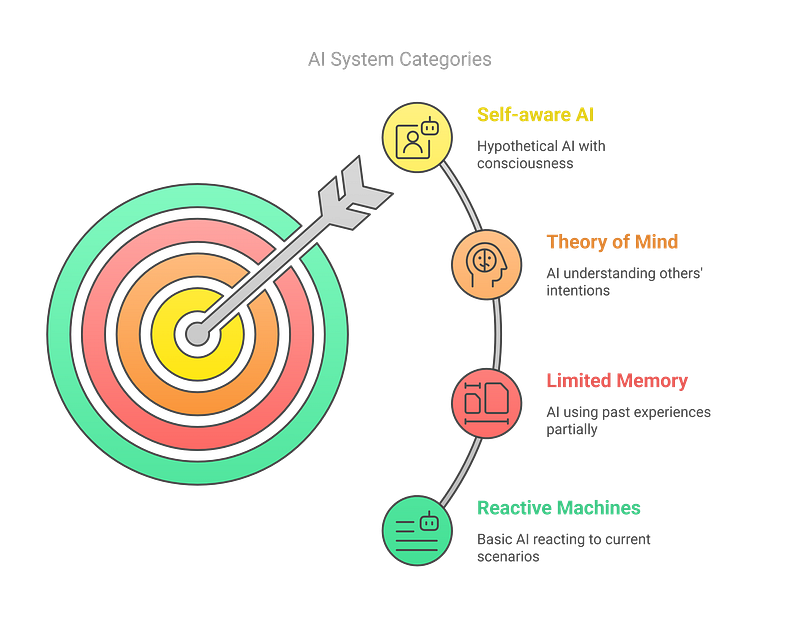
Before going deeper into how to learn AI from scratch in 2026, you should understand the main types of AI, because this helps you see how the field is structured and where different applications fit. AI is generally divided into four categories based on capability and development stage.
- Reactive Machines: These are the simplest AI systems. They only respond to current inputs and do not store past experiences. A well-known example is IBM Deep Blue, which was designed to play chess by evaluating positions in real time without learning from previous games.
- Limited Memory: These systems can use past data to improve decisions, but only to a certain extent. Many real-world applications fall into this category, especially self-driving cars that observe speed, direction, and patterns to make decisions on the road.
- Theory of Mind: This is still under research. The idea is to build systems that understand human emotions, intentions, and beliefs, which would allow more natural interaction between humans and machines.
- Self-aware AI: This is purely hypothetical right now. These systems would have consciousness and self-awareness similar to humans, but this level of AI does not exist yet.
Understanding these types gives you a clear foundation. It helps you see what AI can currently do, what it might do in the future, and where your learning fits into the bigger picture.
The Difference Between Data Science, Artificial Intelligence, Machine Learning and Deep Learning
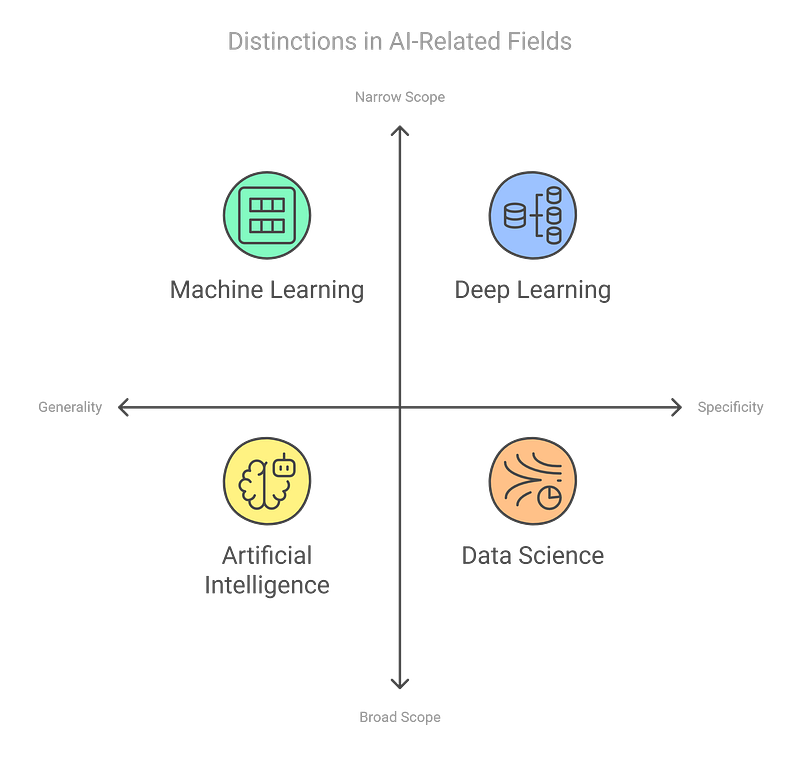
Before you go deeper into how to learn AI from scratch in 2026, you need clarity on these terms because many people confuse them. If you are trying to learn AI from scratch, understanding how these fields connect will save you a lot of confusion later.
- Data Science: This is the broader field focused on working with data. It involves collecting, cleaning, analyzing, and extracting insights from data, whether structured or unstructured. You can think of it as the process of turning raw data into useful information.
- Artificial Intelligence (AI): AI is the bigger concept. It is about building systems that can perform tasks in a way that feels intelligent. This includes decision making, prediction, and automation based on data.
- Machine Learning (ML): Machine learning is a part of AI. Instead of manually programming rules, you train models using data so they can recognize patterns and make predictions. This is where most modern AI applications come from.
- Deep Learning (DL): Deep learning is a more advanced part of machine learning. It uses neural networks with multiple layers to process large amounts of data and solve complex problems like image recognition and language understanding.
When you understand these differences, the entire AI roadmap for beginners 2026 becomes clearer. You start to see what to learn first and how each part fits into the bigger picture.
Why Should You Learn Artificial Intelligence in 2026?
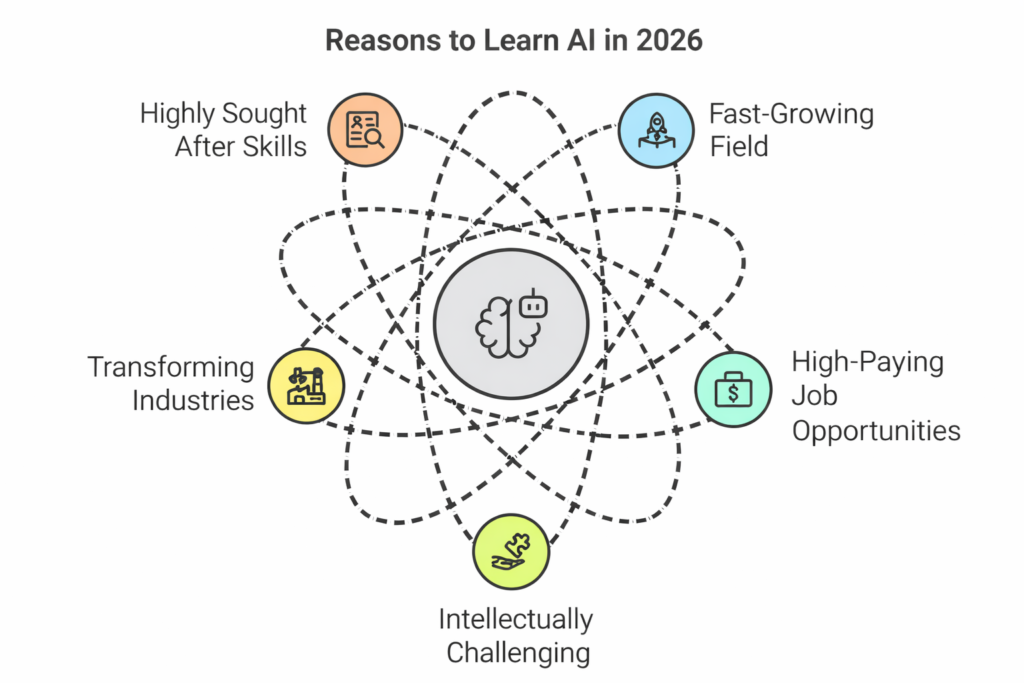
If you are thinking about how to learn AI from scratch in 2026, you should first understand why it is worth your time and effort. AI is not just another trend. It is becoming a core skill across industries, and learning artificial intelligence for beginners can open both career and business opportunities.
- AI is a Fast-Growing Field: AI is evolving quickly, especially in areas like language models, computer vision, and automation. New tools and applications are being built every day, which means there is constant scope for innovation and real-world problem solving.
- AI Offers High-Paying Job Opportunities: There is strong demand for AI professionals, and companies are willing to pay well for these skills. Roles like AI engineer, data scientist, and machine learning engineer are among the highest-paying jobs in tech today.
- AI is Intellectually Challenging: If you enjoy solving problems and building things, AI gives you that challenge. It combines logic, mathematics, and programming, which makes the learning process both demanding and rewarding.
- AI is Transforming Industries: AI is changing how industries operate, from healthcare to finance to marketing. When you start learning AI from scratch, you are positioning yourself to be part of this shift instead of being left behind.
- AI Skills are Highly Sought After: Companies are actively looking for people who understand AI and can apply it in real situations. Having these skills makes you more valuable and gives you more options in your career.
Timeline: How Long Does It Take to Master AI?
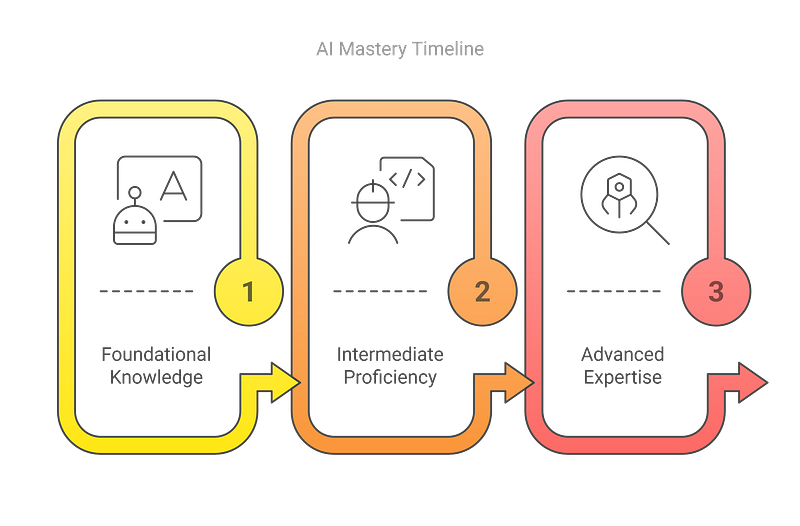
When you start thinking about how to learn AI from scratch in 2026, one common question is how long it actually takes. The answer depends on your consistency, background, and how you approach learning AI from scratch, but you can follow a realistic timeline to guide your progress.
- Foundational Stage (3–6 months): In this phase, you focus on the basics. You learn a programming language like Python, understand simple statistics, and build a clear understanding of core AI concepts. This stage sets the base for everything that follows.
- Intermediate Stage (6–12 months): Here, you start applying what you have learned. You work on projects, explore machine learning algorithms, and begin understanding areas like natural language processing or computer vision. This is where your practical skills develop.
- Advanced Stage (1–2 years): At this level, you work on more complex problems. You can build advanced models, experiment with real-world datasets, and even contribute to research or industry-level applications. This is where your understanding becomes deeper and more specialized.
AI is not something you learn once and finish. It keeps evolving, so you need to keep updating your skills. If you follow a clear structure like an AI roadmap for beginners 2026, you can stay consistent and continue improving over time.
How to Learn AI From Scratch in 2026
Starting your journey with how to learn AI from scratch in 2026 can feel overwhelming at first, especially when you see how wide the field is. But if you follow a clear structure, you can make steady progress without confusion. If you want to learn AI from scratch, you need to focus on three things: understanding concepts, building programming skills, and applying what you learn through real projects.
AI is not something you master by just watching tutorials. You have to practice consistently and build things on your own. If you are serious about artificial intelligence for beginners, the goal should be simple. Start with the basics, move step by step, and gradually work on more complex ideas as your understanding improves.
In the next sections, you will see a structured path you can follow. You will understand what to learn first, how to progress, and how to gain real experience. If you stay consistent with this approach, you can build strong skills in AI over time.
Step 1: Build a Strong Foundation in Mathematics and Programming
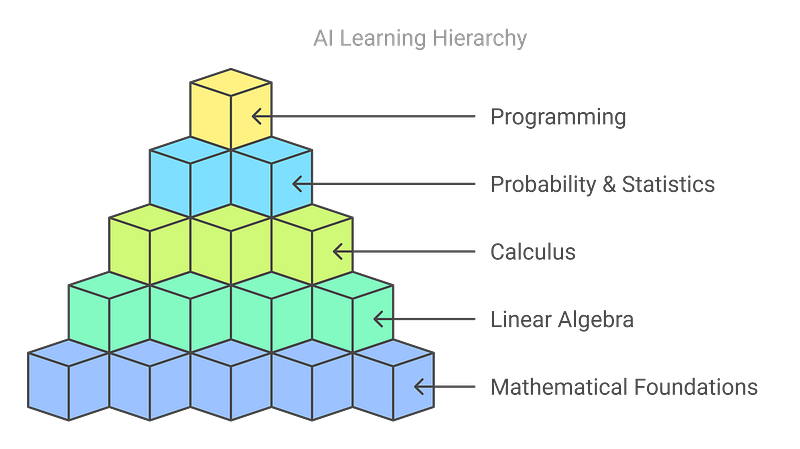
If you are serious about how to learn AI from scratch in 2026, you need to start with the fundamentals. AI is built on mathematics, and without a basic understanding, things will feel confusing later. When you start learning AI from scratch, focus on the core concepts that actually power these systems.
- Linear Algebra: This is essential for understanding vectors, matrices, and transformations, which are the backbone of AI algorithms. You should understand concepts like matrix multiplication, eigenvalues, and singular value decomposition. A good starting point is Linear Algebra Done Right by Sheldon Axler. You can also go through the Essence of Linear Algebra series by 3Blue1Brown.
- Calculus: AI models rely on optimization, and for that, you need to understand derivatives, gradients, and integrals. These concepts explain how models learn by adjusting weights. A useful resource is Calculus: Early Transcendentals by James Stewart, and you can also study calculus through MIT OpenCourseWare.
- Probability and Statistics: AI is about making predictions from data, and probability helps you understand uncertainty, distributions, and concepts like Bayes’ theorem. You can refer to Introduction to Probability by Joseph Blitzstein and explore courses like Probability for Data Science on edX.
Once you are comfortable with these basics, the next step is programming. Python is the most widely used language in AI because of its simplicity and strong ecosystem, including libraries like NumPy, Pandas, TensorFlow, and PyTorch. If you are completely new, you can start with platforms like freeCodeCamp, Codecademy, or practice on LeetCode. You can also go through Python Crash Course by Eric Matthes to build your foundation step by step.
Step 2: Understand Core AI Concepts
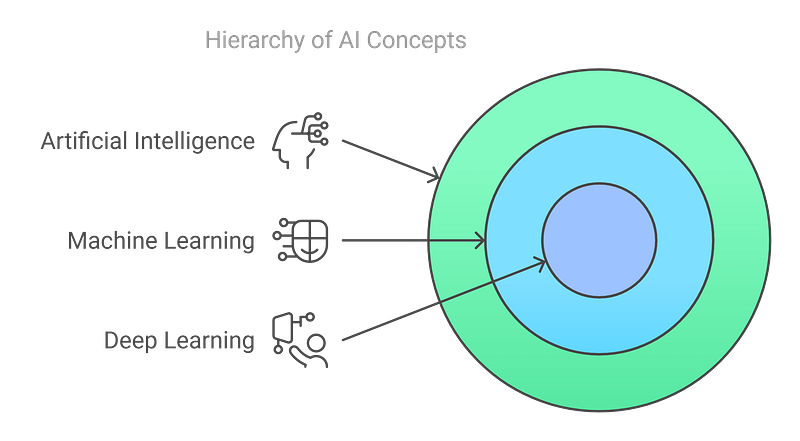
Once you’re comfortable with Python and the necessary math skills, the next step in how to learn AI from scratch in 2026 is to understand the core concepts of AI. Artificial intelligence has multiple branches, but the two most important fields you need to understand are Machine Learning (ML) and Deep Learning (DL). If you are approaching this as part of an AI roadmap for beginners 2026, this step becomes the foundation of everything you will build next.
- Machine Learning: Machine learning is the study of algorithms that allow computers to learn from data without explicit programming. There are three main types:
- Supervised Learning: The model learns from labeled data (e.g., classifying spam emails).
- Unsupervised Learning: The model finds patterns in unlabeled data (e.g., customer segmentation).
- Reinforcement Learning: The model learns by interacting with its environment (e.g., training a robot to walk).
A great beginner-friendly book is Hands-On Machine Learning with Scikit-Learn, Keras, and TensorFlow by Aurélien Géron. For courses, the Machine Learning Specialization by Andrew Ng on Coursera is one of the best introductions.
- Deep Learning: This is a subset of machine learning that focuses on neural networks. Deep learning powers modern AI applications like image recognition, natural language processing, and self-driving cars. Key concepts include:
- Neural Networks: The building blocks of deep learning, inspired by the human brain.
- Convolutional Neural Networks (CNNs): Used for image processing tasks.
- Recurrent Neural Networks (RNNs): Used for sequential data like speech or text.
To get started with deep learning, you can take the Deep Learning Specialization by Andrew Ng on Coursera or read Deep Learning by Ian Goodfellow. If you prefer hands-on learning, the course from fast.ai is an excellent free resource.
If you are wondering which areas to focus on after understanding these concepts, you can also explore “7 AI Skills That Can Make You Rich in 2026”. It gives a clear direction on which skills are actually valuable in the market and how they can turn into real income opportunities.
Step 3: Engage in Hands-On Projects
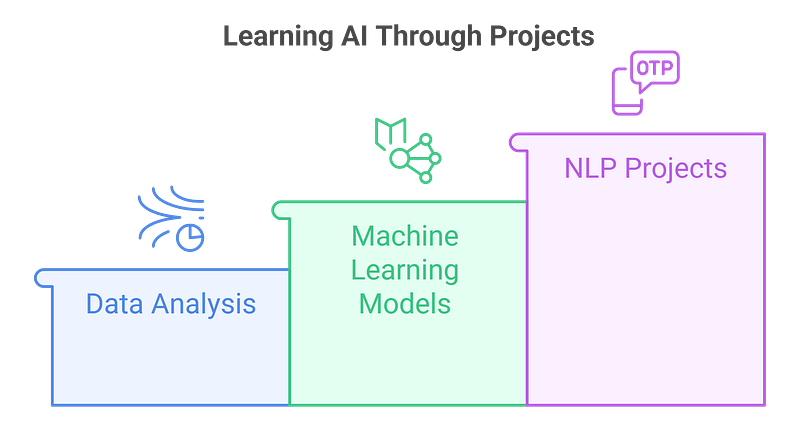
When you are working on how to learn AI from scratch in 2026, theory alone will not take you far. You need to apply what you learn to real problems. This is one of the most important parts of learning AI from scratch, because this is where your understanding becomes practical and useful.
You can start with simple data analysis projects using tools like Pandas and Matplotlib to explore datasets. Platforms like Kaggle and Google Dataset Search provide free datasets on many topics. You can work on problems like predicting housing prices, detecting spam messages, or classifying images. This will help you understand how data is handled and how basic models work.
Once you are comfortable, you can move to building machine learning models using libraries like Scikit-learn for traditional algorithms and TensorFlow or PyTorch for deep learning. If you are following how to start learning AI step by step, this is the stage where you begin creating real systems. You can try projects like a movie recommendation system or an image classifier using datasets like CIFAR-10.
If you are interested in natural language processing, you can experiment with models from OpenAI to build chatbots or text summarization tools. AI is not just about concepts. You understand it much better when you start building things on your own.
If you want a simpler and more practical entry point into AI, you can also explore “How to Become a Prompt Engineer in 2026 (No Degree Needed)”. It focuses on working directly with AI tools and building real-world use cases without needing deep technical complexity.
Step 4: Leverage Online Courses and Resources
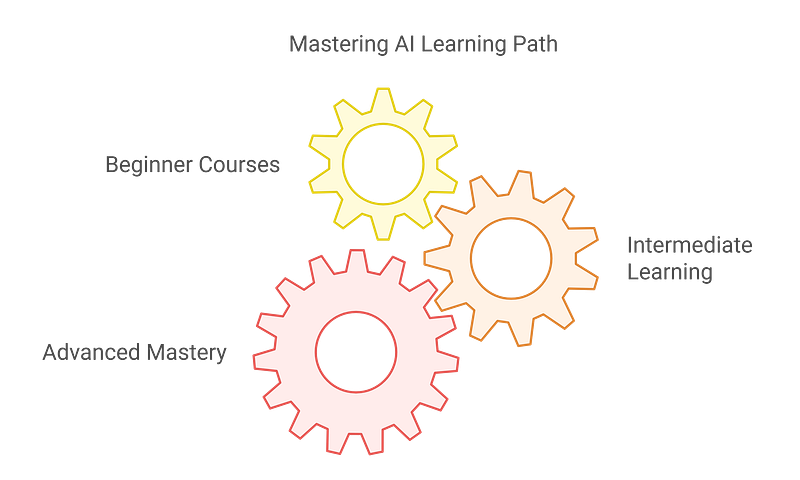
If you are following an AI roadmap for beginners 2026, structured learning resources can help you stay consistent and avoid confusion. Online platforms allow you to learn at your own pace, and choosing the right courses at each level makes your progress much smoother.
Beginner:
- AI for Everyone by Andrew Ng on Coursera helps you understand the impact of AI without requiring coding.
- Python Machine Learning by Sebastian Raschka covers the basics of machine learning using Python.
Intermediate:
- Machine Learning with Python Cookbook by Chris Albon provides a hands-on approach with practical code examples.
- MIT’s Introduction to Deep Learning available on YouTube explains deep learning concepts in a clear and structured way.
Advanced:
- Pattern Recognition and Machine Learning by Christopher Bishop gives a deeper understanding of machine learning algorithms.
- Practical Deep Learning for Coders by fast.ai is useful for applying AI in real-world scenarios.
If you want a more focused list of high-impact learning resources, you can also check out “Top 7 Online Courses to Master AI Agents in 2026”. It can help you choose the right courses faster, especially if you want structured recommendations instead of searching randomly.
Step 5: Participate in AI Communities
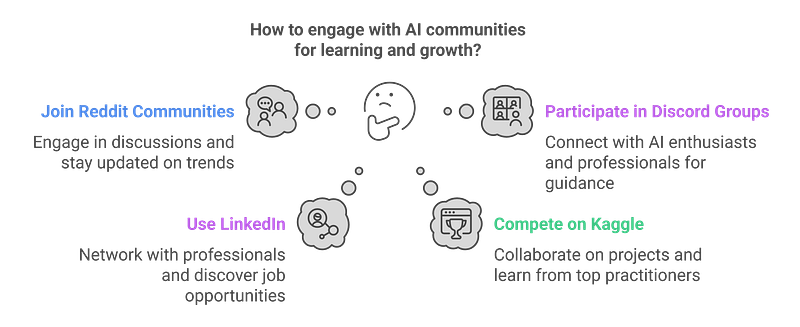
If you are serious about artificial intelligence for beginners, learning on your own is not enough. Being part of a community makes the process easier because you stay motivated, get guidance, and keep up with what is happening in the field.
You can join communities on platforms like Reddit, Discord groups focused on AI and machine learning, and LinkedIn where people regularly share ideas and answer questions. Another strong platform is Kaggle, where you can participate in competitions, work on projects, and learn from experienced practitioners.
You can also gain practical experience by contributing to open-source AI projects on GitHub. This improves your coding skills and helps you build a strong portfolio, which becomes useful when you start applying for AI roles.
Step 6: Stay Updated with AI Research
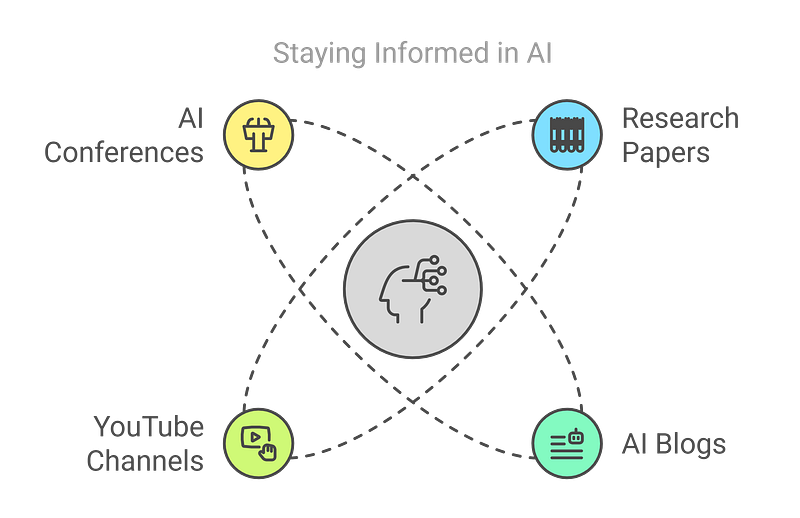
If you are following how to start learning AI step by step, staying updated with new developments is just as important as learning the basics. AI is evolving quickly, and new research, tools, and techniques are coming out regularly. If you do not keep up, your knowledge can become outdated.
You can follow research papers on arXiv and read blogs from Google AI, OpenAI, and Towards Data Science to understand real-world advancements. You can also watch content from Lex Fridman, Two Minute Papers, and Yannic Kilcher to stay informed about new ideas and breakthroughs in a simple way.
If you want to go deeper, you can follow major AI conferences like NeurIPS, ICML, and CVPR. These events showcase the latest research and practical applications being developed in the industry.
Final Thoughts: Learning AI from scratch in 2026 may feel difficult at first, but if you follow a structured approach, it becomes manageable. Focus on building strong fundamentals, work on real projects, and keep learning through courses, books, and communities. AI is already shaping the world around you, and if you stay consistent, you can build real expertise over time.
Best Online Courses to Learn AI
If you are serious about best way to learn AI without coding, online courses are one of the most practical ways to get started. There are many high-quality courses available that cover different levels, from complete beginners to advanced learners. The key is to choose the right course based on your current understanding and learning goals.
Below, the courses are divided into three levels so you can easily decide where to begin and how to move forward as your skills improve.
Beginner-Friendly Courses: Start with the Basics
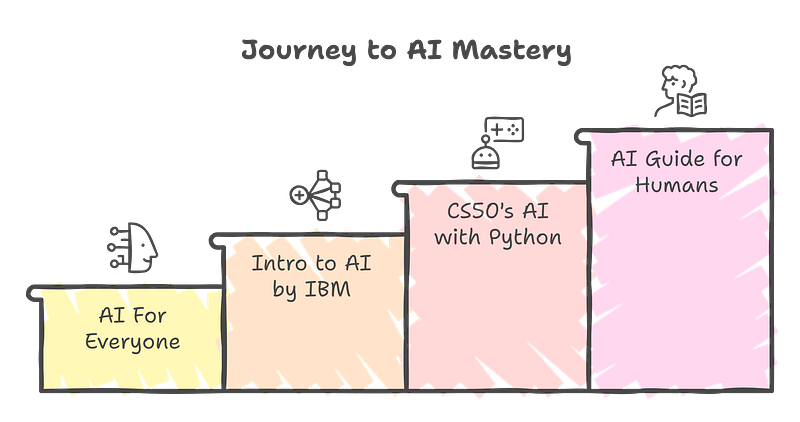
If you are just getting started with how to learn AI from scratch in 2026, you do not need to focus on complex algorithms or advanced coding right away. The goal at this stage is to build a strong foundation in AI concepts, understand how it is used in the real world, and get comfortable with basic programming. These beginner-friendly courses will help you start in a clear and simple way.
- “AI For Everyone” by Andrew Ng (Coursera)
This course is ideal if you come from a non-technical background. It explains how AI works and how it is used across industries without requiring coding. You will understand topics like AI ethics, business use cases, and future trends. It is a good starting point if you want clarity before going deeper. - “Introduction to Artificial Intelligence” by IBM (edX)
This course covers the fundamentals of AI, machine learning, and deep learning in a beginner-friendly way. You also get exposure to real-world applications and case studies, which helps you understand how AI is actually used. - “CS50’s Introduction to Artificial Intelligence with Python” by Harvard University (edX)
If you are ready to start coding, this is a strong next step. You will learn concepts like search algorithms, machine learning, and reinforcement learning while building actual programs. Some basic Python knowledge will help you get more out of this course. - “Artificial Intelligence: A Guide for Thinking Humans” by Melanie Mitchell (Book)
This book explains AI in a simple and clear way without heavy math or technical language. It is useful if you want a deeper understanding of AI concepts alongside your courses.
Intermediate Courses: Deepen Your AI Knowledge
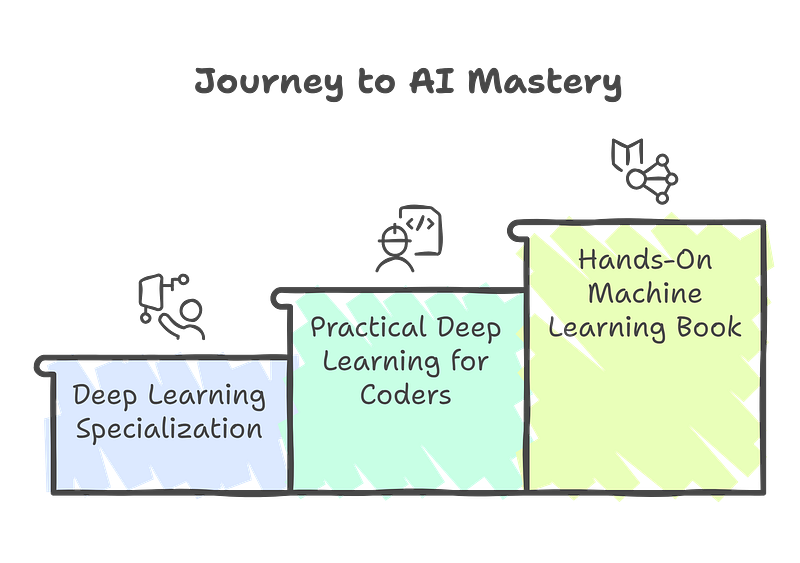
Once you understand the basics, the next step in an AI roadmap for beginners 2026 is to move into practical learning with machine learning and deep learning. At this stage, you should be comfortable with Python and have a basic understanding of statistics and probability. These courses will help you build and train real AI models.
- “Deep Learning Specialization” by Andrew Ng (Coursera)
This is one of the most popular AI courses, covering deep learning fundamentals, neural networks, and applications like computer vision and speech recognition. You will work with TensorFlow and Keras, which are widely used frameworks. This course is a strong choice if you want to go deeper into AI. - “Practical Deep Learning for Coders” by fast.ai
This course focuses on hands-on learning instead of theory. You start building AI models from the beginning and use PyTorch to create real applications. If you prefer learning by doing, this course fits well. - “Hands-On Machine Learning with Scikit-Learn, Keras, and TensorFlow” by Aurélien Géron (Book)
This book gives step-by-step guidance on building machine learning and deep learning models. It works well alongside these courses and helps you understand implementation clearly.
Advanced Courses: Master AI and Specialize
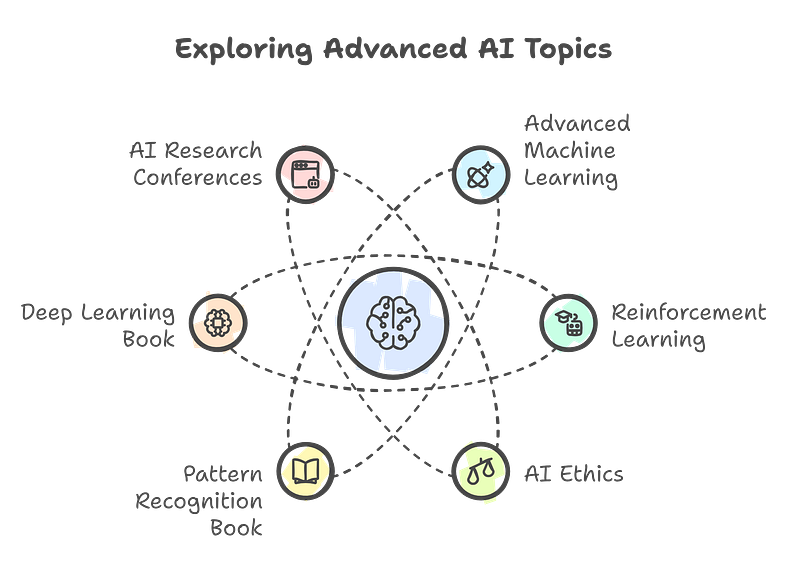
Once you have a strong foundation and have built some models, the next step in artificial intelligence for beginners is to move into advanced topics. At this level, you focus on deeper concepts like reinforcement learning, AI research, and ethical considerations. These resources are best suited if you already understand mathematics, programming, and machine learning well.
- “Advanced Machine Learning Specialization” by HSE University (Coursera)
This course goes beyond basic machine learning and covers topics like Bayesian methods, deep generative models, and advanced natural language processing. It is useful if you want to move toward research or advanced data science roles. - “Reinforcement Learning Specialization” by University of Alberta (Coursera)
Reinforcement learning is important in areas like robotics and gaming. This course covers concepts from Markov decision processes to deep reinforcement learning and helps you build systems that learn from interaction. - “AI Ethics and Society” by University of Edinburgh (edX)
As AI grows, topics like bias, privacy, and regulation are becoming more important. This course explains how AI affects society and how to build responsible systems. - “Pattern Recognition and Machine Learning” by Christopher Bishop (Book)
This is a detailed guide to machine learning concepts such as probabilistic models and advanced techniques. It is suitable if you want a deeper understanding of theory. - “Deep Learning” by Ian Goodfellow, Yoshua Bengio, and Aaron Courville (Book)
Often considered a core reference in deep learning, this book is widely used by researchers and academics. - Keeping Up with AI Research: NeurIPS, ICML, and CVPR
AI keeps evolving, so staying updated is important. You can follow these conferences and read research papers on arXiv to keep up with new developments.
Choosing the Right Course for You
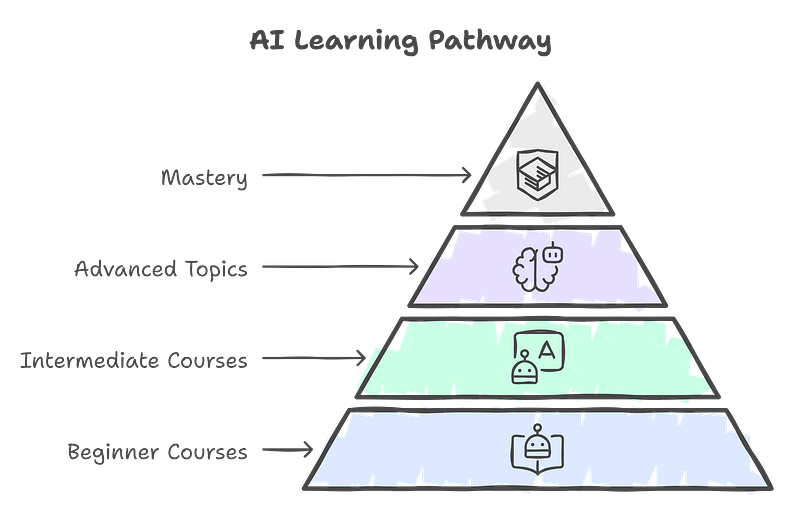
With so many AI courses available, it is important to choose one that matches your current level and goals. If you are following how to start learning AI step by step, your course selection should be simple and practical so you can progress without confusion.
- If you are a complete beginner, you can start with courses like AI for Everyone by Andrew Ng or CS50’s Introduction to AI with Python by Harvard University to build a strong foundation.
- If you already have basic Python knowledge, you can move to intermediate options like the Deep Learning Specialization by Andrew Ng or Applied AI with Deep Learning by IBM to gain hands-on experience.
- If you’re ready for advanced AI topics, which is part of the best way to learn AI without coding, explore reinforcement learning with the University of Alberta’s specialization or dive into AI research with HSE University’s course.
No matter where you begin, the key is consistency and practice. When you combine structured courses with real projects, your progress becomes much faster and more practical.
Exploring AI Career Paths
If you are thinking about how to learn AI from scratch in 2026, it is also important to understand where it can take you. AI offers a wide range of career opportunities across industries like healthcare, finance, robotics, and technology. Once you build the right skills, you can choose from multiple roles based on your interests and strengths.
Here are some of the most in-demand AI career paths you can explore:
1. Data Scientist: The Bridge Between AI and Business Insights
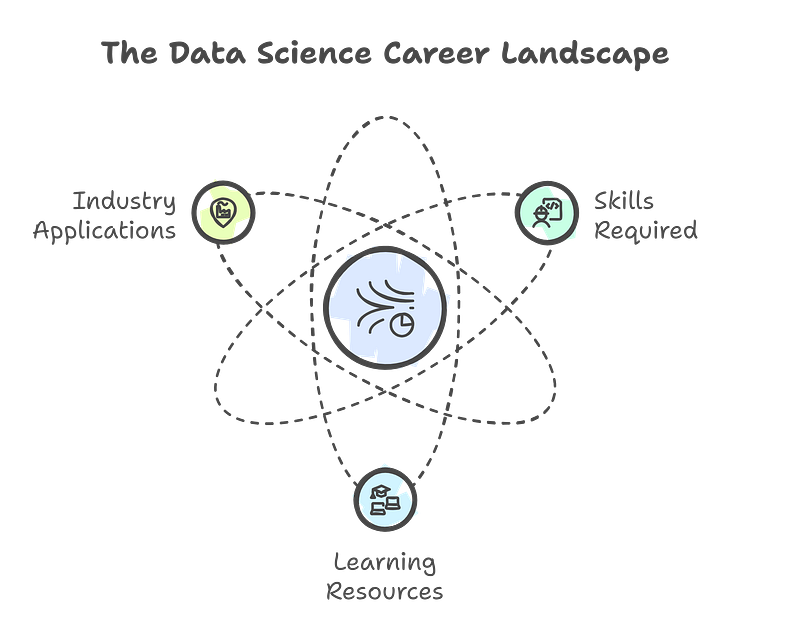
If you are following an AI roadmap for beginners 2026, becoming a data scientist is one of the most practical and in-demand career paths you can aim for. Organizations rely heavily on data to make decisions, and a data scientist helps turn raw data into meaningful insights. In this role, you collect, clean, analyze, and interpret large datasets to find patterns, trends, and useful information. AI and machine learning play an important role here by helping automate analysis, improve predictions, and support better business strategies.
A data scientist works with both structured and unstructured data, applies machine learning models, and presents results in a way that others can understand. Companies across industries like finance, healthcare, marketing, and e-commerce hire data scientists to gain a competitive advantage and make smarter decisions.
Skills Required:
To become a data scientist, you need strong programming skills in Python or R, along with experience using libraries like NumPy and Pandas for data handling. You should also understand machine learning frameworks such as Scikit-learn and be comfortable with visualization tools like Tableau, Power BI, or Matplotlib. A solid foundation in statistics and probability is important because most data-driven decisions depend on these concepts.
Where to Learn:
- Data Science from Scratch by Joel Grus is a beginner-friendly introduction to core concepts.
- Data Science Specialization by Johns Hopkins University on Coursera helps you learn data analysis and machine learning.
- Data Science Professional Certificate by Harvard University on edX focuses on practical, hands-on skills.
If you want a more detailed breakdown of this path, you can also read “How to Become a Data Scientist in 2026 (Without a Degree)”. It explains the exact steps, tools, and skills required to move from beginner level to a job-ready data scientist.
2. Machine Learning Engineer: The Architect of AI Models
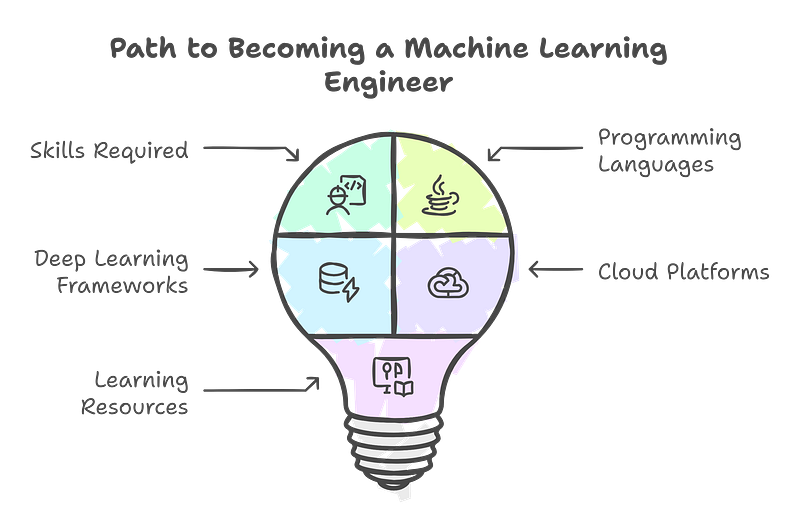
If you are following artificial intelligence for beginners, becoming a machine learning engineer is a strong career option, especially if you enjoy coding and solving technical problems. In this role, you design, build, and deploy machine learning models that power real-world applications such as recommendation systems, chatbots, fraud detection systems, and self-driving technologies.
Unlike data scientists, who focus more on analyzing data and generating insights, machine learning engineers work on building scalable systems that can learn and improve over time. They collaborate closely with software engineers and data scientists to bring AI solutions into real applications.
Skills Required:
To become a machine learning engineer, you need strong programming skills in Python or Java, along with experience in deep learning frameworks like TensorFlow or PyTorch. You should also be familiar with cloud platforms such as AWS, Google Cloud, or Azure. A solid understanding of mathematics, especially linear algebra and probability, is important for optimizing models and improving performance.
Where to Learn:
- Hands-On Machine Learning with Scikit-Learn, Keras, and TensorFlow by Aurélien Géron is a strong foundation for learning how models are built and applied.
- Machine Learning course by Andrew Ng on Coursera is one of the most popular beginner-friendly introductions.
- Practical Deep Learning for Coders by fast.ai focuses on hands-on learning by building real-world applications.
3. AI Research Scientist: Pushing the Boundaries of AI
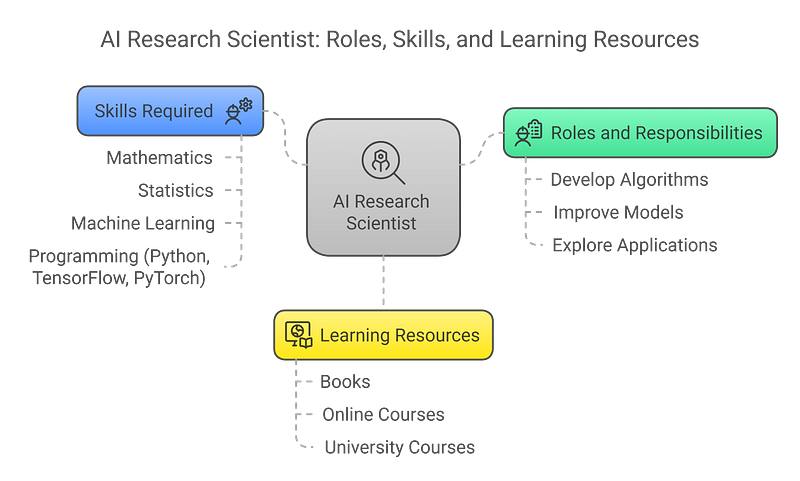
If you are following how to start learning AI step by step, this is one of the most advanced career paths you can aim for. AI research scientists focus on developing new algorithms, improving existing models, and exploring cutting-edge applications. They often work in research labs, universities, or companies like OpenAI, Google Brain, DeepMind, and Meta AI. Their work drives progress in areas such as computer vision, natural language processing, and reinforcement learning.
This path is best suited if you enjoy theoretical thinking and experimenting with new ideas. Research scientists often publish papers, attend conferences, and collaborate with academic institutions to contribute to the advancement of AI.
Skills Required:
To succeed in this field, you need a strong foundation in mathematics, statistics, and machine learning. You should be comfortable with Python and frameworks like TensorFlow and PyTorch. It is also important to know how to read and implement research papers. Knowledge of areas like natural language processing, generative models, and reinforcement learning can help you specialize further.
Where to Learn:
- Deep Learning by Ian Goodfellow, Yoshua Bengio, and Aaron Courville is widely considered a core reference for deep learning.
- Deep Learning Specialization by Andrew Ng on Coursera covers advanced concepts in a structured way.
- MIT’s Introduction to Deep Learning available on YouTube provides a strong university-level understanding of deep learning fundamentals.
4. AI Product Manager: The Business Side of AI
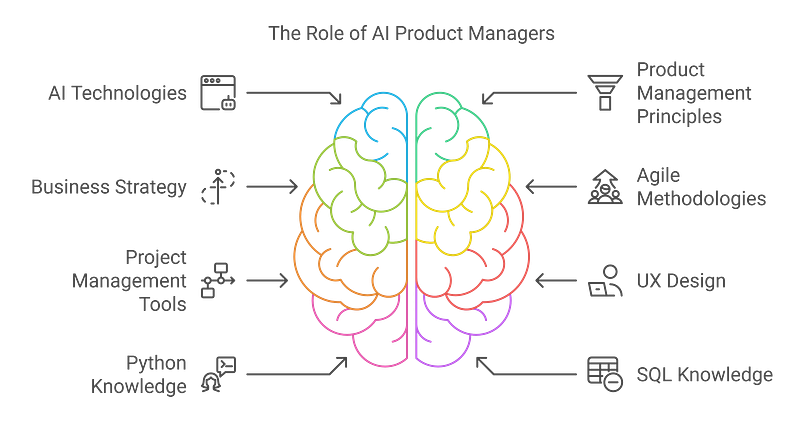
If you are exploring the best way to learn AI without coding, this is one of the most suitable career paths. AI product managers act as a bridge between technical teams and business stakeholders. Their role is to ensure that AI solutions align with business goals, user needs, and ethical considerations. While they do not need to code, they must understand how AI works, what it can and cannot do, and how it should be applied in real products.
This role fits well if you enjoy working at the intersection of technology, business, and user experience. AI product managers define product roadmaps, coordinate with different teams, and make sure AI-powered products succeed in the market.
Skills Required:
You need a strong understanding of AI concepts, product management principles, and business strategy. Knowledge of agile methodologies, project management tools, and user experience design is also useful. Coding is not required, but basic familiarity with Python, SQL, and AI frameworks can help you communicate better with technical teams.
Where to Learn:
- AI Superpowers by Kai-Fu Lee explores how AI is shaping global business and technology.
- AI Product Management courses on Udemy teach AI concepts from a product perspective.
- AI for Product Managers lectures from Stanford University available on YouTube provide insights into managing AI-driven products.
If you are interested in this career path, you can go deeper with “How to Become an AI Product Manager in 2026 (No Degree Needed)”. It covers how to enter this role, what skills you need, and how to position yourself even without a technical background.
5. AI Ethics & Policy Specialist: Shaping the Future of Responsible AI
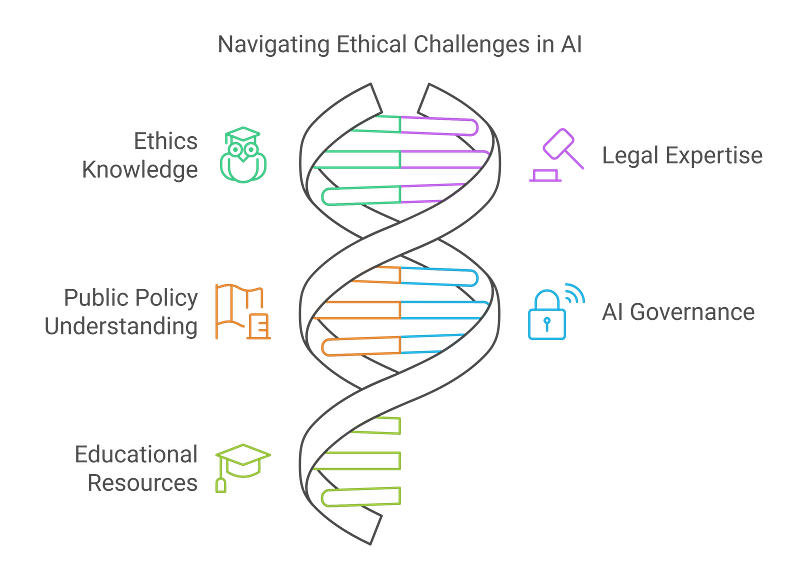
If you are exploring how to learn AI from scratch in 2026, it is also important to understand the ethical side of AI. As AI systems become more powerful, concerns around bias, privacy, accountability, and fairness are getting more attention. AI ethics specialists focus on making sure these systems are developed and used responsibly, so they do not create harm or unfair outcomes.
This career path is a good fit if you are interested in law, philosophy, public policy, or ethics. AI ethics specialists work with governments, regulatory bodies, and technology companies to create guidelines and policies that control how AI is used in real-world situations.
Skills Required:
You need a strong understanding of ethics, law, public policy, and AI governance. It is important to understand topics like bias in AI systems, fairness, and regulatory frameworks. Coding is not required, but having basic knowledge of AI and machine learning helps you understand how these systems work.
Where to Learn:
- Weapons of Math Destruction by Cathy O’Neil explains how biased algorithms can impact society.
- AI Ethics and Governance course from MIT on edX covers topics like fairness and policy.
- AI and Society lectures from Stanford University available on YouTube explain the broader impact of AI on society.
Navigating the AI Job Market: How to Land Your First AI Job
If you are following an AI roadmap for beginners 2026, reaching the job stage can feel like a big step. You may have learned the basics, completed courses, and built a few projects, but the real question is how to actually get your first role in AI. The market is competitive, but beginners can still break in with the right approach.
Whether you want to become a data scientist, machine learning engineer, AI researcher, or AI product manager, the focus should be on building real skills and showing your work. Companies care more about what you can do than what you have studied. That means your projects, your understanding, and how you present your work matter more than just certificates.
Many people struggle at this stage because moving from learning to earning is not straightforward. In AI, having a degree alone is usually not enough. Employers look for hands-on experience and a strong portfolio that proves you can solve real problems. In the next steps, you will see a clear approach you can follow to navigate the job market and improve your chances of landing your first AI role.
1. Build an AI Portfolio: Showcasing Your Work
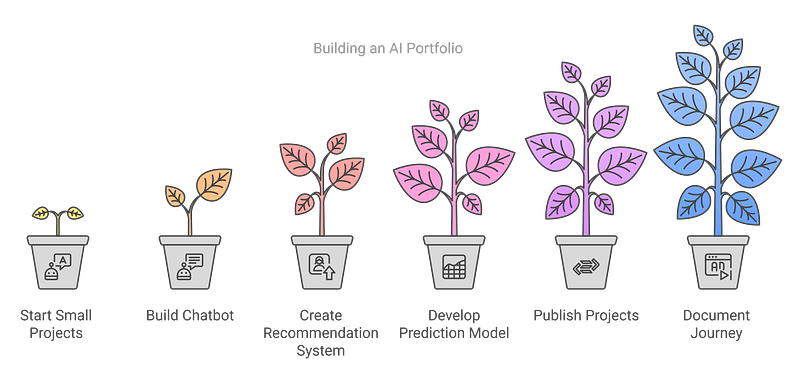
If you are serious about artificial intelligence for beginners, your portfolio matters more than your resume. Employers want to see how you apply concepts in real situations, not just what you have studied. A strong portfolio shows that you can solve problems using AI and makes you stand out from other candidates.
Start with small but meaningful projects that demonstrate different AI techniques:
- A chatbot using Natural Language Processing (NLP): Build a simple AI assistant that can answer questions or handle basic conversations using tools like NLTK, spaCy, or OpenAI’s GPT models.
- A recommendation system: Create a movie or book recommendation system using collaborative filtering or content-based filtering techniques.
- A stock price prediction model: Use historical data to build a machine learning model that predicts trends with libraries like Scikit-learn, TensorFlow, or PyTorch.
Once you complete a few projects, you should publish and document your work. Upload your code on GitHub, participate in competitions on Kaggle, and write about your learning process on platforms like Medium or LinkedIn. This shows initiative and helps others see your thinking process.
Where to Learn:
- Python Machine Learning Projects by Lisa Tagliaferri is useful for building hands-on projects.
- Kaggle Learn provides free exercises in machine learning and AI.
- Google’s TensorFlow Playground is a simple way to experiment with neural networks visually.
2. Contribute to Open Source AI Projects
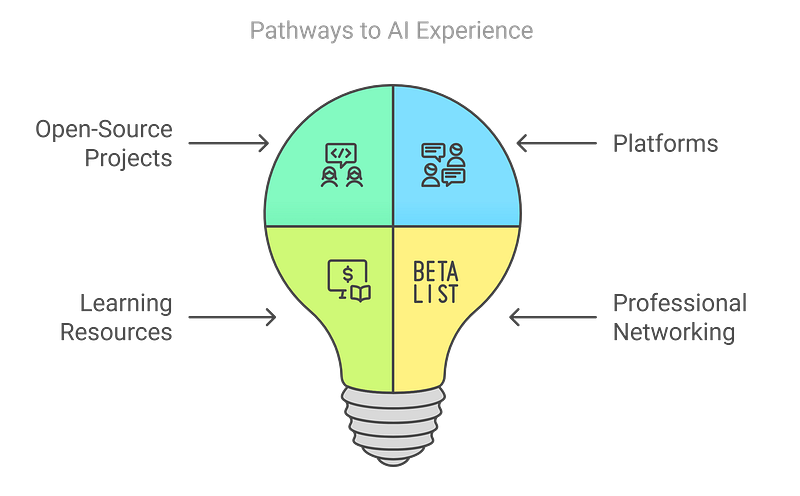
If you are following how to learn AI from scratch in 2026, contributing to open-source projects is one of the most practical ways to gain real-world experience. It allows you to work with experienced developers, improve your coding skills, and understand how AI systems are built and maintained in real scenarios.
You can explore platforms like GitHub, Hugging Face, and OpenAI, where many AI repositories are open for contribution. You do not need to start with complex tasks. You can begin by fixing small bugs, improving documentation, or adding minor features. Over time, you can move to larger contributions in frameworks like TensorFlow, PyTorch, or Scikit-learn, which can significantly strengthen your profile.
Platforms like Hugging Face Model Hub also allow you to experiment with pre-trained models and contribute to NLP-based projects. This kind of experience not only builds your portfolio but also helps you connect with other developers and professionals who may open up future opportunities.
Where to Learn:
- Open Source for AI Beginners (GitHub Guide) gives a step-by-step approach to contributing to AI projects.
- Hugging Face courses help you understand how to work with NLP models and contribute effectively.
- Google Summer of Code offers opportunities to work on real open-source AI projects with guidance.
3. Apply for Internships and Entry-Level AI Jobs
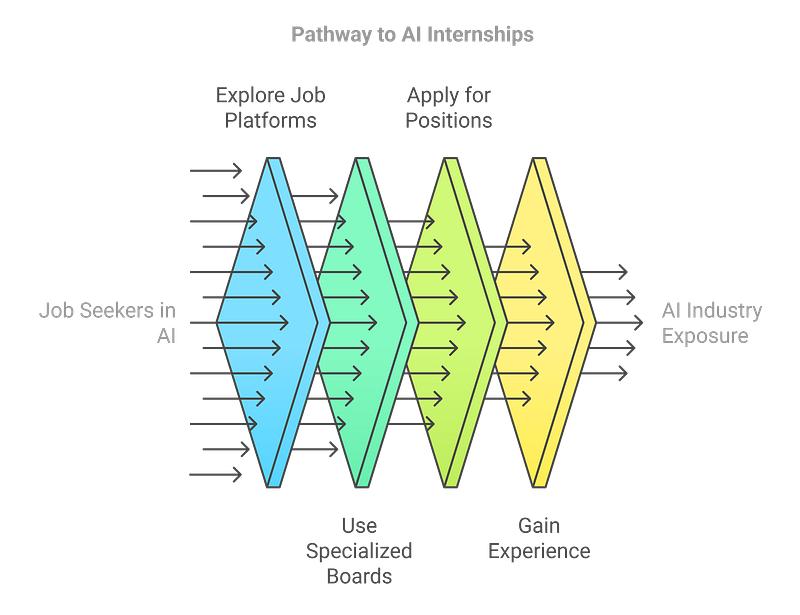
If you are following an AI roadmap for beginners 2026, internships and entry-level roles are one of the best ways to move from learning to real industry experience. Getting your first opportunity in AI can feel difficult, but these roles help you understand how AI is actually used in companies and give you practical exposure.
You can start by applying on platforms like LinkedIn, Glassdoor, and Indeed. You can also explore specialized AI job platforms:
- JobHire.ai – A job portal focused exclusively on AI roles.
- LoopCV – An AI-driven job search platform that automates applications.
- AIApply – A tool that helps match AI candidates with job openings.
If you are a student or a recent graduate, you can also look for research assistant positions at universities. Many professors work on AI projects and look for people who can help with research. This can give you hands-on experience and even help you contribute to research papers.
When applying, avoid sending the same resume everywhere. You should tailor your resume and cover letter to highlight your projects, your work on GitHub, your participation on Kaggle, and any courses you have completed. Recruiters often look for proof of effort and interest, even if you do not have formal work experience.
Where to Learn:
- Cracking the Machine Learning Interview by Nitin S. helps you prepare for AI interviews and understand what companies expect.
4. Network with AI Professionals and Join AI Communities
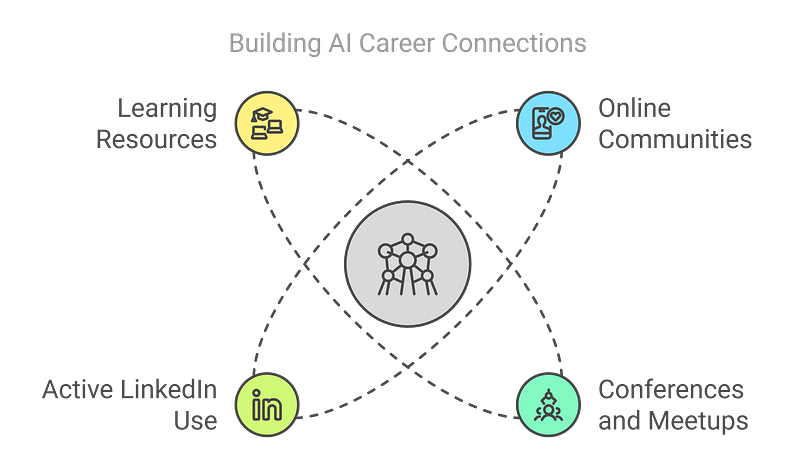
If you are following how to learn AI from scratch in 2026, networking is something you should not ignore. In AI, opportunities often come through connections and referrals, not just applications. Being active in the right communities helps you learn faster and also opens doors to roles that are not publicly listed.
You can start by joining communities on platforms like LinkedIn, Reddit, Discord groups, and X. Some useful communities include:
- r/artificial (Reddit) – A popular space for AI discussions and updates.
- AI Alignment Forum – A platform where researchers discuss long-term AI development and safety.
- Kaggle Forums – A place to learn from practitioners and discuss real-world problems.
You can also attend AI conferences and meetups to expand your network. Events like NeurIPS, ICML, and CVPR bring together researchers, engineers, and recruiters. Even attending these events online can help you connect with the right people.
Another useful step is to stay active on LinkedIn. You can share your projects, write about what you are learning, and engage with content from others in the field. Many recruiters search for candidates directly on LinkedIn, and a strong profile can lead to opportunities.
Where to Learn:
- Networking for Nerds by Alaina Levine explains how to build professional connections in tech.
- Meetup helps you find AI-related events and workshops near you.
- LinkedIn AI Masterclass on Udemy teaches how to use LinkedIn effectively for job opportunities.
5. Keep Learning and Stay Updated on AI Trends
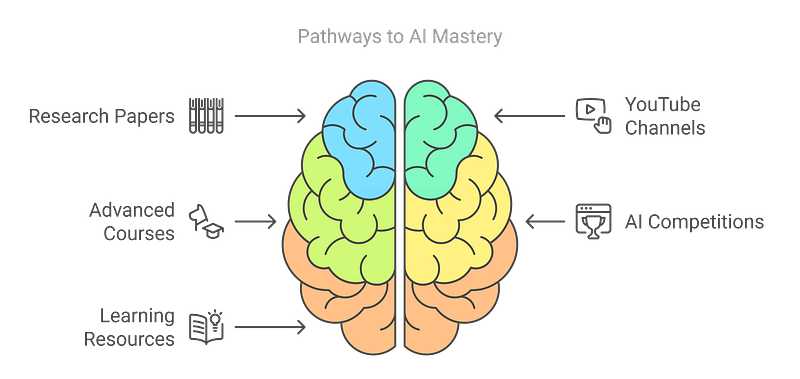
If you are following AI roadmap for beginners 2026, learning does not stop after getting a job. AI keeps evolving, and staying updated is important if you want to grow in your career. You should keep learning new tools, techniques, and ideas as the field changes.
You can follow research papers on arXiv and watch content from Lex Fridman, Two Minute Papers, and Yannic Kilcher to stay updated with new developments. Taking advanced courses from time to time will also help you deepen your understanding.
Another useful way to improve is by participating in AI hackathons and competitions. Platforms like Kaggle, DrivenData, and Zindi host challenges where you can test your skills against others. Even participating in these competitions helps you learn faster and build a stronger profile.
Where to Learn:
- The Hundred-Page Machine Learning Book by Andriy Burkov is a concise guide to machine learning concepts.
- DeepLearning.AI blog shares updates on trends in AI and deep learning.
- AI hackathons on platforms like Devpost and Kaggle help you improve through real challenges.
Conclusion
If you are following how to learn AI from scratch in 2026, this journey can be both challenging and rewarding. Whether you are starting from zero or switching from another field, AI offers real opportunities if you approach it the right way. By focusing on fundamentals, working on projects, learning through structured courses, and staying connected with the community, you can build strong and practical skills over time.
The most important thing is consistency. You need to keep practicing, build real-world projects, and continue learning as the field evolves. AI is not just a trend. It is shaping industries and creating new possibilities. If you stay committed and keep improving, you can build a strong position in this field in the coming years.
FAQs
- How do I start learning AI from scratch? If you are following how to start learning AI step by step, begin with Python, basic mathematics like linear algebra, calculus, and statistics, and core concepts such as machine learning and deep learning. After that, take online courses, work on projects, and stay active in AI communities to build real understanding.
- Is it worth learning AI in 2026? Yes, it is. AI is already transforming industries like healthcare, finance, and robotics. The demand for skilled professionals is increasing, and those who understand AI have a strong advantage in the job market.
- How do I start an AI career with no experience? You can begin by building personal projects, contributing to open-source work, completing certifications, and connecting with professionals in the field. Applying for internships and entry-level roles also helps you gain practical experience.
- Can I learn AI myself? Yes, you can. Many people have learned AI on their own using online resources, books, and hands-on projects. With the right approach and consistency, it is possible to build strong skills without a formal degree.
- Will AI replace jobs in 2026? AI will automate some repetitive tasks, but it will also create new opportunities. People who adapt, learn new skills, and understand AI will be in a much stronger position as the job market evolves.
Final Thoughts
If you are thinking about the best way to learn AI without coding, the reality is that AI has already become a core skill across industries. Starting from scratch today is more accessible than ever because of the resources, tools, and communities available. Whether your goal is to become a data scientist, machine learning engineer, or AI researcher, the path remains simple. You learn the fundamentals, build real projects, and apply what you know.
The most important step is to begin. When you stay consistent and keep improving, your skills compound over time. If you are still wondering how to learn AI from scratch in 2026, the answer is simple. Start now, stay consistent, and keep building. AI is not just about the future. It is already shaping how work is done today, and those who take action early will benefit the most.