

Have you ever thought about how to enter the fast-growing field of AI product management without a formal degree? The demand for AI Product Managers in 2026 is growing rapidly, and the best part is you do not need a computer science background to get started. Artificial intelligence is changing how businesses operate, and companies are actively looking for people who can connect AI technology with real business problems.
If you are coming from a non-technical background or planning a career switch, this guide on How to Become an AI Product Manager in 2026 will help you understand how to become an AI product manager without a degree. You will learn the exact steps, skills, and approach needed to break into this role and build a strong career in AI product management. Keep reading, and I will walk you through a clear, practical roadmap to land your first AI Product Manager role.
What is an AI Product Manager?
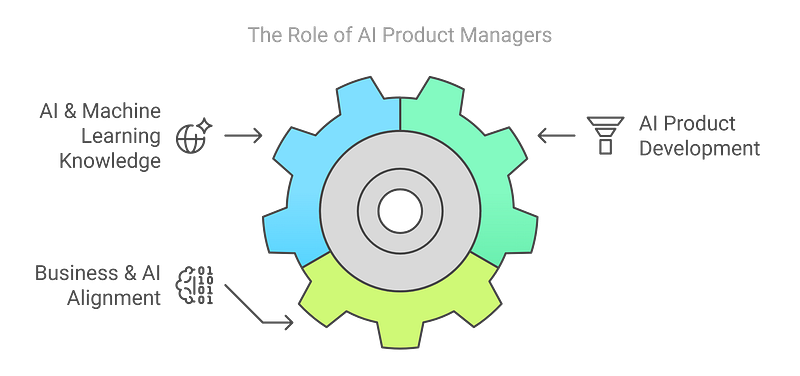
An AI Product Manager, or AI PM, connects complex AI technology with simple, user-friendly products. An AI Product Manager, or AI PM, is someone who connects complex AI technology with real, user-friendly products. Instead of only managing features, they work closely with engineers and data scientists to build AI solutions that solve real-world problems and create business impact.
So, what makes an AI Product Manager different?
- AI & Machine Learning Understanding
They understand key ML concepts, data quality, and risks like bias or model drift. You do not need to code, but this knowledge is essential in the AI product manager roadmap. - Continuous AI Product Development
AI products improve over time. AI PMs focus on refining models, tracking performance, and ensuring scalability instead of treating the product as fixed after launch. - Business & AI Alignment
They translate AI capabilities into simple ideas for stakeholders and make data-driven decisions. This is a key skill if you want to learn how to become an AI product manager without a degree.
At its core, AI product management is not just about features. It is about shaping how AI interacts with users and businesses in a responsible and meaningful way.
What is AI Product Management?
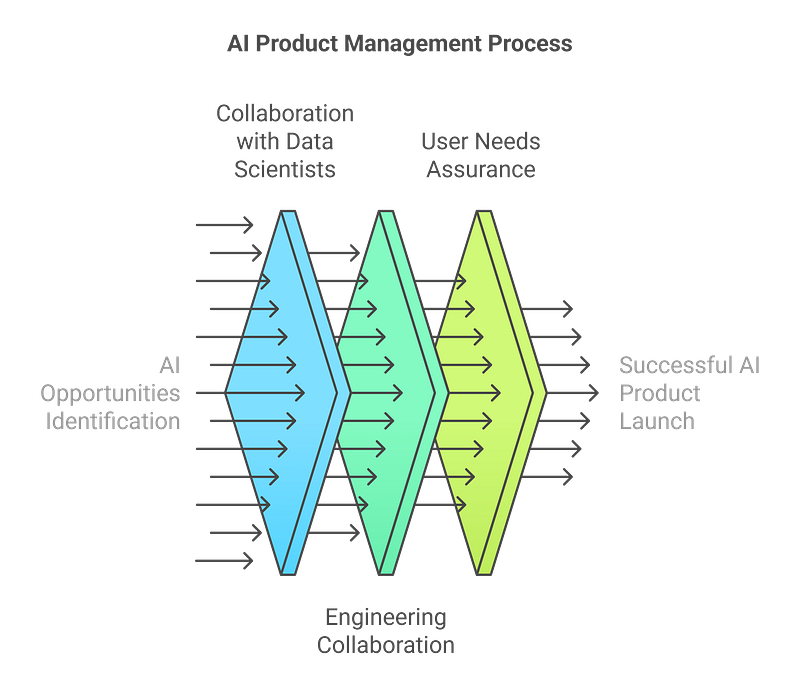
AI product management is the process of building and managing AI-driven products from idea to launch. It involves identifying where artificial intelligence can create real value, working with engineers and data scientists to develop solutions, and ensuring the final product meets user needs. An AI Product Manager combines strategic thinking with basic technical understanding, making it a key part of the roadmap to become an AI product manager in 2026, especially for those exploring AI product management for beginners.
Who is an AI Product Manager?
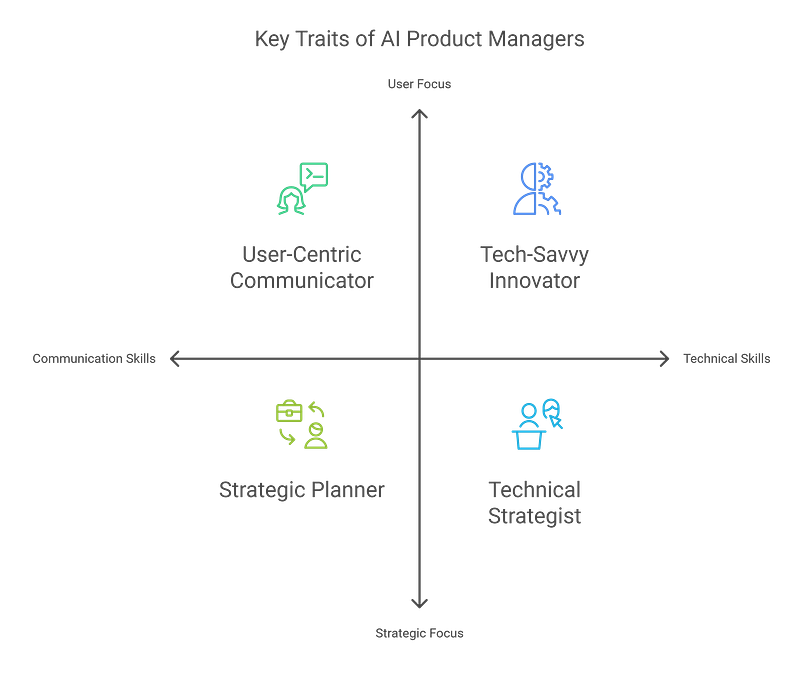
AI Product Managers come from different backgrounds. Some have experience in data science or software engineering, while others move from business analysis, marketing, or traditional product roles. What connects them is a genuine interest in AI, a problem-solving mindset, and the ability to turn complex ideas into practical solutions that people can actually use.
Key traits of an AI Product Manager:
- Strong Communicator
Connects engineers, data scientists, and business teams, making sure everyone stays aligned. - Tech-Savvy
Understands AI basics well enough to guide development, even without writing code. - Strategic Thinker
Identifies where AI can create real value and makes smart, data-driven decisions. - User-Focused
Ensures AI features improve the user experience instead of making it more complicated.
At the end, AI Product Managers do more than manage products. They shape how AI is used in real life, making sure it is useful, responsible, and meaningful.
What Do AI Product Managers Do and What Are Their Responsibilities?

AI Product Managers work at the intersection of technology, business, and user experience. They manage AI-powered products that keep evolving over time, while making sure those products actually solve real problems. They collaborate closely with data scientists, engineers, and stakeholders, balancing technical complexity with clear business goals. At the end, their main responsibility is simple. Build AI products that are not just innovative, but also practical, reliable, and easy for users to understand and use.
Key Responsibilities of an AI Product Manager
1. Market Research: Identifying User Needs and AI Opportunities
AI Product Managers study market trends, understand user problems, and analyze competitors to find where AI can actually add value. They also make an important decision early on. Whether AI is even needed or if a simpler solution would work better. This kind of thinking is essential in the roadmap to become an AI product manager, because not every problem requires AI.
2. Project Management: Leading Cross-Functional Teams
AI product development involves working with data scientists, engineers, designers, and sometimes compliance teams. AI PMs make sure everyone is aligned and the project moves forward smoothly, even when AI models take time to train and require multiple iterations.
3. Model Evaluation: Ensuring Accuracy and Fairness
They work closely with data teams to evaluate how well the model performs. This includes checking accuracy, scalability, and fairness, while also being aware of issues like bias. They decide when a model is ready to launch, knowing that AI products continue improving over time.
4. User Testing: Refining AI Features Based on Feedback
AI should make things easier for users, not confusing. AI PMs run experiments like A/B testing, collect feedback through interviews or surveys, and refine features to improve usability and trust.
5. Stakeholder Communication: Translating AI for Non-Technical Teams
AI can be difficult to understand for non-technical people. AI PMs simplify complex ideas for stakeholders like executives, marketing teams, and legal departments. They set clear expectations and ensure the product is used responsibly and effectively, which is a key part of AI product manager skills.
The Ultimate Goal: Building AI Products That Are Innovative and User-Centric
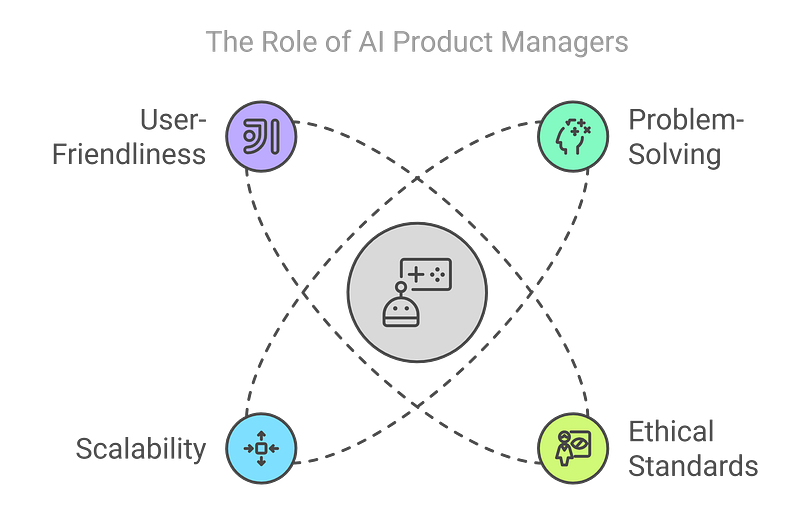
The main goal of an AI Product Manager is simple. Build products that are useful, reliable, and truly centered around the user. Every AI-powered feature should meet a few important standards.
Key Criteria for AI Products:
- It should solve real problems, not use AI just for the sake of it
- It should be accurate, fair, and mindful of bias or ethical concerns
- It should scale properly to handle real-world usage
- It should feel simple and intuitive so users can trust and adopt it easily
At the end, AI Product Managers connect advanced technology with real-world needs. They make sure AI products are not just impressive, but also practical, responsible, and meaningful. If you enjoy working at the intersection of AI, business, and user experience, this role offers strong career growth and long-term opportunities in the evolving field of AI product management.
Why Become an AI Product Manager?

The AI industry is growing rapidly, and companies across the world are integrating AI into their products and services. This creates strong demand for skilled professionals, making this a great time to understand how to become an AI product manager in 2026 and enter the field.
- Competitive Salaries:
AI Product Managers earn high salaries, especially in global markets. In the United States, the average salary is around $160,000 to $200,000 per year, with entry-level roles starting near $120,000 and senior positions going beyond $220,000+. This makes AI product manager salary in 2026 one of the most attractive aspects of this career (source: Glassdoor). - Diverse Opportunities:
AI is transforming multiple industries, including healthcare, finance, retail, and technology, giving you the flexibility to work in different domains. - Continuous Learning:
AI is constantly evolving, which means you will always be learning new tools, concepts, and strategies, making this career both dynamic and intellectually engaging.
What’s the Difference Between an AI Product Manager and a General Product Manager?
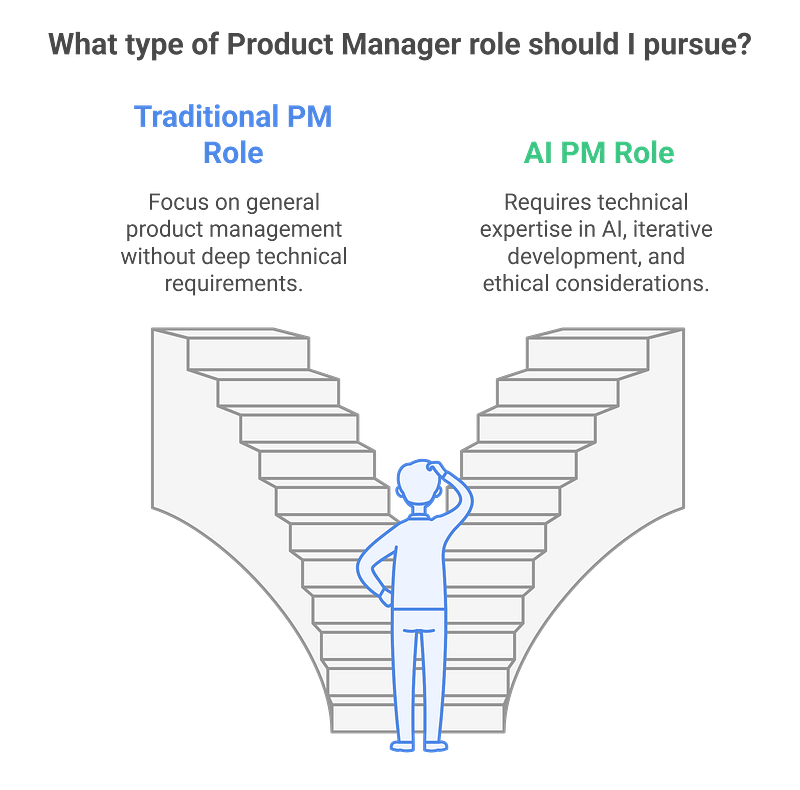
Both roles share the same core responsibility of building and managing products, but AI Product Managers work more closely with technical systems and data. The difference mainly comes down to how deeply they engage with AI and its challenges.
Key differences:
- Technical Understanding:
AI Product Managers need a basic understanding of machine learning concepts and data, while general PMs may not go this deep. - Development Process:
AI products are not fixed. They require continuous testing, model improvements, and validation, unlike traditional products that are more feature-driven. - Ethical Considerations:
AI Product Managers deal with challenges like data privacy, bias, and fairness, which are less common in general product management.
In simple terms, AI Product Managers combine product thinking with AI understanding to build smarter and more responsible products.
Do I Need a Degree to Become an AI Product Manager?
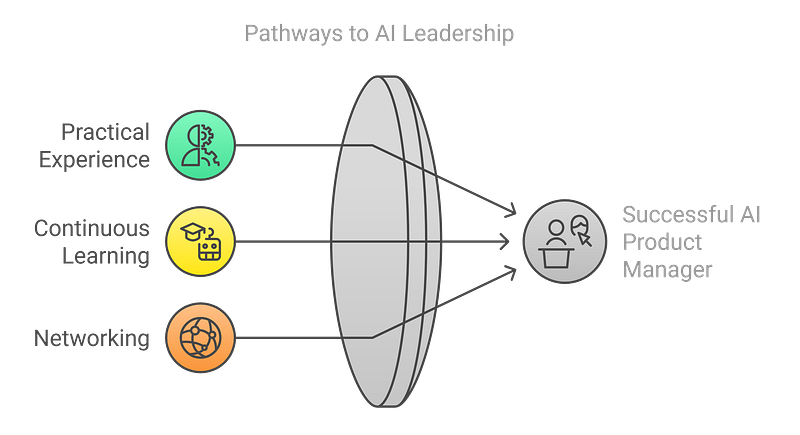
Not necessarily. While a degree in fields like computer science, business, or data science can help, it is not required. Many successful AI Product Managers come from non-traditional backgrounds. What matters most is your ability to connect AI technology with real business problems and build useful products.
Here’s what matters more than a formal degree:
1. Practical Experience
Hands-on experience is one of the most important factors. You should understand how AI models work, what kind of data they need, and how they solve real problems. You can gain this by working on AI projects, collaborating with engineers or data enthusiasts, and building a portfolio that shows your work, even if it includes personal or side projects.
2. Continuous Learning
AI is evolving quickly, so staying updated is essential. You can learn through online courses, certifications, books, and practical resources that cover AI, machine learning, and product management. Consistent learning is a key part of how to become an AI product manager without a degree.
3. Networking and Industry Connections
Building connections can open up real opportunities. Engage with AI communities, connect with professionals on platforms like LinkedIn, attend events or meetups, and participate in hackathons. This helps you learn faster and get closer to real job opportunities.
In the end, a degree can help, but it is not the only path. If you focus on building skills, gaining experience, and learning consistently, you can successfully enter AI product management without a formal degree.
Life as an AI Product Manager
Being an AI Product Manager is not just about building advanced AI features, it is about solving real-world problems using technology in a practical way. This role requires strategic thinking, strong collaboration, and a clear understanding of both AI systems and user needs. Every day can look different, but that is what makes it interesting. Let’s take a look at what a typical day might feel like, even though no two days are exactly the same in AI product management.
Morning: Analyzing Data and Identifying Pain Points
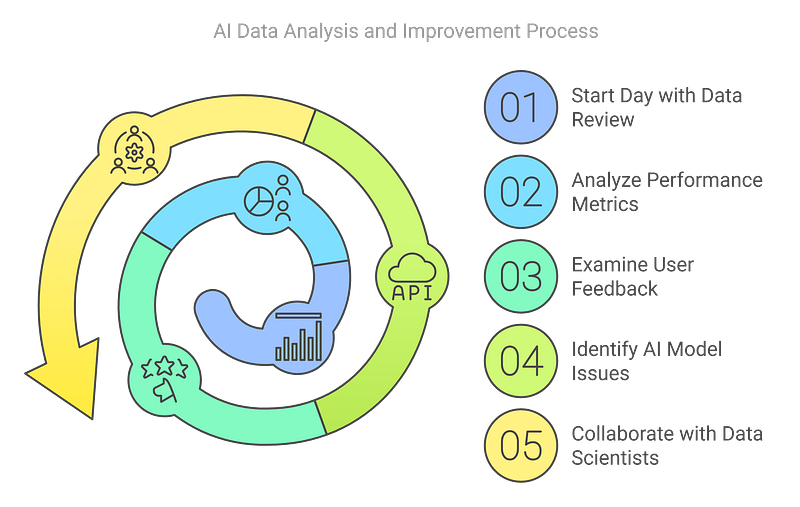
Your day often starts by looking at data. You might check dashboards, review key metrics, or go through user feedback to understand what is working and what is not. For example, a chatbot you launched might be struggling with certain queries, or a recommendation system might not be giving accurate results.
Identifying these issues early is important. AI systems depend heavily on data, so your role is to spot where things are not performing well and work with data scientists to improve the model and overall product experience.
Mid-Morning: Brainstorming AI Solutions with Data Scientists
Once you have identified a problem, the next step is to work with your data science team to find the best solution. This is where collaboration becomes very important.
- Improving the existing model to make it more accurate
- Adding better or more relevant data to improve predictions
- Trying different AI approaches depending on the problem
As an AI Product Manager, you do not need to code, but you do need to think clearly, ask the right questions, and translate business problems into technical challenges that your team can solve.
Late Morning: Aligning with Engineers on Implementation

Next, you might connect with engineers to figure out how to turn the AI solution into a real product feature. AI is not just about models, it has to be properly integrated into an app, website, or system so users can actually benefit from it.
- Ensuring the AI model works smoothly within the product
- Making sure the user experience feels simple and seamless
- Handling performance, speed, and scalability challenges
One of the biggest parts of this role is balancing trade-offs. A highly accurate model might be slow, while a faster one may lose accuracy. Your job is to find the right balance that works for users while keeping both engineers and business stakeholders aligned.
Lunchtime: Catching Up on AI Trends

AI is constantly evolving, so staying updated is an important part of the role. During lunch, you might read about the latest AI developments, explore new tools, or listen to a podcast to understand what is happening in the industry.
Some AI Product Managers also use this time to engage with the community. This could mean participating in discussions, sharing ideas, mentoring others, or learning from professionals in AI-focused groups and forums.
Afternoon: Reviewing AI Model Performance and User Feedback
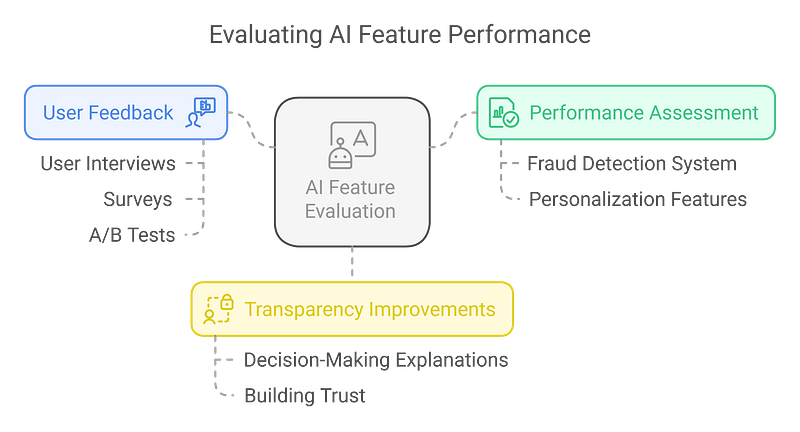
After lunch, you focus on how well your AI features are actually performing. You might review reports, check key metrics, or analyze user behavior to understand what is working and what is not. For example, you could be evaluating how accurately a fraud detection system is flagging transactions or how users are engaging with a personalization feature.
In many cases, AI models perform well during testing but face challenges in real-world usage. This is where user feedback becomes important.
- Reviewing performance metrics and real-world results
- Collecting feedback through surveys, interviews, or A/B testing
- Identifying trust issues and improving user experience
If users find an AI feature confusing or unreliable, you may need to make it more transparent by explaining how it works or refining its behavior to improve trust and usability.
Late Afternoon: Presenting Updates to Stakeholders
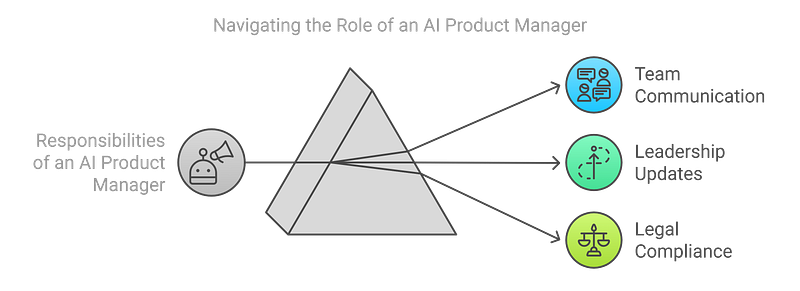
AI products involve multiple teams, including executives, marketing, customer support, and legal. As an AI Product Manager, you need to keep everyone informed and aligned on progress.
In the afternoon, you might present updates to leadership, showing how an AI feature is performing and how it is impacting business metrics. For example, you could explain how a recommendation system improved user engagement or how a feature is delivering better results.
- Sharing product performance and key insights with stakeholders
- Explaining results in a simple and clear way
- Aligning teams on next steps and priorities
You may also work with legal or compliance teams to ensure the product follows privacy and ethical guidelines. AI brings important responsibilities, so your role includes making sure everything is fair, transparent, and aligned with regulations.
Evening: Wrapping Up & Planning Ahead (In a Perfectly Organized World, That Is…)
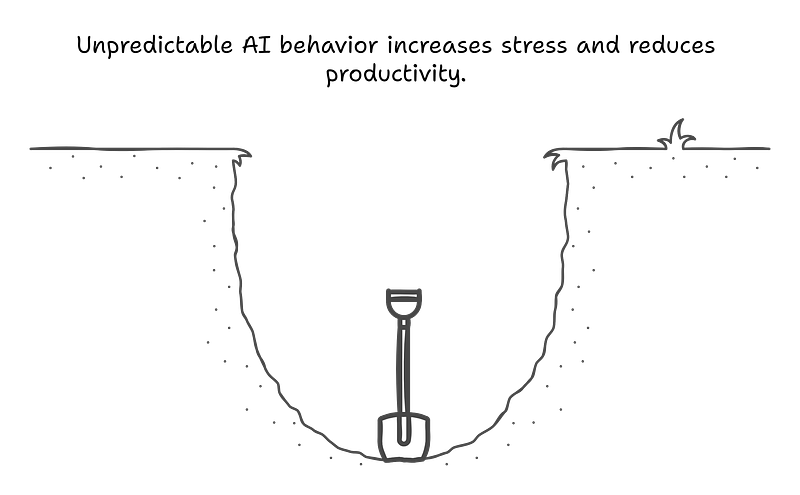
Let’s take a moment to pretend that AI Product Managers live in a world where schedules go exactly as plaIn an ideal world, your evening would be calm and structured. You would spend time updating product roadmaps, replying to emails, and writing clear requirements for upcoming AI features. You might even reflect on what worked well during the day and plan improvements for tomorrow.
But in reality, things are often less predictable.
- Unexpected Issues:
Sometimes an AI model behaves differently in production, and the team needs to quickly fix it while you manage expectations. - Last-Minute Requests:
New ideas or changes can come in suddenly, requiring quick thinking and adjustments. - Constant Communication:
Even at the end of the day, messages and emails may keep coming, requiring your attention.
On some days, everything runs smoothly and you get time to learn, explore new ideas, or simply log off on time. But overall, this role keeps you on your toes, which is what makes it both challenging and interesting.
Why AI Product Management is Both Exciting and Challenging
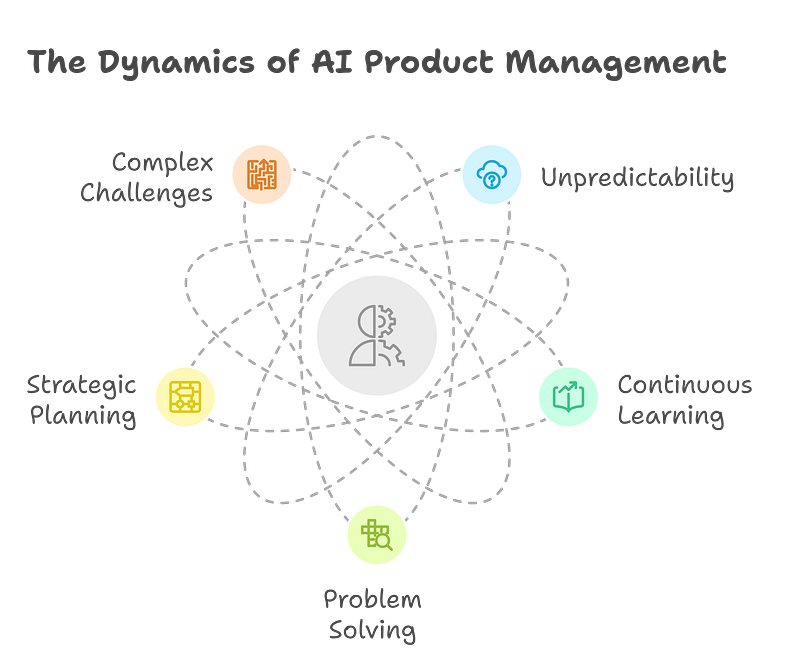
AI product management is different from traditional product management because AI systems are not always predictable. Unlike regular software features, AI models learn from data, and if the data is incomplete or biased, the results can also be imperfect.
That is what makes this role both challenging and exciting. It is not just about launching a product, it is about continuously learning, improving, and adapting. Some days, you will be analyzing why an AI model is not performing as expected. On other days, you will focus on strategy, thinking about how AI can create a real advantage for the business.
If you enjoy solving complex problems, working with skilled teams, and building the future with technology, AI product management can be a very rewarding career path.
What is the Average AI Product Manager’s Salary?
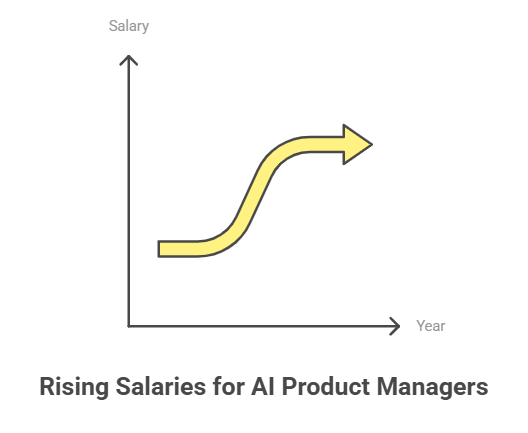
If you are considering a career as an AI Product Manager, one of the most important questions is how much you can actually earn. The good news is that AI Product Managers are in high demand, and the salaries reflect that.
As of 2026, the average AI Product Manager in the United States earns around $193,000 per year in total compensation, with typical ranges between $160,000 and $238,000+, and top professionals earning up to $280,000+ depending on experience (source: Glassdoor).
In addition, compensation data from top tech companies shows that total pay, including bonuses and stock, can go even higher, often reaching $200,000 to $300,000+ in strong markets (source: Levels.fyi).
Of course, your actual salary will depend on factors like your experience, location, company, and industry. Let’s break it down further.
Salary Breakdown by Experience Level
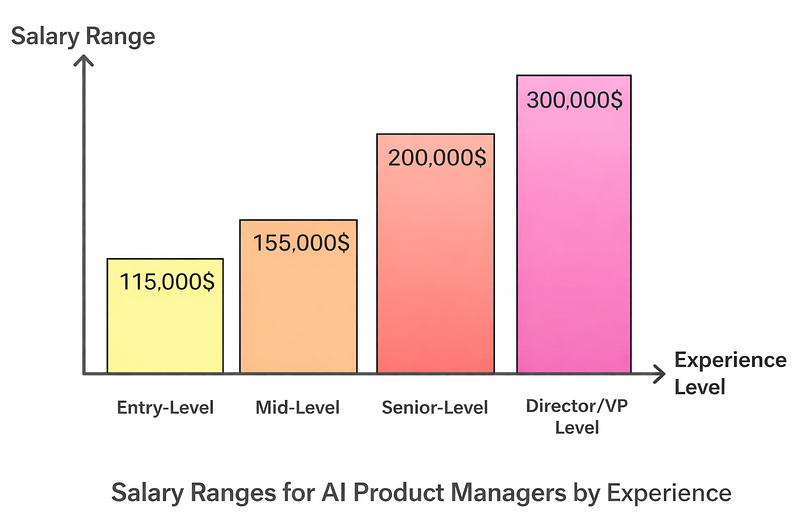
Like most roles, your earning potential as an AI Product Manager increases as you gain more experience. Here is what you can expect at different stages:
- Entry-Level (0–2 years experience):
Salaries typically range from $100,000 to $130,000 per year, depending on the company and location. Bonuses and stock options can increase total compensation (source: Glassdoor). - Mid-Level (3–5 years experience):
With a few years of experience, you can expect to earn between $130,000 and $180,000 annually, as you start handling larger projects and responsibilities (source: Glassdoor). - Senior-Level (5+ years experience):
Experienced AI Product Managers often earn between $160,000 and $240,000+ per year, with total compensation going higher depending on bonuses and stock (source: Glassdoor, Levels.fyi). - Director or VP Level:
At leadership levels, total compensation can reach $250,000 to $400,000+ per year, especially in top tech companies with strong equity packages (source: Levels.fyi).
These numbers can vary based on location, company, and industry, but overall, AI product management remains one of the highest-paying career paths in tech.
What Factors Affect an AI Product Manager’s Salary?
AI Product Manager salaries can vary quite a bit depending on several factors:
1. Location
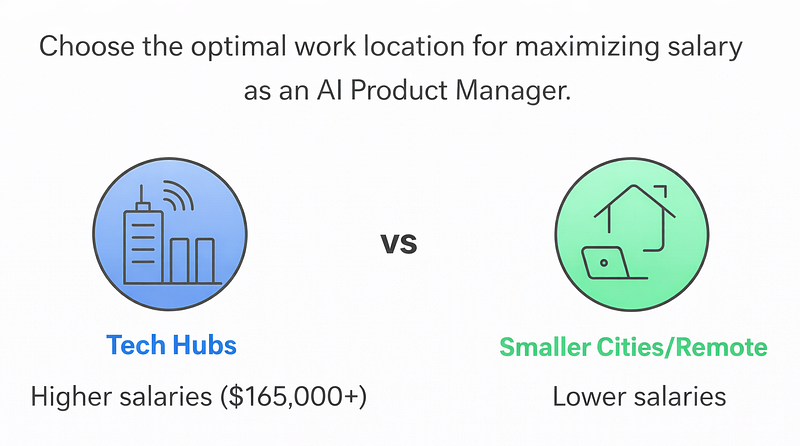
Where you work has a major impact on your salary. In top tech hubs like San Francisco, New York, and Seattle, total compensation for Product Managers often falls between $165,000 and $320,000+ per year, with higher ranges in top companies and senior roles (source: Levels.fyi) . In AI-focused companies, compensation can go even higher depending on experience and company scale.
On the other hand, salaries may be slightly lower in smaller cities or non-tech environments, although remote roles are gradually reducing this gap and giving access to higher-paying opportunities globally.
2. Industry
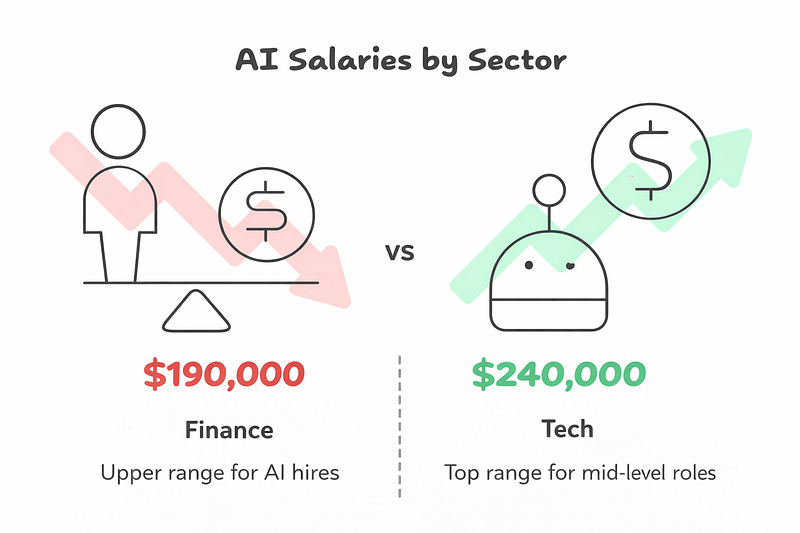
Not all industries pay the same for AI expertise, and your salary can vary significantly depending on where you work.
- Tech (Google, Meta, OpenAI, Microsoft, etc.):
Offers the highest compensation. AI-focused Product Managers typically earn $170,000 to $240,000+ per year, with top companies and roles going much higher (source: Glassdoor, Levels.fyi) - Finance and Banking:
AI Product Managers in fintech and banking generally earn around $130,000 to $190,000 per year, depending on experience and company scale (source: Glassdoor) - Healthcare:
Salaries usually range between $120,000 and $180,000+, with higher pay for experienced professionals working on advanced AI systems (source: Glassdoor) - Retail and E-commerce:
Salaries typically fall between $120,000 and $170,000 per year, depending on company size and product complexity (source: Levels.fyi)
These ranges can vary, but overall, tech and AI-first companies consistently offer the highest compensation, especially when stock and bonuses are included.
3. Education & Certifications
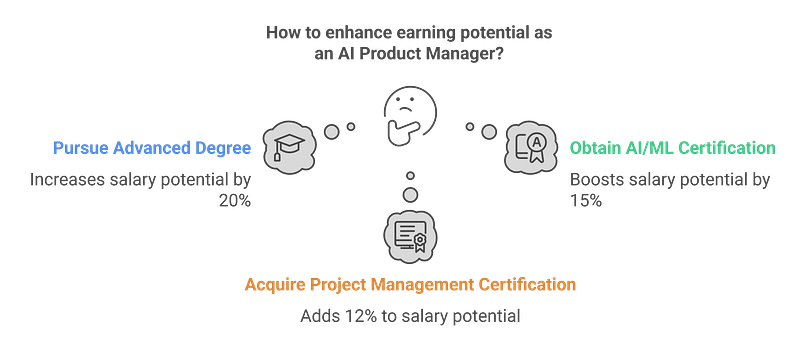
You do not need a formal degree to become an AI Product Manager, but your education and skills can still influence your salary. Having a higher degree can sometimes lead to better pay. For example, product managers with a master’s degree earn around $127,000 on average compared to about $115,000 with a bachelor’s degree, showing a noticeable increase (source: Coursera).
Certifications can also strengthen your profile, especially in AI, machine learning, or product management. While there is no fixed percentage increase, professionals with strong technical and product skills tend to earn more because they can contribute more effectively to AI-driven products. In fact, AI-focused roles reward practical skills and experience more than just degrees, making certifications and hands-on learning a valuable way to increase your earning potential (source: Simplilearn).
4. Experience & Track Record
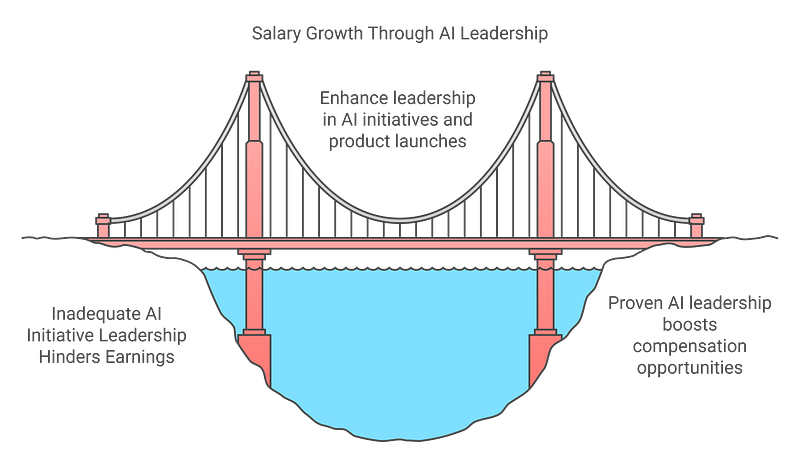
One of the biggest factors in salary growth is your experience and proven results. If you have a strong track record of launching AI-powered products, leading teams, and improving business outcomes, your value in the market increases significantly. Companies are willing to pay more for professionals who can show real impact and handle complex AI projects effectively (source: Levels.fyi).
How Do AI Product Manager Salaries Compare Globally?
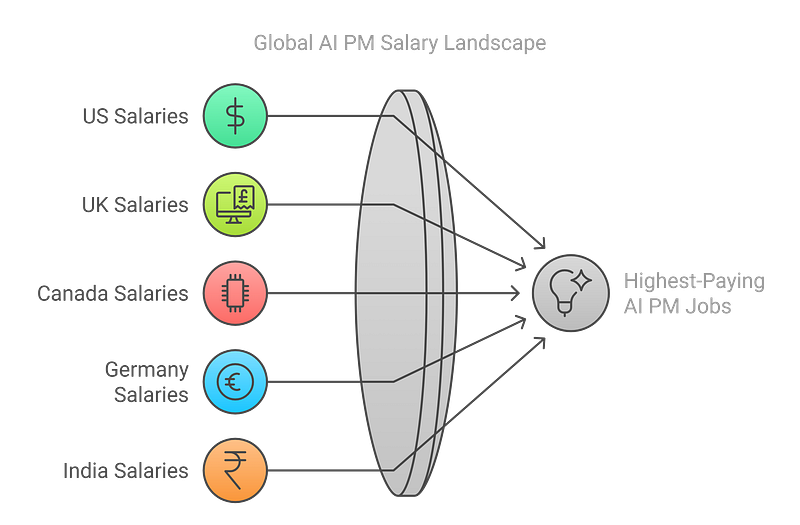
AI Product Managers are in demand worldwide, and salaries vary based on location, experience, and market maturity:
- United States:
The average base salary is around $135,000 to $150,000 per year, with total compensation typically reaching $190,000 to $240,000+ annually, especially in top tech companies (source: Glassdoor US, Levels.fyi). - United Kingdom:
AI Product Managers earn an average base salary of about £70,000 to £85,000 per year, with total compensation going up to £100,000 to £120,000+ annually (source: Glassdoor UK). - Canada:
The average base salary is approximately CA$110,000 to CA$130,000 per year, with total compensation reaching CA$140,000 to CA$170,000+ annually (source: Glassdoor Canada). - Germany:
AI Product Managers typically earn around €75,000 to €95,000 per year as base salary, with total compensation reaching €100,000 to €130,000+ annually (source: Glassdoor Germany). - India:
Experienced AI Product Managers earn an average base salary of around ₹20 lakh to ₹35 lakh per year, with total compensation reaching ₹25 lakh to ₹45 lakh+ annually depending on company and experience (source: Glassdoor India).
Salaries in Europe and Canada are strong, but the highest-paying opportunities are still concentrated in the United States, especially in major tech hubs.
Is AI Product Management a High-Paying Career?
Yes, AI product management is one of the highest-paying roles in the product space. As AI continues to shape the future of technology, companies are investing heavily in AI-driven products and need skilled professionals who can connect technical teams with business goals and user needs.
This demand directly translates into strong salary growth, better opportunities, and long-term career stability. If you are interested in both AI and product strategy, this field offers not only high earning potential but also the chance to work on meaningful and impactful products (source: Interview Kickstart).
Types of AI Product Managers
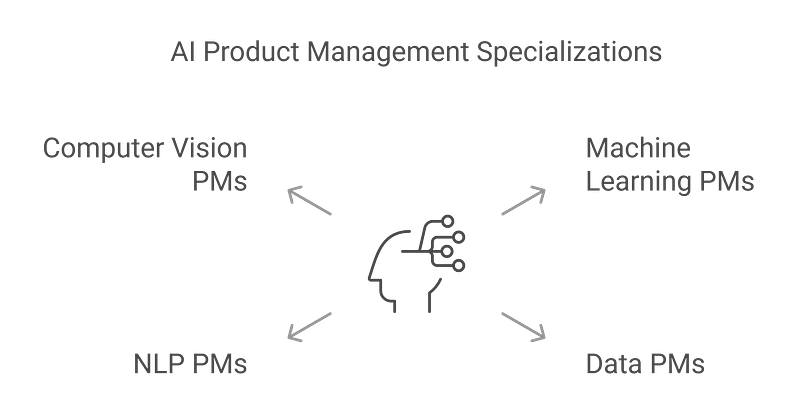
AI Product Managers can specialize in different areas depending on the type of product they work on.
- Machine Learning PMs:
Focus on products that use machine learning models to make predictions and improve over time. - Data PMs:
Work on products built around data collection, analytics, and processing. - NLP PMs:
Specialize in natural language processing, including chatbots, voice assistants, and text-based AI systems. - Computer Vision PMs:
Manage products that work with images and videos, such as recognition systems or visual analysis tools.
Each of these roles requires a slightly different skill set and comes with its own challenges, depending on the type of AI technology involved.
Top Skills to Learn for an AI Product Manager
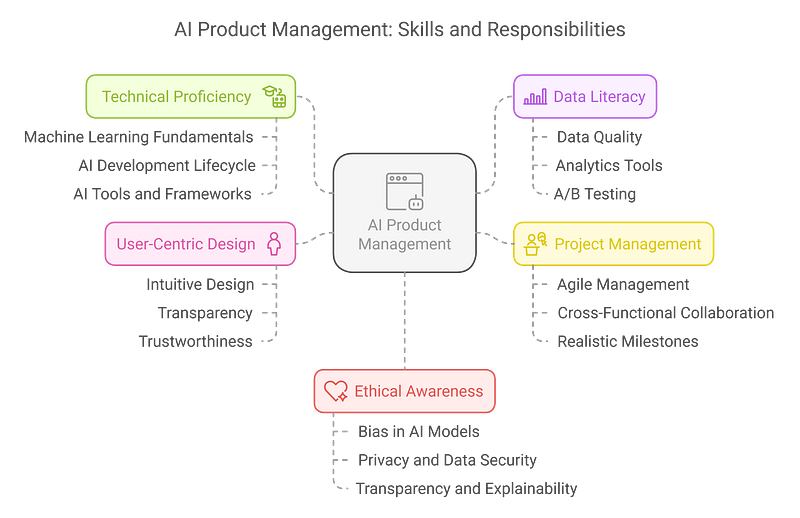
AI product management requires a mix of technical understanding, business thinking, and leadership skills. Unlike traditional product managers, AI PMs work with machine learning models, data, and real-world uncertainties, which makes the role both broad and slightly more complex.
If you want to succeed in this field, you need to focus on building the right skills that help you manage AI-driven products, collaborate with technical teams, and make smart, data-driven decisions.
1. Technical Proficiency: Understanding AI and Machine Learning
You do not need to be a data scientist to become an AI Product Manager, but you do need a solid understanding of how AI systems work. This helps you make better decisions and work effectively with technical teams.
- Machine learning fundamentals:
Understand how models learn from data and make predictions. - AI development lifecycle:
Know the process from data collection to training, testing, and deployment. - AI tools and frameworks:
Be familiar with tools like TensorFlow, PyTorch, or AutoML at a basic level.
With this knowledge, you can communicate clearly with engineers and data scientists, set realistic expectations, and guide the product in the right direction.
2. Data Literacy: Making Data-Driven Decisions
Since AI depends heavily on data, AI Product Managers need to be comfortable working with and understanding data. This helps you make better decisions and improve product performance.
- Understanding data quality:
Know how clean and relevant data impacts AI model accuracy. - Using analytics tools:
Track performance and measure how well AI features are working. - Running experiments:
Use A/B testing and other methods to evaluate and improve AI-driven features.
A data-literate AI Product Manager can identify patterns, detect issues like bias, and make decisions that lead to better and more reliable AI products.
3. Project Management: Leading AI Teams and Delivering Results
AI product development is often unpredictable. Unlike traditional software, AI models require continuous testing and improvement. That is why strong project management skills are essential.
- Agile project management:
Handle changing requirements and manage AI projects with flexible timelines. - Cross-functional collaboration:
Work closely with data scientists, engineers, designers, and stakeholders to keep everyone aligned. - Setting realistic milestones:
Understand that training, testing, and deploying AI models takes time, and plan accordingly.
A strong AI Product Manager knows how to balance business goals with technical limitations, ensuring projects move forward smoothly and deliver real results.
4. User-Centric Design: Ensuring AI Products Solve Real Problems
AI should make the user experience better, not more complicated. As an AI Product Manager, your job is to ensure that AI features are simple, clear, and genuinely helpful.
- Intuitive and easy to use:
AI should feel simple and not overwhelm users with complexity. - Transparent:
Users should have a basic understanding of how and why the AI is making decisions. - Trustworthy:
Outputs should feel reliable and not confusing or impersonal.
By working closely with designers, you can build AI products that feel natural, useful, and focused on real user needs.
5. Ethical Awareness: Navigating AI’s Impact Responsibly
AI comes with important ethical responsibilities, and AI Product Managers need to be aware of how their products affect users and society.
- Bias in AI models:
Ensure fairness in predictions and avoid biased outcomes. - Privacy and data security:
Handle user data responsibly and follow regulations like GDPR and CCPA. - Transparency and explainability:
Make AI decisions easier to understand for both users and stakeholders.
AI Product Managers play a key role in making sure AI products are not only effective but also responsible and aligned with real-world expectations. By combining technical understanding, data awareness, leadership, and ethics, they help build AI products that are useful, trustworthy, and impactful.
Step-by-Step Process to Start from Scratch to Becoming an AI Product Manager
Getting into AI product management can feel overwhelming in the beginning, especially if you come from a non-technical background. But the truth is, you do not need a computer science degree or years of experience to get started. What you need is a clear understanding of AI basics, product management skills, hands-on experience, and the ability to work with technical teams.
The good news is that you can build all of this from scratch if you follow the right approach. Start by learning the fundamentals, then move into practical projects, build a strong portfolio, connect with people in the industry, and apply for roles in a smart way. If you stay consistent and keep improving, this step-by-step process can help you understand how to become an AI product manager in 2026 and move closer to landing your first role.
1. Learn the Fundamentals of AI and Product Management
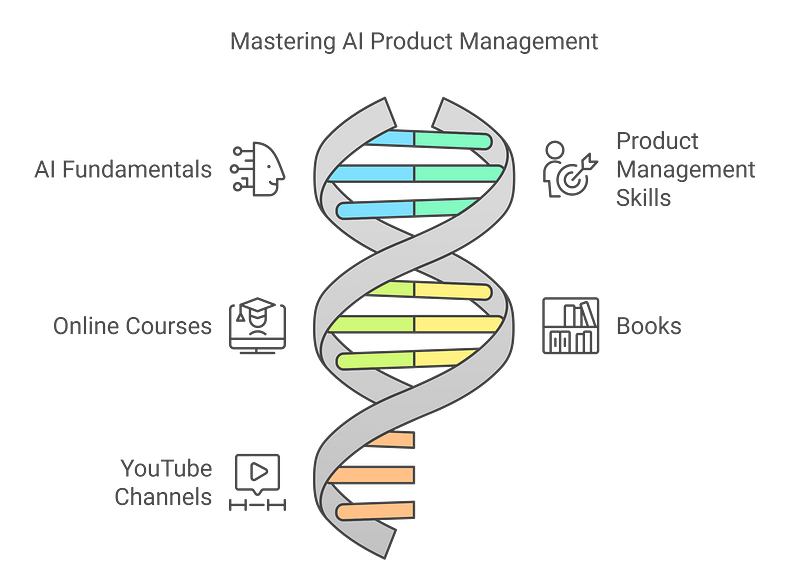
The first step is to build a strong foundation in artificial intelligence, machine learning, and product management. You do not need to be a data scientist or engineer, but you should understand how AI works and how it is used in real products.
- How AI works:
Understand machine learning basics, training data, and common issues like bias. - How AI is used in products:
Learn how systems like chatbots, recommendation engines, and image recognition work. - How to work with technical teams:
Be able to communicate clearly with data scientists, ML engineers, and developers.
At the same time, you should develop core product management skills like user research, roadmap planning, feature prioritization, and stakeholder communication.
Best Online Courses for AI and Machine Learning Fundamentals
If you are a complete beginner, these courses can help you build a strong foundation in AI and understand how it applies to real products:
- IBM AI Product Manager Professional Certificate (Coursera):
Covers AI fundamentals, data-driven decision-making, and how to build AI product strategies. - AI For Everyone by Andrew Ng (Coursera):
A beginner-friendly course that explains AI concepts in simple terms along with real-world use cases. - Elements of AI (University of Helsinki):
A free and non-technical course designed to help you understand core AI concepts without coding. - Google Machine Learning Crash Course:
A practical introduction to machine learning with hands-on exercises, useful for gaining deeper understanding as a product manager.
Best Online Courses for Product Management
To learn how to build, manage, and scale AI-driven products, these courses can help you develop the right product thinking and practical skills:
- AI Product Manager Nanodegree (Udacity):
Covers AI product strategy, working with data teams, and understanding ethical considerations in AI. - Product Management for AI and Data Science (Udemy):
Focuses on managing AI products, collaborating with ML engineers, and handling real-world AI challenges. - Become a Product Manager (LinkedIn Learning):
A beginner-friendly course that gives you a strong foundation in product management concepts and workflows.
Best Books to Learn AI and Product Management
If you prefer learning through books, these are some great options to build both AI understanding and product thinking:
- “The AI-First Company” by Ash Fontana:
Explains how AI is transforming businesses and how product managers can use it to build better products. - “The Lean Product Playbook” by Dan Olsen:
Covers core product management skills, including how to validate and build successful products. - “Building Machine Learning Powered Applications” by Emmanuel Ameisen:
Helps non-technical professionals understand how AI products are built and managed from start to finish.
Best YouTube Channels for Learning AI and Product Management
- DeepLearning.AI (Andrew Ng):
Explains AI concepts in a simple and beginner-friendly way. - AI Coffee Break with Letitia:
Breaks down AI topics and trends in an easy-to-understand format. - Product School:
Covers product management strategies, including practical insights for building products.
At this stage, your focus should be on learning as much as possible, but remember that learning alone is not enough. You need to apply what you learn through projects and real-world practice to truly understand how AI products work.
2. Gain Hands-On Experience with AI Projects

Learning theory is important, but it is not enough to get hired. You need practical experience to show that you can actually work with AI-driven products. The best way to do this is by building real projects, even if you start on your own.
How to get hands-on AI experience:
- Work on Kaggle projects:
Use real-world datasets and competitions to practice data analysis and basic machine learning. - Use no-code AI tools:
Platforms like Google AutoML, Microsoft AI Builder, and Teachable Machine let you build AI models without coding. - Build simple AI applications:
Create small projects like a chatbot, sentiment analysis tool, or recommendation system using open datasets.
Best Books for Hands-On AI Learning
- “Hands-On Machine Learning with Scikit-Learn, Keras, and TensorFlow” by Aurélien Géron: A practical guide to understanding and applying machine learning.
- “Data Science for Business” by Foster Provost and Tom Fawcett: Helps you understand how to use data for better product decisions.
Once you complete a few projects, document everything in a portfolio so you can clearly show your skills to potential employers.
3. Build a Strong Portfolio to Showcase Your AI Knowledge
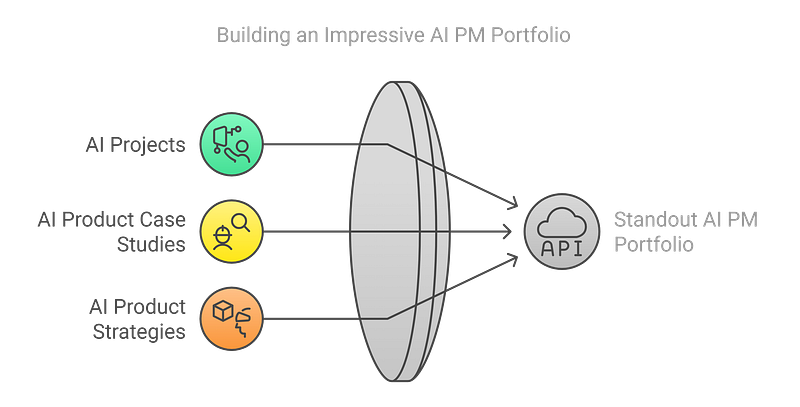
A well-crafted portfolio is one of the best ways to stand out when applying for AI Product Manager If you want to stand out for AI Product Manager roles, your portfolio is one of the most important assets. It should clearly show how you think, how you solve problems, and how you approach AI-driven products from a product perspective.
What to include in your AI PM portfolio:
- AI projects you have worked on:
Explain the problem, how AI was used, what approach you took, and the outcome. Focus on your thinking, not just the result. - Case studies on AI products:
Break down products like ChatGPT, recommendation systems, or AI tools. Analyze what works, what does not, and suggest improvements. - AI product roadmaps and strategies:
Create mock product plans where you define the vision, features, user flow, and how AI adds value. - Product thinking and decision-making:
Show how you prioritize features, handle trade-offs, and make data-driven decisions. - Documentation and clarity:
Write everything in a simple, structured way so anyone can understand your thinking, even non-technical people.
Where to build your portfolio:
- Framer (Highly recommended):
You can build a clean, modern, and professional portfolio website without coding. It helps you present your projects like a real product, which makes a strong impression. - Notion (Simple option):
Useful for creating structured case studies and sharing them easily. - GitHub (Optional):
If you have technical projects, you can link code or project files.
You can also connect your own domain to your portfolio website to make it look more professional. A strong portfolio shows that you can think like an AI Product Manager, which is often more valuable than just listing skills on a resume.
4. Start Networking and Engaging with AI Communities
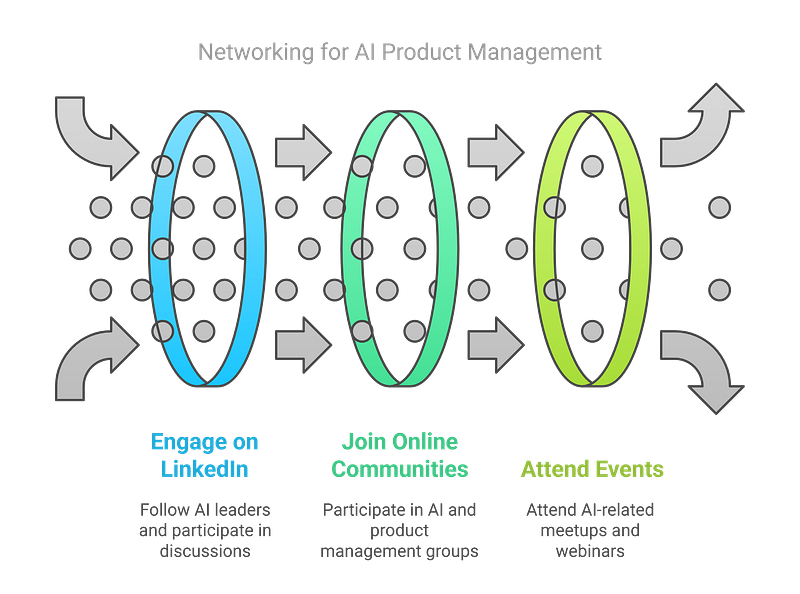
Breaking into AI product management is easier when you connect with professionals already in the Networking plays a huge role in breaking into AI product management. It helps you learn faster, discover opportunities, and connect with people who are already in the field.
Where to network:
- LinkedIn:
Follow AI and product leaders, engage with their posts, and share your own learnings or projects. - Online communities (Slack, Discord, forums):
Join groups like DataTalks.Club, Product School communities, or AI-focused forums where people actively discuss ideas and opportunities. - Meetups and webinars:
Attend AI and product management events through platforms like Meetup, Eventbrite, or Google Developer Groups to connect with professionals. - Twitter (X) and creator communities:
Many AI builders and product managers share insights daily. Engaging here can help you stay updated and visible.
Networking is not just about asking for jobs. It is about building genuine relationships, learning from others, and staying updated with what is happening in the AI space.
5. Apply for AI Product Manager Jobs
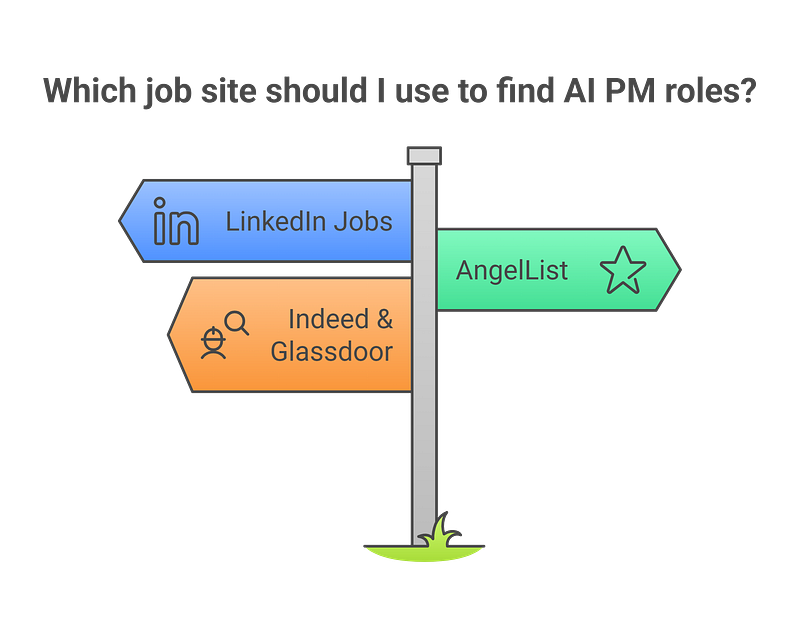
Once you’ve built a solid foundation, gained hands-on experience, and developed a strong portfolio, it’s Once you have built a strong foundation, gained hands-on experience, and created a solid portfolio, the next step is to start applying for roles. This is where consistency matters. You may not get results immediately, but regular applications and improvements will help you move forward.
Best platforms to find AI Product Manager roles:
- LinkedIn Jobs:
One of the best platforms to find AI PM roles across companies and industries. - Wellfound:
Great for discovering opportunities in AI startups and early-stage companies. - Indeed and Glassdoor:
Useful for finding a wide range of AI-focused product roles with updated listings. - Remote job platforms:
Websites like Remotive and other remote job boards can help you find global AI PM opportunities. - AI tools for job search and interviews:
Platforms like aiapply.co can help streamline your applications, and tools like Final Round AI can support interview preparation with mock interviews and feedback.
If you are just starting out, focus on roles like Associate AI Product Manager (APM) or junior product roles. These are designed for beginners and can help you enter the field and gain real-world experience.
6. Keep Upskilling and Learning Complementary Skills
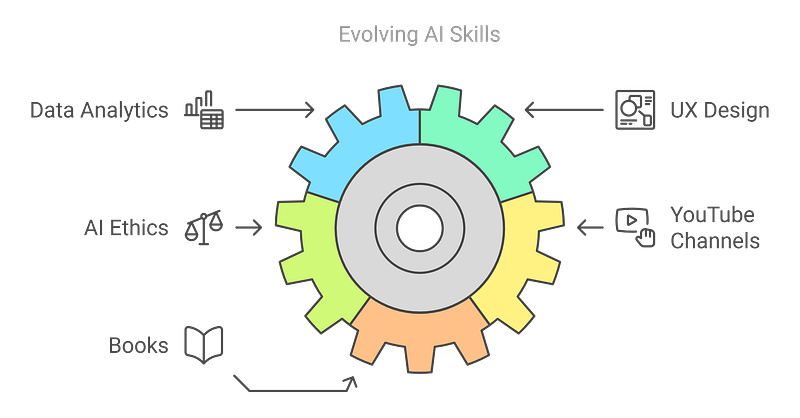
AI is constantly evolving, so continuous learning is essential if you want to stay relevant and grow in this field. Along with your core skills, you should focus on building complementary skills that make you a better AI Product Manager.
- Data analytics:
Learn tools like SQL and basic Python to understand data and make better decisions. - UX design:
Understand how users interact with AI products so you can create better experiences. - AI ethics:
Learn about responsible AI, bias, and fairness to build trustworthy products.
Helpful learning resources:
- YouTube channels: Data School for data analytics and UX Mastery for understanding user experience.
- Books: “Human-Centered AI” by Ben Shneiderman and “The Art of Data Science” by Roger D. Peng.
The more you learn and adapt, the stronger your profile becomes, especially in a fast-changing field like AI.
Best Courses for AI Product Managers

AI product management requires a mix of technical understanding, strategic thinking, and leadership skills. Whether you are just starting out or looking to improve your expertise, the right courses can help you build a strong foundation in AI, data, and product management.
Below are some of the best online courses, certifications, and learning resources that can help you develop the skills needed to break into AI product management and grow in this field.
1. AI Product Management Certifications & Nanodegrees
If you want structured and in-depth learning, certification programs and nanodegrees are a great starting point. They help you understand both AI concepts and how they apply to real products.
- IBM AI Product Manager Professional Certificate (Coursera):
A comprehensive program covering AI basics, data-driven decision-making, and product strategy. Ideal for beginners. - AI Product Manager Nanodegree (Udacity):
Focuses on business applications of AI, working with data teams, and understanding ethical considerations. - Product Management for AI and Data Science (Udemy):
Covers the AI lifecycle, stakeholder communication, and how to integrate AI into business strategies. - Google AI Essentials (Google Cloud):
A beginner-friendly course that explains AI and machine learning concepts without requiring heavy coding.
These certifications not only help you build strong foundational knowledge but also add credibility to your profile, making it easier to stand out in job applications.
2. AI & Machine Learning Fundamentals
To become a successful AI Product Manager, you do not need to code, but you do need to understand how AI models work, how data is used, and what makes AI products successful. These courses can help you build that foundation:
- AI For Everyone by Andrew Ng (Coursera):
A beginner-friendly course that explains what AI can and cannot do, making it ideal for non-technical learners. - Elements of AI (University of Helsinki):
A free and interactive course that covers the basics of AI and its real-world applications. - Google Machine Learning Crash Course:
A hands-on introduction to machine learning, including model training and decision-making. - MIT AI: Implications for Business Strategy (MIT Sloan):
Focuses on how AI is transforming industries and how businesses can use it effectively.
These courses help you understand AI at a practical level, so you can communicate better with engineers and data scientists and work effectively in cross-functional teams.
3. Product Management & Business Strategy
AI is only valuable when it solves real problems and aligns with business goals. That is why strong product management and strategic thinking are essential. These courses can help you build those skills:
- Become a Product Manager (LinkedIn Learning):
A beginner-friendly course that covers product development, roadmaps, and team collaboration. - AI-Powered Product Management (DataCamp):
Focuses on how AI products are designed, tested, and improved in real-world scenarios. - Product Management Specialization (University of Maryland, Coursera):
Covers market research, product-market fit, and innovation strategies in depth. - Agile Product Management with Scrum and Kanban (Udemy):
Helps you understand how to manage projects effectively in an agile environment.
These courses will help you connect AI technology with business needs and build products that are both practical and impactful.
4. Data & Analytics for AI PMs
Since AI is driven by data, understanding analytics and experimentation is a key skill for AI Product Managers. You do not need to be a data scientist, but you should know how to work with data and make informed decisions.
- Data Science for Business Leaders (Udacity):
Explains how data science and AI influence business strategy and decision-making. - SQL for Data Science (Coursera):
Helps you learn how to query and analyze data, even without a technical background. - A/B Testing and Experimentation (Google):
Teaches how to design experiments and evaluate the performance of AI features. - Machine Learning for Business Leaders (Harvard):
Provides a high-level understanding of how companies use AI to drive growth and efficiency.
With a strong understanding of data, you can ask better questions, interpret results more accurately, and make decisions that improve AI product performance.
5. AI Ethics & Responsible AI Development
AI comes with important challenges like bias, privacy, and fairness, so AI Product Managers need to ensure that AI systems are responsible and trustworthy. Understanding ethical AI is becoming an essential skill as companies focus more on safe and transparent AI usage.
- AI Ethics and Responsible AI (DeepLearning.AI, Coursera):
Covers topics like bias, ethical frameworks, and real-world risks in AI systems. - Fairness in AI (Google):
Focuses on identifying and reducing bias in AI models. - AI and Society (Stanford University):
Explores how AI impacts society, including privacy and regulations.
By learning these concepts, you can build AI products that are not only effective but also fair, transparent, and aligned with real-world expectations.
Additional Learning Resources
Beyond courses, there are other ways to keep learning and stay updated in this fast-moving field.
Books to read:
- “The AI-First Company” by Ash Fontana:
Explains how AI is transforming industries and how businesses can use it effectively. - “The Lean Product Playbook” by Dan Olsen:
Covers essential product management strategies and how to build successful products. - “Building Machine Learning Powered Applications” by Emmanuel Ameisen:
A practical guide to understanding how AI products are built and managed.
YouTube channels and podcasts:
- DeepLearning.AI:
Shares AI concepts, insights, and updates from industry experts. - Google Cloud AI:
Provides tutorials and real-world examples of AI applications. - The TWIML AI Podcast:
Features conversations with AI professionals and researchers, helping you understand real-world trends and ideas.
Next steps in your AI product management journey start with learning AI fundamentals, product strategy, and basic data understanding, which is essential if you want to follow a clear roadmap to become an AI product manager in 2026, but real growth comes from applying that knowledge through projects, networking, and consistent practice. The best AI Product Managers keep learning, experiment with new ideas, and stay updated with industry trends, so whether you are just starting or trying to advance, focus on building real skills and taking action to move forward in this field.
Career Path of an AI Product Manager
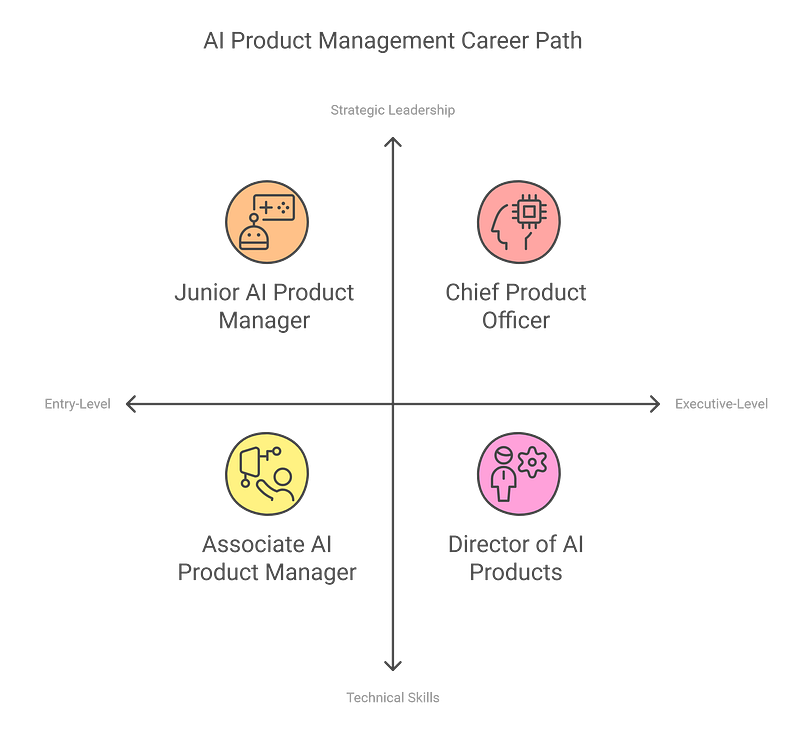
AI Product Management offers a clear growth path, where you move from learning and supporting projects to leading strategy and large-scale AI initiatives. Here’s how your journey can typically look:
1. Entry-Level AI Product Manager
At the entry level, you start by working on smaller AI projects and closely collaborating with data scientists and engineers to understand how AI fits into real products. Your role usually involves supporting product development, doing market research, and managing basic feature backlogs while learning how AI systems work in practice.
Common job titles:
- Associate AI Product Manager (APM), often in larger companies with structured programs
- Junior AI Product Manager, usually in startups with broader responsibilities
Key skills:
- Basic understanding of AI and machine learning concepts
- Strong analytical and problem-solving ability
- Familiarity with Agile workflows
- Good communication and teamwork
This stage is all about gaining hands-on experience and building a strong foundation that will support your future growth in AI product management.
2. Mid-Level AI Product Manager
At this stage, you move from supporting projects to leading them. You take ownership of AI initiatives, define product strategy, and drive AI-powered solutions. You also manage cross-functional teams, improve model performance, and ensure AI is used responsibly.
Common job titles:
- AI Product Manager, responsible for managing features and product direction
- Senior AI Product Manager, leading complex projects and overall strategy
Key skills:
- Strong understanding of AI systems and data workflows
- Experience with A/B testing and performance optimization
- Leadership and strategic thinking
Here, your role focuses on connecting AI development with real-world use, making sure products are both impactful and scalable.
3. Senior AI Product Manager / Director of AI Products
At this level, you take full ownership of AI-driven products and work closely with leadership to scale AI solutions across the company. Your role expands to defining the AI vision, managing product roadmaps, and ensuring everything aligns with business goals and regulations.
Common job titles:
- Lead AI Product Manager, managing multiple AI teams
- Director of AI Products, leading AI strategy at a broader level
- Head of AI Product, defining overall AI direction for the company
Key skills:
- Scaling AI systems and driving monetization
- Evaluating business impact and outcomes
- Strong leadership and executive communication
Here, your focus shifts from day-to-day execution to high-level strategy, ensuring AI is adopted effectively across the organization.
4. VP of Product / Chief Product Officer (CPO)
At the executive level, you lead AI transformation across the entire company. You oversee large-scale AI initiatives, make high-level strategic decisions, and ensure AI is creating real business value. Your role includes setting AI roadmaps, guiding investments in innovation, and making sure AI is used responsibly.
Common job titles:
- VP of AI Products, overseeing AI at an enterprise level
- Chief AI Officer (CAIO), leading company-wide AI strategy
- Chief Product Officer (CPO), managing overall product direction, including AI
Key skills:
- AI governance and risk management
- Business strategy and revenue growth
- Leadership at an organizational or global level
At this stage, your focus is on using AI to create a strong competitive advantage and long-term impact for the company.
Future Scope of AI Product Managers
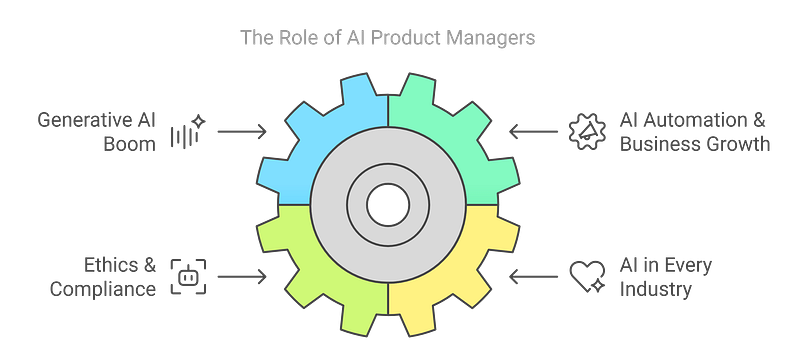
AI is rapidly transforming industries, and the demand for AI Product Managers is growing fast. As more companies adopt AI, this role will play a major part in shaping how products are built and used in the future.
1. Generative AI Boom
Tools like ChatGPT and image generation models are changing how content, code, and customer interactions work. Companies need AI Product Managers to build and improve these products while keeping them useful, safe, and easy to use.
2. AI Automation and Business Growth
AI is helping businesses automate tasks, reduce costs, and improve efficiency. From chatbots to predictive systems, AI Product Managers will lead the development of smarter tools that improve operations across industries.
3. Ethics and Compliance Are Becoming Critical
As AI grows, so do concerns around data privacy, bias, and regulations. AI Product Managers will be responsible for ensuring that AI is used responsibly and follows evolving legal standards.
4. AI in Every Industry
AI is no longer limited to tech companies. It is expanding across multiple sectors:
- Healthcare: AI-based diagnostics and personalized treatments
- Finance: Fraud detection and smart trading systems
- Retail: Better product recommendations and demand forecasting
The future of AI Product Management is strong, with opportunities across industries for those who build the right skills early.
Why Now is the Best Time to Become an AI Product Manager
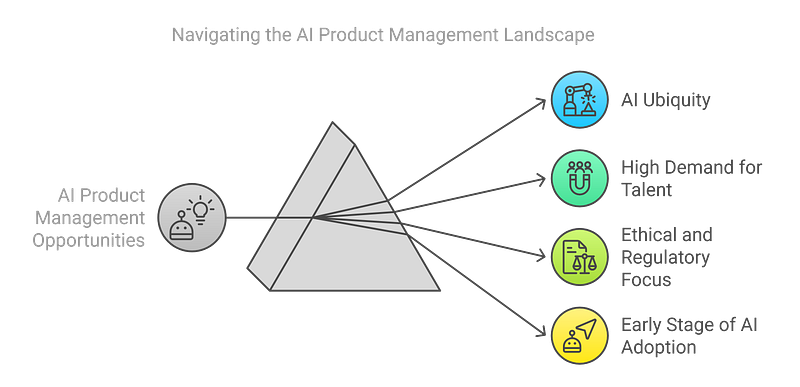
AI is growing rapidly across industries, and companies need skilled professionals to turn this technology into real products. Whether you are coming from a traditional product role or starting fresh, this is the right time to build your skills and understand how to become an AI product manager in 2026.
1. AI is Everywhere
From chatbots to automation tools, AI is transforming industries like healthcare, finance, retail, and tech. Businesses are investing heavily in AI, which creates strong demand for people who can connect technology with real user needs.
2. AI Talent is in High Demand
Companies are actively looking for product managers who understand AI basics and can work with data teams. If you can turn AI ideas into practical products, you become highly valuable in the market, both in terms of opportunities and salary.
3. AI Ethics and Regulations are Growing
As AI becomes more powerful, companies need to use it responsibly. This creates a need for AI Product Managers who understand ethical concerns, fairness, and compliance, and can guide teams in the right direction.
4. The AI Boom is Just Beginning
AI adoption is still in the early stage, which means there is a huge opportunity ahead. If you start now and follow a clear roadmap to become an AI product manager in 2026, you can position yourself early in a high-growth field.
The future of AI product management looks strong, and those who start today will have a clear advantage in the coming years.
Conclusion
You do not need a degree to break into AI product management in 2026. What matters most is your skills, real-world experience, and consistency. Start by learning AI basics through online resources and gain hands-on experience with projects, as this is essential to understand how to become an AI product manager in 2026. Build a strong portfolio that clearly shows your thinking and problem-solving ability, and connect with people in the AI and product space to learn and grow.
If you want to explore another high-demand AI career path, you can also read the article “How to Become a Prompt Engineer in 2026 (No Degree Needed)” on your ZeroToAIMastery.com website.
Most importantly, keep applying and keep improving, because those who follow a clear roadmap to become an AI product manager in 2026 and stay consistent will have a strong advantage in this fast-growing field.
FAQs
1. How to become an AI Product Manager in 2026?
Start by learning AI basics and product management fundamentals. Then gain hands-on experience by working on small AI projects, build a portfolio, connect with people in the industry, and start applying for entry-level or transition roles. This forms a practical roadmap to become an AI product manager in 2026.
2. Can I become an AI Product Manager without a degree?
Yes, you can. Many AI Product Managers come from non-traditional backgrounds. Focus on building real skills, taking online courses, and gaining project experience instead of relying only on a formal degree.
3. What is the roadmap to becoming an AI Product Manager?
- Learn AI & product management basics.
- Work on AI projects.
- Network and find mentors.
- Build a strong portfolio.
- Apply for AI PM jobs and keep learning.
4. What does an AI Product Manager do?
An AI Product Manager leads the development of AI-powered products. They work with engineers and data scientists, define product strategy, and ensure the final product solves real problems and delivers value to users.
5. What is the AI Product Manager salary?
AI Product Manager salaries are among the highest in tech. In the United States, the median total pay is around $193,000 per year, with typical ranges between $160,000 and $239,000+, and top professionals earning even higher (source: Glassdoor). In India, the average salary is around ₹30 lakh per year, with experienced professionals earning significantly more depending on location and experience (source: Glassdoor).
Final Thoughts
AI product management is an exciting and fast-growing career with huge potential in 2026 and beyond. If you are interested in AI, enjoy solving real problems, and like working with teams to build meaningful products, this path can be a great fit for you. The best part is that you do not need a formal degree. What matters more is your curiosity, consistency, and willingness to learn and improve over time.
If you are serious about how to become an AI product manager in 2026 without a degree, the right time to start is now. Focus on building your skills, understanding how AI products work, and taking practical steps every day. Stay consistent, and you can move closer to landing your first AI Product Manager role.