Let’s be honest, data has quietly become one of the most valuable assets in the world, and data scientists are the ones turning it into real insights. Every time Netflix recommends a show or a company predicts customer behavior, it’s all powered by data behind the scenes. If you’ve ever wondered how to become a data scientist in 2026 without a degree, the good news is that this path is more accessible than ever. You don’t need a computer science background or an expensive university to get started. With the right approach, consistent effort, and the availability of modern tools, building a data scientist career is now possible for almost anyone.
This field is no longer limited to experts with advanced degrees or years of experience. It’s for people who enjoy solving real problems, understanding patterns, and building useful solutions using data. Whether you’re a student exploring new opportunities, someone looking to switch careers, or simply curious about working with data, this journey is open to you. The growing demand for professionals with strong data science skills means companies care more about what you can do than where you studied.
In this guide, you’ll follow a clear path that feels practical and achievable. We’ll walk through a data scientist roadmap 2026 step by step, covering what data scientists actually do, which skills matter the most, and how you can start learning from scratch. You’ll also discover how to build real projects, develop your portfolio, and understand the best way to learn data science from scratch in 2026 without feeling overwhelmed.
The reality is simple. Tech careers are becoming more accessible every year, and data science is leading that shift. If you’re willing to learn, practice, and stay consistent, you can build a future in this field. You don’t need permission, and you don’t need a traditional degree. You just need to start.
What is Data Science?
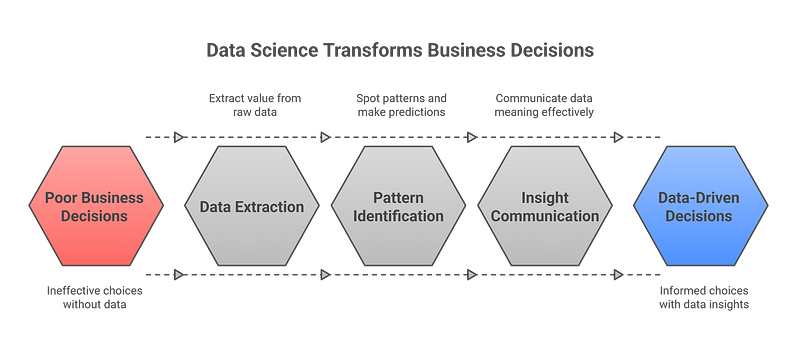
Think about this for a moment. Your website is getting more visitors, but your sales are dropping. Or imagine predicting tomorrow’s weather not by guessing, but by analyzing millions of real-time data points. That is data science in action. If you’re exploring how to become a data scientist in 2026 without a degree, this is the foundation you need to understand first. Data science is all about turning raw information into meaningful insights that help people and businesses make smarter decisions.
At its core, data science sits at the intersection of programming, statistics, and real-world problem solving. It is not just about numbers. It is about understanding patterns, making predictions, and communicating what those patterns actually mean. A data scientist builds models, analyzes trends, and uses strong data analysis techniques to uncover insights that can influence decisions. This is why companies today value practical data science skills more than just theoretical knowledge.
It is also important to understand what data science is not. It is not limited to Excel sheets or basic queries, even though those are part of the journey. It is not the same as data engineering or purely machine learning basics, although all these areas are connected. A data scientist focuses on asking the right questions, exploring data deeply, and explaining results in a way that others can understand and act on.
Today, the field has shifted from being theory-heavy to being impact-driven. Companies are no longer looking only for academic excellence. They want people who can work on real problems, build solutions, and deliver results. That is why learning through a data scientist roadmap 2026 step by step approach matters more than ever. The best part is that you do not need a traditional degree to get started. With the right mindset and consistent effort, you can build a strong data scientist career from scratch.
Who is a Data Scientist?

If Sherlock Holmes lived in today’s world, he would probably be a data scientist. The tools would be different, but the mindset would be the same. Instead of magnifying glasses and clues, today’s professionals use code, data, and logic to solve problems. If you’re wondering how to become a data scientist in 2026 without a degree, this mindset is what truly defines the role. A data scientist asks the right questions, gathers data as evidence, analyzes it carefully, and builds conclusions backed by facts.
A data scientist is someone who turns raw, messy data into meaningful insights that can drive real-world decisions. This could mean predicting customer behavior, identifying patterns in healthcare data, or improving business operations. It requires a combination of technical ability and thinking skills. Strong data analysis techniques, along with problem-solving and communication, are essential. It is not just about building models, but also about explaining insights in a simple and useful way.
Today, the demand for this role is not limited to tech companies. Data scientists are needed across industries like healthcare, finance, e-commerce, education, and even agriculture. The reason is simple. Every industry is generating massive amounts of data, and organizations need people with practical data science skills to turn that data into action. This is why building a data scientist career today offers so many opportunities across different domains.
One of the most encouraging aspects is that there is no single path into this field. Many successful data scientists started in completely different careers and transitioned by learning step by step. Following a clear data scientist roadmap 2026 step by step can help you move in the right direction without feeling lost. What matters most is your curiosity, your ability to learn consistently, and your willingness to solve real problems using data.
What Do Data Scientists Do and What Are Their Responsibilities?
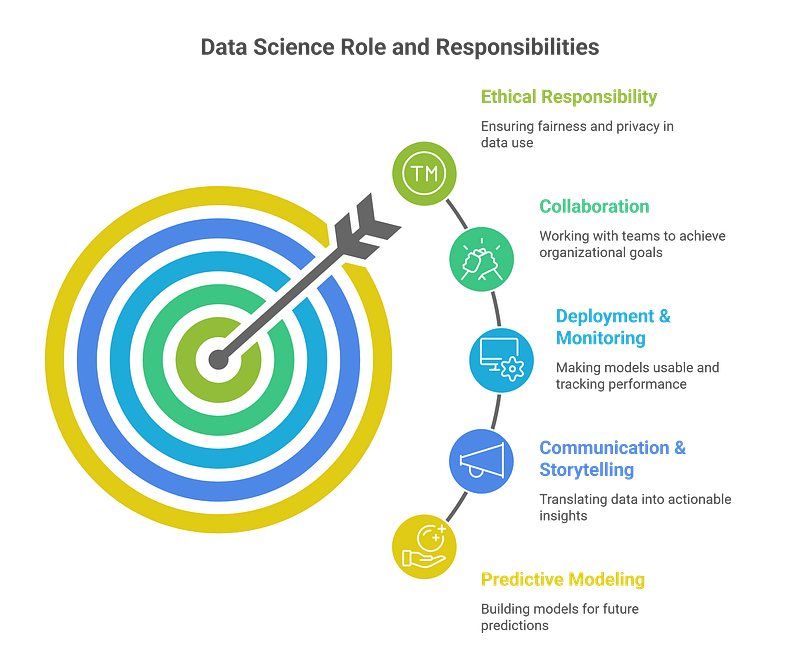
Have you ever noticed how apps seem to predict what you want before you even search for it? That is the work of data scientists. If you’re exploring how to become a data scientist in 2026 without a degree, understanding their real responsibilities will give you clarity on what you’re working toward. Data scientists act like modern detectives, using data instead of clues to uncover insights that drive decisions.
At its core, this role is about solving real-world problems using data. It blends technical knowledge, business understanding, and strong data science skills. Let’s break down what this looks like in practice.
1. Data Collection and Cleaning
The first step in any project is gathering data from different sources such as APIs, databases, or external platforms. But raw data is rarely clean. It often contains errors, missing values, and inconsistencies. Cleaning and organizing this data using tools like Python and SQL is a critical part of building strong data analysis techniques.
2. Exploratory Data Analysis (EDA)
Once the data is ready, the next step is to explore it. This is where patterns begin to appear. Using visualizations and simple analysis, data scientists try to understand what is happening in the data. This stage strengthens your understanding of machine learning basics before jumping into complex models.
3. Feature Engineering
Better input leads to better output. Data scientists create meaningful features from raw data to improve model performance. For example, transforming dates into useful metrics or combining variables to capture behavior patterns. This step is an important part of the data scientist roadmap 2026 step by step.
4. Statistical Analysis
Data alone is not enough. You need to understand why something is happening. Statistical methods help validate patterns and test assumptions. This builds deeper data science skills and ensures decisions are based on reliable insights rather than guesses.
5. Predictive Modeling
This is where data science becomes powerful. Data scientists build models to predict outcomes such as customer churn, demand trends, or risk factors. Beginners often start with simple tools, but over time, they move into more advanced areas of machine learning basics and model optimization.
6. Communication and Storytelling
Insights are only valuable if they are understood. A data scientist must explain findings clearly to non-technical people. This could involve dashboards, reports, or presentations. Strong communication is what turns technical work into real impact and helps grow a data scientist career.
7. Deployment and Monitoring
In today’s world, building a model is not enough. It needs to be used in real applications. Data scientists often work on deploying models and ensuring they continue to perform well over time. This is where practical experience becomes crucial, especially if you want to get a data science job without experience in 2026.
8. Collaboration
Data science is a team effort. You will work with engineers, analysts, and business teams to align your work with real goals. This collaboration helps you understand how data fits into the bigger picture and improves your overall data science skills.
9. Ethics and Responsibility
Data is powerful, but it must be used responsibly. Data scientists must ensure fairness, avoid bias, and respect privacy. Ethical thinking is becoming a key part of the data scientist roadmap 2026 step by step, especially as AI systems become more influential.
In simple terms, data scientists sit at the intersection of technology, data, and decision-making. They are not just working with numbers. They are solving problems, uncovering insights, and helping organizations move in the right direction.
What Skills Do Data Scientists Need?
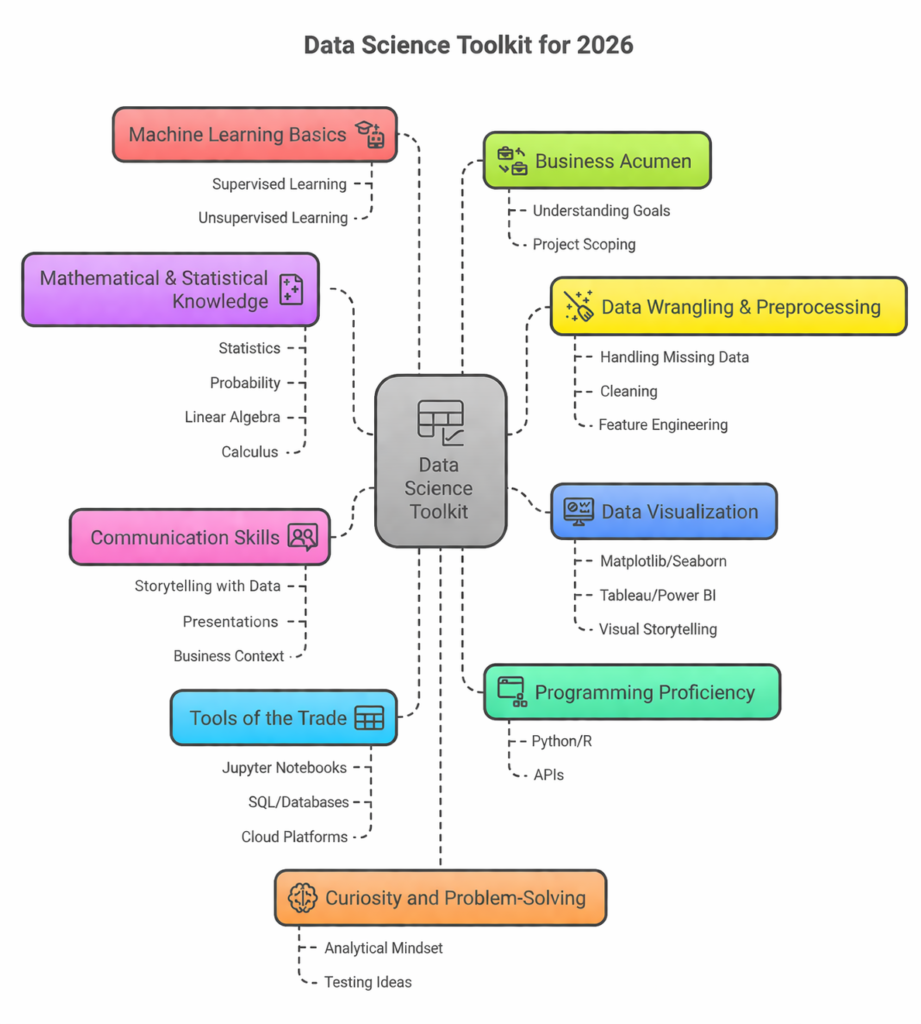
If you’re serious about understanding how to become a data scientist in 2026 without a degree, the first thing you need is clarity on the skills that actually matter. Data science may look overwhelming at first because it combines multiple domains, but the reality is simple. You don’t need to learn everything at once. You just need to build the right data science skills step by step.
1. Programming Proficiency (Python is Essential)
Python is the backbone of modern data science. Almost every part of the workflow, from cleaning data to building models, is done using Python. If you’re following the best way to learn data science from scratch in 2026, this is where you should begin.
You will spend most of your time working with:
- pandas → for data manipulation and cleaning
- NumPy → for numerical computations
- matplotlib & seaborn → for visualization
- scikit-learn → for machine learning models
- statsmodels → for statistical analysis
Alongside Python, SQL is equally important. Whether you are extracting business data or querying large datasets, SQL is essential for building strong data analysis techniques and working with structured data efficiently.
2. Mathematical and Statistical Thinking
You do not need a PhD in mathematics, but you must understand the fundamentals. These concepts help you interpret results, validate models, and make better decisions.
Key areas to focus on:
- Statistics → hypothesis testing, p-values, confidence intervals
- Probability → distributions, Bayes’ theorem, expected value
- Linear Algebra → vectors, matrices, basic transformations
- Calculus (basics) → optimization and gradient descent
Understanding these concepts strengthens your overall data science skills and allows you to trust and improve your models instead of just using them blindly.
3. Data Cleaning and Preprocessing
In real-world projects, data is messy. You will spend a large portion of your time cleaning and preparing data before doing any analysis. This step is a core part of the data scientist roadmap 2026 step by step.
This includes:
- Handling missing values and outliers
- Cleaning inconsistent or duplicate data
- Normalizing or scaling datasets
- Encoding categorical variables
- Merging and aggregating multiple data sources
It may not sound exciting, but this is one of the most critical data analysis techniques you will use in every project.
4. Data Visualization
A good visualization can explain insights faster than pages of numbers. Data scientists need to present their findings in a clear and impactful way.
Common tools include:
- matplotlib & seaborn → for static visualizations
- Plotly → for interactive charts
- Tableau / Power BI / Looker → for dashboards
Strong visualization skills not only improve your communication but also help you grow your data scientist career by making your work more understandable and valuable.
5. Machine Learning Basics
In 2026, even beginner data scientists are expected to understand basic models. Learning machine learning basics allows you to move from analysis to prediction.
Start with:
- Linear Regression and Logistic Regression
- Decision Trees and Random Forests
- K-Means Clustering and K-Nearest Neighbors
- Support Vector Machines (SVM)
As you progress, you can explore advanced tools like XGBoost, LightGBM, and deep learning frameworks. The goal is not just building models, but understanding how they work and when to use them.
6. Business Understanding
Data science is not just technical. It is about solving real problems. You need to understand business goals and translate them into data-driven solutions.
This means:
- Understanding what problem needs to be solved
- Connecting insights to real-world decisions
- Focusing on impact, not just accuracy
Strong business understanding combined with data science skills is what makes you valuable in real job roles.
7. Communication Skills
A great data scientist is also a great communicator. Your ability to explain insights clearly is just as important as your technical knowledge.
You should be able to:
- Simplify complex results for non-technical audiences
- Write clear reports with actionable insights
- Present findings confidently to teams or stakeholders
Good communication helps your work create real impact and strengthens your data scientist career.
8. Tools and Platforms
Modern data science involves working with multiple tools and platforms. These tools help you build, manage, and deploy your work efficiently.
Important tools include:
- Jupyter Notebooks → for experimentation and sharing
- Git & GitHub → for version control
- Google Colab → for cloud-based development
- AWS / GCP / Azure → for cloud computing
- Docker (optional) → for packaging workflows
Learning these tools is especially useful if you want to get a data science job without experience in 2026, as they are widely used in real-world projects.
9. Curiosity and Problem-Solving
At the end of the day, the most important skill is your mindset. The best data scientists are curious and persistent. They ask questions, explore ideas, and keep experimenting until they find answers.
This mindset is what drives continuous improvement and helps you stay consistent while learning how to become a data scientist in 2026 without a degree.
If you start with Python and SQL, build your understanding of statistics and machine learning basics, and apply everything through real projects, you will develop a strong and practical skill set. Over time, this combination of technical ability and curiosity will make you stand out.
Key Responsibilities of a Data Scientist
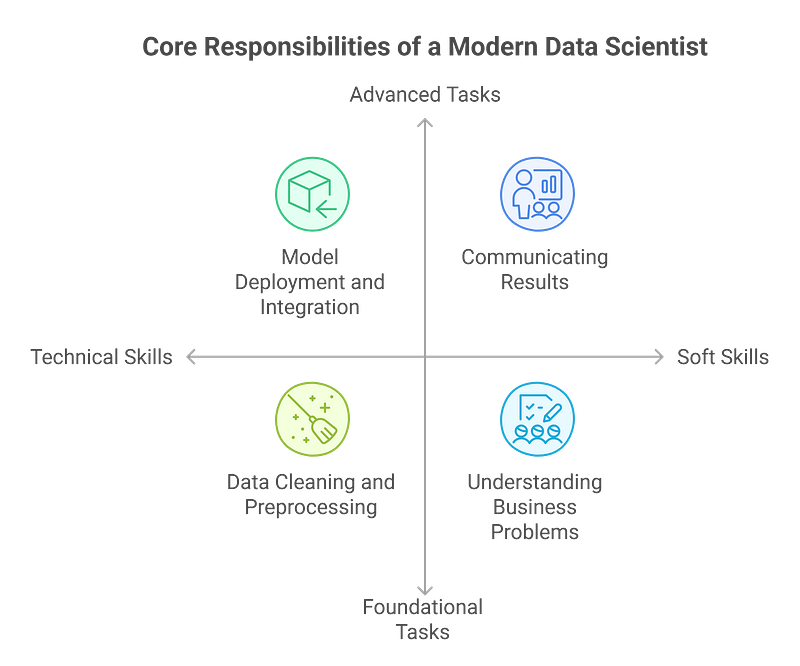
In today’s world, data is driving decisions across every industry, and data scientists are the ones turning that data into real impact. If you’re exploring how to become a data scientist in 2026 without a degree, understanding these responsibilities will give you a clear picture of what the role actually involves. A data scientist is not just analyzing numbers, but solving problems, building solutions, and communicating insights using strong data science skills.
Below are the core responsibilities that define the role of a modern data scientist:
1. Understanding Business Problems
Before writing any code, a data scientist must fully understand the problem they are trying to solve. This step is critical because it sets the direction for everything else.
This involves:
- Talking with stakeholders to understand goals
- Defining clear success metrics
- Translating business problems into data problems
Your ability to ask the right questions is a key part of the data scientist roadmap 2026 step by step, because it ensures your work actually solves meaningful problems.
2. Collecting and Managing Data
Data scientists gather data from multiple sources and ensure it is usable and reliable.
Common data sources include:
- APIs
- Databases (SQL and NoSQL)
- Web scraping
- Third-party data providers
You also need to assess data quality and organize it efficiently. This process strengthens your data analysis techniques and helps you work with real-world datasets effectively.
3. Data Cleaning and Preprocessing
This is one of the most time-consuming but essential parts of the job. Poor-quality data leads to poor results, so cleaning is critical.
This includes:
- Handling missing values
- Removing or treating outliers
- Encoding categorical variables
- Creating time-based features
- Normalizing numerical data
Mastering this step is a core part of building strong data science skills and ensures your models perform well.
4. Exploratory Data Analysis (EDA)
Once the data is clean, the next step is to explore it and uncover patterns.
This involves:
- Using summary statistics
- Creating correlation heatmaps
- Building visualizations like bar charts, scatter plots, and box plots
EDA helps you understand the data deeply and improves your machine learning basics by guiding your modeling decisions.
5. Feature Engineering
Raw data rarely contains all the information needed for accurate predictions. Data scientists create new features to improve model performance.
Examples include:
- Ratios and aggregated values
- Time-based features like moving averages
- Text-based features such as TF-IDF
Feature engineering is a key part of the data scientist roadmap 2026 step by step and can significantly improve results.
6. Model Development
This is where predictions are built. Data scientists train models to solve specific problems.
Common tasks include:
- Predicting customer churn
- Classifying user behavior
- Forecasting demand or sales
You will use tools and frameworks to build models and evaluate them using different metrics. This stage strengthens your understanding of machine learning basics and practical application.
7. Model Deployment and Integration
A model is only useful if it can be used in real-world applications. Data scientists often work on deploying models so they can be accessed and used.
This includes:
- Building APIs using tools like Flask or FastAPI
- Deploying models on cloud platforms
- Integrating models into dashboards or applications
Learning this step is especially important if you want to get a data science job without experience in 2026, as companies value real-world implementation.
8. Communicating Results
Insights are valuable only when they are understood. Data scientists must communicate results clearly to non-technical audiences.
This involves:
- Translating technical results into business insights
- Creating dashboards and reports
- Presenting findings to teams and stakeholders
Strong communication helps you grow your data scientist career and ensures your work creates impact.
9. Continuous Learning and Experimentation
Data science is constantly evolving, so learning never stops.
You will spend time:
- Exploring new tools and techniques
- Practicing on real datasets
- Participating in projects or competitions
- Learning from industry trends
This mindset is essential if you want to stay relevant while learning how to become a data scientist in 2026 without a degree.
10. Ethical and Responsible AI Practices
With great data comes great responsibility. Data scientists must ensure their work is fair and ethical.
This includes:
- Checking models for bias
- Protecting user data and privacy
- Making models transparent and explainable
Understanding ethics is becoming an important part of modern data science skills as companies focus on responsible AI.
In simple terms, a data scientist wears multiple hats: analyst, developer, communicator, and problem solver. It is a role that combines logic, creativity, and real-world impact, making it one of the most valuable careers today.
Why Become a Data Scientist?
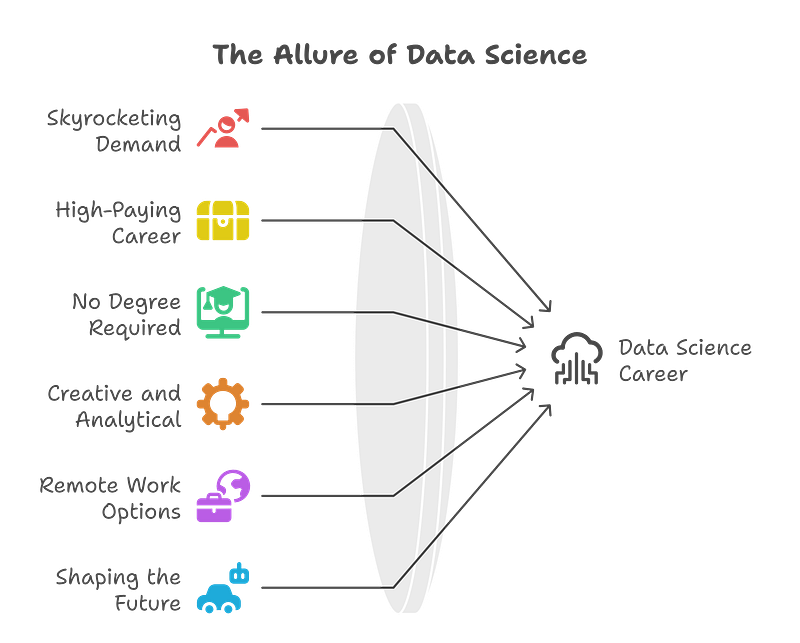
Let’s be honest, data science is not just another trending job title. It is one of the most flexible, high-impact, and future-proof career paths you can choose today. If you’re thinking about how to become a data scientist in 2026 without a degree, this field offers a rare combination of opportunity, growth, and accessibility. With increasing demand and easier entry points, building a data scientist career today can be one of the smartest moves you make.
1. Skyrocketing Demand Across Every Industry
Every industry today is generating massive amounts of data, and companies need people who can turn that data into decisions. From healthcare and finance to e-commerce and entertainment, organizations are actively looking for professionals with strong data science skills.
This includes:
- Understanding customer behavior
- Predicting trends and demand
- Detecting fraud and risks
- Optimizing business operations
Data science is no longer limited to tech companies. It is becoming essential everywhere.
2. High-Paying Career Path
One of the biggest reasons people explore how to become a data scientist in 2026 without a degree is the earning potential. Even at entry level, data science roles offer competitive salaries, and as your skills grow, your income can increase significantly.
What makes it even better:
- Opportunities for remote work
- Freelance and consulting options
- Global job market access
With the right data science skills, you can build multiple income streams beyond a traditional job.
3. You Do Not Need a Degree
The traditional path of needing a degree is no longer mandatory. Today, companies care more about what you can do than where you studied. If you follow a clear data scientist roadmap 2026 step by step, you can build real skills through projects and practical learning.
You can learn through:
- Online courses and tutorials
- Open-source tools and datasets
- Personal and portfolio projects
This makes it possible to build a strong data scientist career from your laptop without formal education.
4. Creative and Analytical Work
Data science is a unique mix of logic and creativity. You are not just analyzing numbers, you are solving problems and telling stories with data. This involves applying data analysis techniques to uncover insights and then presenting them in a meaningful way.
Your work might include:
- Building predictive models
- Creating visual dashboards
- Exploring patterns in complex datasets
This balance keeps the work interesting and mentally engaging.
5. Flexibility: Remote, Freelance, or Business
One of the biggest advantages of this field is flexibility. Many roles are remote-friendly, and there are plenty of opportunities to work independently. As you grow your data scientist career, you can choose different paths.
You can:
- Work remotely for global companies
- Freelance on different platforms
- Start your own consulting or data-driven business
Data science gives you control over how you want to work.
6. Building for the Future
Data is at the core of modern technology, and data science plays a major role in shaping industries. Learning machine learning basics and working with data allows you to be part of innovations that impact real life.
You could be contributing to:
- Smarter healthcare systems
- Better financial decisions
- Improved customer experiences
- AI-driven products and solutions
This makes the role both impactful and future-oriented.
7. It Is Genuinely Fun and Rewarding
Beyond money and demand, data science is enjoyable. There is something satisfying about solving problems and discovering insights hidden in data. Applying python for data science beginners and seeing your models work can feel like solving a complex puzzle.
Every project becomes:
- A new challenge to explore
- A problem to solve creatively
- An opportunity to learn something new
In a world driven by data, data scientists are the ones creating insights, guiding decisions, and building the future. If you want a career that pays well, keeps you learning, and gives you real impact, then learning how to become a data scientist in 2026 without a degree is a path worth taking.
Data science is just one part of a much larger shift happening in the world of AI. If you want to expand your opportunities even further, it is worth exploring other high-income AI skills that complement data science. Skills like automation, AI tools, and prompt engineering are creating entirely new income streams. If you are curious about this bigger picture, you can read my article on 7 AI Skills That Can Make You Rich in 2026, where I break down practical, high-demand skills you can start learning today.
Do I Need a Degree to Become a Data Scientist?
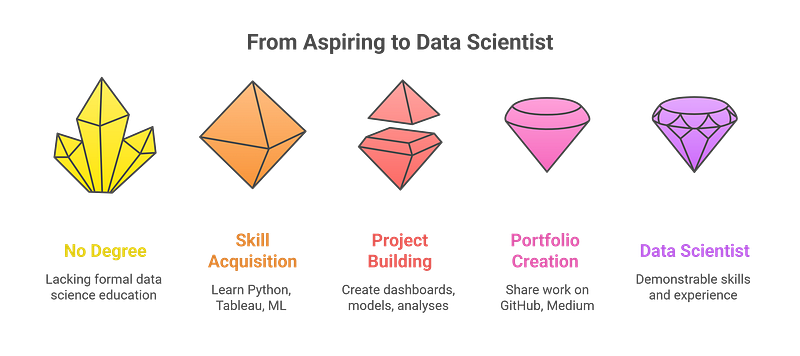
Let’s settle this clearly. You do not need a degree to build a career in data science. If you’re thinking about how to become a data scientist in 2026 without a degree, the reality is that skills and proof of work matter far more than formal education. With the internet, open-source tools, and practical resources available today, learning has become more accessible than ever.
Many successful professionals in this field did not start with a technical background. People have transitioned from marketing, finance, biology, and even completely unrelated fields. What they all focused on was building real skills and applying them. Instead of relying on degrees, they developed strong data science skills by working on projects, experimenting with data, and sharing their work publicly.
Even large companies have started shifting their hiring approach. They are more interested in what you can do rather than what degree you hold. If you can demonstrate your abilities through real work, you are already ahead. For example, if you can:
- Analyze datasets using Python
- Apply practical data analysis techniques to solve problems
- Build dashboards or visualizations
- Train simple models using machine learning basics
- Share your projects on platforms like GitHub
then you are already building a strong foundation for a data scientist career.
The traditional college route can often be slow, expensive, and sometimes outdated. In contrast, modern learning is flexible and practical. You can follow a structured data scientist roadmap 2026 step by step, learn from online courses, practice coding, and even deploy projects from your own setup. This approach allows you to focus on skills that are actually used in real-world jobs.
If you are unsure whether you are ready to move forward, ask yourself a few simple questions:
- Do you understand basic Python concepts?
- Can you clean and explore a dataset?
- Have you tried building even a simple project?
- Have you shared your work anywhere online?
If your answer is yes to even one of these, you are already progressing in the right direction. The key is to keep building and improving your data science skills over time.
At the end of the day, you do not need a degree or permission to get started. What you need is consistency, curiosity, and the willingness to learn and build in public. In this field, your work speaks louder than your resume, and that is what truly opens opportunities.
Life as a Data Scientist
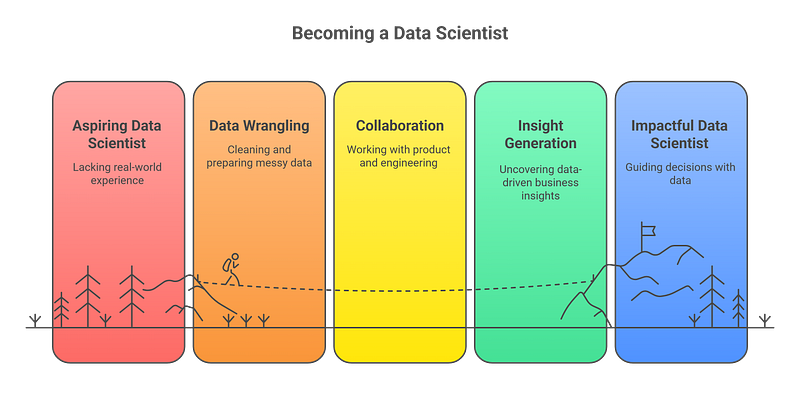
So what does life actually look like once you step into this role? If you’re exploring how to become a data scientist in 2026 without a degree, it helps to understand the day-to-day reality. The work is fast-paced, dynamic, and constantly evolving, combining deep thinking with real-world impact. As your data scientist career grows, you quickly realize that no two days are exactly the same.
A typical day often begins with working on real-world data, which is rarely clean or organized. You might be fixing missing values, correcting inconsistencies, or figuring out why your results changed overnight. This is where strong data analysis techniques come into play, helping you make sense of messy datasets and prepare them for further work.
After that, you might join a quick meeting with your team to discuss ongoing projects. This could involve reviewing user behavior patterns, planning experiments, or aligning your work with business goals. Collaboration is a big part of the role, and it helps you apply your data science skills in ways that directly impact decisions.
Your daily toolkit becomes second nature over time. You will regularly use tools like notebooks, Python libraries, and databases to explore and analyze data. If you’re learning python for data science beginners, this is exactly the kind of environment you’re preparing for. Alongside coding, you may also work with dashboards or automation scripts that make your workflow smoother and more efficient.
But the most rewarding part is not just the technical work. It is the impact you create. Your insights can help businesses understand customers better, improve operations, or make smarter decisions. Whether you are predicting trends or identifying patterns, your work plays a meaningful role. This is where understanding machine learning basics and applying them effectively makes a real difference.
Another major advantage of this field is flexibility. Many data science roles are remote-friendly, allowing you to work from anywhere as long as you have a reliable setup. This flexibility makes it easier to design your own work environment while continuing to grow your data scientist career.
The variety in work keeps things interesting. One day you might be analyzing trends, and the next you could be building or improving a predictive model. Some days require deep focus and problem-solving, while others involve discussions, presentations, and idea-sharing. This balance keeps the work engaging and continuously challenging.
In the end, life as a data scientist is a mix of logic, curiosity, and creativity. You are always learning, adapting, and building. If you stay consistent and keep improving your data science skills, you will find yourself working on problems that truly matter, using data as your most powerful tool.
What is the Average Data Scientist’s Salary? (2026 Breakdown)
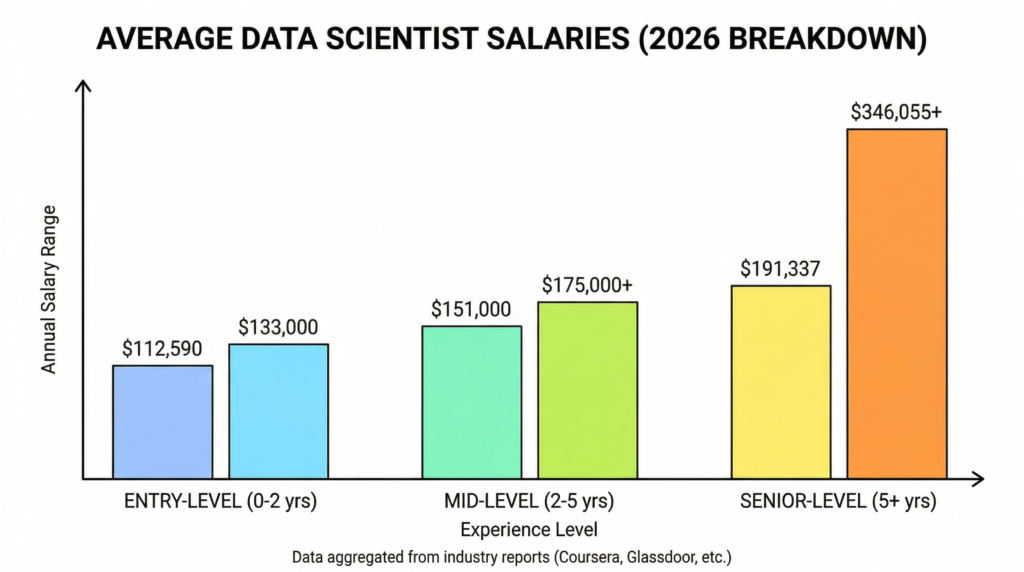
Let’s talk numbers, because data science does not just pay well, it pays very well. As of 2026, here is what salaries typically look like for data scientists depending on their experience level
- Entry-Level (0–2 years): $112,590 to $133,000/year (Source: Coursera) At this stage you are just starting out, but already making more than most new grads in tech. With a few portfolio projects or Kaggle competitions under your belt, you can confidently land a solid-paying role, even without a degree.
- Mid-Level (2–5 years): $151,000 to $175,000+/year (Source: Glassdoor) By now you have likely built and deployed models, designed dashboards, and influenced business decisions. Employers pay well for people who can balance both the technical and the business side of things.
- Senior-Level (5+ years): $191,337 to $346,055+/year (Source: Glassdoor) This is where salaries really take off. If you are leading projects, improving pipelines, or specializing in advanced areas like NLP, deep learning, or cloud analytics, your paycheck will reflect that expertise.
On top of base salaries, many companies also offer bonuses, equity, stock options, remote flexibility, learning stipends, and travel or conference allowances.
Freelance data scientists? They often charge between $35 and $250 per hour depending on the complexity of the project. That means even a handful of freelance contracts can rival or surpass a full-time salary. (Source: Upwork)
So yes, data science is not just future-proof. It is financially solid. The median total compensation for data scientists sits at $175,000, and many professionals cross the $200K compensation mark within five years, especially if they specialize in high-demand areas like cloud-based machine learning, time-series forecasting, or AI product development. (Source: Levels.fyi)
What Factors Affect a Data Scientist’s Salary?
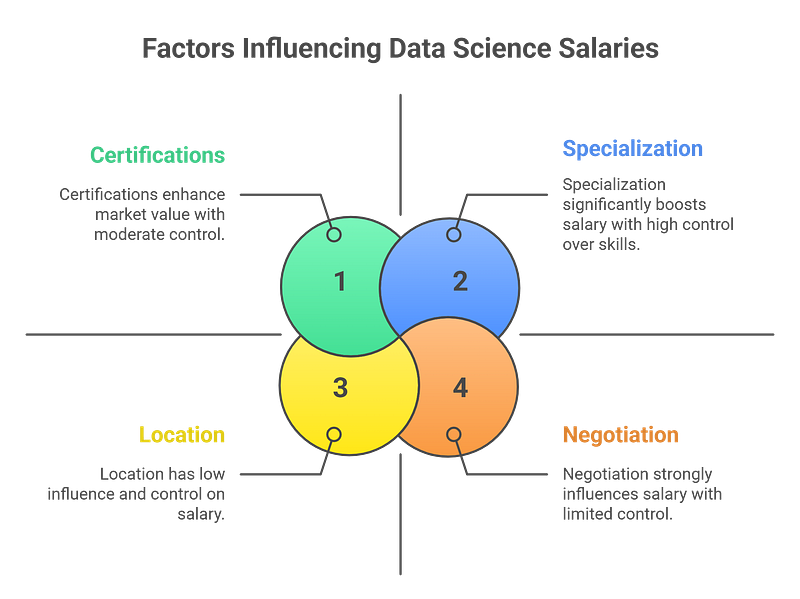
Here is the truth. While data science is a high-paying field overall, your actual salary can vary a lot depending on a few key factors. If you are exploring how to become a data scientist in 2026 without a degree, understanding these factors will help you not only enter the field but also maximize your earning potential. Strong data science skills alone are not enough. How you apply them matters just as much.
1. Industry
Not all industries pay the same, even for the same role. Data scientists working in high-impact sectors tend to earn more because their work directly affects revenue, risk, or large-scale decisions.
For example:
- Finance and fintech companies
- Healthcare and pharmaceuticals
- Technology and AI-driven startups
These industries rely heavily on advanced data analysis techniques, which is why they offer higher compensation compared to sectors like education or non-profits.
2. Location
Location has traditionally played a major role in salary levels. Cities like San Francisco, New York, and Seattle have been known for offering top salaries. However, this is changing.
With remote work becoming more common:
- You can work for global companies from anywhere
- Skilled professionals can earn international salaries
- Opportunities are no longer limited by geography
This shift makes it easier to build a strong data scientist career regardless of where you live.
3. Experience and Impact
Experience matters, but not just in terms of years. What really increases your value is what you have done during that time.
Employers look for:
- Real-world projects and deployments
- Measurable business impact
- Problem-solving ability
Following a practical data scientist roadmap 2026 step by step and building projects can often accelerate your growth faster than traditional experience alone.
4. Specialization
General knowledge helps you get started, but specialization helps you earn more. As you grow, focusing on specific areas can significantly increase your value.
High-paying specializations include:
- Natural Language Processing (NLP)
- Time-series forecasting
- MLOps and deployment systems
- Cloud-based analytics
Deep knowledge in these areas, along with strong machine learning basics, can help you command higher salaries.
5. Certifications
While degrees are not mandatory, certifications can still add credibility, especially if you are switching careers.
Popular certifications include:
- Google Professional Data Engineer
- AWS Machine Learning certifications
- Microsoft Azure Data Scientist
These certifications show that you have practical data science skills and are ready to work on real-world problems.
6. Portfolio Strength
Your portfolio is one of the most important factors in your earning potential. A strong portfolio proves your ability better than any resume.
A good portfolio should include:
- Real-world problem-solving projects
- Clean, well-documented code
- Clear explanation of results
If your projects demonstrate strong data analysis techniques, they can significantly improve your chances of getting higher-paying roles.
7. Negotiation Skills
Many people overlook this, but negotiation can directly impact your salary. Knowing your worth and understanding market rates can make a big difference.
To improve your negotiation:
- Research industry salary benchmarks
- Compare multiple job offers
- Be confident when discussing compensation
Even a small negotiation can increase your overall data scientist career earnings over time.
At the end of the day, your earning potential depends on how valuable your skills are in real-world situations. The more practical, specialized, and impactful your work is, the higher your income can grow. If you stay consistent and keep improving your data science skills, you will steadily build a stronger and more rewarding data scientist career over time.
How Do Data Scientist Salaries Compare Globally?
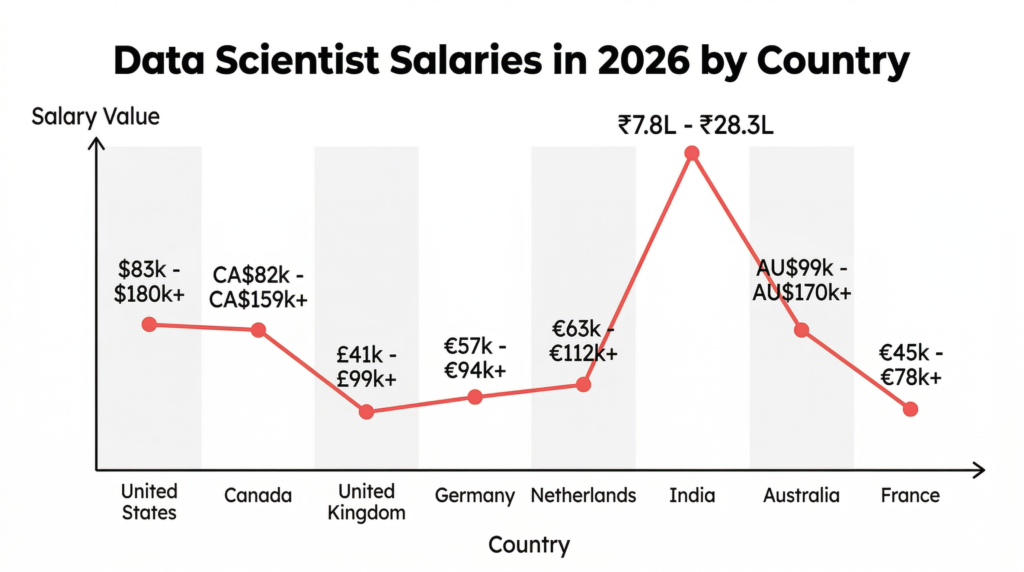
Data science is not just thriving in Silicon Valley, it has become a worldwide movement. As organizations everywhere adopt data-driven strategies, the demand for skilled data scientists is exploding across the globe. Still, where you live or where your employer is based can make a big difference in how much you earn.
Here is how data scientist salaries stack up in 2026 around the world.
- United States: $83,063 to $180,750+ per year (Source: Talent.com) The U.S. remains the highest-paying region, with San Francisco, Seattle, New York, and Austin leading the way. Remote-first American startups are also hiring international talent at competitive rates.
- Canada: CAD $82,309 to $159,512+ per year (Source: Glassdoor Canada) Toronto, Vancouver, and Montreal are building strong data ecosystems. Salaries are lower than in the U.S., but cost of living and work-life balance often balance it out.
- United Kingdom: £41,185 to £99,481+ per year (Source: Glassdoor UK) London remains a hub, especially for fintech roles, with growing opportunities in Manchester and Edinburgh.
- Germany: €57,000 to €94,350+ per year (Source: Glassdoor Germany) Germany’s automotive and industrial sectors are fueling demand, with Berlin, Munich, and Frankfurt emerging as key hubs.
- Netherlands: €63,000 to €112,180+ per year (Source: Glassdoor Netherlands) Amsterdam is quickly establishing itself as a European tech capital with strong demand for data professionals.
- India: ₹7,87,500 to ₹28,30,000 per year (Source: Glassdoor India) India is a major destination for global companies hiring remote talent. Salaries are climbing, especially for roles connected to U.S.-based firms or specialized skills in machine learning and NLP.
- Australia: AUD $99,149 to $170,500+ per year (Source: Glassdoor Australia) Sydney and Melbourne lead the demand, with strong adoption in government, logistics, and finance.
- France: €45,663 to €78,720+ per year (Source: Glassdoor France) Paris, Grenoble, and Toulouse are emerging as European AI hubs, thanks to increasing funding and investment in AI and data science.
Remote work is helping level the playing field. Many companies are moving away from geography-based pay and shifting toward skills-first, global salary bands. If you have the right skills, tools, and portfolio, your location does not have to put a ceiling on your income.
Is Data Science a High-Paying Career?
Yes, absolutely. Data science is one of the highest-paying career paths in tech today, and the demand continues to grow rapidly. If you’re exploring how to become a data scientist in 2026 without a degree, this is one of the biggest advantages of choosing this field. A strong data scientist career not only offers stability but also exceptional earning potential across industries.
Here is why data science pays so well:
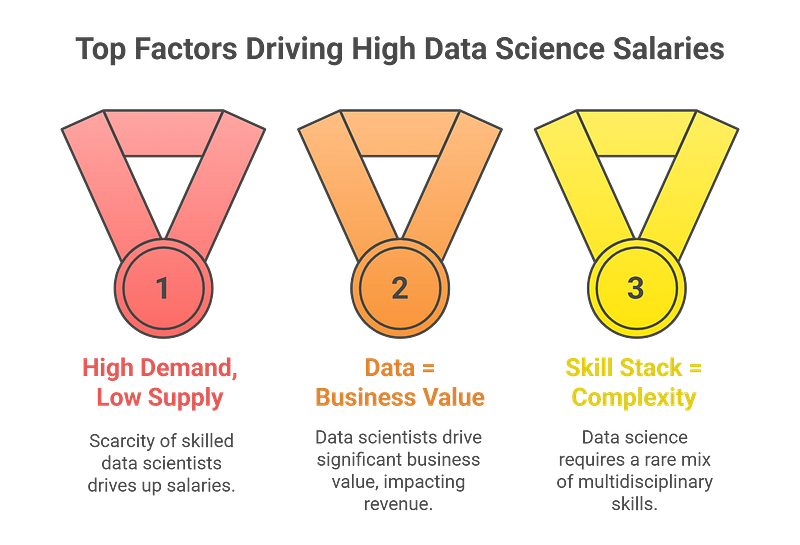
1. High Demand, Low Supply
Every industry is becoming data-driven, but there is still a shortage of professionals with strong data science skills. Companies are constantly looking for people who can work with data, build models, and generate insights. This gap between demand and supply naturally drives salaries higher.
2. Direct Impact on Business Value
Data scientists do not just analyze data, they influence decisions that directly affect revenue. Using advanced data analysis techniques, they help businesses predict trends, reduce risks, and optimize performance.
This includes:
- Predicting customer behavior
- Detecting fraud
- Improving pricing strategies
- Forecasting demand
Because their work creates measurable impact, companies are willing to pay a premium.
3. Complex and Valuable Skill Set
Data science requires a mix of multiple skills, making it one of the most valuable roles in tech. You need programming, statistics, business understanding, and machine learning basics all working together.
This combination of skills includes:
- Python and SQL for data handling
- Statistics for analysis
- Machine learning for predictions
- Communication for explaining insights
Since this skill set is rare and difficult to master, it increases your value in the job market.
4. Entry-Level Roles Pay Above Average
Even at the beginner level, salaries are significantly higher than many other careers. With a strong portfolio and practical knowledge, you can start earning well early in your journey.
Entry-level compensation often exceeds average tech salaries, making this field highly attractive for beginners.
5. Specialization Increases Earnings
As you grow, specializing in specific areas can boost your income even further. Professionals who focus on advanced topics earn significantly more.
High-paying specializations include:
- Natural Language Processing (NLP)
- Deep Learning
- MLOps and deployment systems
- Cloud-based analytics
Building expertise beyond machine learning basics can significantly increase your earning potential.
6. Additional Benefits and Flexibility
Beyond salary, data scientists often receive additional perks that increase total compensation.
These may include:
- Performance bonuses
- Stock options and equity
- Remote work opportunities
- Learning and development budgets
These benefits make a data scientist career even more attractive in the long term.
In simple terms, data science is not just high-paying, it is one of the most financially rewarding and future-proof careers available today. If you stay consistent, build real projects, and improve your data science skills, learning how to become a data scientist in 2026 without a degree can open doors to both high income and long-term growth.
Top Skills to Learn for a Data Scientist (2026 Edition)
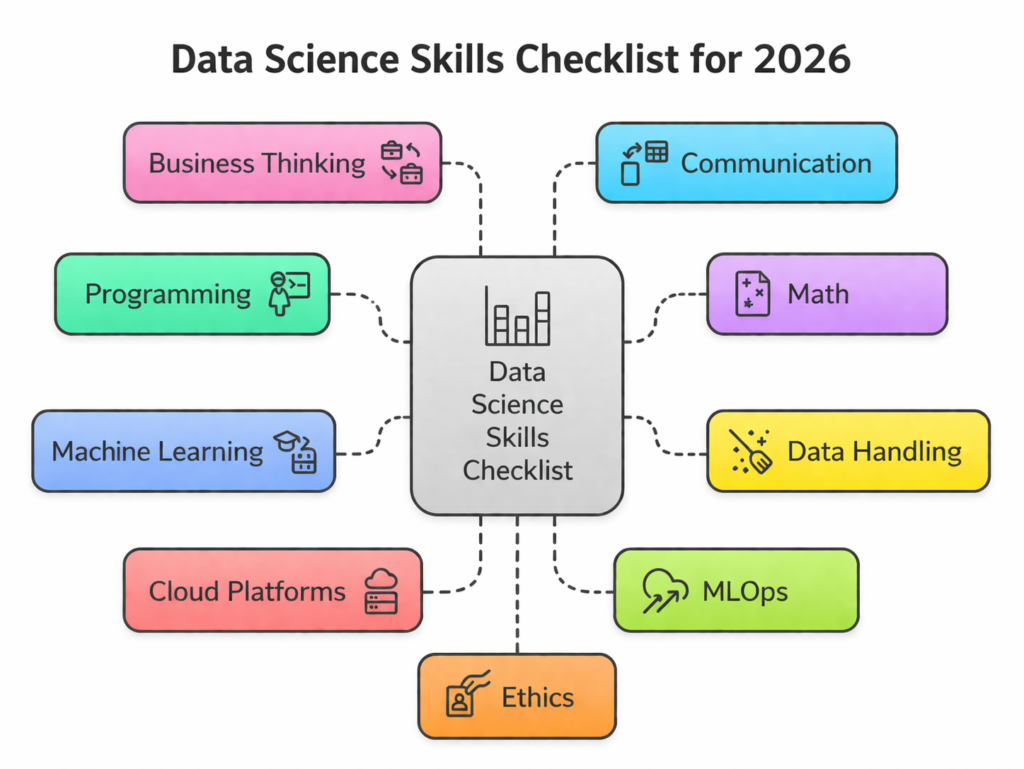
If you’re serious about understanding how to become a data scientist in 2026 without a degree, the biggest question is what to actually learn. The good news is you don’t need to learn everything at once. You just need to focus on the right skills that are actually used in real-world projects. This is your practical, no-fluff checklist of data science skills that matter.
1. Programming (Python + SQL)
Python is the foundation of modern data science. It is flexible, beginner-friendly, and powerful enough to handle everything from cleaning data to building models. If you’re starting with python for data science beginners, this is where your journey begins. SQL is equally important because most companies store their data in databases, and knowing how to query that data is essential.
2. Math (Statistics, Probability, Linear Algebra)
You do not need advanced mathematics, but you must understand the basics. Statistics and probability help you validate results, while linear algebra supports how models work internally. These fundamentals strengthen your data analysis techniques and help you make sense of results instead of guessing.
3. Data Cleaning and Wrangling
Real-world data is messy, and cleaning it is a major part of the job. You will spend time removing duplicates, handling missing values, and preparing data for analysis. Tools like pandas and NumPy make this process easier, and mastering this step is a core part of the data scientist roadmap 2026 step by step.
4. Exploratory Data Analysis (EDA)
EDA is where you start understanding your data. By using visualization tools, you can uncover trends, patterns, and anomalies. This step builds your intuition and strengthens your understanding of machine learning basics, because it guides what you do next.
5. Machine Learning Algorithms
Before diving into advanced AI, focus on core algorithms. Models like linear regression, decision trees, and clustering methods are widely used in real-world problems. Learning these builds a strong foundation in machine learning basics and prepares you for more advanced work.
6. Deep Learning
Deep learning is not required for every role, but it opens doors to advanced applications like image recognition and recommendation systems. Learning frameworks like TensorFlow or PyTorch can significantly boost your data scientist career if you want to work in cutting-edge areas.
7. Natural Language Processing (NLP)
Text data is everywhere, from reviews to chat logs. NLP allows you to extract insights from unstructured text. Tools and libraries help you build models for sentiment analysis, summarization, and chatbots. This skill adds depth to your overall data science skills.
If you are interested in working with text data, chatbots, or AI systems, learning prompt engineering can give you a strong advantage. Prompt engineering focuses on how to interact with AI models effectively and extract useful outputs. It is becoming an important extension of data science skills, especially in areas like NLP and generative AI. If you want to go deeper into this area, you can explore my complete guide on How to Become a Prompt Engineer in 2026 (No Degree Needed) where I break down the skills, tools, and roadmap step by step.
8. Time Series Analysis
If you are interested in domains like finance or logistics, time series analysis is extremely valuable. It helps predict future trends based on past data. Learning these techniques improves your data analysis techniques and makes your work more impactful.
9. Data Visualization and Dashboards
Data is only useful if people can understand it. Visualization helps you communicate insights clearly. Tools like dashboards and charts allow you to turn complex data into simple stories, which is critical for growing your data scientist career.
10. Cloud Platforms (AWS, GCP, Azure)
Modern data science work happens in the cloud. Knowing how to store data, run models, and manage workflows on cloud platforms gives you a strong advantage. This is especially important if you want to get a data science job without experience in 2026.
11. MLOps and Deployment Tools
Building a model is not enough. You need to deploy it and make it usable. Tools for deployment, automation, and tracking experiments help you move from learning to real-world implementation. This is a key part of becoming job-ready.
12. Business Thinking
Data science is not just technical, it is practical. You need to understand business problems and connect your work to real outcomes. This is what transforms your data science skills into real value.
13. Communication and Storytelling
Even the best analysis is useless if it cannot be explained clearly. You need to present insights in a way that non-technical people can understand. Strong communication skills help you grow faster in your data scientist career.
14. Ethics and Data Responsibility
Data science comes with responsibility. You must ensure fairness, avoid bias, and respect privacy. Ethical thinking is becoming an essential part of modern data science skills.
If you want to stand out, focus on one skill at a time, build real projects, and share your work. Then repeat the process. That is how you go from learning to actually understanding how to become a data scientist in 2026 without a degree.
Step-by-Step Process to Start from Scratch to Becoming a Data Scientist
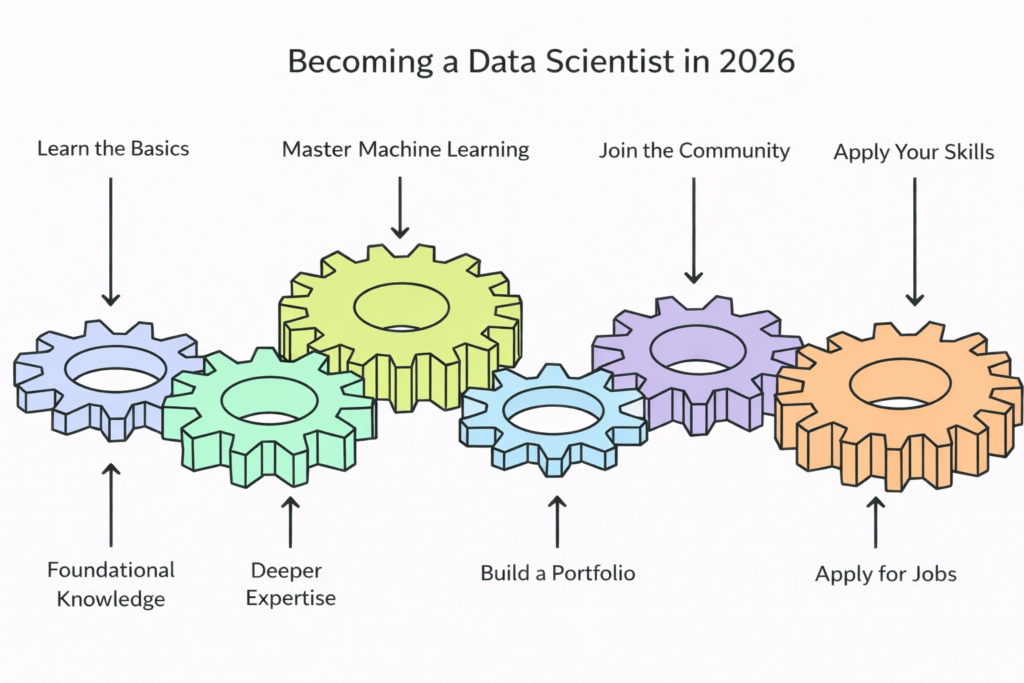
Let’s break this down in the simplest and most practical way possible. If you’re trying to understand how to become a data scientist in 2026 without a degree, this journey might feel overwhelming at first, but it is more achievable than ever. With the right approach and consistency, you can move from beginner to job-ready by following a clear path. Think of this as your data scientist roadmap 2026 step by step, designed to help you build real, practical skills from scratch.
1. Learn the Basics of Python, SQL, and Data Literacy
Before moving into advanced topics like machine learning, you need a strong foundation in three core areas. These are the building blocks of all data science skills and will be used in almost every real-world project.
- Python is the main programming language used in data science. It is beginner-friendly, flexible, and powerful enough to handle everything from cleaning data to building predictive models. You will use libraries like pandas for data manipulation, NumPy for numerical operations, and tools for visualization and modeling. If you are starting with python for data science beginners, focus on writing small programs, exploring datasets, and understanding how to work with data step by step.
- SQL is essential because most real-world data is stored in databases. It allows you to extract, filter, and transform data efficiently. You will use SQL to query large datasets, combine multiple tables, and prepare data for analysis. While it may not feel as exciting as Python, it is one of the most practical data analysis techniques you will use in real jobs.
- Data literacy is about understanding data beyond just coding. It involves asking the right questions, identifying patterns, understanding distributions, and recognizing when something looks unusual. This skill helps you think like a data scientist and is a critical part of the data scientist roadmap 2026 step by step, because it guides how you approach every problem.
Best Resources to Get Started:
To build a strong foundation, you can start with these beginner-friendly resources:
- freeCodeCamp’s Python for Data Science → interactive and beginner-friendly
- SQLBolt → hands-on SQL learning with instant feedback
- Google Data Analytics Professional Certificate (Coursera) → structured introduction to data tools and workflows
- Khan Academy Statistics and Probability → excellent for building core concepts
You should aim to spend around two to three weeks getting comfortable with these basics. During this time, focus on exploring rather than mastering everything. Try working with small datasets, writing simple Python scripts, practicing SQL queries, and understanding how data behaves.
This phase is all about building confidence and developing a strong foundation. If you stay consistent here, you will set yourself up for success in the next steps and move closer to understanding how to become a data scientist in 2026 without a degree.
2. Practice Analyzing Real Data Every Day (Yes, Daily)
This is the step where real growth happens. If you’re serious about how to become a data scientist in 2026 without a degree, you cannot rely only on theory. Data science is a hands-on skill, and the only way to improve is by working with real datasets consistently. Building strong data science skills comes from daily practice, not just watching tutorials.
Start simple. Pick any dataset that interests you and begin exploring it. It could be anything, like movies, weather, finance, or sports. The topic does not matter. What matters is that you are actively practicing data analysis techniques and learning how to work with real-world data.
Each day, try small practical tasks like:
- Cleaning missing values or handling outliers using Python
- Visualizing trends and patterns with charts
- Grouping and summarizing data to extract insights
- Writing a short explanation of what you discovered
- Sharing your work publicly, even if it is not perfect
These small actions, done consistently, are a key part of the data scientist roadmap 2026 step by step.
Tools to Use While Practicing:
Using the right tools will make your learning smoother and more effective. Focus on tools that are widely used in real projects:
- Jupyter Notebooks → organize your code, visuals, and explanations
- pandas → handle and manipulate datasets efficiently
- matplotlib and seaborn → create clear and meaningful visualizations
- Google Colab → run your code in the cloud without setup
- Framer → build a clean portfolio to showcase your projects and progress
These tools will help you apply python for data science beginners concepts in a practical way and prepare you for real-world workflows.
Ideas for Practice Projects:
If you are not sure where to start, here are some simple project ideas:
- Analyze your personal data, like music or app usage
- Explore global datasets such as population or health trends
- Study patterns in public data like crime or weather
- Try basic predictions based on available data
The goal is not to build something perfect, but to keep improving your understanding of data analysis techniques through real examples.
Do not overthink this step. You are not trying to build complex systems yet. You are training your mind to think like a data scientist. The more datasets you explore, the better you get at spotting patterns, asking meaningful questions, and finding insights others might miss.
You can also explore platforms where people share projects and solutions. Studying others’ work, experimenting with it, and trying your own variations is one of the fastest ways to improve your data science skills.
Remember: consistency > perfection. One hour a day adds up fast.
3. Master Machine Learning Basics and Start Building Models
Once you are comfortable working with real data, the next step is to move into machine learning. This is where things start getting exciting. If you’re learning how to become a data scientist in 2026 without a degree, this stage is where you transition from analysis to prediction. Building a strong foundation in machine learning basics is essential for developing real-world data science skills.
Start with the core algorithms that every data scientist should understand:
- Linear Regression → used for predicting continuous values like prices or sales
- Logistic Regression → used for classification problems like yes/no outcomes
- Decision Trees and Random Forests → useful for understanding patterns and feature importance
- K-Nearest Neighbors (KNN) → simple but effective for classification tasks
- K-Means Clustering → used to group similar data points together
At this stage, the goal is not just to run models, but to truly understand them. You should focus on:
- When to use each algorithm
- How to improve model performance
- How to evaluate results using metrics like accuracy, precision, recall, and AUC
This understanding is a crucial part of the data scientist roadmap 2026 step by step, because it helps you move beyond theory into practical problem-solving.
Your best tool for this phase is scikit-learn, a powerful Python library that makes it easy to build and test models. It allows you to train models on real datasets, evaluate them, and improve them efficiently. Using tools like this will strengthen your data analysis techniques and prepare you for real-world tasks.
Resources to Guide You:
To build a strong foundation in machine learning, you can use these resources:
- Coursera’s Machine Learning course by Andrew Ng → one of the most trusted beginner courses
- StatQuest with Josh Starmer (YouTube) → simple explanations of complex topics
- Kaggle’s Intro to Machine Learning → short, practical, and hands-on
- Hands-On Machine Learning with Scikit-Learn, Keras, and TensorFlow → great for learning by building
Do not rush into advanced topics like deep learning yet. Focus on mastering the fundamentals first. Traditional machine learning algorithms are often fast, interpretable, and highly effective for real-world business problems.
A great way to practice is by working on a simple project. Take a dataset, clean it, and try building different models on it. Compare how each model performs and understand why one works better than the other. This process helps you develop intuition and strengthens your machine learning basics.
Every time you build a model, you are not just learning code. You are learning how to think, analyze, and communicate insights using data. That is what truly moves you forward in your journey of how to become a data scientist in 2026 without a degree.
4. Build a Killer Portfolio (Yes, This Matters More Than Any Certificate)
Let’s be clear about one thing. If you’re learning how to become a data scientist in 2026 without a degree, your portfolio matters far more than any certificate. Companies are not just looking for what you know, they are looking for what you can build. Your portfolio is proof of your data science skills and your ability to apply them in real-world scenarios.
Your portfolio does not need to be flashy or overly complex. It needs to be practical, well-structured, and easy to understand. Start by building two to three solid projects that solve real problems using real data. Each project should clearly demonstrate your use of data analysis techniques and your ability to think through a problem.
Each project should include:
- A clear problem statement explaining what you are trying to solve
- Your approach, including data cleaning, EDA, modeling, and results
- Visuals such as charts, dashboards, or screenshots
- A well-written README that explains your thought process
- Optional: interactive dashboards or deployed applications
These elements make your work easier to understand and show that you are following a structured data scientist roadmap 2026 step by step.
Project Ideas to Get Started:
If you are unsure what to build, here are some practical ideas:
- Predict customer churn for a fictional business
- Analyze sentiment in product or review datasets
- Forecast demand using time-based data
- Visualize trends in public datasets like traffic or health data
- Build a simple app that uses your model for predictions
These projects will help you apply both your machine learning basics and real-world problem-solving skills.
Best Tools to Showcase Your Work:
To present your portfolio effectively, use tools that are commonly used in the industry:
- GitHub → organize your projects, code, and documentation
- Notion or Medium → write detailed explanations and share insights
- Streamlit or Gradio → turn your models into interactive applications
- Google Colab → share notebooks easily without setup
Using these tools shows that you are comfortable with real workflows and strengthens your data scientist career profile.
Your portfolio should tell a story. It should reflect your learning journey, your curiosity, and your ability to solve problems using data. Every project you build adds credibility and gives you something meaningful to discuss in interviews.
Also, do not build in silence. Share your work publicly. Post your projects, insights, and learnings. Visibility plays a huge role in opportunities. When people can see your work, they can trust your skills.
By the end of this stage, you will not just have knowledge, you will have proof. And that is what truly moves you forward in how to become a data scientist in 2026 without a degree.
5. Join the Data Community and Start Networking
Here’s something most courses don’t emphasize enough. If you’re serious about how to become a data scientist in 2026 without a degree, the community you surround yourself with can accelerate your growth more than any single course. Being part of a network of learners and professionals helps you stay motivated, learn faster, and discover real opportunities. It is an underrated but powerful way to build your data scientist career.
Networking does not mean formal meetings or uncomfortable conversations. It simply means showing up, sharing what you are learning, and being part of ongoing discussions. When you engage consistently, you naturally improve your data science skills and start getting noticed.
Where to Start:
There are several platforms where you can learn, connect, and grow:
- Kaggle → explore datasets, study notebooks, and learn from others’ approaches
- Reddit → communities where people discuss projects, careers, and real-world challenges
- LinkedIn → share your work, follow professionals, and build your presence
- Discord or Slack groups → connect with learners and professionals in real-time discussions
- X (Twitter) → follow conversations around data science, AI, and industry trends
These platforms expose you to different perspectives and help you strengthen your understanding of data analysis techniques through real discussions.
What to Actually Do:
Being present is not enough. You need to actively participate and contribute:
- Ask for feedback on your projects
- Share what you learned from a course or experiment
- Comment thoughtfully on others’ posts
- Help others when you can
- Share small milestones and progress
These actions not only improve your learning but also reinforce your data science skills through practice and communication.
One of the biggest advantages of being active in the community is access to opportunities. Many job leads do not come from traditional job boards. They come from conversations, recommendations, and visibility. When you are active and consistent, people start recognizing your work.
You do not need to be an expert to participate. You just need to be curious, consistent, and willing to share your journey. That is what helps you grow faster and move forward in your path of how to become a data scientist in 2026 without a degree.
Data science today is not a solo journey. It is collaborative, global, and constantly evolving. The sooner you become part of the community, the faster your data scientist career will grow.
6. Apply for Jobs (Even If You Think You’re Not Ready Yet)
Here’s a secret that seasoned data scientists will tell you: if you’re learning how to become a data scientist in 2026 without a degree, you’ll never feel 100% ready and that’s okay. The best way to break into the field is to start applying before you feel “qualified.” In fact, applying is part of the learning process and helps build your data scientist career.
Why? Because writing resumes, tailoring cover letters, and going through interviews forces you to articulate your data science skills. It helps you reflect on what you know, identify gaps, and grow faster than waiting on some imaginary “perfect moment.”
What should you have before applying?
- A strong portfolio with 2–3 real-world projects that demonstrate your data analysis techniques
- A GitHub profile that shows recent activity
- A LinkedIn profile that highlights your data journey, tools you know, and projects you’ve built
- A short, punchy resume focused on skills and outcomes (not fluff or coursework)
Don’t forget to include:
- Python, SQL, scikit-learn, pandas, matplotlib
- Tools like Jupyter, Git, Tableau, Streamlit
- Any cloud platforms you’ve worked with (AWS, GCP, etc.)
- Keywords like “data cleaning,” “model evaluation,” “EDA,” “machine learning,” and machine learning basics
Where to find beginner-friendly jobs:
- LinkedIn Jobs - use filters like “entry-level,” “data analyst,” “remote”
- Wellfound - perfect for startups, where skills > degrees
- Himalayas.app - remote-focused roles across startups and tech
- DataJobs.com - data-only job board with a wide range of roles
- RemoteOK & We Work Remotely - remote data science gigs
AI-powered job application hacks for 2026:
- Jobhire.ai - your AI recruiter that scans listings and sends you only the best matches.
- LoopCV.pro - automates applications by sending out your CV daily to multiple companies, keeping your pipeline active even when you’re busy.
- Careerflow.ai - helps optimize your LinkedIn profile, track applications, and manage your job hunt like a pro with AI-driven insights.
Also, don’t just look for “Data Scientist” titles. Apply to:
- Data Analyst
- Machine Learning Intern
- Junior Data Engineer
- Research Assistant (Data-Focused)
- Business Intelligence Analyst
These are all valid entry points into building your data scientist career.
Pro Tip: Every job you apply for is practice. You’ll learn to talk about your projects, answer questions, and refine your story. And even if you don’t get the offer, you’ll get better every time.
And remember that your goal isn’t to get 100% of the jobs. Your goal is to get one yes. Just one.
7. Keep Learning — Because Data Science Changes Fast
Let’s be real: data science doesn’t stand still. The tools, techniques, and even job roles evolve fast. What’s cutting-edge today might be outdated next year. That’s why your final step is actually ongoing: keep learning, keep building, and stay curious. If you’re serious about how to become a data scientist in 2026 without a degree, continuous learning is what will keep your data science skills relevant.
You don’t need to learn everything at once. But you do need a rhythm — a personal learning loop. Here’s how to stay sharp without burning out:
Stay Informed with Short, High-Value Content:
- Newsletters: Subscribe to Data Elixir, The Batch (by DeepLearning.ai), and Data Weekly — they highlight top tutorials, tools, and career tips to improve your data scientist career
- YouTube: Follow Ken Jee, Data School, and StatQuest — great for understanding concepts like machine learning basics visually
- Podcasts: Try Data Skeptic, Not So Standard Deviations, and Chai Time Data Science for easy listening and insights
- Twitter/X and LinkedIn: Follow people actually working in the field. They often share real-world data analysis techniques and insights you won’t find in courses
Dive into Emerging Tools and Techniques:
- MLOps: Learn how models are deployed, monitored, and scaled using tools like MLflow, DVC, and Docker
- Deep Learning: After mastering basics, explore PyTorch or TensorFlow for advanced applications
- Cloud Platforms: Try deploying models on AWS, GCP, or Azure to strengthen your real-world data science skills
- Big Data Tools: Learn Spark, Databricks, or Snowflake to handle large datasets
- LLMs and Generative AI: Understanding prompt engineering and model fine-tuning can give you a major edge in your data scientist career
One of the fastest-growing areas right now is AI agents, which can automate workflows, perform tasks, and act like digital assistants. Understanding how to build and use these systems can significantly boost your practical data science skills and open up new career opportunities. If you want a structured way to learn this, you can explore my article on Top 7 Online Courses to Master AI Agents in 2026, where I have curated the best resources to get started.
Keep Building:
- Add a new project every month or two using your data analysis techniques
- Share what you learn, what went wrong, and what you would improve
- Get feedback from others and keep iterating to improve your data science skills
Remember, you’re not just learning, you’re evolving. Data science in 2026 will reward those who can learn quickly, adapt to change, and apply new tools to real-world problems.
The best part? You’ve already proven you can learn from scratch. Now it’s about leveling up your journey in how to become a data scientist in 2026 without a degree.
Best Online Courses for Data Scientists (by Experience Level)
Let’s be honest, searching for the best data science courses online can feel overwhelming. If you’re trying to figure out how to become a data scientist in 2026 without a degree, you’ll come across hundreds of options, many claiming to make you job-ready in just a few weeks. The reality is that only a few courses actually help you build real data science skills that employers care about.
To make things simpler, here is a practical list of online courses organized by experience level. These courses are beginner-friendly, structured, and focused on helping you follow a clear data scientist roadmap 2026 step by step, so you can build job-ready skills without confusion.
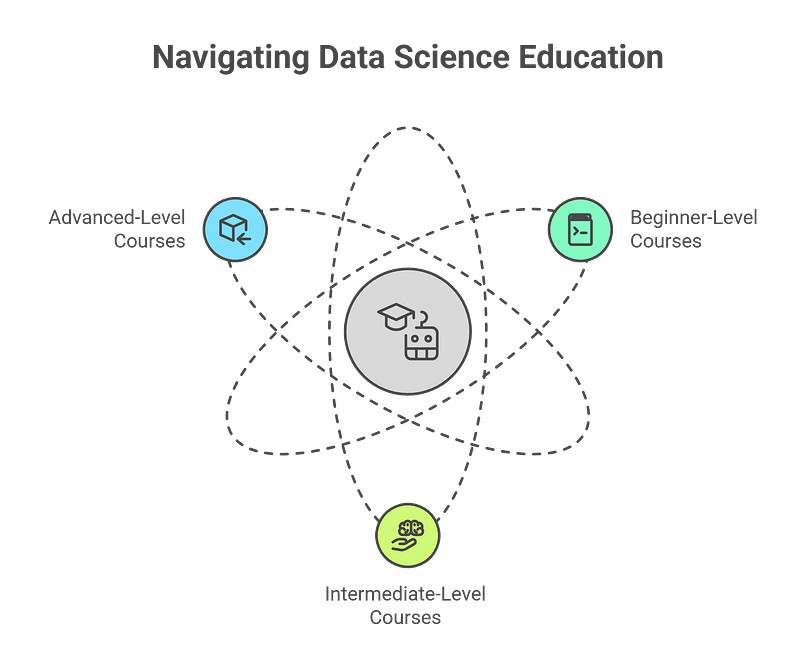
Beginner-Level Courses (perfect if you are just starting out, even with zero coding background)
At this stage, your goal is to get comfortable with Python, SQL, and the basics of data. If you’re starting your journey of how to become a data scientist in 2026 without a degree, these courses will help you build strong foundational data science skills without feeling overwhelmed.
- IBM’s Introduction to Data Science (Coursera) — A great starting point that covers Python, SQL, visualization, and how data science works in practice. It gives you a clear overview while helping you understand essential data analysis techniques through hands-on exercises.
- Python for Everybody (freeCodeCamp or University of Michigan, Coursera) — One of the most beginner-friendly ways to learn coding. Perfect for python for data science beginners, this course teaches Python from scratch with simple explanations and no prior experience required.
- Intro to Data Science (Udacity) — Focuses on data wrangling, visualization, and basic analysis. A good choice if you prefer short, practical lessons that help you start applying your data science skills quickly.
- SQL for Data Science (Coursera) — A dedicated course for learning SQL, which is a critical part of working with data. It helps you understand how to query and manage data, an essential skill in any data scientist roadmap 2026 step by step.
- Google Data Analytics Professional Certificate (Coursera) — While not purely data science, it provides a strong introduction to working with data, dashboards, and basic analysis. It is a great starting point before diving deeper into machine learning basics.
- Kaggle’s Python and Intro to Machine Learning micro-courses (free) — Short, interactive, and hands-on courses that let you practice directly in your browser. These are perfect for daily learning and improving your data analysis techniques step by step.
Intermediate-Level Courses (when you already know Python or basic machine learning concepts)
Now that you can write Python code and run queries in SQL, it is time to go deeper. If you are progressing in how to become a data scientist in 2026 without a degree, this stage is where you start applying your knowledge to real-world problems and strengthening your core data science skills. Here, you will work with real tools, datasets, and begin building models using practical data analysis techniques.
- Applied Data Science with Python Specialization (University of Michigan, Coursera) — Covers pandas, data visualization, text mining, and machine learning using real-world case studies. This course helps you apply your learning in a structured data scientist roadmap 2026 step by step approach.
- IBM Data Science Professional Certificate (Coursera) — A comprehensive program that includes Python, SQL, data visualization, and basic modeling workflows. It is ideal if you want a guided path to build strong data science skills through hands-on projects.
- Supervised Machine Learning with scikit-learn and Python (Coursera, IBM or DeepLearning.AI) — Focuses on building and evaluating models using practical examples. It strengthens your understanding of machine learning basics and helps you transition from theory to real implementation.
- Data Analyst in Python Track (DataCamp) — Teaches data cleaning, transformation, and visualization using pandas and matplotlib. Great for improving your coding skills and applying data analysis techniques in real scenarios.
- Statistics and Probability Specialization (Coursera, Duke University) — Builds a strong mathematical foundation and connects statistical concepts directly to data problems, improving your overall data science skills.
- SQL for Data Analysis (Mode Analytics) — Focuses on real-world SQL usage with business datasets, helping you become more confident in handling structured data, which is essential for any data scientist career.
Advanced-Level Courses (for scaling projects, production systems, and specialized topics)
Once you are confident with the basics and intermediate concepts, it is time to move into advanced territory. If you are serious about how to become a data scientist in 2026 without a degree, this stage focuses on building production-ready systems, working with large-scale data, and mastering specialized areas. These courses are designed to help you deepen your data science skills and prepare for real-world, high-impact roles.
- Data Scientist Nanodegree (Udacity) — A project-based program that teaches you how to build complete machine learning pipelines, manage workflows, and deploy real applications. Ideal for developing industry-level data science skills and practical experience.
- Machine Learning Specialization (Coursera, DeepLearning.AI & Stanford, taught by Andrew Ng) — A modern and structured path covering supervised learning, unsupervised learning, and advanced topics. It strengthens your foundation in machine learning basics while expanding into more complex concepts.
- Deep Learning Specialization (Coursera, DeepLearning.AI) — A highly respected course series that dives into neural networks, CNNs, RNNs, and advanced architectures. Perfect if you want to go beyond basics and build expertise in AI-driven systems.
- MIT MicroMasters in Statistics and Data Science (edX) — A rigorous, academic-level program that covers probability, statistics, and machine learning in depth. Great for strengthening your theoretical understanding alongside practical data analysis techniques.
- Advanced Data Science Specialization (Coursera, University of Washington) — Focuses on scalable machine learning, big data systems, and advanced algorithms. Helps you understand how to apply data science skills at scale.
- MLOps Specialization (Coursera, DeepLearning.AI) — Teaches how to deploy, monitor, and manage machine learning systems in production. This is a key skill for building a modern data scientist career.
- Big Data with Spark and Hadoop (edX or DataCamp) — Designed for working with large datasets at enterprise scale. Strengthens your ability to handle real-world data challenges using advanced data analysis techniques.
- Generative AI with Large Language Models (Coursera, DeepLearning.AI) — Covers prompt engineering, fine-tuning, and practical applications of LLMs. A cutting-edge area that is shaping the future of data science skills and AI.
Quick Tips to Get the Most Out of These Courses
- Pair learning with doing — If you’re serious about how to become a data scientist in 2026 without a degree, don’t just watch lessons. Take a course and immediately build your own project using Kaggle or real-world datasets. This is how you develop real data science skills.
- Don’t just collect certificates — Focus on completing projects, writing blog posts, or creating demos that showcase your thinking and your data analysis techniques. Employers care more about what you build than what you complete.
- Use extra resources when stuck — YouTube tutorials, blogs, and GitHub repositories can help you understand concepts better and strengthen your machine learning basics.
- Measure learning by outcomes — A working model, a clear explanation, or a shared demo is far more valuable than any certificate. This approach helps you build a stronger data scientist career.
- Treat learning as a journey — Start with the basics, move into advanced topics, and keep experimenting. Consistency and curiosity are what truly help you master how to become a data scientist in 2026 without a degree.
If you want to explore further, you can dive into detailed course recommendations with links, follow a structured study plan using these courses, or learn how to align them with your projects to build a stronger portfolio and accelerate your progress.
Career Path of a Data Scientist
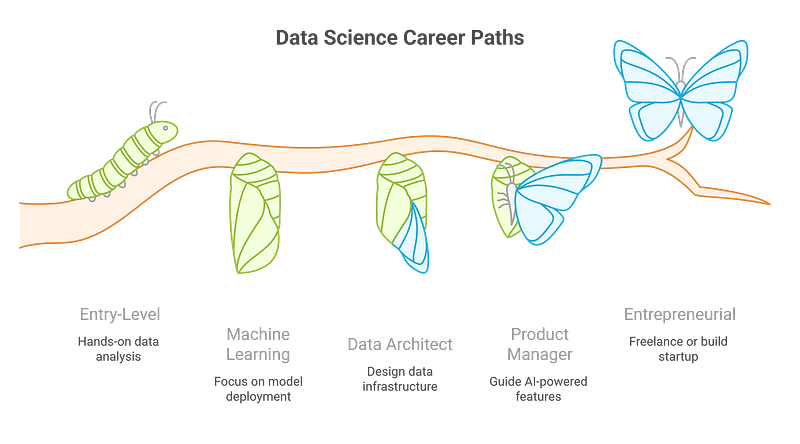
So, what happens after you land that first role? If you’re working toward how to become a data scientist in 2026 without a degree, it’s important to understand that this career path is not a straight ladder. It is more like a flexible journey where you can move in different directions based on your interests, strengths, and long-term goals. As you build your data science skills, multiple paths open up.
Here is how your journey might unfold:
1. Entry-Level Data Scientist
At this stage, you are the hands-on builder. You will be collecting, cleaning, and analyzing data while applying core data analysis techniques. Your work will involve running experiments, exploring patterns, building your first models, and collaborating with teams.
This phase is about:
- Learning through real projects
- Improving your data science skills
- Understanding how data impacts decisions
It is less about perfection and more about gaining experience and building confidence.
2. Machine Learning Engineer
As you gain experience, you may choose a more technical path. This role focuses heavily on building and deploying models. You will work on improving performance, tuning models, and creating scalable systems using your knowledge of machine learning basics and beyond.
In this role, you:
- Design and optimize models
- Build deployment pipelines
- Work on systems that operate at scale
You move from analysis to production-level problem solving.
3. Data Science Architect
This role combines strategy with technical expertise. Instead of focusing only on execution, you start designing systems and guiding how data is used across the organization. Strong data science skills and experience are essential here.
You will:
- Design data infrastructure
- Set best practices for teams
- Align data projects with business goals
This role focuses on big-picture thinking.
4. Data Product Manager
If you enjoy combining business thinking with data, this path is a strong option. A data product manager focuses on building products powered by data and machine learning. This role requires both communication and technical understanding.
You will:
- Translate user problems into data-driven solutions
- Work across teams to deliver products
- Ensure data creates real value in products
This path helps you grow your data scientist career in a more strategic direction.
If you find yourself more interested in combining data with product thinking rather than deep technical work, transitioning into an AI product role can be a powerful option. This path allows you to work closely with data scientists, engineers, and business teams to build data-driven products that people actually use. If you want to explore this direction further, you can check out my detailed guide on How to Become an AI Product Manager in 2026 (No Degree Needed) where I explain the exact skills and roadmap required.
5. Freelancer, Consultant, or Founder
For those who want independence, this path offers flexibility and control. You can work on projects, consult for companies, or build your own products. Many professionals who master data analysis techniques and real-world problem solving choose this route.
In this path, you can:
- Freelance on different projects
- Offer consulting services
- Build startups or data-driven products
In today’s world, your portfolio and your ability to solve problems matter more than formal qualifications.
The best part is that all these paths are open to you. Whether you have a degree or not is less important than your skills, your projects, and your ability to deliver real value. If you stay consistent and keep improving your data science skills, you can shape your own path while mastering how to become a data scientist in 2026 without a degree.
Future Scope of Data Scientists
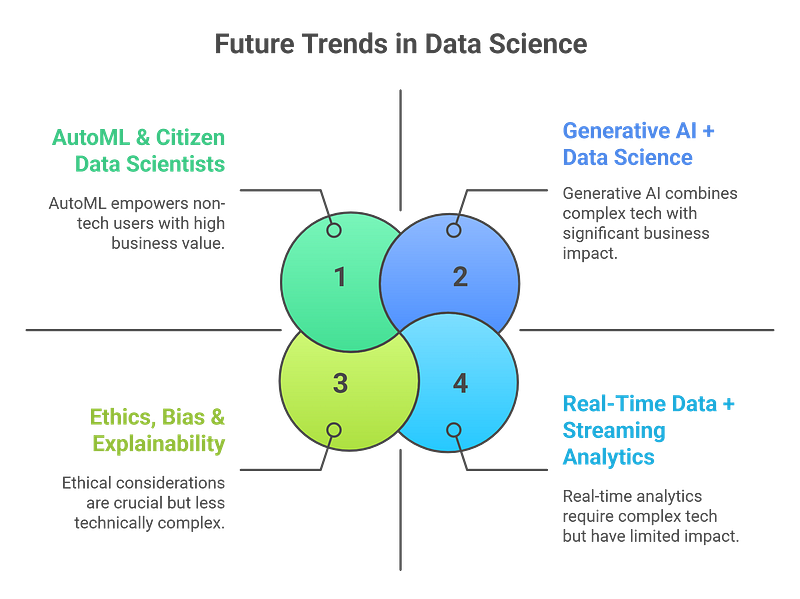
Let’s make one thing clear: data science is not slowing down, it is accelerating faster than ever. If you’re starting your journey of how to become a data scientist in 2026 without a degree, you are not late. You are entering at a time when opportunities are expanding rapidly, and strong data science skills are becoming more valuable across every industry.
Let’s look at what’s ahead:
1. Generative AI + Data Science
This is one of the biggest shifts happening right now. Generative AI is no longer limited to creating images or text. It is being used to analyze data, generate insights, and even automate complex workflows. A data scientist who understands both traditional data analysis techniques and modern AI tools will be at the forefront of building next-generation products and systems.
2. AutoML and Citizen Data Scientists
AutoML tools are making it easier for non-technical users to build basic models. However, this does not replace professionals. Instead, it increases the demand for people with strong data science skills who can interpret results, validate models, and solve more complex problems. AutoML expands the field rather than replacing it.
3. Real-Time Data and Streaming Analytics
Businesses now want insights instantly, not after hours or days. Real-time analytics is becoming a standard requirement. Data scientists will need to work with systems that process data continuously and deliver immediate insights. This shift makes advanced data analysis techniques even more important in real-world applications.
4. Data-Centric AI
The focus is moving from just building models to improving data quality. Clean, well-structured data is becoming more valuable than complex algorithms. This means skills like data cleaning, preprocessing, and understanding datasets are becoming critical parts of the data scientist roadmap 2026 step by step.
5. Domain-Specific Data Science
While general skills are important, specialists are in higher demand. Companies are looking for professionals who understand both data and a specific industry such as healthcare, finance, or retail. Combining domain knowledge with data science skills allows you to create deeper and more valuable insights.
6. Ethics, Bias, and Explainability
As data-driven decisions impact real lives, ethical considerations are becoming essential. Companies need data scientists who can ensure fairness, reduce bias, and explain how models work. This combination of technical expertise and responsibility will play a major role in shaping a strong data scientist career.
At the end of the day, data science is becoming more powerful, more integrated, and more essential across industries. The tools will continue to evolve, but the need for people who can think critically, work with data, and create meaningful impact will only grow. If you keep improving your data science skills, you will stay relevant and continue to grow in your journey of how to become a data scientist in 2026 without a degree.
Why Now is the Best Time to Become a Data Scientist
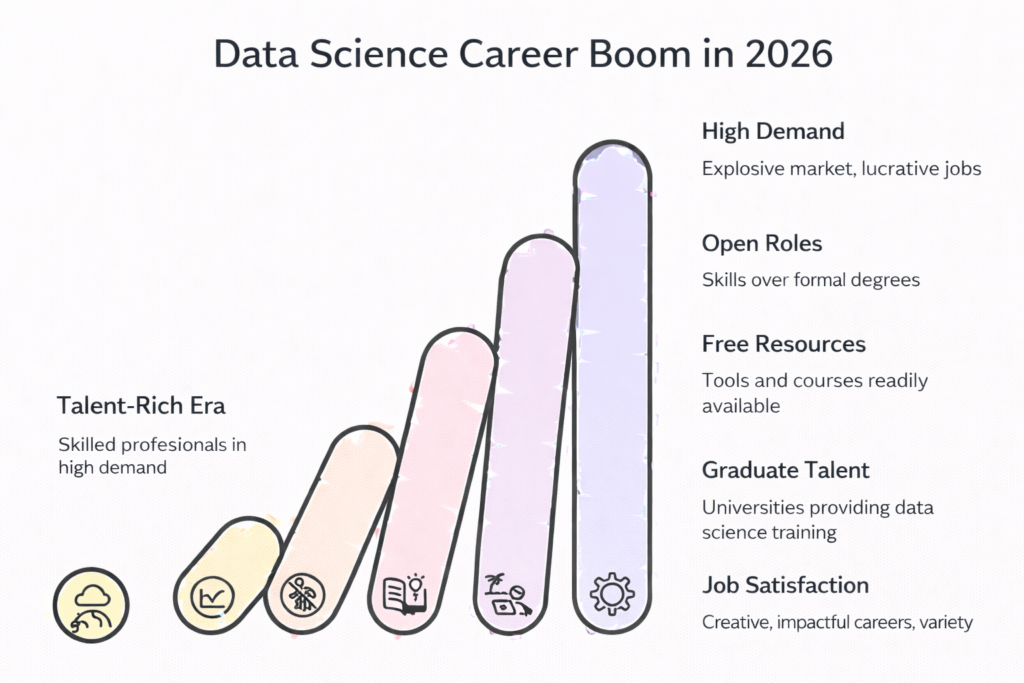
Seriously — why now? Because we are at the beginning of a data-first era, and the world is finally recognizing it. If you’re thinking about how to become a data scientist in 2026 without a degree, this is one of the best times to start. Everyone is talking about AI and automation, but none of it works without people who can clean, analyze, and interpret data. In today’s world, companies are not just hiring, they are actively competing for talent with strong data science skills.
Here is why this is your moment:
1. The demand is sky-high
Every industry is generating massive amounts of data but struggling to turn it into meaningful insights. Businesses across retail, healthcare, finance, and more need people who can apply data analysis techniques to solve real problems. What used to be a “nice to have” role has now become essential for survival.
2. No degree? No problem
The traditional rules have changed. Companies now focus more on what you can build rather than where you studied. If you can demonstrate real data science skills, build projects, and explain your work clearly, you are already qualified. This makes it easier than ever to build a data scientist career without formal education.
3. Free knowledge and powerful tools
You no longer need expensive courses to get started. Tools and resources are widely available, making learning more accessible than ever. With platforms, tutorials, and hands-on practice, you can build strong machine learning basics and practical skills from your own setup.
4. Remote freedom and strong pay
Data science is one of the most flexible and well-paying career options today. Many roles allow you to work remotely, opening up global opportunities. With the right data science skills, you can work from anywhere while building a stable and high-income data scientist career.
5. You will actually enjoy the work
There is something deeply satisfying about working with data. Turning messy datasets into meaningful insights, discovering patterns, and helping solve real problems makes the work both creative and impactful. It combines logic, curiosity, and problem-solving in a unique way.
At the end of the day, we are in the middle of a major shift toward data-driven decision-making. The opportunity is open to anyone willing to learn and build. If you stay consistent and keep improving your data science skills, starting now can put you far ahead in your journey of how to become a data scientist in 2026 without a degree.
Before we wrap up, a quick note. If you’re serious about how to become a data scientist in 2026 without a degree, investing in structured learning can speed up your progress. Platforms like Coursera often run limited-time offers on their Coursera Plus Annual plan, giving you access to thousands of courses, including top programs for building data science skills and mastering machine learning basics. If you’ve been waiting for the right time to commit to guided learning, this could be the perfect moment to start.
Conclusion
Here is the truth you cannot ignore: data science in today’s world is not just another career path, it is a gateway to endless opportunities. If you are thinking about how to become a data scientist in 2026 without a degree, this is one of the most accessible and rewarding paths you can choose.
You do not need an expensive degree. You do not need to be a math genius. You do not need anyone’s permission. What you really need is curiosity, consistency, and a clear direction to build your data science skills.
And that direction is simple. Start with Python. Learn the basics of data analysis. Work on real datasets. Build projects that solve real problems using practical data analysis techniques. Share your work online. Join communities. Keep experimenting, keep learning, and keep improving. That is the process that works.
Data science is not slowing down, it is becoming more powerful and more essential across industries. From healthcare and finance to entertainment and technology, organizations rely on people who understand data. If you can analyze data, visualize it clearly, and communicate insights effectively, you will always have opportunities. These abilities not only strengthen your data scientist career, but also give you the freedom to choose the kind of work you want to do.
So now is the time to take action. The tools are accessible. The knowledge is everywhere. The opportunity is right in front of you. Your journey into data science starts today, and everything depends on whether you take that first step toward how to become a data scientist in 2026 without a degree.
FAQs
- What skills are required to become a data scientist?
To succeed in how to become a data scientist in 2026 without a degree, you need a mix of technical and analytical abilities. The most important data science skills include programming (Python, SQL), statistics, and machine learning basics. Along with this, strong data analysis techniques, problem-solving skills, and clear communication are essential to turn data into useful insights.
- Is data science a good career in 2026?
Yes, data science is one of the most in-demand and future-proof careers today. Companies rely heavily on data to make decisions, making a data scientist career highly valuable. With the right data science skills, you can work across industries like finance, healthcare, and technology, with strong growth and global opportunities.
- Is Python and SQL enough for data science?
Python and SQL are enough to get started and form the foundation of data science skills. Python is used for analysis and modeling, while SQL helps you manage and query data. However, to grow in your data scientist career, you should also learn machine learning basics and more advanced data analysis techniques over time.
- Are coding questions asked in data science interviews?
Yes, coding is an important part of data science interviews. You are often required to write code using Python or SQL and solve real-world problems. Employers test your ability to apply data analysis techniques, clean data, and build models, which are key parts of how to become a data scientist in 2026 without a degree.
- How do I prepare for a data science job interview?
Preparation should focus on both concepts and practical experience. You should work on projects, practice coding, and understand key topics like statistics and machine learning basics. Building a strong portfolio that showcases your data science skills is one of the best ways to prepare, especially if you are following the path of how to become a data scientist in 2026 without a degree.
Final Thoughts
Here’s the reality: data science is not just the future, it is the present. If you’re thinking about how to become a data scientist in 2026 without a degree, you are stepping into a field that already powers the apps you use, the businesses you rely on, and the decisions shaping the world around you. Behind every insight, prediction, and dashboard, there are strong data science skills and practical data analysis techniques at work.
That data scientist could be you.
You do not need a degree. You do not need permission from anyone. What you need is persistence, curiosity, and the willingness to keep learning and improving your data science skills. In today’s world, your work speaks louder than your résumé. The projects you build, the problems you solve, and the portfolio you create matter far more than traditional credentials.
Start small by working on a dataset that interests you. Build consistently by creating projects that apply real data analysis techniques. Share your work online and connect with others who are learning. Apply for opportunities even before you feel ready, because that is how you grow. And always remember, you are not just working with numbers. You are turning data into stories that influence real decisions.
The best time to start was yesterday. The next best time is right now. Take the first step toward how to become a data scientist in 2026 without a degree, and begin building your journey today.