

Your portfolio is down for the week, one fund owns more technology stocks than you remembered, and some cash is still sitting in the account. You open an investing app and ask, “Where am I taking more risk than I think?” A neat answer appears in seconds. It sounds convincing. The harder question is whether the answer came from your holdings, current market data, or a language model filling gaps with confident prose.
That distinction matters when you compare AI financial advisor chatbots for retail investors. PortfolioPilot looks at a portfolio as a whole. Fiscal.ai helps you study company accounts and earnings calls. Origin connects investments with the rest of your finances. Public places research and rule-based automation inside a brokerage account. The chat box may look similar in each product, but the work behind it is different.
I would not choose one of these tools by asking which chatbot sounds smartest. I would choose it by asking what data it can see, what calculation it performs, what proof it shows, and whether it can move money. A useful research assistant should help you reach the original filing, transcript, fund document, or account record. If it cannot show where an important claim came from, keep that claim out of your investment decision.
This guide compares seven tools for portfolio analysis, company research, financial planning, and broker-connected workflows. You will see the best use for each product, its current access or pricing, the type of investor it suits, and the first question worth asking. A separate course section explains where to learn the finance and data skills needed to judge these answers. The final 30-day test gives you a calm way to test a tool before you trust it with sensitive data or a real trade.
The Short Answer: Which Tool Fits Which Job?
- PortfolioPilot: Choose it when you want a review of the portfolio you already own.
- Magnifi: Choose it when you want to search for investments and compare ideas in plain language.
- Origin: Choose it when your investment question depends on debt, spending, savings, or another household goal.
- Public Alpha and Agents: Choose them when you want research and user-approved rules inside a brokerage account.
- Fiscal.ai: Choose it when you want company financials, estimates, transcripts, and detailed fundamental research.
- WarrenAI: Choose it when your research covers several markets, asset classes, or countries.
- Walnut: Choose it when you want a read-only view of an existing brokerage portfolio and an approval step before any supported order.
This is a job-based shortlist, not a promise that every tool suits every investor. The sections below explain the limits that the short answer leaves out.
What Is an AI Financial Advisor Chatbot?
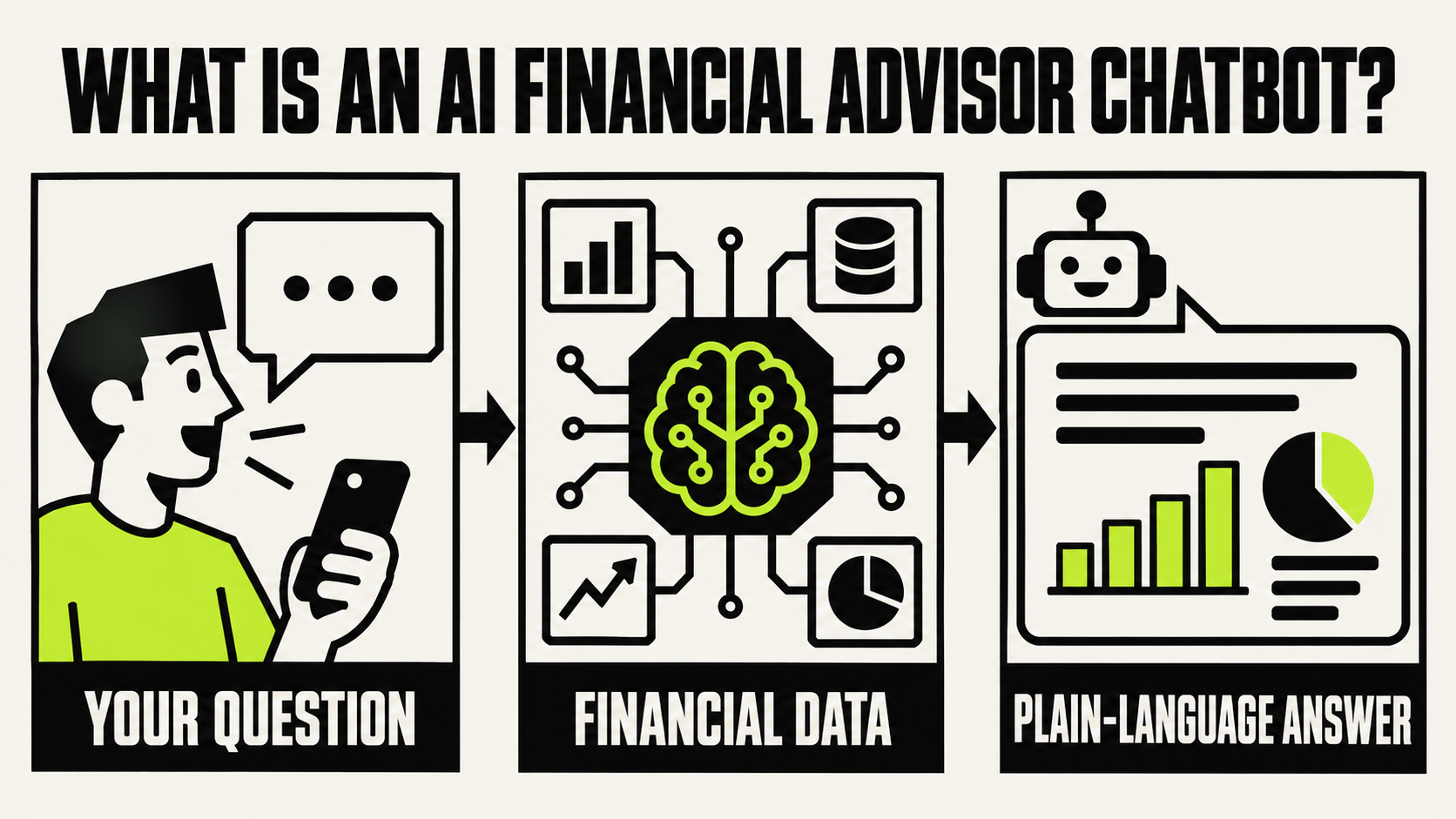
An AI financial advisor chatbot is a conversational tool that uses financial data, software models, and a language model to answer questions about money or investments. The best products connect the conversation to current market information, a portfolio engine, or your linked accounts. The weakest products place a finance-themed prompt in front of a general chatbot and let the confident writing hide the missing data.
The phrase “financial advisor” also has a legal meaning in many places, while marketing teams use it much more loosely. A product can explain diversification without being a registered investment adviser. A research assistant can compare two companies without considering your emergency savings, tax situation, debt, insurance, time horizon, or ability to handle a loss. You should therefore treat the product’s registration, disclosures, data sources, and action permissions as part of the product itself.
1. A Conversation Layer
The conversation layer lets you ask questions in ordinary language. You can write, “How much of my portfolio depends on large technology companies?” instead of building a custom screen. The model interprets the request, identifies the relevant data, and turns the result into an explanation.
This interface helps when the question is exploratory. You may not know that you need to examine sector concentration, overlapping fund holdings, interest-rate sensitivity, or valuation multiples. A useful assistant can connect your broad concern to a precise analysis and explain the term before presenting the result.
Conversation also creates a risk. Language models produce fluent sentences even when they misunderstand the request or lack current data. A strong product shows the source period, the securities included, the assumptions it used, and a path to the underlying numbers. A weak product gives you a conclusion without enough evidence to reproduce it.
2. A Financial Data Layer
Useful investment answers require more than language. A product may connect to market prices, company filings, earnings transcripts, analyst estimates, portfolio holdings, spending records, or financial planning rules. The data layer determines whether the assistant can answer a current question or only provide general education.
Public’s Alpha, for example, can draw from filings, earnings calls, price history, analyst material, news, and sentiment inside the Public platform. Fiscal.ai connects its Copilot to company financials, estimates, key performance indicators, transcripts, and dashboards. These systems can still make mistakes, but they have financial context that a blank general-purpose chat window does not automatically possess.
Data freshness matters as much as breadth. A question about an earnings release from this morning needs a different source from a question about ten years of revenue. Ask the tool to state its latest data date. If the answer affects a trade, open the filing, exchange notice, fund document, or brokerage screen that contains the original figure.
3. An Analysis or Planning Layer
The analysis layer performs the work behind the reply. A portfolio product may calculate concentration, volatility, diversification, fees, or a projected range of outcomes. A research product may screen companies, compare valuation measures, or summarize an earnings call. A planning product may combine cash flow, debt, savings, investments, and retirement goals.
PortfolioPilot explains that its assistant works with internal APIs, financial models, economic signals, and a portfolio engine. Origin’s AI Advisor can analyze a user’s connected financial picture, model scenarios, update a budget, and surface prioritized actions. Both products use chat, but the analysis beneath the chat serves different needs.
This distinction should shape your choice. A stock researcher does not become a household planner because it can answer a retirement question. A planning tool does not become a trading terminal because it can explain a price-to-earnings ratio. Choose the engine built for the decision you face.
4. An Action Layer
Some assistants stop after an answer. Others can prepare a trade, automate a rule, rebalance an account, or move money after you approve an action. The action layer creates convenience and raises the cost of an error.
Public’s Agents provide a clear example. A user describes a strategy, reviews the plan, and approves it. Public says the agent carries out the user-defined plan and does not recommend trades. The conversation used to form the plan may be flexible, while the approved execution rules remain deterministic.
You should start with read-only access whenever a product allows it. Let the tool analyze a small or simulated portfolio before you give it authority to trade. If the product can act, confirm the trigger, eligible assets, order type, spending limit, pause control, notification method, and record of every action.
5. An Explanation Layer
The explanation layer is where a good assistant earns trust. It should tell you what it found, which data produced the result, which assumptions could change the answer, and what it cannot know. A useful explanation gives you enough detail to disagree with it.
Retail investors often meet financial concepts in the middle of a decision. Terms such as duration, drawdown, factor exposure, tracking error, and tax-loss harvesting can stop a beginner from asking a better question. A chatbot can define the term inside the portfolio context and show a concrete example.
The explanation should never become a substitute for evidence. Ask the assistant to show the calculation or source. If it calls a portfolio diversified, ask for the sector weights, top holdings, regional exposure, and overlap between funds. The answer becomes more useful when you turn a general judgment into a set of inspectable claims.
How We Evaluated the Best AI Investing Assistants
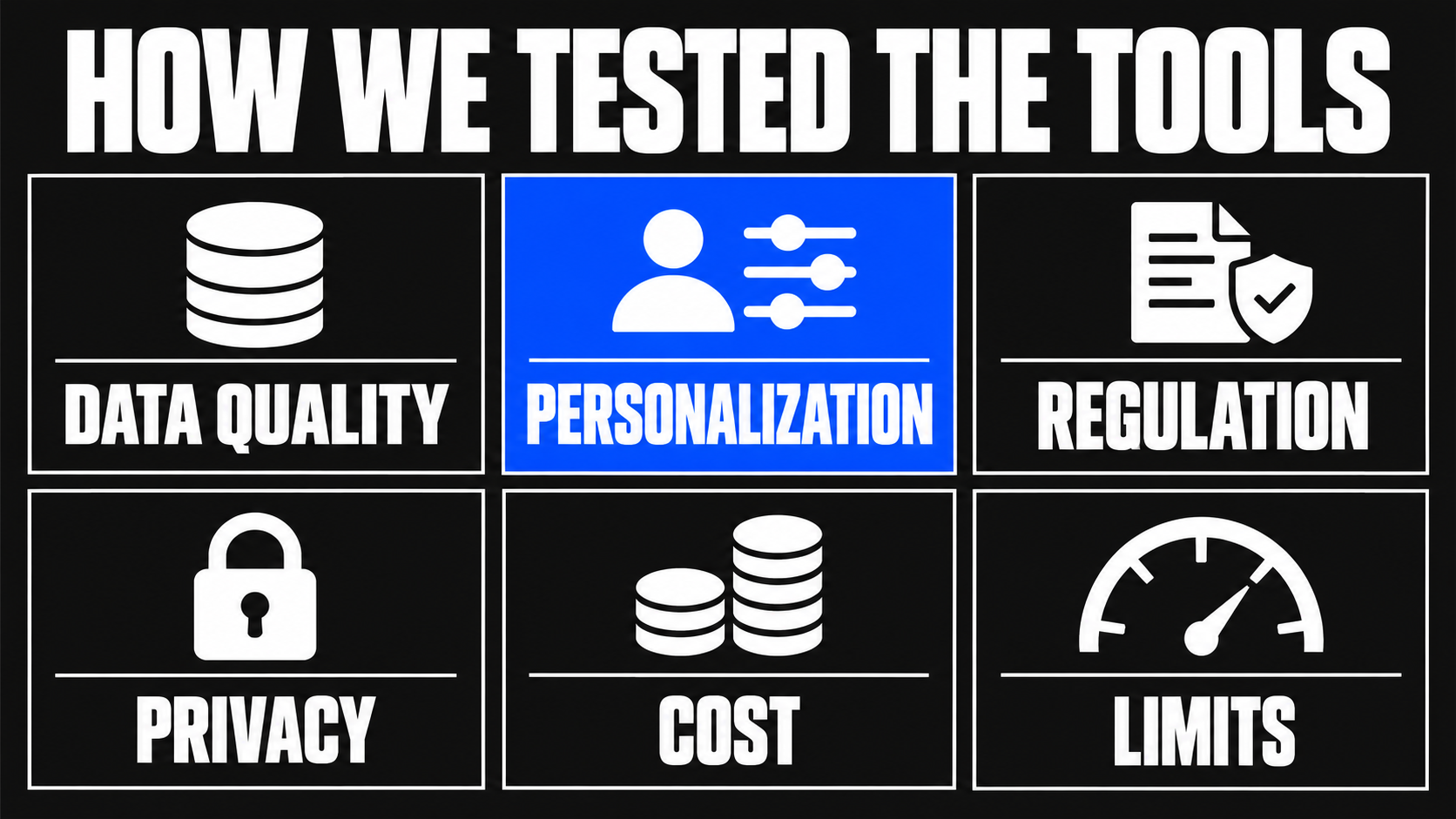
We evaluated each product by the job it can perform, the data supporting its answers, the degree of personalization, and the consequences of a mistake. A long feature list did not receive extra weight when the basic answer could not be checked. The result is a practical comparison for retail investors, not a ranking of which company writes the most exciting product page.
1. Data Quality and Freshness
The first question was simple: where does the answer come from? Financial research needs current prices, filings, transcripts, estimates, or portfolio records. Planning needs accurate account balances, liabilities, goals, and assumptions. A tool that cannot identify its data source should remain an educational aid.
We favored products that connect chat to a defined financial database or portfolio engine. We also looked for access to underlying documents. A summary becomes safer when you can open the filing or transcript and check the sentence that matters.
2. Personalization
Personalization can mean several things. A watchlist summary is personalized because it follows assets you selected. A portfolio review is more personal because it can examine holdings and allocation. A household plan goes further by considering spending, debt, cash reserves, taxes, and goals.
We separated these levels instead of treating them as the same feature. A tool may know every metric about a company and still know nothing about whether that company belongs in your account. The product should make that boundary clear.
3. Registration and Product Responsibility
The third test examined who stands behind the output. PortfolioPilot states that Global Predictions Inc. is an SEC-registered investment adviser. Public separates its experimental Alpha research output from advisory and brokerage services and explains which entity provides each service. Other products describe themselves as research platforms and state that their output is not advice.
Registration does not make every output correct, and a disclosure does not make a bad product useful. The legal role matters because it tells you what relationship the company claims to have with the user. Verify a firm independently when the product manages money or provides individualized recommendations.
4. Privacy and Account Access
Financial chat can contain salary, debt, account balances, holdings, goals, tax details, and family circumstances. The Consumer Financial Protection Bureau has warned that chatbots can create accuracy, privacy, security, and escalation problems when financial institutions deploy them poorly.
We looked for a clear reason to connect an account and a useful experience before that connection. You should inspect what data the service collects, how long it keeps chat records, which providers receive the data, whether the connection is read-only, and how to revoke access.
5. Cost and Access
The free experience matters because you need room to test the assistant. Magnifi lists basic portfolio analysis on its free tier and charges $99 per year for Premium at the time of this review. Fiscal.ai lists 10 Copilot prompts per month on Free, 100 on Plus, and 500 on Pro. WarrenAI allocates different monthly credit limits across InvestingPro plans.
Prices and limits change, so this guide treats current numbers as a snapshot rather than a promise. Judge the paid plan by the repeated job it replaces. A subscription may make sense if it saves several hours of verified research every month. It makes less sense if you open it twice, read a market summary, and forget it exists.
6. Limits and Failure Behavior
The most trustworthy product page explains what the assistant cannot do. Public says Alpha may produce inaccurate responses and should not form the basis of an investment decision. WarrenAI states that it may provide incorrect information and is not financial advice. These statements are useful because the product acknowledges the behavior you need to test.
We also considered whether a user can identify stale data, unsupported conclusions, and missing context. A safe assistant should accept correction, expose sources, and avoid pretending that one metric decides an investment. Polished writing received no credit when the answer lacked a verifiable path.
7 Best AI Financial Advisor Chatbots for Retail Investors in 2026
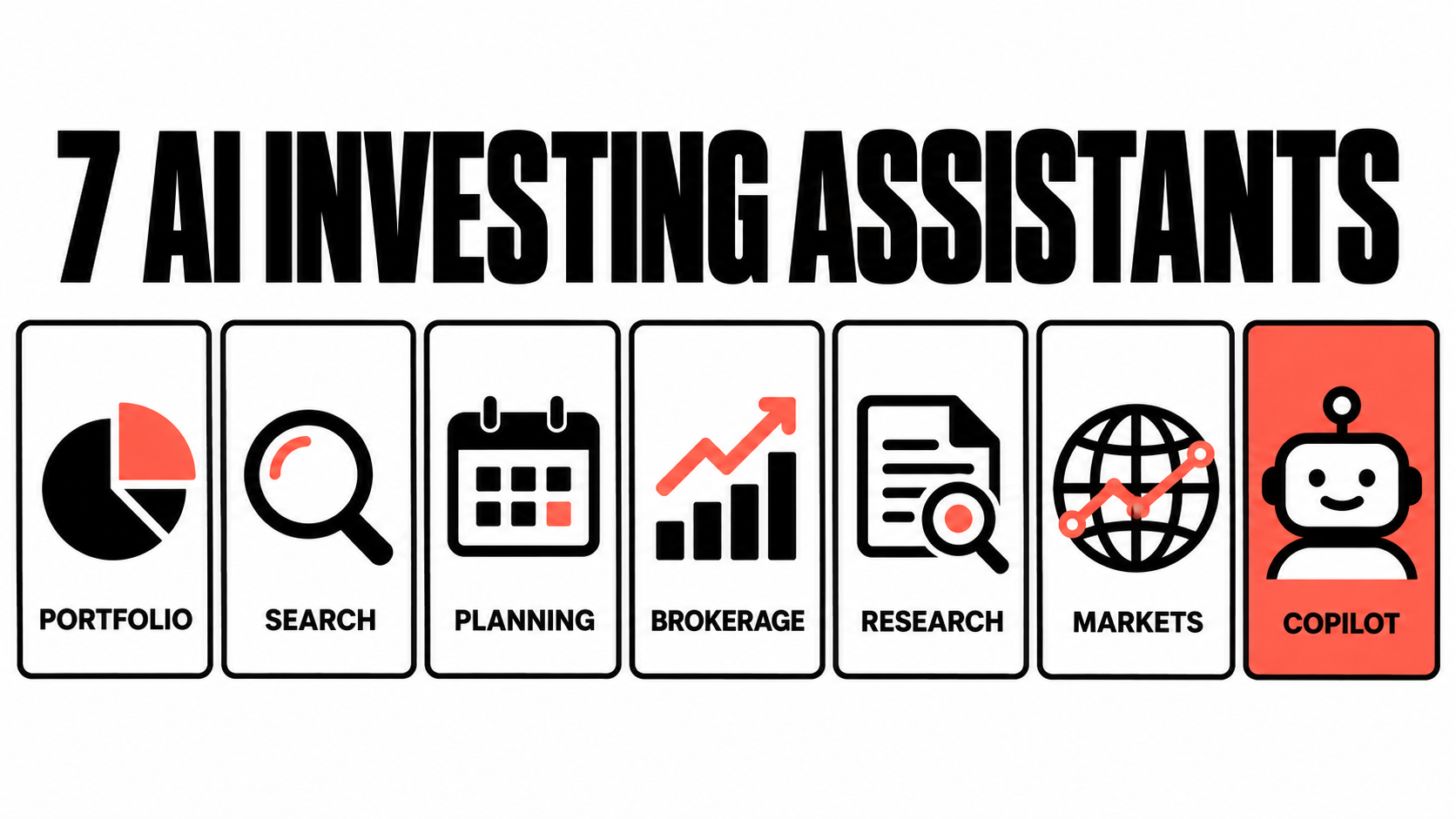
The best AI financial advisor chatbot depends on the decision you need to make. PortfolioPilot is the strongest fit for a whole-portfolio review, Magnifi works well for conversational discovery, Origin connects investing to a broader financial plan, and Public brings research and automation into a brokerage account. Fiscal.ai and WarrenAI are research tools, while Walnut represents a newer broker-connected assistant model.
1. PortfolioPilot: Best for a Whole-Portfolio Review
PortfolioPilot is the best starting point when your question concerns the portfolio as a whole. Its assistant can work with holdings, risk preferences, goals, retirement information, market conditions, and the company’s portfolio models. That combination helps it move beyond a generic explanation of diversification.
- Best for: Investors who want one view across several accounts and a portfolio-level diagnosis.
- Current access: Free plan; Gold starts at $29 per month or $20 per month with annual billing. Platinum starts at $99 per month or $49 per month with annual billing.
- Skip it if: You only want a fast stock screen or a summary of one earnings call.
The useful question is not “Which stock should I buy?” A better first prompt is, “Where am I taking more risk than I realize?” The assistant can then examine concentration, correlated holdings, sector exposure, or an allocation that conflicts with the user’s stated preferences. You can follow with a request for the numbers behind each finding.
PortfolioPilot also has a meaningful responsibility boundary. Global Predictions Inc., the company behind the product, identifies itself as an SEC-registered investment adviser. Registration should prompt more diligence, not less. Read the firm’s disclosures, understand which experience constitutes advisory service, and confirm how the product handles connected account data.
This tool suits a self-directed investor with several accounts or a portfolio that grew without a written allocation plan. It is less compelling for someone who only wants a quick company comparison or short-term chart analysis. The portfolio engine is the reason to choose it.
Start with a read-only review. Ask for your largest hidden concentration, the funds with overlapping holdings, the fees it can identify, and the assumptions behind its risk estimate. Save the answers, verify the holdings, and repeat the questions one week later to see whether the explanation remains consistent.
2. Magnifi: Best for Conversational Investment Discovery
Magnifi is built around the idea that an investor should be able to search and discuss investments in normal language. It combines account tracking, investment discovery, portfolio analysis, scenario testing, forecasts, and a personalized assistant. The interface fits beginners who know the outcome they want but do not know the filter names.
- Best for: Beginners who want to turn a plain-language investment idea into a shortlist.
- Current access: Free plan; Premium was listed at $99 per year when this guide was checked.
- Skip it if: Your work depends on detailed company models, long financial histories, or transcript research.
You might ask for funds that provide broad exposure to a theme, compare two exchange-traded funds, or test how a hypothetical move in oil could affect a portfolio. The assistant can connect the request to Magnifi’s data and portfolio tools. Premium adds deeper scenario analysis, forecasting, and ongoing guidance, while the free tier gives you enough room to understand the product.
Magnifi works best when discovery leads to verification. Ask the assistant to identify the selection rules, expense ratio, concentration, top holdings, and main risks of each result. Then open the fund page and issuer document. A conversational search can narrow the field, but the final comparison should rest on the actual product data.
The tool may feel broad because it includes a brokerage experience. Keep research and execution as separate mental steps. Write down the reason for a purchase before placing it. If the reason came from one chat answer, wait until you can reproduce it from the underlying data.
Magnifi is a good fit for an investor who wants guided exploration and portfolio context in one app. A user who needs deep company models, long histories of financial statements, or transcript analysis will find Fiscal.ai or WarrenAI more suitable.
3. Origin AI Advisor: Best for Connecting Investments to a Financial Plan
Origin’s AI Advisor is the best fit when investing is one part of a larger household decision. It can analyze spending, saving, investments, and other financial information, model scenarios, build or update a budget, and surface prioritized actions. That broader view matters because a portfolio decision can be wrong even when the investment analysis is correct.
- Best for: Households that need to connect investing with cash flow, debt, savings, and life goals.
- Current access: Origin was offering the first year for $1 when this guide was checked, followed by a $99 annual renewal. Check the sign-up page because the introductory offer can end.
- Skip it if: You spend most of your research time screening securities or reading company filings.
Consider a person deciding whether to increase stock exposure. A research bot may compare funds and expected volatility. A planning tool should also see an upcoming home purchase, high-interest debt, a thin emergency reserve, or a short time horizon. Origin is designed to bring those connected facts into the conversation.
The Financial Health Score and prioritized Actions can help a beginner decide which problem deserves attention first. Treat the score as a starting summary. Ask which inputs produced it, which assumptions carry the most weight, and how the result changes when income, savings, or a target date changes.
Origin also offers access to human financial professionals in parts of its service. That combination can be useful when the AI identifies an issue that requires judgment about taxes, estate planning, insurance, or a major life change. The assistant can organize the facts and scenarios before the human conversation.
Choose Origin when you want an integrated money plan, not a stream of stock ideas. It is a weaker fit for an active investor who spends most of the time screening securities or reading company filings.
4. Public Alpha and Agents: Best Inside a Brokerage Account
Public Alpha is a research assistant embedded in the Public investing platform. It can use filings, earnings calls, price history, analyst material, news, and sentiment to answer questions about supported assets. Public clearly states that Alpha is an experimental research tool and does not provide financial advice.
- Best for: United States investors who want research and user-approved automation inside one brokerage account.
- Current access: Alpha subscriptions and Agents access depend on the account and current rollout. Confirm the price and eligibility inside Public before moving a brokerage workflow there.
- Skip it if: You need a household financial plan or a portfolio review across several outside institutions.
That boundary makes Alpha useful for research questions. You can ask why a company moved after earnings, compare revenue trends, summarize management guidance, or examine a bond or fund available on the platform. The answer sits close to the asset page and brokerage data, which reduces the work of moving between separate tools.
Public’s newer Agents add an action layer. The user describes a plan in plain English, reviews it, and approves the rules. The agent then monitors defined conditions and executes the approved workflow. Public says an Agent follows the user’s plan and does not recommend trades.
The distinction between Alpha and Agents is important. Alpha helps you investigate. An Agent helps you carry out a strategy you designed. Do not let the convenience of the second step erase the uncertainty in the first. Test the research, define narrow rules, set limits, and monitor every execution.
Public fits a United States investor who wants research and automation in one brokerage experience. Availability, eligible assets, and account features vary, and Agents were still rolling out during this review. Confirm current access inside the platform before designing a workflow around them.
5. Fiscal.ai Copilot: Best for Company Fundamentals and Earnings Research
Fiscal.ai is the best option in this list for investors who want to interrogate company fundamentals, key performance indicators, estimates, filings, transcripts, and dashboards. Its Copilot sits on top of a financial research terminal instead of a general personal-finance app.
- Best for: Long-term stock investors and analysts who work from financial statements and earnings calls.
- Current access: Free plan; Plus is listed at $24 per month and Pro at $64 per month before any annual-billing discount.
- Skip it if: Your main question concerns budgeting, retirement planning, or whether an investment fits your household finances.
A strong prompt asks for a specific analytical job. You can request a five-year comparison of revenue growth and margins, identify the drivers management discussed in the latest call, or compare a company with peers using the same measures. Follow by opening the chart, statement, or transcript passage that supports the answer.
The free plan currently provides a limited number of Copilot prompts and a shorter financial history. Paid plans expand prompt limits, history, dashboards, events, estimates, and research features. The free allowance is enough for a disciplined test if you write the question before opening the chat.
Fiscal.ai does not know your complete financial life. It can help you understand a company, but it cannot decide whether that company fits your cash needs, taxes, risk capacity, or existing exposure. Use it as an analyst’s workbench and pair it with a written portfolio rule.
The product suits a long-term stock investor, financial student, or analyst who wants to move from a broad question to source-linked company data. It is excessive for someone who only wants a basic retirement allocation or budget plan.
6. WarrenAI: Best for Broad Global Market Research
WarrenAI is Investing.com’s conversational market researcher. It connects natural-language questions to real-time market information, hundreds of metrics, historical data, screening, news, analyst material, earnings-call content, and watchlists across a large global asset universe.
- Best for: Investors whose watchlists cover several markets, countries, or asset classes.
- Current access: WarrenAI credits come with InvestingPro plans. Investing.com changes plan prices and discounts by country and promotion, so check the live plan page before subscribing.
- Skip it if: You want a complete personal plan built from income, debt, goals, taxes, and account balances.
The breadth is useful when your research crosses markets. You can screen companies with a plain-language condition, compare valuation and dividend measures, summarize news affecting a watchlist, or ask for the main points from an earnings call. WarrenAI also supports several languages, which can lower the barrier for investors who do not want to conduct every search in English.
Investing.com gives Pro and Pro+ users different monthly WarrenAI credit limits. The tool’s value therefore depends on question quality. Broad prompts consume credits and often produce broad answers. A prepared request with the exact assets, period, measures, and output structure creates a result that is easier to check.
WarrenAI’s own page warns that it may provide incorrect information and is never financial advice. That warning should shape the workflow. Use the assistant to locate and compare evidence. Do not treat a bullish or bearish paragraph as a trade instruction.
Choose WarrenAI when you follow several markets and want a conversational layer over a large research database. Choose Fiscal.ai when your work centers on detailed company fundamentals and transcripts. Choose a portfolio or planning product when the main question is personal suitability.
7. Walnut: Best for a Broker-Connected Assistant Model
Walnut represents a newer type of investment chatbot that connects to the brokerage relationship and helps a user move from conversation to an approved action. The company distinguishes brokerage-connected assistants from budgeting bots, research chatbots, general assistants, and portfolio-advice apps.
- Best for: Investors who want an assistant to read an existing brokerage portfolio and prepare an action for approval.
- Current access: Walnut describes the service as free at the time of this review.
- Skip it if: You want regulated personal advice or you have not yet written down your own investment rules.
That classification is useful even if you choose another product. It reminds you that “AI advisor” describes several different businesses. A broker-connected assistant can reduce friction around a trade, but it should not inherit your decision-making authority. The user still needs to understand the investment, the order, the cost, and the downside.
Walnut’s best use is a controlled workflow for an investor who already has a decision process. Ask the assistant to gather information, prepare an order, and show the final details for approval. Avoid vague instructions such as “make my portfolio safer” until you know which definition, data, and constraints the system will apply.
Newer products deserve extra operational checks. Confirm custody, broker registration, account permissions, security controls, data retention, fees, eligible securities, and the process for revoking access. Search the relevant regulator’s database instead of trusting a badge on a marketing page.
Walnut may appeal to users who want conversation and execution close together. Beginners should spend more time in read-only tools first. The ability to place an order is useful after you have a repeatable rule, not before.
Courses on AI, Finance, and Investing
An investing chatbot becomes much easier to judge once you understand the numbers it is discussing. You do not need to finish seven courses before testing a tool, and you should not buy several at once. Pick the course that covers the gap you notice first, whether that is basic market knowledge, company valuation, portfolio risk, or the code behind a trading model.
Coursera currently includes the three Coursera courses below in Coursera Plus, listed at $59 per month or $399 per year in the United States, with local prices shown at checkout. Udemy changes course prices by country, account, and promotion, so the amount on the course page is the price that applies when you buy. I have stated that directly instead of publishing a temporary sale price that may disappear before you open the link.
Affiliate disclosure: If you buy a course through one of the links below, ZeroToAIMastery.com may earn a commission at no extra cost to you. That does not affect which courses appear here or how I assess them.
- Smart Investing with AI: How to Invest Like a Pro: This six-hour beginner course explains stocks, ETFs, bonds, REITs, market indices, and the events that move prices. You will also practise using AI tools to research investments while checking their limits and spotting common scams. Duration: about 6 hours. Price: included with Coursera Plus.
- Financial Markets by Yale University: Robert Shiller explains risk, diversification, behavioral finance, securities, insurance, and the institutions behind modern markets. This is the best foundation in the list if terms such as CAPM, portfolio risk, and market efficiency still feel abstract. Duration: about 3 weeks at 10 hours per week. Price: included with Coursera Plus.
- Using Machine Learning in Trading and Finance: This intermediate course moves from quantitative trading ideas into TensorFlow, Keras, momentum strategies, pair trading, and backtesting. It suits readers who already know Python, statistics, and basic market structure and want to understand how a model gets built and tested. Duration: about 8 hours. Price: included with Coursera Plus.
- ChatGPT/AI for Finance Professionals: Investing & Analysis: You will use ChatGPT and other assistants for company research, financial statements, forecasting, valuation, and technical analysis. The course also gives you a useful way to compare a chatbot’s answer with a financial model instead of trusting the summary on its own. Duration: 10 hours 15 minutes. Price: Udemy displays the current local price on the course page.
- The Complete AI for Finance Course: Beginner to Master Level: This course teaches you to read financial statements, build a five-year forecast, and value a stock with price-to-earnings, price-to-sales, and discounted cash flow methods. It treats AI as a research assistant and spends time on the assumptions that can make a valuation look stronger than it is. Duration: 9 hours 39 minutes. Price: Udemy displays the current local price on the course page.
- Investment Analysis & Portfolio Management: Core Finance: You will calculate returns, measure market and company-specific risk, study diversification, and build portfolio calculations in Excel or Google Sheets. This course fits readers who want to check the risk and return numbers produced by PortfolioPilot, Magnifi, or another portfolio tool. Duration: 8 hours 1 minute. Price: Udemy displays the current local price on the course page.
- Financial Engineering and Artificial Intelligence in Python: This is the technical option. You will work with financial time series, ARIMA models, portfolio optimization, CAPM, machine learning, and algorithmic trading in Python. Take it after you are comfortable with Python, probability, NumPy, pandas, and matrix arithmetic. Duration: 21 hours 44 minutes. Price: Udemy displays the current local price on the course page.
For most beginners, I would start with Yale’s Financial Markets course and then take one practical AI course. Readers who already build models in Python can skip the beginner material and move to machine learning or financial engineering. A course should help you question a tool’s output; the certificate matters less than your ability to reproduce a calculation and explain why it belongs in an investment decision.
How to Choose the Right AI Financial Advisor App
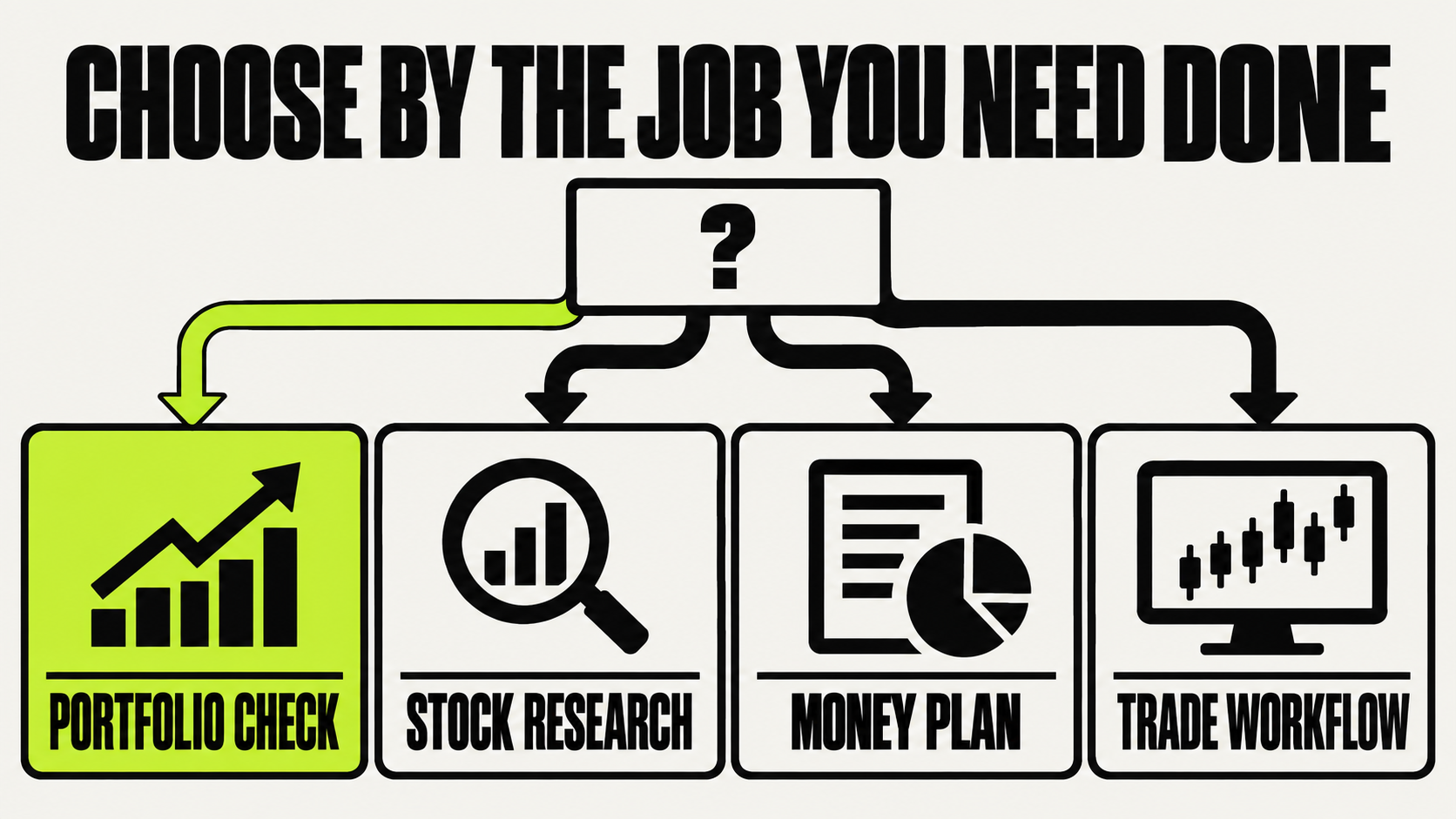
Choose an AI financial advisor app by the job you need done and the cost of a wrong answer. A portfolio review, a company analysis, a household plan, and a trade workflow require different data and controls. The right tool has the narrowest authority that can complete your task.
1. Choose PortfolioPilot for Portfolio Diagnosis
Start with PortfolioPilot if you already own several funds or securities and cannot explain the total exposure. The assistant can help find concentration, duplication, fees, and allocation conflicts across the portfolio. This is a diagnosis job.
Write down your investment goal and time horizon before linking an account. Ask the tool to separate observations from recommendations. Verify every holding and account balance, because a missing account can change the conclusion.
2. Choose Magnifi for Guided Discovery
Choose Magnifi when you have an investment idea in plain language and need help turning it into a shortlist. The conversation interface can reduce the learning curve around screeners and fund comparison. This is a discovery job.
Do not stop at the shortlist. Compare fees, holdings, concentration, liquidity, structure, tax treatment, and the issuer’s documents. Discovery saves time only when it leads to better verification.
3. Choose Origin for Household Planning
Choose Origin when the decision involves your budget, debt, savings, investments, and future goals. A household planning system can identify that the investment question is not the first problem to solve. This is a coordination job.
Test several scenarios with the same facts. Change one input at a time, such as the retirement date or emergency reserve. A good planning tool should explain why the priority changes.
4. Choose Public for Brokerage-Native Research and Automation
Choose Public when you already want to invest through its brokerage and value research beside the asset page. Alpha can shorten research, while Agents can implement rules you explicitly approve. This is a research and execution job.
Keep the two stages separate in your notes. Record the evidence that supports the plan, then record the rule the Agent will follow. Pause automation when market conditions or your financial situation invalidate the original reason.
5. Choose Fiscal.ai for Fundamental Analysis
Choose Fiscal.ai when you read financial statements, follow company operating measures, or analyze earnings calls. Copilot can help you query a large research workspace without hunting through every menu. This is an analyst job.
Ask for a time series and the original source. Compare the assistant’s conclusion with the chart and transcript. The product becomes more useful as your questions become more precise.
6. Choose WarrenAI for Cross-Market Research
Choose WarrenAI when your watchlist spans many markets and you want screening, news, analyst views, and asset comparisons in one conversational interface. This is a broad market-research job.
Set a credit budget and prepare prompts in advance. A structured question should name the asset universe, period, measures, and format. Verify time-sensitive answers before acting.
7. Choose Walnut for an Approval-Based Trade Workflow
Choose Walnut when you want a broker-connected assistant and you already understand the decision rules. This is an execution-support job. Confirm that each action stops for approval and that you can review the order before submission.
Start with a small amount or a simulated workflow. Review the activity record and revocation controls. The product should make it easy to stop, inspect, and correct the process.
How to Use an AI Investment Research Chatbot Safely
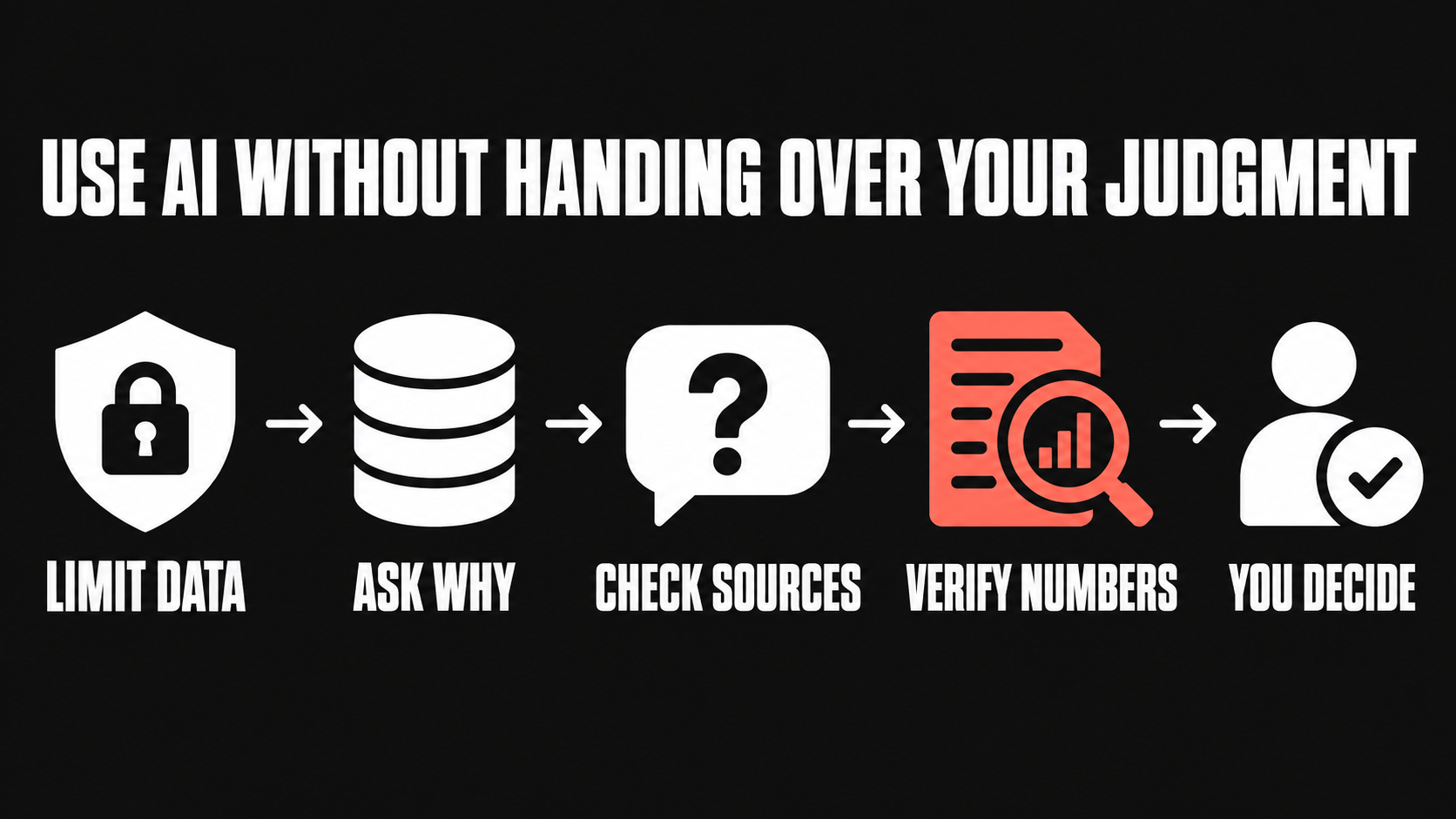
Use an AI investment research chatbot as a research assistant with restricted access, not as an unquestioned authority. Give it the minimum data needed, require sources and calculations, verify important numbers in original documents, and keep the final decision under your control.
1. Identify the Product’s Legal and Operational Role
Begin by naming the service correctly. Is it a registered adviser, a broker-dealer feature, a research publisher, a planning app, or a general chatbot? The answer determines which duties, disclosures, and regulators may apply.
Check registrations through the regulator’s database when the company manages assets or gives individualized recommendations. Read the firm’s relationship summary, advisory brochure, fee schedule, and conflicts. A logo or phrase such as “AI-powered advisor” does not prove registration.
FINRA reminds member firms that existing securities rules still apply when they use generative AI. The technology does not remove supervision, communication, recordkeeping, suitability, or best-interest obligations. The same principle helps users: a new interface does not erase old responsibilities.
2. Limit the Data You Share
Do not paste account passwords, full account numbers, tax identifiers, private keys, recovery codes, or payment details into a chat. Use the platform’s official account-linking method when a connection is necessary. Confirm whether the connection is read-only and how to remove it.
Financial conversations can reveal sensitive facts even without an account number. A complete prompt may include income, debt, medical expenses, family plans, property, and retirement balances. Share only what the specific analysis requires.
Read the privacy policy for chat retention, model training, service providers, deletion, and exports. Take a screenshot or note the setting you selected. Review connected apps every few months and revoke services you no longer use.
3. Ask for Sources Before Conclusions
A strong prompt requests evidence in the same message. Ask the assistant to cite the filing, transcript, fund document, price date, or calculation behind each important claim. Ask it to separate facts, assumptions, and interpretation.
If the tool cannot show the source, treat the answer as a lead. Search the original document yourself. Company investor-relations pages, regulator filings, exchange notices, and fund issuer documents carry more weight than an unattributed summary.
The source also needs to support the sentence. A link to an earnings release does not prove a claim about valuation. A historical return does not prove a forecast. Read enough of the original page to confirm the relationship.
4. Verify Numbers and Dates
Financial errors often hide in small details: a value may use the wrong currency, fiscal period, split adjustment, denominator, or market close. Ask the assistant to state the unit and date beside each number. Recalculate ratios that drive the conclusion.
Check whether the market is open and whether the quote is delayed. Confirm whether “revenue growth” compares quarters, years, or a trailing period. Ask whether a forecast comes from analysts, the company’s guidance, or the tool’s own model.
One verified number can change the entire answer. Build the habit before the amount at risk becomes large.
5. Test for Missing Personal Context
FINRA’s guidance on automated investment tools warns that a tool may fail to consider age, finances, experience, other holdings, taxes, risk tolerance, time horizon, cash needs, and goals. Use that list as a test.
Ask the assistant which personal facts would change its answer. If it cannot name missing context, the system may be treating the prompt as a complete picture. Add one relevant fact at a time and observe whether the reasoning changes in a sensible way.
Do not force a research tool to act like a planner. Move the conclusion into a planning process that includes cash, debt, taxes, and goals before acting.
6. Keep Actions Narrow and Reversible
Read-only analysis creates less risk than trading authority. A prepared order creates less risk than autonomous execution. A capped, single-asset rule creates less risk than a broad instruction across an entire portfolio.
Use the narrowest permission that completes the job. Set spending limits, eligible assets, frequency, stop conditions, and notifications. Confirm that you can pause the workflow immediately.
Review the audit trail after every action during the test period. If the system cannot explain why an action occurred, stop the automation.
7. Recognize Fraud Patterns Around AI
AI language now appears in old investment scams. On September 29, 2026, the SEC announced charges in alleged schemes that used supposed AI trading signals, fake regulatory claims, and nonexistent AI bots to lure retail investors. The cases involved at least $15 million in alleged fraud.
Promises of guaranteed returns, pressure to act, private group chats, fake certificates, unusual transfer methods, and withdrawal fees remain warning signs. The term “AI” does not make a return more predictable. A sophisticated demo does not prove that a real trading system or regulated firm exists.
FINRA also warns about unregistered auto-trading services, exaggerated AI claims, and promises of consistent high returns. Check the firm independently and keep control of your brokerage account.
8. Build a Two-Source Rule
For any claim that changes a trade, tax decision, account transfer, or allocation, require two independent sources. One should be primary when possible. The second source should confirm the fact from a different path.
The rule slows you down in a useful way. It catches stale prices, misunderstood filings, copied errors, and a model that invented a citation. It also gives you time to decide whether the fact matters to your original plan.
9. Maintain a Decision Journal
Write the question, the assistant’s answer, the sources, your verification, the decision, and the condition that would make you reconsider. A short journal separates process quality from market luck. A good decision can lose money, and a bad decision can make money.
Review the journal monthly. Look for questions that produced vague answers, sources you failed to open, and decisions made under urgency. The assistant should improve your process, not hide it.
10. Learn the Terms That Can Change Your Decision
An assistant becomes easier to challenge when you understand its vocabulary. The following terms appear often in portfolio reviews, market research, and automated investing. Use these definitions as a starting point, then ask the product to show how each term applies to the actual data in your account.
1. Asset allocation is the percentage of a portfolio held in categories such as stocks, bonds, cash, and real assets. The allocation often explains more about the portfolio’s behavior than any single security. Ask the assistant to calculate the current allocation from every connected account and compare it with the allocation you intended to hold.
2. Diversification means spreading exposure across investments that do not depend on the same source of return or risk. Owning several funds does not guarantee diversification because the funds may hold the same large companies. Ask for security overlap, sector weights, geography, currency, and factor exposure before accepting a diversification claim.
3. Concentration risk is the possibility that one security, sector, country, theme, or source of income can damage the portfolio more than you expected. A position can become concentrated after a large gain even when the original purchase was small. Ask the assistant to show concentration at both the fund level and the underlying-holding level.
4. Volatility measures how widely returns have moved over a period. It describes movement, not the complete chance of permanent loss. An assistant should state the period, data frequency, and comparison benchmark when it uses volatility to label an investment risky.
5. Drawdown is the decline from a previous portfolio peak to a later low. A 20 percent drawdown means the value fell 20 percent from its high before any recovery. Ask for the largest historical drawdown, its duration, and the assumptions used when the tool estimates a future drawdown.
6. Risk tolerance describes how much uncertainty and loss you feel able to accept. Risk capacity describes how much loss your financial situation can absorb without breaking the plan. A person may tolerate aggressive investments emotionally while having low capacity because the money is needed soon.
7. Time horizon is the period before you expect to use the money. A retirement account for someone decades from retirement has a different horizon from a home deposit needed in two years. The same investment can be reasonable for one horizon and unsuitable for another.
8. Liquidity describes how easily an asset can be sold near its observed price. Cash and heavily traded public securities usually have more liquidity than private assets or thinly traded securities. Ask the assistant to separate market value from the amount you could likely realize under normal and stressed conditions.
9. Expense ratio is the annual percentage of a fund’s assets used to cover operating expenses. The charge reduces returns inside the fund and may not appear as a separate bill. Compare expense ratios between similar funds and ask whether another layer of advisory or platform fees also applies.
10. Tracking error measures how differently a fund or portfolio behaves from its benchmark. A low-cost index fund can still drift because of fees, sampling, cash, trading, or implementation choices. The number only makes sense after the assistant names the benchmark and period.
11. Correlation measures how two return series have moved together. A high historical correlation suggests that two holdings may fall or rise at the same time, but the relationship can change during stress. Ask for the period and whether the calculation used daily, weekly, or monthly data.
12. Factor exposure describes sensitivity to broad return patterns such as market size, value, quality, momentum, or interest rates. Two funds with different names may share the same factor exposure. An assistant should explain the factor model and avoid presenting the result as an unchanging property.
13. Rebalancing means adjusting holdings to restore a chosen allocation. Rebalancing can control concentration and maintain the original risk plan, but it can create taxes and transaction costs. Ask the tool to show the trades, tax assumptions, and post-trade allocation before approving anything.
14. Tax-loss harvesting means selling an investment at a loss to offset taxable gains, then reinvesting in a way that maintains the intended exposure. Rules such as the United States wash-sale rule can affect the result. A generic chatbot should not make this decision without current jurisdiction-specific data and account context.
15. Dollar-cost averaging means investing a fixed amount on a schedule instead of choosing a single entry date. The method can make behavior easier to manage, but it does not guarantee a profit or remove market risk. Ask the assistant to compare the schedule with your available cash and time horizon.
16. Backtest is a simulation of how a rule would have performed on historical data. A backtest can look strong because the designer selected favorable rules, periods, assets, or assumptions after seeing the past. Ask for transaction costs, delisted securities, data availability, benchmark choice, and out-of-sample testing.
17. Benchmark is the reference used to evaluate results. The S&P 500 may be an unsuitable benchmark for a global balanced portfolio or a short-duration bond strategy. An assistant should explain why the benchmark matches the assets and risk of the portfolio.
18. Fiduciary duty generally describes a duty to act in a client’s best interest within a defined advisory relationship. The exact duty depends on the jurisdiction, entity, and service. Do not assume that a chatbot has a fiduciary relationship because its interface uses the word “advisor.”
19. Suitability asks whether a recommendation fits a customer’s profile under the applicable rules. Best interest obligations can require a higher standard and attention to costs or conflicts. The label on the app does not reveal which standard applies, so read the relationship documents.
20. Hallucination is a confident answer that contains invented or unsupported information. In finance, a hallucination can appear as a false filing number, nonexistent product, wrong price, or fabricated quotation. The defense is a workflow that requires original sources, dates, calculations, and independent confirmation.
These definitions give you language for better follow-up questions. The assistant should be able to connect each term to a number, source, assumption, or decision rule. If it cannot make that connection, keep the answer in the education stage and away from execution.
A 30-Day Test Before You Trust an AI Investing Tool
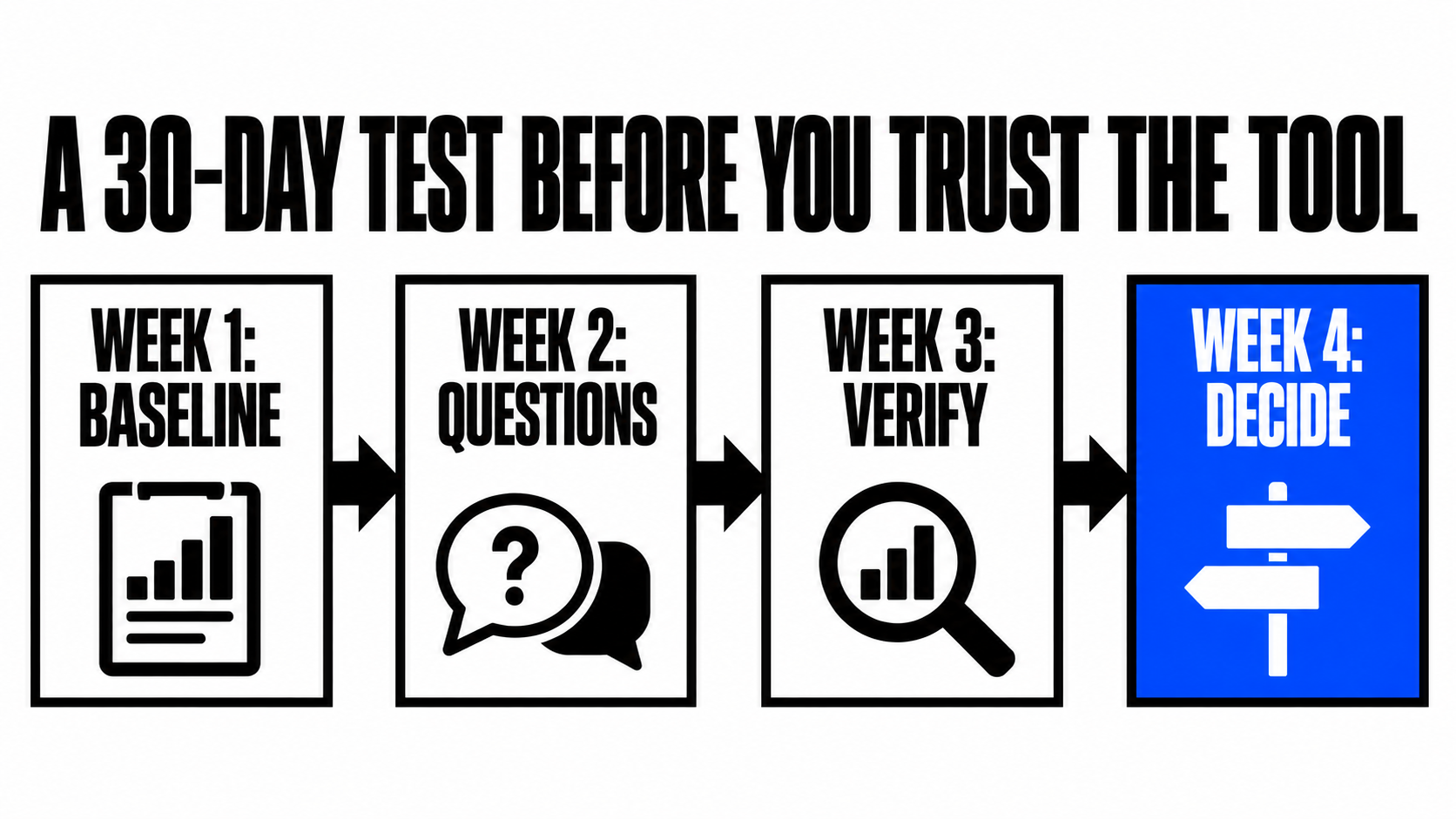
Test an AI investing tool for 30 days before you connect meaningful assets or rely on its output. The goal is to measure accuracy, consistency, evidence quality, privacy controls, and time saved. Do not measure success by whether a suggested asset rose during one month.
Days 1 to 7: Build a Baseline
Choose one job and one product. Use a sample portfolio, read-only connection, or small watchlist. Record the plan, cost, data permissions, company role, and cancellation process.
Prepare ten questions whose answers you already know. Include a current price, a historical figure, a fund fee, a portfolio weight, a recent filing fact, and a concept explanation. Score each answer for correctness, date clarity, source quality, and uncertainty.
Repeat three questions on different days. The words may change, but the underlying facts and calculation should remain stable. Record contradictions instead of explaining them away.
Days 8 to 14: Ask Real Research Questions
Use the tool on a decision you are studying without taking action. Ask one broad question, then narrow it. Require the assistant to show the evidence, assumptions, and missing context.
Compare the time required with your old workflow. Count verification time as part of the tool’s cost. A reply that arrives in ten seconds and takes forty minutes to correct did not save time.
Track whether the assistant asks useful follow-up questions. A portfolio tool should ask about goals and risk. A company researcher should ask about period, peers, and measures. Missing questions reveal the boundary of the product.
Days 15 to 21: Verify Every Important Claim
Open the original filing, transcript, fund document, or account record behind each claim. Recalculate at least three ratios. Check the dates and units. Ask the tool to correct any error and explain the source of the mistake.
Test an adversarial question with a false premise. State that a company reported a number it did not report or that a fund owns an asset it does not own. A trustworthy system should challenge the premise or show that the data does not support it.
Test privacy controls. Export your data if available, delete a conversation, review connected accounts, and locate the revocation setting. A feature you cannot find during a calm test will be harder to find during a problem.
Days 22 to 30: Decide the Tool’s Role
Review the journal and assign the product one role: education, discovery, research, planning, monitoring, or execution support. Do not award several roles because the assistant can discuss them. Award a role only when the product completed that job with verifiable work.
Calculate the monthly value. Add the subscription, verification time, switching cost, and risk created by new permissions. Compare that total with the hours saved and the quality improvement.
Write permanent rules for use. Examples include no trade from one chat answer, two sources for allocation changes, read-only connections by default, and a monthly account-permission review. Cancel the service if the tool does not earn a defined place in your process.
Conclusion
AI financial advisor chatbots for retail investors are useful when their data, purpose, and authority match the job. PortfolioPilot is the best fit for portfolio diagnosis, Magnifi for conversational discovery, Origin for broader financial planning, Public for brokerage-native research and automation, Fiscal.ai for company fundamentals, WarrenAI for global market research, and Walnut for an approval-based broker workflow.
The category will keep changing, but your selection method can remain stable. Identify the job, verify the company’s role, inspect the data, limit permissions, check sources, and measure the assistant during a controlled test. The smoothest reply should never outrank the most verifiable work.
Your next step depends on why you opened this guide. If terms such as language model, training data, and hallucination still feel unfamiliar, How to Learn AI From Scratch in 2026 explains them without assuming a technical background. Readers studying the business behind financial assistants can use 21 Billion Dollar AI Startup Ideas for 2026 to see where finance fits among larger AI product opportunities. Each link answers a different question, so choose the one that matches what you want to do next.
FAQs
1. What Is the Best AI Financial Advisor Chatbot for Retail Investors?
PortfolioPilot is the best overall choice for a retail investor who wants a whole-portfolio review, while Origin is stronger for household planning and Fiscal.ai is stronger for company research. The correct choice depends on the job. Select the product whose data and permissions match that job, then test it for 30 days before relying on it.
2. Can an AI Chatbot Legally Give Financial Advice?
The answer depends on the company, service, country, and relationship with the user. Some products operate through registered investment advisers, while others provide research or education and state that their output is not advice. Verify the firm through the relevant regulator and read the service disclosures before treating a personalized answer as regulated advice.
3. Are AI Financial Advisor Apps Safe?
An AI financial advisor app can be used safely when you limit data, verify sources, keep permissions narrow, and retain control of every decision. The technology can produce inaccurate answers, use stale data, or miss personal context. Safety depends on the product’s controls and the user’s process.
4. Is PortfolioPilot a Registered Investment Adviser?
PortfolioPilot states that it is a technology product of Global Predictions Inc., an SEC-registered investment adviser. Registration does not guarantee returns or eliminate model errors. Review the firm’s current regulatory record, disclosures, fees, and service terms before using personalized recommendations.
5. Is Magnifi Free?
Magnifi currently offers a free tier with basic portfolio and investment features. Its Premium plan was listed at $99 per year during this review and adds deeper scenario analysis, forecasts, and guidance. Check the live pricing page because subscription prices and limits can change.
6. Does Public Alpha Make Trades for You?
Public Alpha is a research assistant and does not provide financial advice or independently make trades for you. Public Agents are a separate feature that can execute a plan a user defines and approves. Review each rule and order because the user remains responsible for the strategy.
7. Is Fiscal.ai Better Than WarrenAI?
Fiscal.ai is better for detailed company fundamentals, key performance indicators, dashboards, and transcript research. WarrenAI is better for broad market coverage, screening, watchlists, news, and cross-asset questions. Both require source checking, and neither understands your full financial life by default.
8. Can ChatGPT Replace a Financial Advisor?
ChatGPT cannot replace a financial professional who understands your full situation and accepts professional responsibility for the advice. It can explain terms, organize questions, compare scenarios, and help you prepare for a conversation. Do not give a general chatbot private account credentials or treat an unsourced answer as a personal recommendation.
9. What Information Should I Avoid Sharing With a Financial Chatbot?
Do not share passwords, full account numbers, tax identifiers, recovery codes, private keys, or payment details in a chat. Limit personal financial facts to the minimum needed for the analysis. Use official account-linking tools and confirm how to revoke access.
10. How Do I Check Whether an AI Investing Platform Is Legitimate?
Search the company and named professionals in the relevant regulator’s official database. Confirm the website domain, legal entity, custody arrangement, fees, disclosures, and withdrawal process. Avoid services that promise guaranteed returns, demand transfers through unusual methods, or pressure you into a private group chat.
Final Thoughts
The appeal of an AI financial assistant is easy to understand. Money questions can feel personal, technical, and expensive, while a chatbot answers without judgment and never makes you wait for an appointment. That convenience can help you ask questions you kept postponing.
Your first goal should be clarity, not confidence. A polished response can create confidence before the evidence deserves it. Use the tool to expose assumptions, organize data, explain terms, and point you toward original sources. Keep your judgment visible in a written process.
Today, choose one of the AI financial advisor chatbots for retail investors in this guide and ask it a question whose answer you can verify. Do not connect a brokerage account yet. Check the date, open the source, repeat the question in a different form, and record the result. That small test will teach you more about the product than an hour of marketing pages.
The strongest investor is not the person with the most advanced chatbot. It is the person who knows which work to delegate, which facts to verify, and which decisions must remain personal.