
Let’s be honest, machine learning is quickly becoming one of the most powerful forces behind modern technology. Every time you see personalized recommendations, smart assistants, or systems that can predict outcomes, there is machine learning working in the background. If you have ever wondered how to become a machine learning engineer in 2026 without a degree, the good news is that this path is more accessible than ever. You do not need a computer science degree or years of technical experience to get started. With the right approach, consistent effort, and access to modern tools, building a career in machine learning is now within reach for almost anyone.
This field is no longer limited to people with advanced degrees or highly technical backgrounds. It is for individuals who enjoy solving real problems, working with data, and building intelligent systems. Whether you are a student exploring new opportunities, someone looking to switch careers, or simply curious about how AI works, this journey is open to you. The growing demand for machine learning engineers means companies are increasingly focused on skills and practical ability rather than formal qualifications.
In this guide, you will follow a clear and practical path that you can actually implement. We will walk through the machine learning engineer roadmap 2026 step by step, starting with what machine learning engineers really do, the skills you need to build, and how you can start learning from scratch. You will also understand how to build projects, create a strong portfolio, and move towards getting hired in this field.
The reality is simple. Technology careers are becoming more accessible every year, and machine learning is leading that change. If you are willing to learn, practice consistently, and stay committed, you can build a career in this space. You do not need permission, and you do not need a traditional degree. You just need to start.
What is Machine Learning?

Let’s start with the basics. Machine learning is simply about teaching computers to learn from data instead of following fixed instructions. Instead of telling a system exactly what to do in every situation, you give it examples, and over time, it starts recognizing patterns and making decisions on its own.
You can think of it as learning through experience. The more data a system processes, the better it becomes at understanding patterns and improving its predictions. This is why machine learning is used in things like recommendation systems, fraud detection, and voice assistants.
Machine learning is a core part of artificial intelligence, and it plays a major role in building systems that can adapt and improve over time. If you are exploring how to become a machine learning engineer in 2026 without a degree, understanding this foundation is where everything begins.
If you are just getting started and want a broader understanding of artificial intelligence, you can also explore How to Learn AI From Scratch in 2026: A Complete Expert Guide to build a strong foundation before diving deeper into machine learning.
Three Main Types of Machine Learning
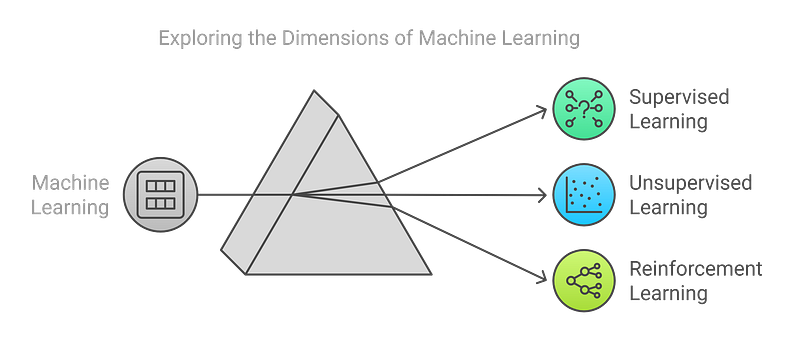
To understand how machine learning actually works, it helps to break it down into three main types. These are the core concepts you will come across as you follow any machine learning engineer roadmap 2026.
- Supervised Learning: This is the most common type of machine learning. Here, the model learns from labeled data. In simple terms, it is given inputs along with the correct answers. For example, if you are training a model to identify images, you might provide data labeled as “dog” or “cat.” Over time, the system learns patterns and can make accurate predictions on new data. This approach is widely used in applications like price prediction, spam detection, and recommendation systems.
- Unsupervised Learning: In this type, the model is not given labeled data. Instead, it works with raw data and tries to find hidden patterns or groupings on its own. You can think of it as organizing information without predefined categories. For example, grouping customers based on behavior or identifying patterns in large datasets. This is useful in areas like clustering, segmentation, and anomaly detection.
- Reinforcement Learning: This approach is based on learning through trial and error. The system takes actions, receives feedback, and improves over time based on rewards or penalties. It is commonly used in areas like robotics, game playing, and self-driving systems. The more the system interacts with the environment, the better it becomes at making decisions.
Where to Start Learning?
If you are serious about understanding how to become a machine learning engineer in 2026 without a degree, starting with the right resources can make a big difference.
- Book: Machine Learning Yearning by Andrew Ng-A practical and beginner-friendly guide that helps you understand how machine learning projects are built in real life.
- YouTube: Andrew Ng’s Stanford Machine Learning Lectures-Clear and structured lectures that explain concepts in a simple and easy-to-follow way.
- Course: Machine Learning by Andrew Ng on Coursera-One of the most popular beginner courses that gives you a solid foundation in machine learning concepts and applications.
Machine learning can seem complex at first, but once you start understanding the basics and follow a structured path, it becomes much more approachable. If you stay consistent and focus on learning step by step, you can build strong machine learning engineer skills and move closer to a career in this field.
What is Machine Learning Engineering?
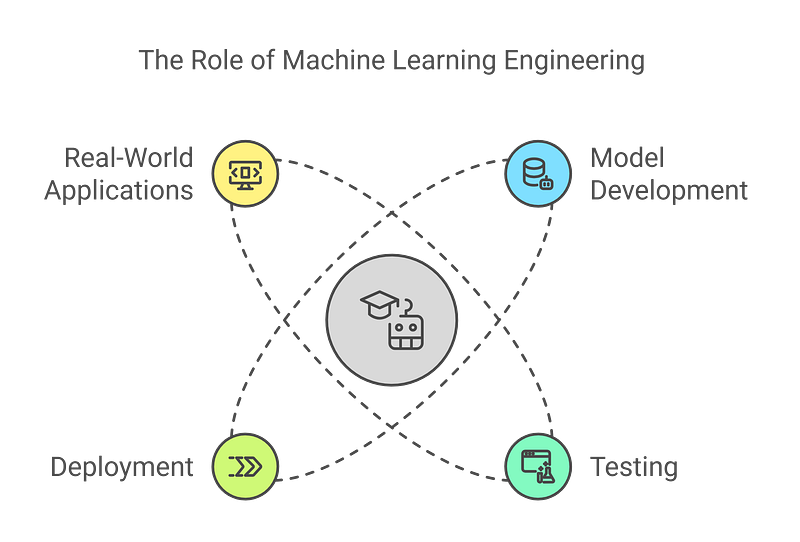
Machine learning engineering is where ideas turn into real, working systems. It sits at the intersection of artificial intelligence and practical applications. Instead of only building models, a machine learning engineer focuses on turning those models into usable products such as applications, websites, or intelligent systems that people interact with every day.
This role goes beyond just creating algorithms. It involves testing models, improving their performance, deploying them into real environments, and making sure they continue to work reliably at scale. In simple terms, it is about taking what works in theory and making it work consistently in the real world.
If you are exploring how to become a machine learning engineer and get hired in 2026, understanding this role is important. Machine learning engineering acts as the bridge between research and real-world solutions, where the goal is not just accuracy, but also performance, reliability, and impact.
Who is a Machine Learning Engineer?
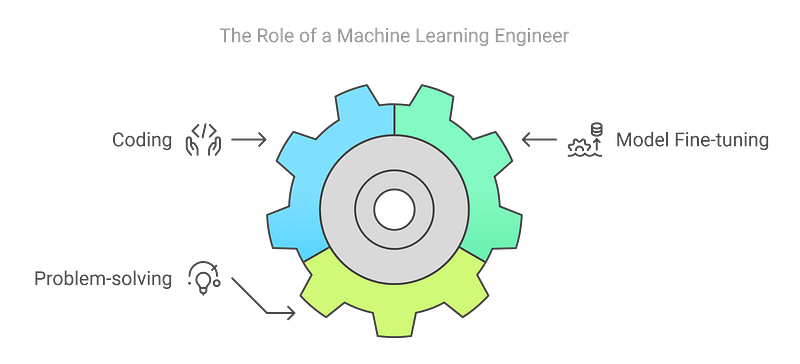
A machine learning engineer is the person responsible for making AI systems work in real-world scenarios. They build, train, and improve models, write the code that powers these systems, and ensure everything runs efficiently and reliably. It is a role that combines programming, data understanding, and problem-solving to create systems that can learn and make decisions.
This is not just about theory or experimentation. A machine learning engineer focuses on building solutions that are actually used in products and services. From recommendation systems to prediction models, their work directly impacts how technology behaves and improves over time.
If you are thinking about how to become a machine learning engineer in 2026 without a degree, this role is well suited for people who enjoy building practical solutions, working with data, and solving real-world problems through technology.
What Does a Machine Learning Engineer Do?
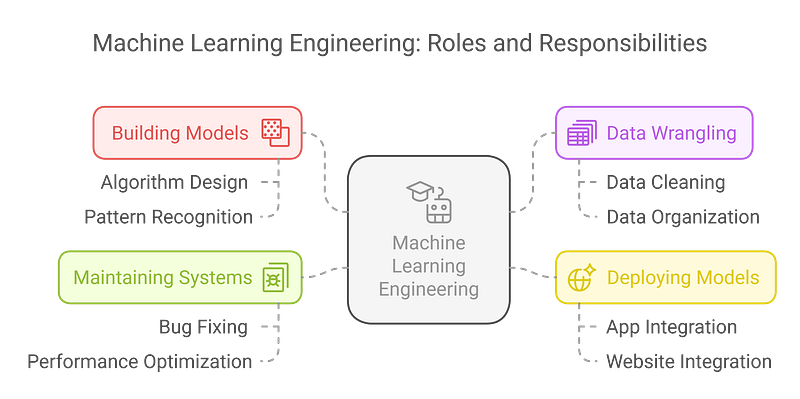
The role of a machine learning engineer is a blend of data science, software development, and practical problem-solving. It is not limited to just building models. It involves working with data, improving systems, and ensuring that everything functions smoothly in real-world environments.
A large part of the work revolves around a few core responsibilities:
- Building Models: Creating algorithms that help machines recognize patterns, such as identifying objects in images or making predictions based on data.
- Data Wrangling: Cleaning and organizing raw data so it can be used effectively for training models.
- Deploying Models: Integrating machine learning models into applications, websites, or platforms where users can actually interact with them.
- Maintaining Systems: Fixing bugs, improving performance, and ensuring systems continue to run reliably over time.
This is a hands-on role where you are constantly building, testing, and improving systems. If you are focusing on developing machine learning engineer skills, understanding these responsibilities is essential because they form the foundation of the job.
For anyone thinking about how to become a machine learning engineer in 2026 without a degree, this career path is about more than just theory. It is about applying what you learn, solving real-world problems, and building systems that actually work.
Why Become a Machine Learning Engineer?
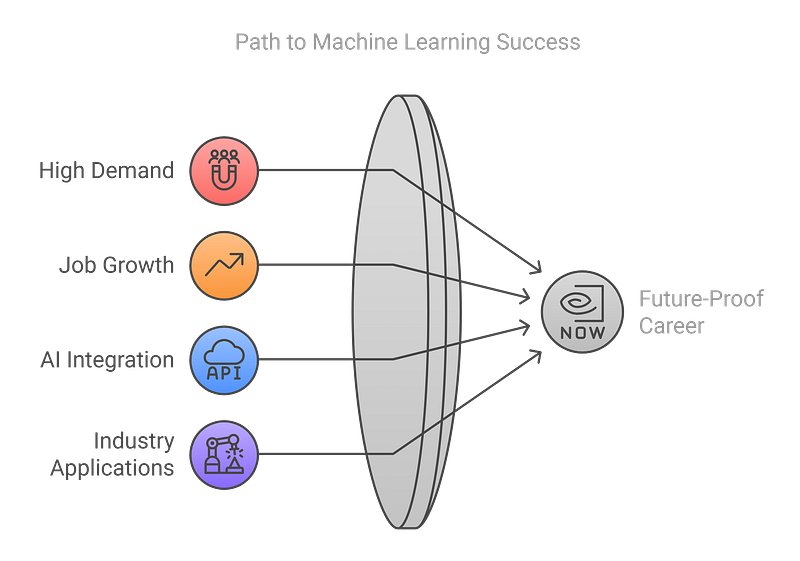
Let’s be clear, artificial intelligence is becoming a core part of almost every industry, and machine learning engineers are the ones building these systems. From global companies like Google and Tesla to fast-growing startups, there is a strong demand for professionals who can create intelligent, data-driven solutions.
The job market reflects this demand. According to the U.S. Bureau of Labor Statistics, employment in professional, scientific, and technical services is projected to grow by over 10.5% between 2023 and 2033, which is significantly higher than average. Within this space, data science and machine learning roles are expected to see even faster growth, with data-related roles projected to increase by around 42%.
What this means is simple. Machine learning is not a temporary trend. It is becoming a fundamental part of industries like healthcare, finance, transportation, and entertainment. From recommendation systems to self-driving technology, these applications are already shaping how the world works.
If you are exploring how to become a machine learning engineer in 2026 without a degree, this is one of the most promising career paths you can choose. It offers strong growth, high demand, and the opportunity to work on systems that have a real impact. For anyone looking for a future-focused career with long-term potential, machine learning engineering stands out as a powerful option.
What’s the Difference Between a Machine Learning Engineer and an ML Engineer?
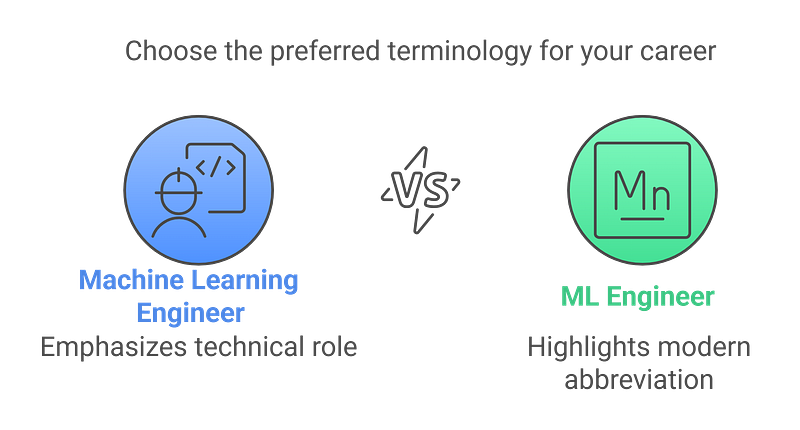
There is no real difference between the two. “Machine Learning Engineer” and “ML Engineer” refer to the exact same role. The shorter version is simply used for convenience, especially in conversations, job descriptions, and technical discussions.
You may also come across the term “MLE,” which is just another commonly used abbreviation. All of these terms point to the same career path, so there is no need to get confused by the wording.
If you are exploring how to become a machine learning engineer in 2026 without a degree, it is more important to focus on building the right skills and understanding the role rather than worrying about the terminology.
Do You Need a Degree to Become a Machine Learning Engineer?
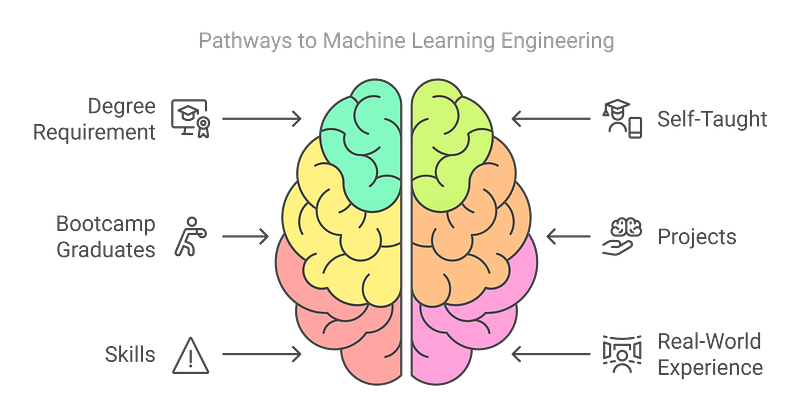
Let’s address one of the most common questions directly. You do not need a traditional degree to become a machine learning engineer. While a background in computer science or mathematics can be helpful, it is no longer a strict requirement to enter this field.
Today, many professionals are self-taught or have learned through online courses and bootcamps. What matters most is your ability to build real projects, understand concepts, and solve problems using machine learning. Companies are increasingly focused on practical skills and what you can demonstrate, rather than where you studied.
If you are exploring how to become a machine learning engineer in 2026 without a degree, this is an important shift to understand. The path is open to anyone who is willing to learn consistently, practice regularly, and apply their knowledge through real-world work. In the next sections, we will break down the exact steps you can follow to move forward.
Life as a Machine Learning Engineer

Life as a machine learning engineer is a balance between focused technical work and real-world problem-solving. On some days, you might be improving a model that predicts outcomes or processes data more efficiently. On other days, you are analyzing results, identifying issues, and refining your approach to make the system perform better.
This role involves a mix of deep work and collaboration. You will spend time coding, experimenting with models, and debugging when things do not work as expected. At the same time, you may work closely with data scientists, developers, or product teams to bring ideas into production and improve existing systems.
There will be challenges, especially when models do not perform as planned or when systems need optimization. But there are also moments of real satisfaction when your solution works and delivers meaningful results. That balance is what makes the role both demanding and rewarding.
If you are thinking about how to become a machine learning engineer and get hired in 2026, it is important to understand that this is a hands-on career. It requires patience, consistency, and a willingness to keep learning, but it also offers the opportunity to build impactful technology that is used in the real world.
What’s the Average Salary for a Machine Learning Engineer?
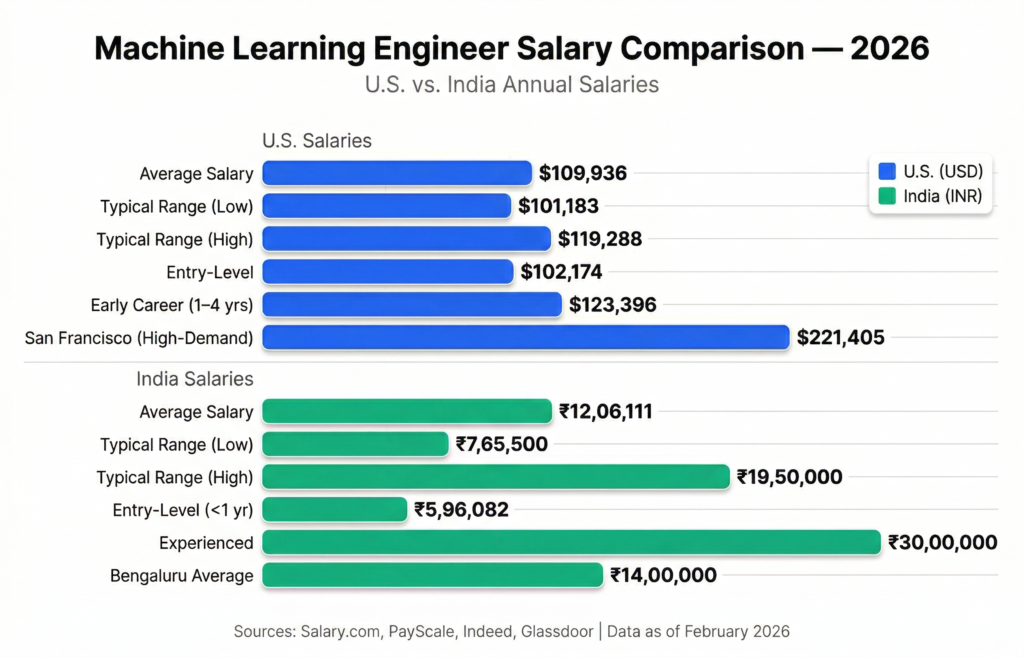
What’s the Average Salary for a Machine Learning Engineer? Let’s talk numbers.
- In the U.S., Machine Learning Engineers are earning impressive salaries. As of February 2026, the average annual salary is approximately $109,936, with a typical range between $101,183 and $119,288 (source: Salary.com).
- Entry-level positions start around $102,174, while early career professionals with 1 to 4 years of experience earn an average of $123,396 (source: PayScale). In high-demand areas like San Francisco, salaries can reach $221,405 per year (source: Indeed).
- In India, Machine Learning Engineers also enjoy competitive pay. The average annual salary is about ₹12,06,111, with a typical range between ₹7,65,500 and ₹19,50,000 per year (source: Glassdoor). Entry-level positions with less than 1 year of experience start around ₹5,96,082, while experienced professionals can earn up to ₹30,00,000 per year (source: PayScale). Major tech hubs like Bengaluru offer higher averages, approximately ₹14,00,000 per year (source: Glassdoor).
For the most current figures, websites like Salary.com, Indeed.com, PayScale.com, and Glassdoor.com offer real-time data. If you are exploring how to become a machine learning engineer in 2026 without a degree, this level of earning potential makes it a highly attractive career path.
Types of Machine Learning Engineers
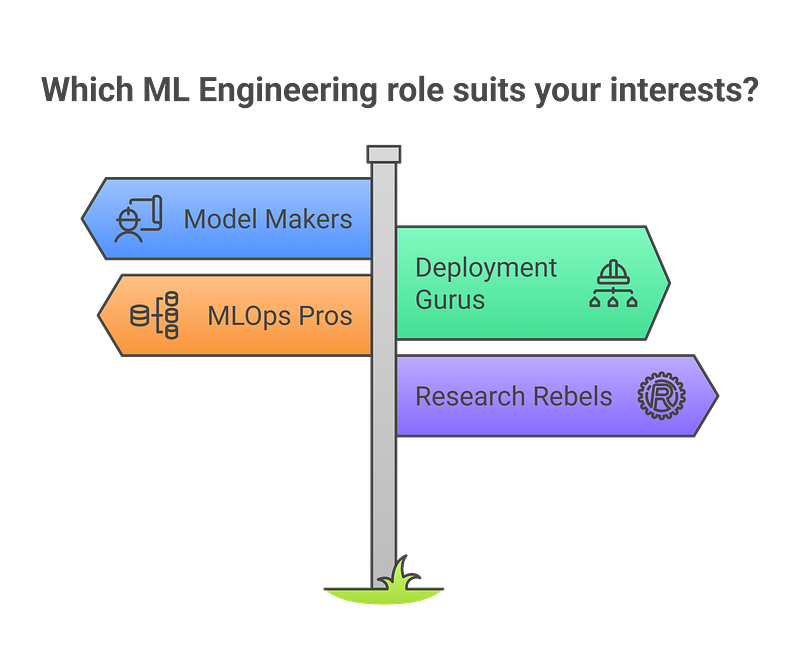
Not all machine learning engineers work on the same kind of problems. Depending on your interests and strengths, you might find yourself focusing on a specific area within this field.
- Model Builders — These are the core creators. They design, train, and fine-tune machine learning models from scratch, focusing on improving accuracy and performance.
- Deployment Engineers — They take models and turn them into real products. Their job is to ensure models work smoothly inside applications, websites, or systems used by people.
- MLOps Engineers — These professionals focus on maintaining and scaling systems. They handle model updates, monitor performance, and make sure everything runs reliably over time.
- Research Engineers — They explore new ideas and experiment with advanced techniques. Their work helps push the boundaries of what machine learning systems can do.
Each of these roles contributes to building and improving real-world AI systems. If you are exploring the machine learning engineer roadmap 2026, understanding these paths can help you decide which direction fits your skills and interests best.
So the question is simple. Which role aligns with what you enjoy doing?
Top Skills to Learn for Machine Learning Engineering
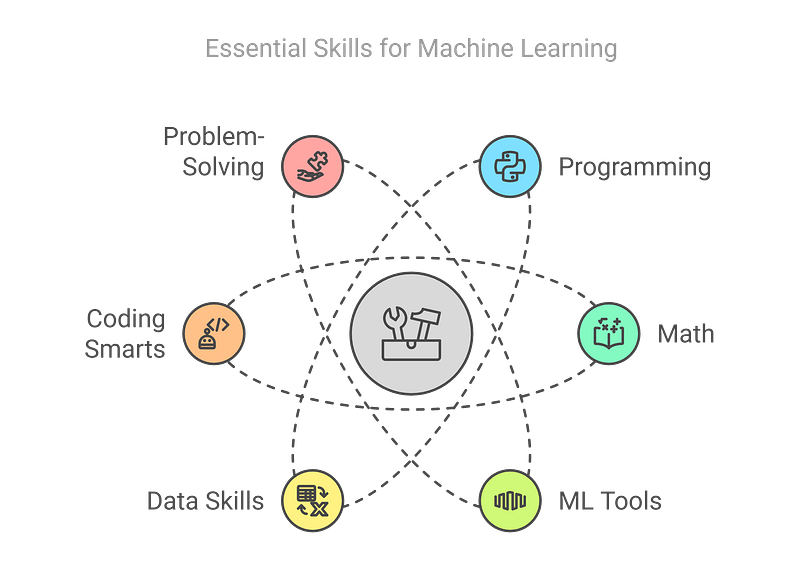
If you are serious about getting started, the first step is building the right skill set. The good news is that you do not need to master everything at once. A focused, step-by-step approach works best.
Here are the core machine learning engineer skills you should focus on:
- Programming — Python is the most important language to learn. It is beginner-friendly and widely used across machine learning projects.
- Mathematics — You only need the basics to start. Concepts like linear algebra, basic calculus, and probability help you understand how models work.
- Machine Learning Tools — Frameworks like TensorFlow and PyTorch are essential for building and training models.
- Data Handling — Libraries like Pandas and NumPy help you clean, organize, and work with datasets effectively.
- Coding Practices — Writing clean, efficient, and scalable code is important, especially when working on real-world systems.
- Problem-Solving — Machine learning is all about solving problems, so the ability to think logically and experiment is key.
If you are exploring how to become a machine learning engineer in 2026 without a degree, focus on building these skills one step at a time. Consistency matters more than speed, and small progress every day adds up quickly.
If you want to go beyond the core skills, you can also explore 7 AI Skills That Can Make You Rich in 2026 to understand which areas offer the most growth and high-income opportunities.
Step-by-Step Process to Become a Machine Learning Engineer from Scratch
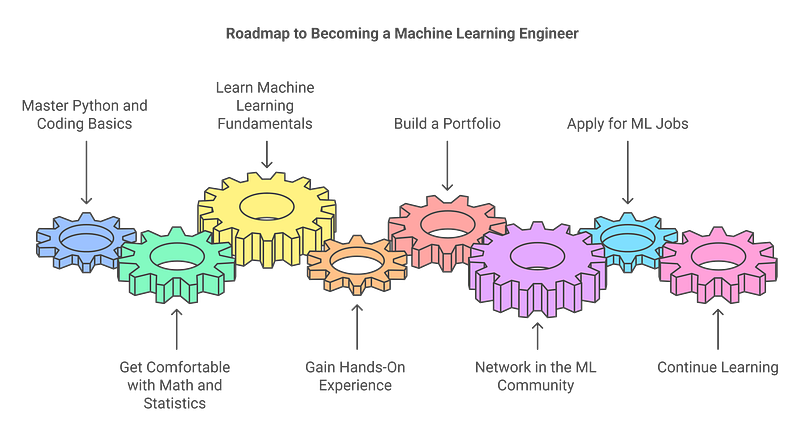
Getting started in machine learning can feel overwhelming at first, but it becomes much more manageable when you break it down into clear steps. You do not need to learn everything at once. The key is to focus on building knowledge gradually, working on projects, and applying what you learn along the way.
If you are exploring how to become a machine learning engineer in 2026 without a degree, the right approach is to follow a structured path. This machine learning engineer roadmap 2026 is designed to help you understand what to learn, when to learn it, and how to gain practical experience without feeling lost.
In the next sections, you will go step by step through the skills, tools, and real-world projects needed to build a strong foundation and move toward getting hired in this field.
Step 1: Master Python and the Basics of Coding
Before you move into machine learning, you need a strong foundation in programming. Python is the most important language in this field because it is simple to learn, flexible, and widely used across the industry. Most machine learning tools and frameworks are built around Python, which makes it the best place to start.
If you are completely new, focus on learning the fundamentals first. Spend the initial few months building comfort with core concepts like how code works, how data is handled, and how to structure simple programs.
- Variables and Data Types — Learn how data is stored and used in programs.
- Loops and Conditionals — Understand how to write logic that allows programs to make decisions.
- Functions and Object-Oriented Programming — Organize your code in a clean and reusable way.
- Data Structures — Work with lists, dictionaries, sets, and tuples, which are essential for handling real-world data.
You do not need to go deep into advanced topics at this stage. The goal is to become comfortable writing code, solving small problems, and understanding how programs behave.
If you are following how to become a machine learning engineer in 2026 without a degree, this step is your foundation. Strong programming skills will make everything else easier as you move forward in the machine learning engineer roadmap 2026.
Where to Learn?
- Book: Python Crash Course by Eric Matthes — A hands-on guide with exercises.
- Course: Python for Everybody (Coursera) — Beginner-friendly and free to audit.
- YouTube: Corey Schafer’s Python Tutorials — Short, clear explanations with examples.
Once you are comfortable writing Python code and solving basic problems, you are ready to move on to the next step.
Step 2: Get Comfortable with Math and Statistics
Machine learning is built on data, and mathematics is what helps models understand patterns within that data. The important thing to remember is that you do not need to be extremely strong in math to get started. Instead of focusing on complex formulas, your goal should be to understand the intuition behind the concepts.
If you are following how to become a machine learning engineer in 2026 without a degree, this step is about building just enough mathematical understanding to make sense of how models work.
What Math Do You Actually Need?
- Linear Algebra — This is the foundation of how data is represented in machine learning. Concepts like vectors, matrices, and basic operations are used in many models, especially in deep learning.
- Probability and Statistics — Machine learning relies on probability to make predictions and measure uncertainty. Understanding concepts like distributions, variance, and basic probability will help you a lot.
- Basic Calculus — Mainly useful for understanding how models learn and improve. Concepts like gradients are used in optimization techniques such as gradient descent. You do not need to go very deep, just understand the idea behind how models adjust themselves.
If math has always felt difficult, the right resources can make a big difference. Visual explanations and step-by-step lessons can help you build confidence without feeling overwhelmed.
Where to Learn?
- YouTube: 3Blue1Brown — Known for clear and visual explanations of complex concepts.
- Book: Practical Statistics for Data Scientists — Focuses on useful statistical concepts without unnecessary theory.
- Course: Khan Academy — Math for Machine Learning — Step-by-step, free lessons.
Once you are comfortable with these basics, you can move forward and start learning machine learning concepts with much more clarity.
Step 3: Learn the Fundamentals of Machine Learning
Now that you have a basic understanding of Python and mathematics, it is time to learn how machines actually learn. Machine learning is about identifying patterns in data and using those patterns to make predictions. This is what powers applications like spam filters, recommendation systems, and predictive analytics.
If you are following how to become a machine learning engineer in 2026 without a degree, this is the stage where everything starts to come together. You begin to understand how models work and how they make decisions based on data.
Types of Machine Learning
- Supervised Learning — The model learns from labeled data. For example, training a model with images labeled as “cat” or “dog” helps it identify new images accurately.
- Unsupervised Learning — The model works with unlabeled data and finds patterns on its own. This is commonly used for grouping data or detecting unusual patterns.
- Reinforcement Learning — The model learns through trial and error, improving based on rewards and penalties. This approach is used in areas like game AI and autonomous systems.
Must-Know Machine Learning Algorithms
- Linear Regression — Used to predict continuous values, such as estimating prices or trends.
- Decision Trees — A simple, rule-based approach that breaks decisions into smaller steps.
- Random Forests — A collection of decision trees that improves accuracy and reduces errors.
- Neural Networks — The foundation of deep learning, inspired by how the human brain processes information.
Learning these concepts is essential for building strong machine learning engineer skills, as they form the core of most real-world applications.
Where to Learn?
- Course: Machine Learning by Andrew Ng — The best introduction to machine learning.
- Book: Hands-On Machine Learning with Scikit-Learn, Keras, and TensorFlow — Practical, code-heavy learning.
- YouTube: Sentdex’s ML Series — Builds machine learning projects from scratch.
At this stage, you will start understanding how models work and how they are applied. The next step is to take this knowledge and apply it by building real-world projects.
Step 4: Get Hands-On with ML Tools and Frameworks
At this stage, learning moves beyond theory. Machine learning becomes much clearer when you start building real projects and working with actual tools. Reading concepts is useful, but applying them is what builds real understanding and confidence.
If you are following how to become a machine learning engineer in 2026 without a degree, this is where you start turning knowledge into practical skills. Working with tools and frameworks is a key part of the machine learning engineer roadmap 2026.
Essential ML Libraries to Learn
- Scikit-Learn — One of the best libraries for classical machine learning algorithms like regression, classification, and clustering.
- TensorFlow and PyTorch — Widely used for deep learning and building neural networks. These frameworks are essential for more advanced applications.
- Pandas and NumPy — Core libraries for data processing, analysis, and handling datasets efficiently.
Beginner Project Ideas
- Spam Email Classifier — Build a simple model using techniques like Naïve Bayes to detect spam emails.
- Movie Recommendation System — Create a system that suggests movies based on user preferences.
- Handwritten Digit Recognition — Train a neural network on the MNIST dataset to recognize digits.
- Sentiment Analysis on Tweets — Use natural language processing to classify text as positive or negative.
These projects help you understand how models are built, trained, and improved in real scenarios.
Where to Learn?
- Course: Deep Learning Specialization — A deeper dive into neural networks and advanced machine learning concepts.
- YouTube: Tech With Tim’s TensorFlow Guides — Beginner-friendly tutorials that focus on practical implementation.
By this point, you will have real projects to show and a much stronger understanding of how machine learning works in practice. The next step is learning how to present and showcase your work effectively.
Step 5: Build a Portfolio That Gets You Noticed
At this stage, your focus should shift from learning to showcasing what you can actually build. A strong portfolio is one of the most important assets you can have. It proves your skills in a way that a resume or degree cannot.
If you are following how to become a machine learning engineer in 2026 without a degree, this is where you stand out. Employers are not just looking for knowledge, they want to see real projects, clear thinking, and the ability to solve problems using machine learning.
How to Showcase Your Work
- GitHub — Upload your projects with clean code and detailed explanations. Show what problem you solved, how you approached it, and what results you achieved.
- Kaggle — Participate in competitions, explore datasets, and share your notebooks. This also helps you learn from other practitioners.
- Portfolio Website — Create a personal website where you highlight your best projects. Keep it simple, structured, and focused on your work. Tools like Framer can help you build a professional portfolio quickly.
Where to Find Datasets
- Kaggle — One of the best platforms for free datasets and real-world machine learning challenges.
- Google Colab — A cloud-based environment where you can run Python code and build projects without setting up anything locally.
Building a strong portfolio is a critical step in the machine learning engineer roadmap 2026. It directly increases your chances of getting noticed and moving toward job opportunities, even without a traditional degree.
Step 6: Network Like Your Career Depends on It (Because It Does)
A strong portfolio and solid skills are important, but networking often plays a key role in getting opportunities. In many cases, connections can help you discover roles, get referrals, and learn directly from people already working in the field.
If you are working on how to become a machine learning engineer and get hired in 2026, building relationships is just as important as building projects. The machine learning community is active and supportive, and engaging with it can significantly speed up your progress.
Where to Network
- LinkedIn — Follow machine learning engineers, engage with their posts, and share your own projects or learning journey. This increases your visibility to recruiters and professionals.
- Discord & Slack Communities — Join machine learning groups where you can ask questions, participate in discussions, and collaborate with others.
- Meetup.com — Attend virtual or in-person meetups to connect with people who share similar interests and goals.
Why Networking Matters
Many opportunities in machine learning are filled through referrals and connections rather than public job postings. By actively participating in the community, you learn faster, stay updated, and increase your chances of getting noticed.
Networking is not just about finding jobs. It is about building relationships, learning from others, and positioning yourself within the industry as you continue to grow.
Step 7: Apply for Your First ML Job
At this point, you have built the foundation, completed projects, and started connecting with the community. Now comes the most important step, getting your first machine learning job.
If you are following how to become a machine learning engineer in 2026 without a degree, this is where your preparation starts turning into real opportunities. The goal is to apply strategically and present your work in the best possible way.
Where to Find ML Jobs
- LinkedIn Jobs — One of the most effective platforms for finding machine learning roles. Use filters to target entry-level or junior positions.
- Indeed & Glassdoor — Search for roles like “Junior ML Engineer” or “Data Engineer” to get started.
- Wellfound — Great for startup roles where you can gain hands-on experience quickly.
- We Work Remotely — Ideal if you are looking for remote opportunities.
- Remotive — Another strong platform for remote-friendly machine learning roles.
What to Include in Your Resume
- Projects with GitHub links — Show your work clearly. Employers want to see what you have built, not just what you know.
- Key ML skills — Highlight tools like TensorFlow, Scikit-Learn, and basic MLOps tools such as Docker or Kubernetes.
- Certifications — You can get certifications like Google ML Engineer, TensorFlow Developer, or AWS ML Specialty to strengthen your profile. They help demonstrate your knowledge and can add credibility when applying for roles, especially if you are building your career without a traditional degree.
How to Stand Out
- Focus your resume on your projects rather than just listing courses or theory.
- Write a clear and concise cover letter explaining your interest in machine learning and how your projects demonstrate your skills.
- If you do not have work experience, start with freelance projects or contribute to open-source repositories on GitHub to gain practical exposure.
Pro Tip: Speed Up Your Job Search
Applying manually can take a lot of time. Tools like JobHire.AI can help automate applications based on your skills, allowing you to focus more on preparation and interviews.
The key is to apply smart, not just apply more. Focus on roles that match your current skill level, use your network for referrals, and continue improving your portfolio as you move forward.
Step 8: Keep Learning and Stay Ahead
Machine learning is constantly evolving. New tools, techniques, and approaches are introduced every year, which means staying updated is an important part of building a long-term career in this field.
If you are serious about how to become a machine learning engineer in 2026 without a degree, continuous learning is what will keep your skills relevant and help you grow over time.
How to Stay Updated
- Follow ML Researchers on Twitter (X) — Many professionals share insights, research updates, and practical knowledge regularly.
- Read Blogs and Research Papers — Platforms like arXiv, Towards Data Science, and the OpenAI Blog publish the latest developments in machine learning.
- Explore New Tools — Try out tools like Hugging Face for natural language processing, Streamlit for building simple ML applications, and MLflow for managing machine learning workflows.
Recommended Resources
- Book: Designing Machine Learning Systems by Chip Huyen — A must-read for understanding real-world ML applications.
- YouTube: freeCodeCamp’s ML Content — Always up-to-date and beginner-friendly tutorials.
Why Continuous Learning Matters
Machine learning is not a one-time skill. It is an ongoing process. By staying updated with new tools, ideas, and trends, you improve your ability to build better systems and stay competitive in the job market.
This mindset is a key part of the machine learning engineer roadmap 2026, especially for those building their careers through self-learning.
Best Courses for Machine Learning Engineers
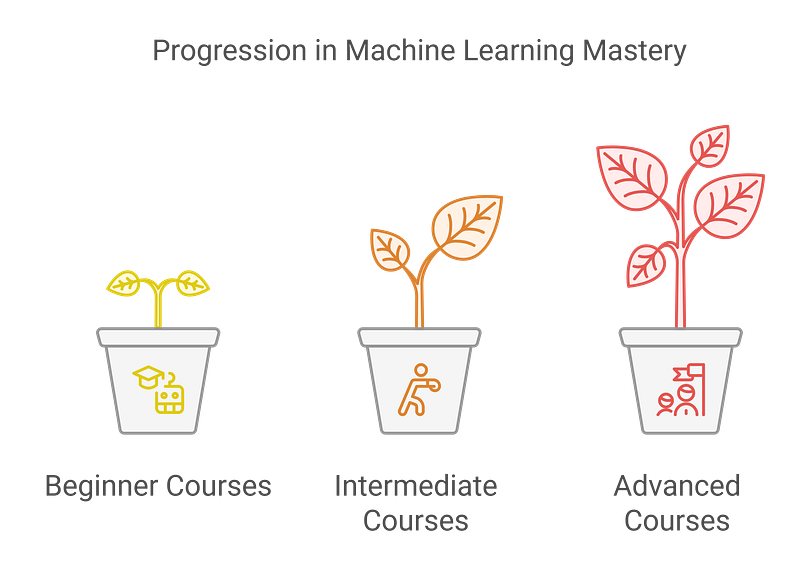
Getting started with machine learning can feel confusing at first, especially when there are so many courses available. The key is to begin with the right ones that build your foundation step by step, without overwhelming you.
If you are exploring how to become a machine learning engineer in 2026 without a degree, choosing the right learning resources can make a big difference. Think of it as following a structured path, where each course helps you build skills progressively.
Here are some of the best beginner-friendly courses to get you started.
Start Here: Beginner-Friendly Courses
If you are new to machine learning, these courses will help you understand the fundamentals while also giving you practical exposure.
- Machine Learning by Andrew Ng (Coursera) — One of the most popular starting points for beginners. It explains core concepts clearly and builds a strong foundation. You can complete it at your own pace over a couple of months.
- Machine Learning Crash Course (Google) — A free and fast-paced course that focuses on real-world applications. It is ideal if you want a quick but effective introduction.
- Introduction to Machine Learning (Udacity) — Covers essential topics like supervised and unsupervised learning with hands-on projects to reinforce your understanding.
- CS50’s Introduction to Artificial Intelligence with Python (Harvard – edX) — A structured course that explains machine learning and AI concepts using Python, making it easier to connect theory with practice.
Starting with these courses will give you a clear understanding of how machine learning works and prepare you for more advanced topics as you continue along the machine learning engineer roadmap 2026.
Next Level: Intermediate Courses
Once you are comfortable with the basics, the next step is to deepen your understanding and start working on more advanced concepts. This is where you move beyond simple models and begin exploring real-world applications in more detail.
If you are following the machine learning engineer roadmap 2026, these courses will help you strengthen your knowledge and build more practical experience.
- Deep Learning Specialization by Andrew Ng (Coursera) — Focuses on neural networks and deep learning. A strong next step if you want to explore advanced machine learning concepts.
- Practical Deep Learning for Coders (fast.ai) — Emphasizes real-world applications and helps you start building models quickly without getting stuck in theory.
- MIT Introduction to Deep Learning — A short but intensive course that takes a more academic approach to deep learning concepts.
- Applied Data Science with Python (Coursera) — Combines machine learning with practical data science applications using Python.
These courses will help you go beyond the fundamentals and start building more complex systems, which is an important step if you are aiming to become a machine learning engineer and get hired in 2026.
Go Pro: Advanced & Specialized Courses
If your goal is to specialize further or improve your chances of getting hired, these courses can help you build in-demand skills and stand out in the job market. They focus on practical tools, cloud platforms, and advanced areas of machine learning.
- AWS Machine Learning Foundations (Udacity) — Helps you understand how machine learning integrates with cloud computing, which is a highly valuable skill in the industry.
- TensorFlow Developer Certificate Course (Coursera) — Focuses on building and deploying machine learning models using TensorFlow, with a strong practical approach.
- Reinforcement Learning Specialization (Coursera) — Covers how systems learn through trial and error, ideal for those interested in advanced AI concepts and research.
- Microsoft Azure AI Fundamentals (Microsoft Learn) — Teaches the basics of AI and machine learning within the Azure ecosystem, useful for cloud-based roles.
If you are working on how to become a machine learning engineer in 2026 without a degree, adding one or two of these specialized courses can strengthen your profile and help you move closer to real job opportunities.
What’s Next? Pick a course that matches your level and start learning, but focus on building projects alongside it. If you are following how to become a machine learning engineer in 2026 without a degree, the key is to apply what you learn consistently, so don’t just watch, code along and build real things.
Career Path of a Machine Learning Engineer

If you are planning your journey, it helps to understand how growth in this field typically looks. The path is not fixed, but there is a clear progression as your skills and experience improve.
1. Junior ML Engineer — Building the foundation
At this stage, you focus on the basics. This includes cleaning data, working with simple models, and understanding how systems behave. You are learning by doing and building confidence with real tasks.
2. Mid-Level ML Engineer — Taking ownership
Here, you start handling complete projects. You build, test, and deploy models that are used in real applications. This is where your work begins to have a direct impact.
3. Senior ML Engineer — Solving complex problems
As a senior engineer, you work on more advanced challenges. This includes optimizing large systems, improving performance, and guiding junior team members.
4. Lead ML Engineer — Leading strategy
At this level, you focus on decision-making and direction. You lead teams, design systems, and contribute to long-term goals for machine learning projects.
What’s next? From here, you can move into research, step into management roles, or even build your own AI-driven company. If you are following how to become a machine learning engineer in 2026 without a degree, this path is flexible, and the direction you take depends on your interests and goals.
If you are considering alternative paths within the same domain, you can also explore How to Become a Data Scientist in 2026 (Without a Degree) to understand how it compares and which direction suits your goals better.
Future Scope of Machine Learning Engineers
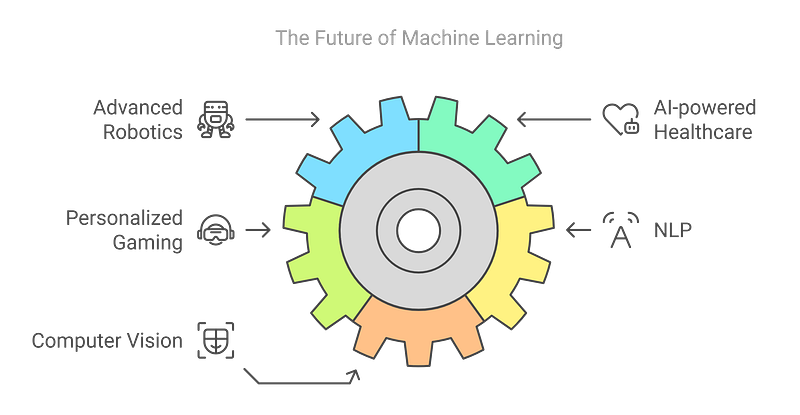
Machine learning is quickly becoming a fundamental part of modern technology. Its applications are growing across industries like healthcare, finance, transportation, and digital platforms, where systems are becoming more intelligent and data-driven. As adoption continues to increase, the demand for skilled machine learning engineers is expected to grow consistently.
According to PwC, artificial intelligence could contribute up to $15.7 trillion to the global economy by 2030, showing the massive impact this field is expected to have on businesses and innovation worldwide.
If you are exploring how to become a machine learning engineer in 2026 without a degree, this growth creates strong long-term opportunities. Specializing in areas like natural language processing or computer vision can help you work on more advanced systems and increase your career potential.
The overall direction is clear. Machine learning is becoming a core part of how industries operate, making it a reliable and future-focused career path.
Conclusion
That brings us to the end of this guide on how to become a machine learning engineer in 2026 without a degree. It is not something that happens overnight, but with consistent effort, the right resources, and a willingness to learn through practice, it is absolutely achievable.
The most important step is to start. Begin with the basics, build projects, and keep improving as you go. Focus on applying what you learn instead of waiting until you feel fully ready.
Machine learning is a growing field with real opportunities. If you stay consistent and keep building, you can create your own path and establish yourself in this space.
FAQs
- How do I become a Machine Learning Engineer in 2026? Start by learning Python and the basics of programming, then move into machine learning concepts and tools. Build real-world projects, practice consistently, and follow a structured path. Courses like Machine Learning by Andrew Ng are widely recommended for beginners and can help you build a solid foundation.
- Can I become a Machine Learning Engineer without a degree? Yes, it is possible. Many professionals enter this field through self-learning and practical experience. If you are focusing on how to become a machine learning engineer in 2026 without a degree, building projects, showcasing your work, and developing strong skills are more important than formal education.
- What is the roadmap to becoming a Machine Learning Engineer? The typical path includes learning Python, understanding basic math and statistics, studying machine learning concepts, working with tools like TensorFlow or PyTorch, building projects, and networking. Following a clear machine learning engineer roadmap 2026 helps you stay focused and avoid confusion.
- What does a Machine Learning Engineer do? A machine learning engineer builds, trains, and deploys models that can make predictions or automate decisions. This includes working with data, improving algorithms, and integrating models into real-world applications like recommendation systems or prediction tools.
- What is the average salary of a Machine Learning Engineer? Salaries vary based on experience and location. In the U.S., the average salary is approximately $109,936 per year, with a typical range between $101,183 and $119,288 (source: Salary.com). In high-demand cities like San Francisco, salaries can reach around $221,405 per year (source: Indeed). In India, the average salary is around ₹12,06,111 per year, with a range between ₹7,65,500 and ₹19,50,000 (source: Glassdoor). Experienced professionals can earn up to ₹30,00,000 per year (source: PayScale).
Final Thoughts
Becoming a machine learning engineer is not just about building a high-paying career, it is about working on technology that is shaping the future. You do not need to have everything figured out to begin. What matters is taking the first step and staying consistent.
If you are working on how to become a machine learning engineer in 2026 without a degree, focus on learning, building, and improving over time. Start with the basics, keep practicing, and gradually move forward.
The journey may take time, but with the right approach and persistence, it is absolutely achievable.